

A tombstone designer creates customized memorial spaces, helping families stay connected to loved ones through personal stories, Zhou Lihua and Hu Qing report.
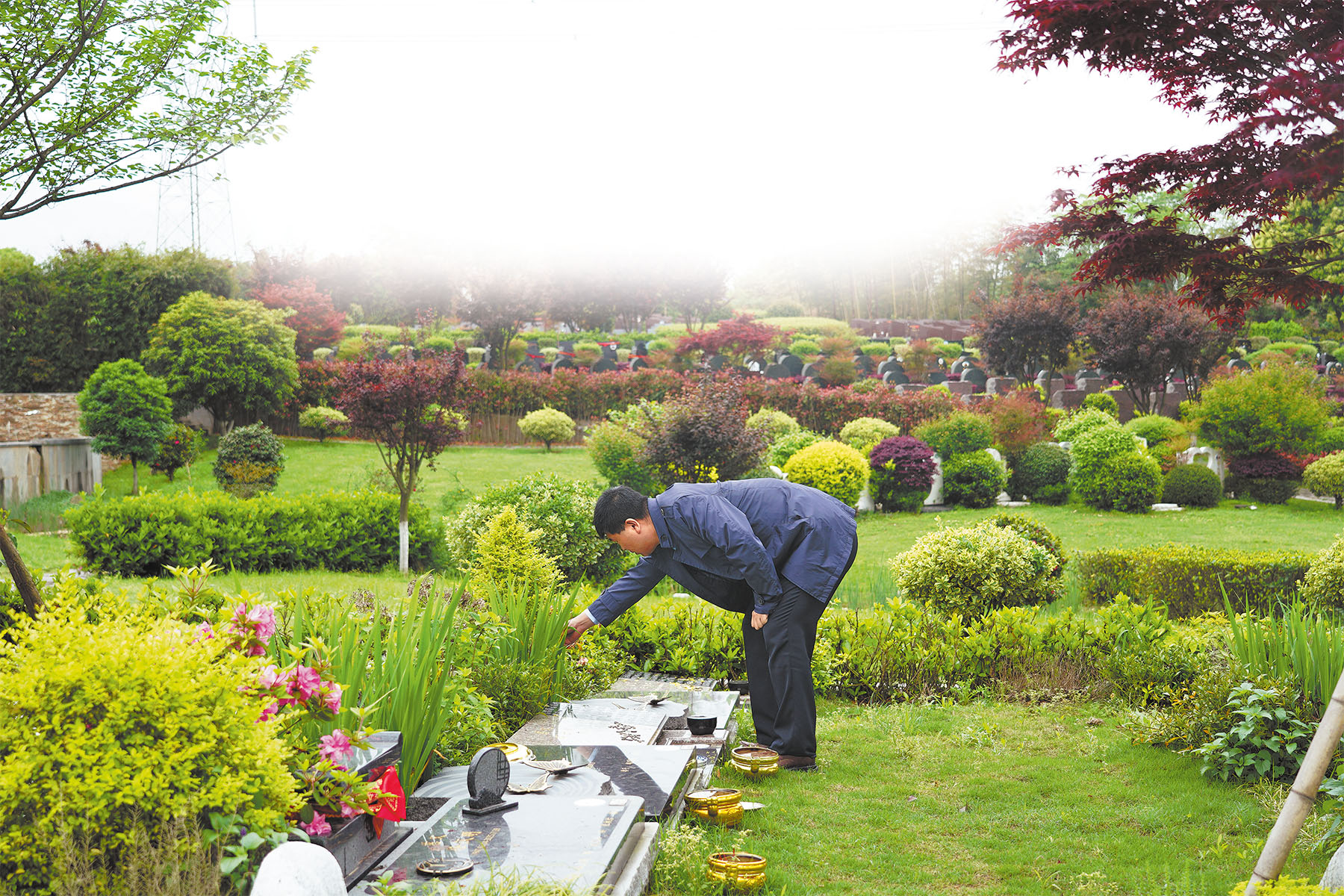
During this year's Tomb-Sweeping Day, Xu Hang moved slowly along rows of tombstones at Crane Lake Memorial Park in Xianning city, Hubei province. He brushed dust from the surfaces, and paused beside one he had designed years ago, lost in thought.
No one asked him to do this. It is simply something he has done for nearly 20 years.
The tombstones stand in silence. Each one holds a story that can no longer be spoken aloud.
And Xu's work ensures those stories are not entirely lost.
At 42, Xu is a tombstone designer. Over the past two decades, he has designed nearly 1,000 tombstones.
READ MORE: Digital memorials, spring break reshape China's Qingming Festival
Having studied environmental art design at Xi'an Polytechnic University, Xu had not planned to enter the funeral industry. After graduation in 2006, he took a job at a cemetery in Zhengzhou, Henan province, and stayed for nearly a decade.
"I wasn't interested in the job at all back then," he recalls.
The setting felt far removed from his ambitions. But over time, something shifted — not through design theory or artistic pursuit, but through an encounter he still remembers clearly.
More than a decade into his career, Xu was organizing a burial ceremony when he presented a tombstone design to a woman in her 50s who had just lost her husband. After the ceremony, she suddenly dropped to her knees.
"Thank you, child," she said.
The moment stayed with him. The woman, whom he later referred to as Aunt Li, told him the tombstone carried the memory of their 30 years together. From then on, she said, this would be the place where she could return and "talk" to her husband.
At that moment, Xu began to understand that what he was shaping was not just stone, but a form of continuity — something that allowed the living to remain connected to those they had lost. A tombstone could hold the presence of a parent for a child, or offer quiet companionship to someone left behind.
"That was when I realized this job could truly matter," he says. "It allows me to help people, and earn their trust."
From then on, he chose to take the work seriously.
He stopped chasing abstract notions of "art" and began by listening. Before starting any design, he sits with families and asks simple questions: What colors did they like? What music or opera did they enjoy? What kind of life did they live?
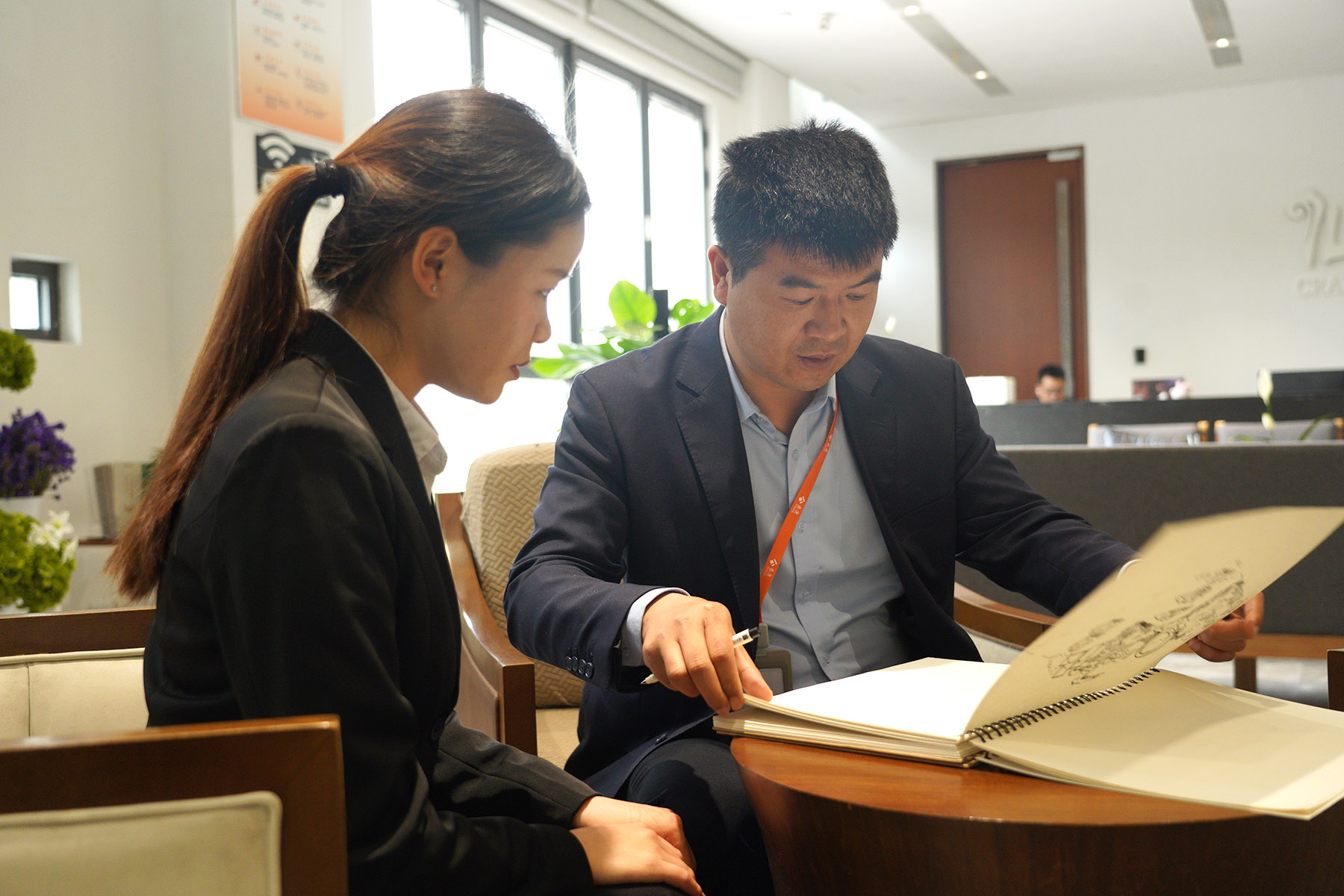
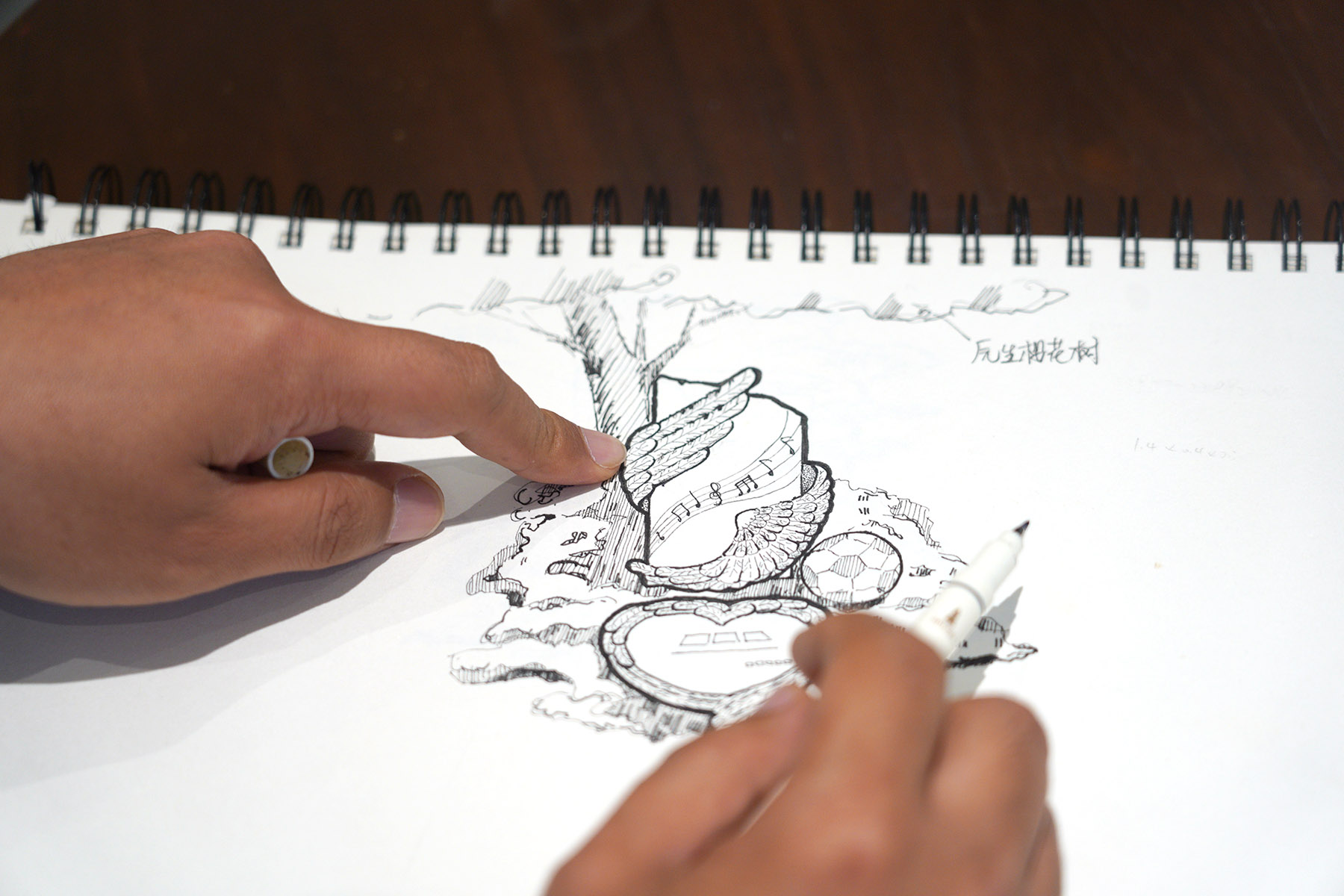
A typical design takes around 10 days. Xu begins with hand-drawn sketches, refining them through conversations with the family. Once a direction is agreed upon, he develops digital renderings to finalize materials, colors and layout.
His work often extends beyond the tombstone itself. He treats each site as a small, contained environment — a place designed not only for remembrance, but for return.
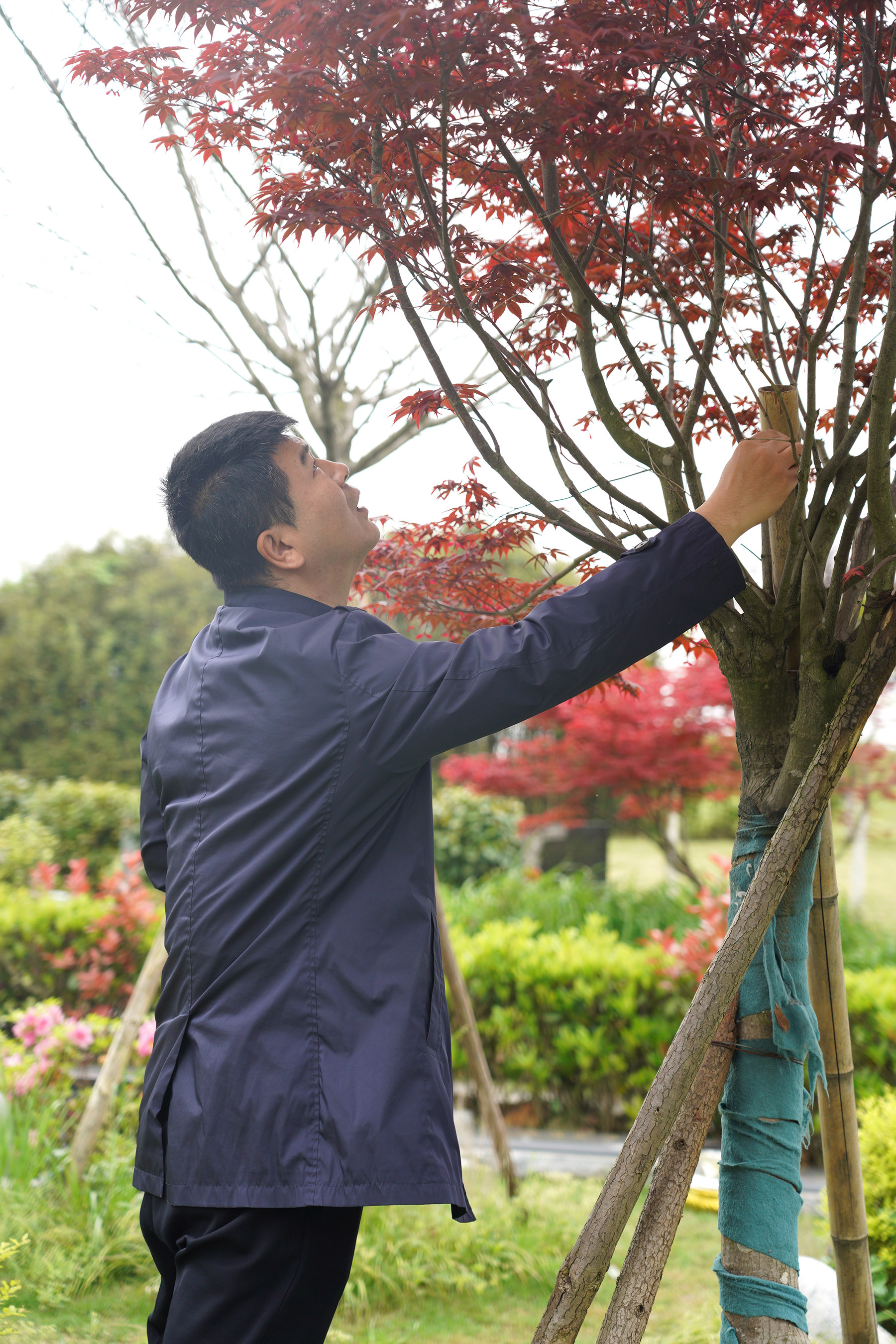
Xu says he avoids the traditional use of plain black stone, instead creating what he describes as a "small courtyard". Evergreen plants provide structure, flowers bloom in spring, and even in winter there is some greenery, ensuring the space never feels desolate.
He often leaves intentional blank spaces on the stone, inviting families to return each year and add their own inscriptions or elements. He also visits regularly to check conditions and maintain the sites.
Xu follows a principle passed down from his parents. "If you deceive the living, you may still have a chance to make amends. But if you deceive the dead, you never will," he says.
One project continues to stay with him. A young woman once described her father, a serviceman stationed on a remote island. Her clearest memory was of arriving each year to find him waiting at the dock, the sea stretching behind him under a vast sky.
Xu translated that memory into a horizontal tombstone. Small stones outlined the shape of the island, while the background opened into a wide "sky", decorated with small stones in shades of blue, yellow and white, inspired by The Starry Night created by Vincent van Gogh.
When the woman saw the finished design, she said nothing.
"But I knew she understood," Xu says.
His work has drawn attention beyond families. Ding Shan, a teacher at the School of Art and Design at Wuhan University of Technology, became a client two years ago when Xu designed a shared burial site for his grandfather and father.
"Xu Hang is very approachable. We had detailed discussions about materials, design and dimensions to meet my specific requests," Ding says, adding that what impressed him most was Xu's attitude toward his job — treating it as a delicate act of creation rather than just a way to earn a living.
"The garden-style layout was truly thoughtful," he says. "The tomb sits by a lakeside cherry blossom tree, with cranes and black swans nearby.
"It feels more like a park than a cemetery. Knowing our loved ones rest in such a place brings us a sense of peace," Ding says.
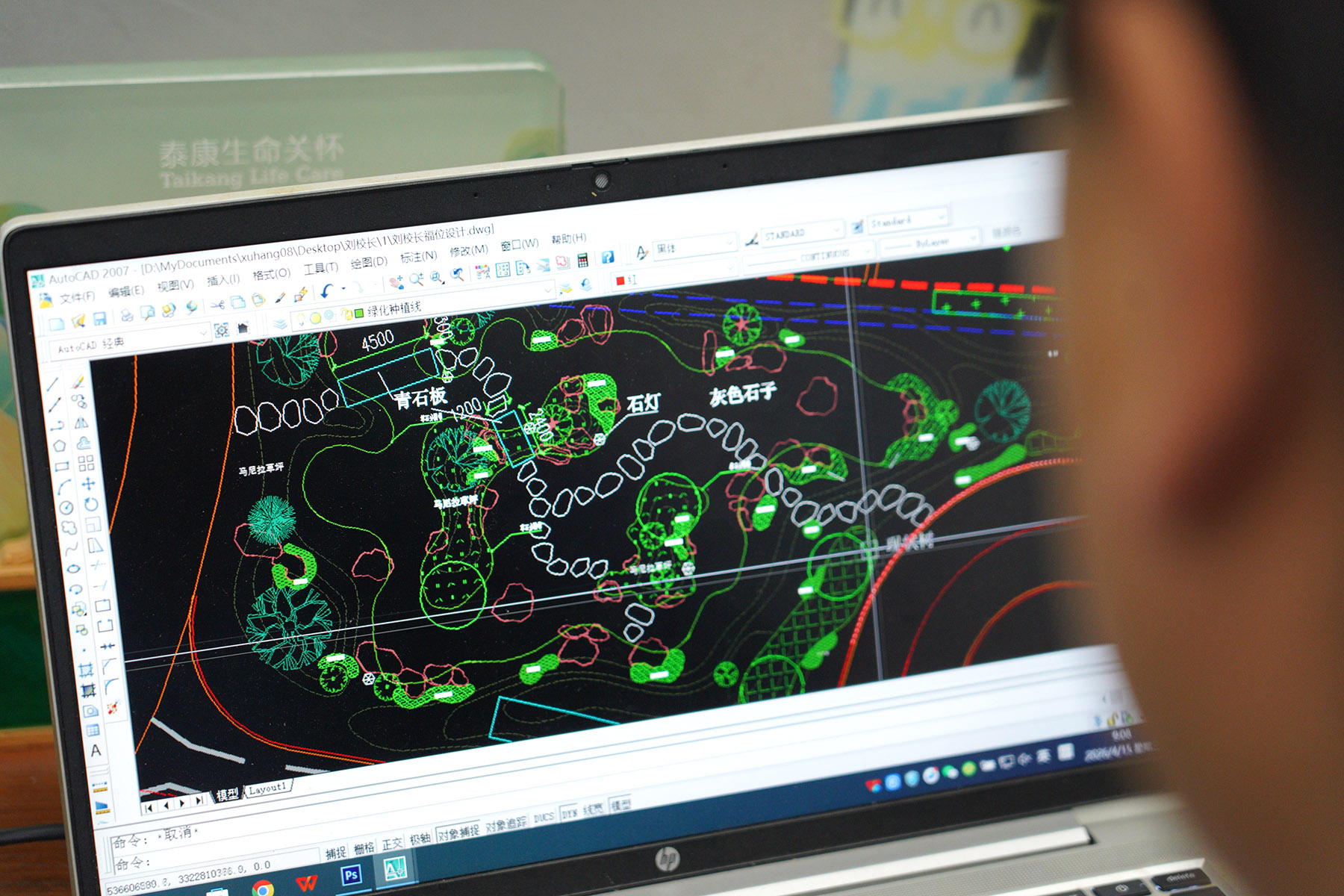
In recent years, Xu has noticed a shift in how people approach memorials. Families are less concerned with scale or formality, and more focused on emotional expression. They want tombstones to reflect the individuality of the person being remembered — places where they can sit, talk, and spend time.
Younger clients, in particular, often bring clear and personal ideas. Some bring sketches; others gather references and images to explain what they have in mind, he says.
ALSO READ: Chinese going online for tomb sweeping
After 20 years in the field, Xu believes not everyone is suited to the work.
"It's not about skill," he said. "It's about what's in your heart."
Awards no longer concern him. What matters is the moment when a family looks at a design and says, "I never imagined it could be like this."
That, he believes, is enough.
He no longer cares about leaving his own name behind. If anything is to endure, he believes, it should be the lives of ordinary people — each one carrying its own quiet significance.
Liu Kun contributed to this story.
Contact the writers at huqing@chinadaily.com.cn
