

Equestrian sports sector spurred on by growing professionalism, popularity
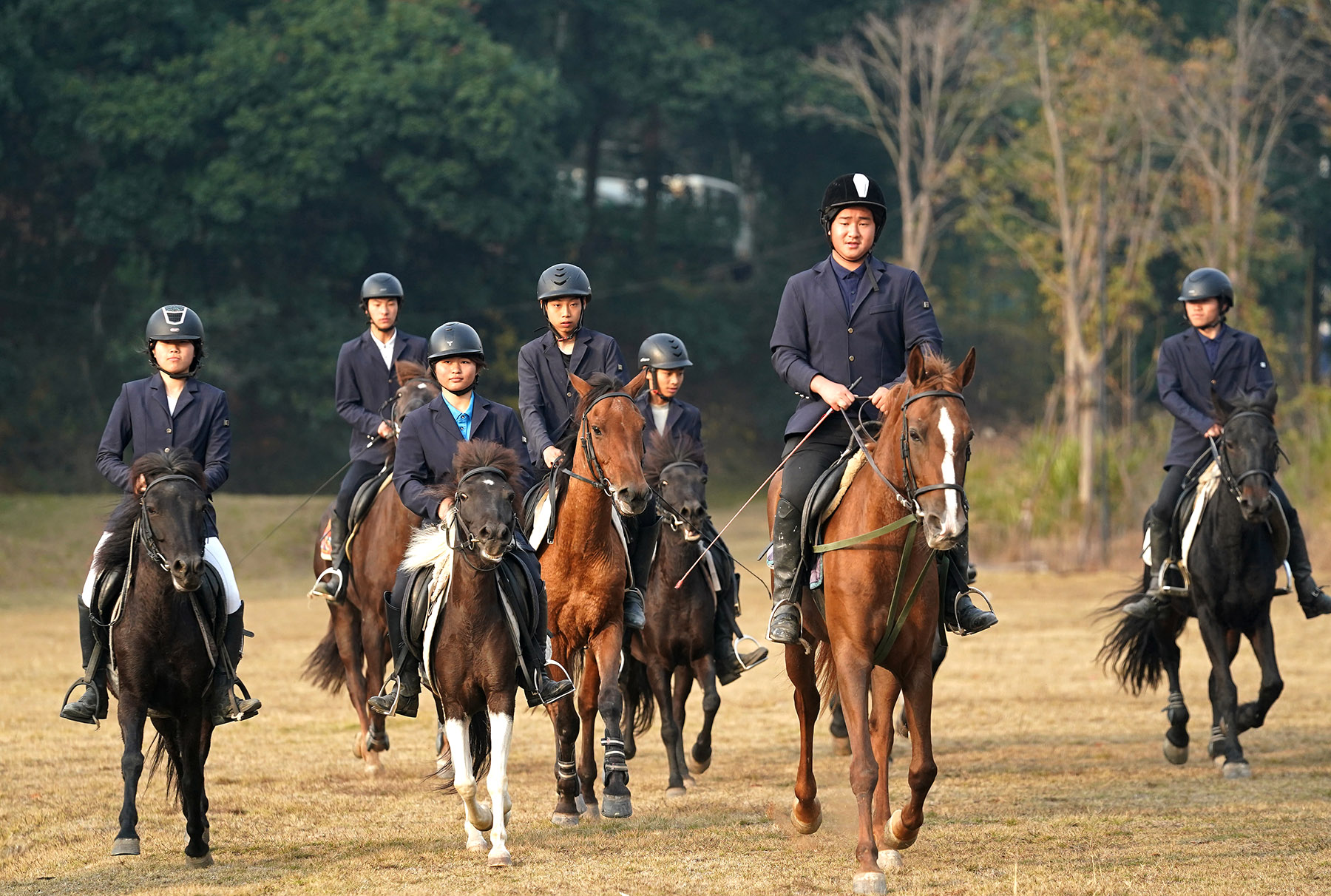
Kong Linghai's workday begins at six in the morning. He feeds and grooms his horses, cleans their stables, and then saddles them.
For the 28-year-old horse riding instructor at Mingyang Equestrian Club on the outskirts of Harbin, Heilongjiang province, these seemingly routine tasks are trust-building rituals with the animals in his care.
"Horses are living creatures and you have to understand their nature before you can communicate with them," he said.
Since Kong graduated from the Inner Mongolia Agricultural University with a degree in sport horse training and management six years ago, he has worked his way up from apprentice to instructor, cutting his teeth at equestrian clubs in Beijing and Harbin and teaching more than 6,000 students.
His trajectory reflects a broader shift, in which professionals with university and college equine training like Kong are becoming increasingly sought after in a country undergoing cultural changes in the relationship between humans and horses.
READ MORE: National Games: China sees a jump in equestrian quality
China is home to 3.6 million horses and more than 2,000 equestrian clubs, according to government data, and the sector's market size reached 21 billion yuan (about $2.9 billion) by the end of 2023. The figure is expected to surpass 60 billion yuan by 2030, according to the market consultancy iiMedia Research.
Lured by the thrill
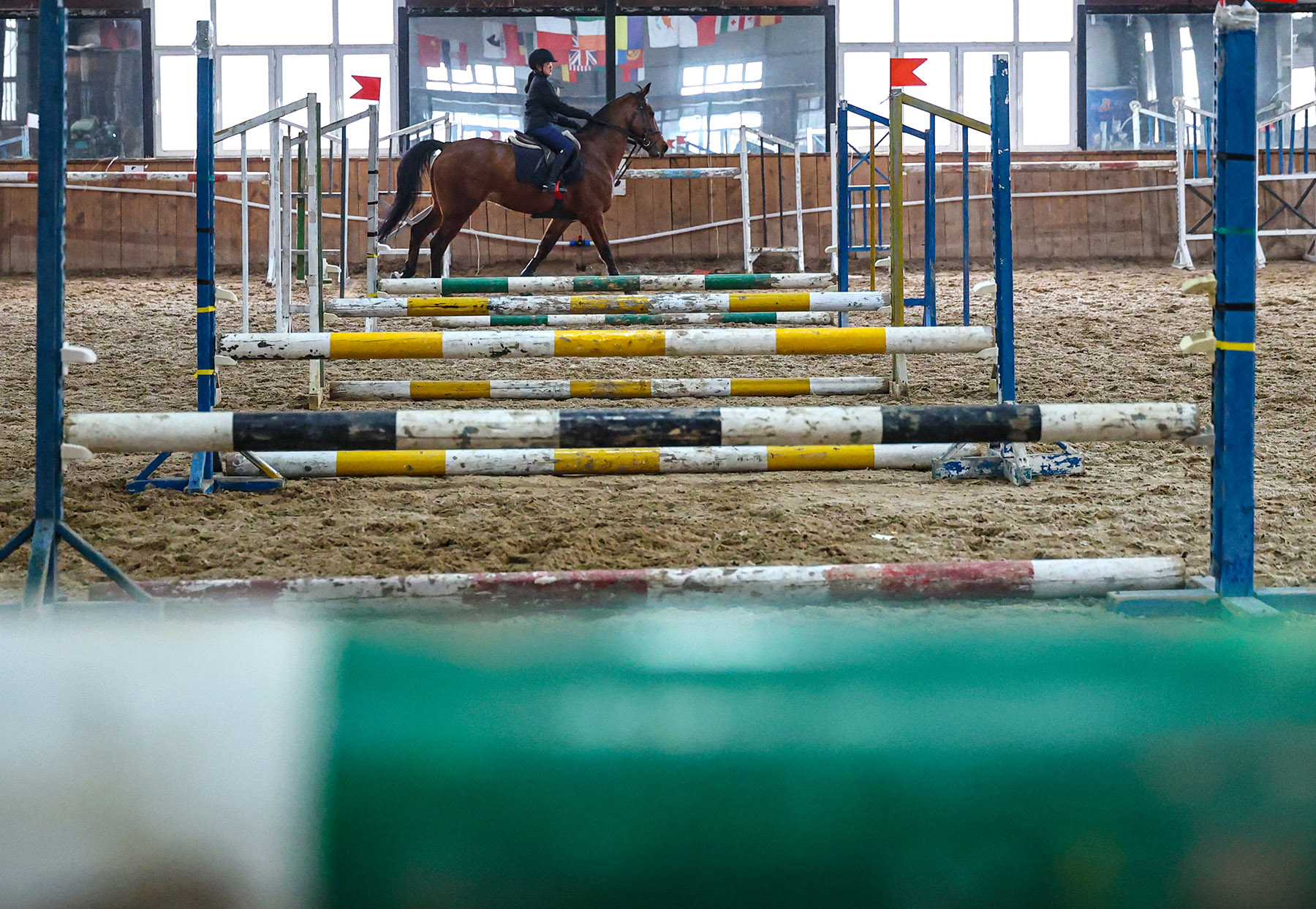
When Huang Ying first saw a horse in late 2024, he was in his first semester at Hejun College in Huichang county, Jiangxi province. Before that, the 19-year-old's world revolved around basketball.
Then, the horses arrived at the college's newly built equestrian center."When I saw them for the first time, I was amazed by how gentle and calm those large animals were," he recalled.
The first time he was given an opportunity to try horseback riding, he recorded the moment on his phone. "The horse's back was so high, and I was terrified. I was afraid of falling off. I was telling the people below to hold it steady," he said.
The thrill lured Huang into spending the following weeks mucking out stables, mixing feed, and hauling hay — work the college requires all equestrian students to do before they are allowed to mount a horse. It was during those hours of shoveling and sweeping that he began to consider a new path.
As Huang engaged in the stable chores, he formed a bond with the horses and chose to become an instructor after the faculty pointed him to equine career possibilities that also included training as a professional rider, farrier or stable manager. "I'm patient. I wanted to teach others, the way I was taught," he said.
In addition to his affinity with horses, he saw a career advantage in choosing equestrian sports.
"Basketball, soccer and badminton are too popular. There are too many people competing for those jobs. For someone like me, at a vocational college, going up against graduates from top-tier sports universities, I probably wouldn't stand a chance," he said.
Yu Hui, Huang's instructor at Hejun College, said the teaching objective is to train a new generation of industry professionals equipped with technical and management skills and formal credentials.
"Before, the equestrian coaching industry in China was dominated by people who were rough around the edges," Yu said candidly. "They might have known how to ride, but they lacked education."
A graduate of Wuhan Business University's horse racing and management program, Yu spent a decade working as an instructor in commercial equestrian clubs before joining the college in 2022, when the equestrian program was established.
He rose from apprentice to head instructor, specializing in youth education, show jumping, competition horse training, and instructor development.
The shift from club instructor to university instructor, he said, required a fundamental rethink of his role.
At the clubs, his students were children ages three to 16, brought by parents with specific goals of improving posture, or acquiring a riding credential to boost applications to Western universities, where equestrian skills are sometimes viewed favorably.
His teaching philosophy at the college follows a sequence: from understanding the horse and mastering the technique, before learning to work with people on a professional level. The top priority is treating horses with respect, he added.
"Equestrian sports are about equality between human and horse and any form of abuse is unacceptable," he noted.
This philosophy has already made an impact on students like Huang."You have to be gentle with a horse. You can't shout at it or lose your temper. Horses can sense your emotions. If you approach them with anger, they'll lose trust in you. They might bite or kick," he said.
Huang learned to read the animal through subtle physical cues, such as the tilt of an ear, a shift in its stance and the rhythm of its breathing.
He recalled one horse in particular that was prone to becoming spooked and bolting. "I was scared. I thought, if I get seriously hurt from this, what happens to my career?"
Instead of backing away, he sought advice from his instructors, and over time, the horse began to trust him."There's a sense of conquest, a sense of accomplishment, when you earn that trust," he said.
Grabbing the reins
Over the years, Kong Linghai has found increasing security with his equine career, and is a rarity among his peers for holding a formal university degree.
"When a horse is acting up, a trained professional will understand the animal's nature and apply systematic knowledge to address the issue. Someone without that background might resort to harsher, more forceful methods," Kong said.
The details matter when it comes to teaching in a real setting such as parents worrying about their child's safety, he said.
Kong recalled one incident, when a mother thought the horse was too big and "wild" for her son. He didn't change the horse. Instead, he observed the boy's riding skills and concluded that the problem wasn't the horse's temperament, but how the youngster was handling the reins.
He taught the child to adjust his grip and timing. Soon, the boy went from barely controlling the horse to riding it with ease. The parents went from constant complaining to full acceptance. "That's what specialized knowledge can do," Kong said.
Wang Yonghao, who runs Mingyang Equestrian Club in Harbin, said, "Instructors with formal education are far more capable overall than those who learned on the job".
Riders from the Inner Mongolia or the Xinjiang Uygur autonomous regions may have excellent riding skills, but they often lack the theoretical foundation and broader competencies that a formal education provides, he added.
Wang also views his equestrian club as part of a broader shift in how equestrian sports are being marketed in China.
Before opening the club in November 2025, Wang spent years in the field of culture and tourism, running a trail-riding camp in the vast Hulunbuir grassland in the north of the Inner Mongolia autonomous region.
He noticed a recurring pattern where many young people wanted to learn to ride but were put off by the cost of traditional equestrian clubs.
"Under the conventional model, lessons are expensive. Many families and young adults simply can't afford the tuition, even if they're drawn to the lifestyle," Wang said.
He set out to create something between a full-service club and a tourist attraction.
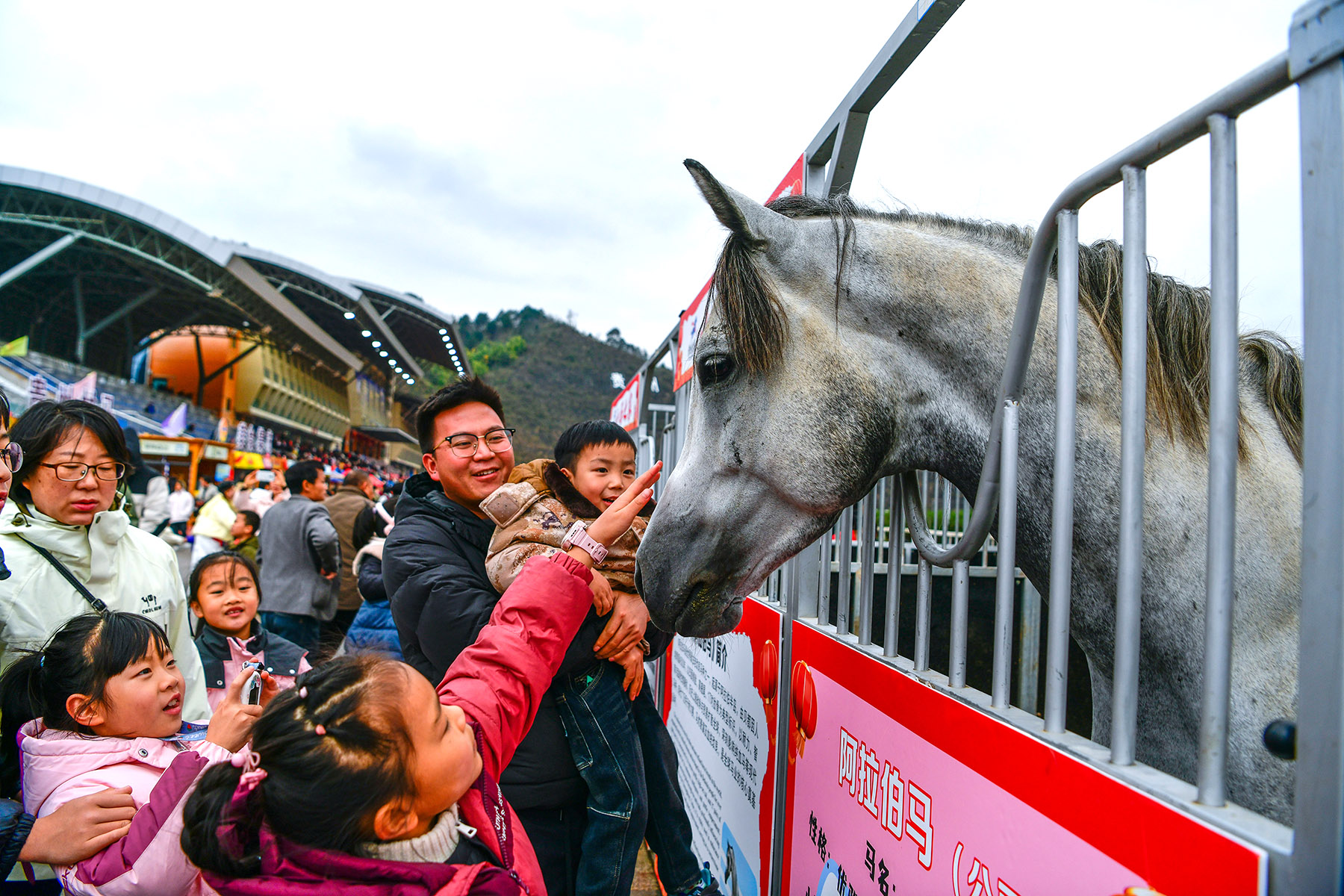
Mingyang sits on a 50,000-square-meter plot about 20 to 30 kilometers from downtown Harbin. It combines riding lessons with trail rides, camping, fishing, a petting zoo, and photo shoots. The aim, Wang said, is to "make equestrian sports more accessible — less remote and exclusive — so ordinary people can enjoy".
A casual ride costs 70 to 80 yuan per hour, while a structured lesson for a child runs from 300 to 400 yuan. A crash course designed for beginners costs around 900 yuan for enough sessions to learn basic control to ride independently.
In Beijing or Shanghai, comparable training would cost two to three times as much.
Four months after opening, the club's popularity exceeded Wang's expectations. "On weekends and holidays, we're fully booked," he said.
With 19 horses and four full-time instructors, the club can handle about 40 to 50 riders a day, plus family members who accompany them. On busy days, around 200 people come through the gates.
"What we're seeing is a shift. Equestrian sports are moving from being an elite pursuit to something more mainstream," he added.
Wang said the way forward involves continuing to bridge the gap between elite equestrian culture and the broader public.
"In a city of about 10 million people, only a few clubs offer serious instructions. That tells you how much room there is to grow," he said.
Rising enrollments
Yu, the instructor in Jiangxi, said the growth in demand is reflected in enrollment numbers.
When Hejun College launched its equestrian program in 2022, it admitted just over 20 students. By 2023, the number had grown to more than 40. By 2025, nearly 200 students were enrolled in equestrian studies.
Yu said the college now boasts one of the largest equestrian facilities in Jiangxi, with a 40-by-50-meter indoor arena and a 30-by-40-meter outdoor training area, a two-story stable with 40 stalls, and a fleet of 19 horses, including one warm-blood used for competition. A second, larger venue is under construction nearby, designed to host major competitions.
The curriculum combines practical stable work with theoretical courses on horse nutrition and care, stable management and equine anatomy.
"The most important attraction for students is job placement," Yu said. "Our first-time employment rate is over 95 percent, with more than 90 percent of graduates entering equestrian-related fields," he said.
The college has partnerships with more than 200 equestrian clubs across China, many in first — and second-tier cities where the industry is growing fastest. Some students receive job offers before they graduate. "The market has a huge appetite for skilled talent," Yu said.
The growth of Hejun's program reflects a broader policy push. In 2020, China's Ministry of Agriculture and Rural Affairs and the General Administration of Sport jointly issued the national equestrian industry development plan (2020–25), which explicitly called for integrating the equestrian industry with tourism, culture, and animal husbandry.
The plan envisioned a complete industrial chain, from breeding to sporting events management, and signaled that equestrian sports were no longer niche hobbies but a recognized economic sector.
ALSO READ: Elderly trainer espouses his equestrian affinity
Zhao Chunjiang, director of the equine research center at China Agricultural University in Beijing, sees the trend as part of a larger pattern.
Equestrian sports and their competitive levels are closely tied to a country's economic development, Zhao said. As incomes rise in China, he expects participation to grow accordingly.
The benefits extend beyond physical fitness, he said. Working with horses builds willpower and resilience, and the sport's inherent emphasis on etiquette can add a refined quality to a person's character that is increasingly valued in contemporary society, Zhao explained.
Yet he acknowledges that barriers remain. Equestrian sports demand high-quality facilities and well-trained horses. They're still a niche activity in China, not yet as widespread as in Western Europe, he added.
Zhao argues for innovation in business models to broaden participation, along with greater domestic breeding of sport horses to reduce costs and improve animal welfare.
Contact the writers at yangfeiyue@chinadaily.com.cn
