

In one of China's earliest national park pilot areas, forests, wildlife and local communities reveal the quiet power of long-term preservation, Yang Feiyue and Li Yingqing report in Diqing, Yunnan.
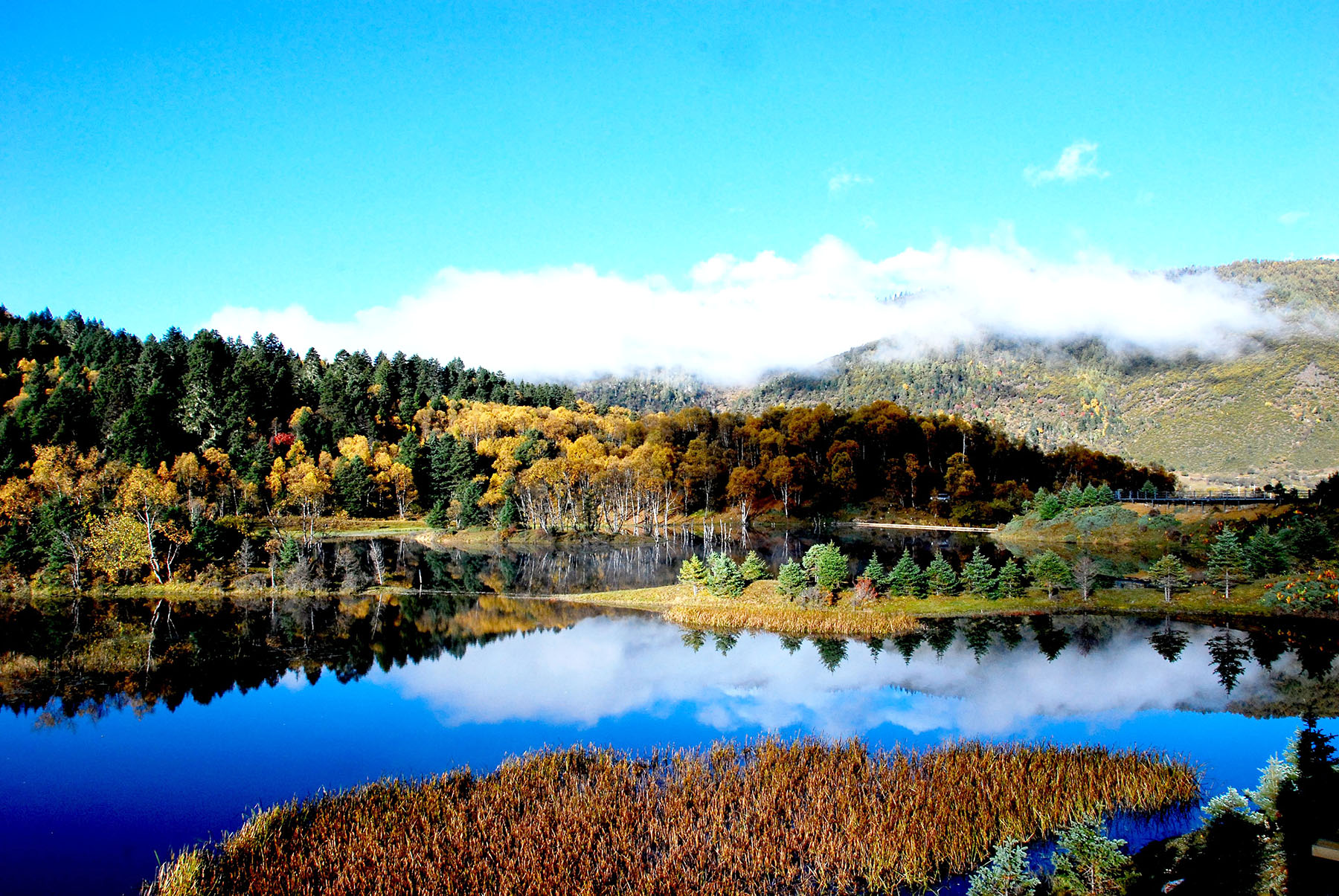
Summer arrives slowly at 3,500 meters above sea level in Potatso National Park.
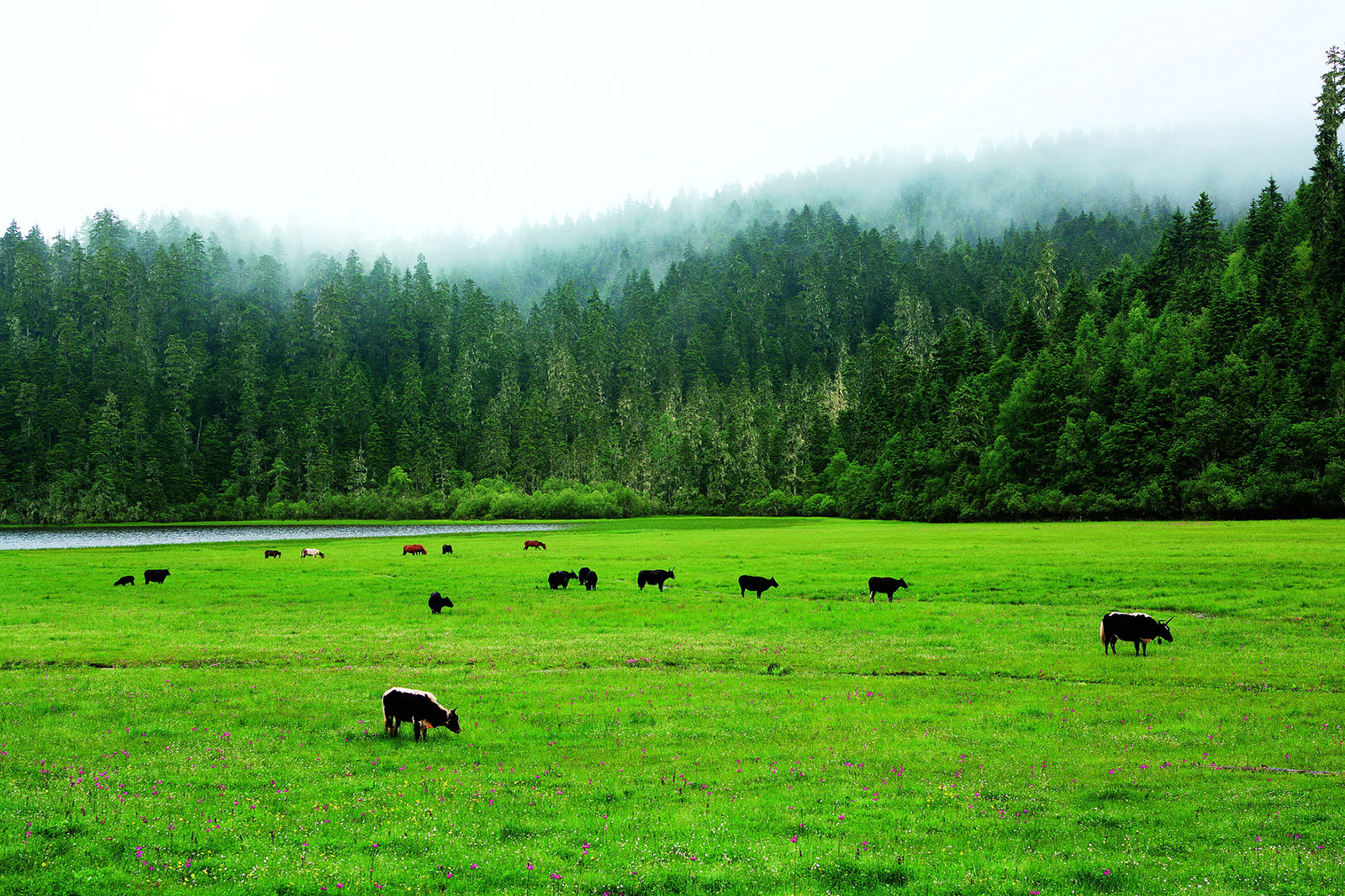
The rich ecological landscape, marked by lush forests, grasslands and lakes, has a way of holding the heat back and unfolding it petal by petal, covering alpine meadows with a shifting tapestry of gold, white, deep blue and violet.
Step off the bus at the entrance of the national park in Shangri-La, Diqing Tibetan autonomous prefecture, Southwest China's Yunnan province, and the first thing that hits you is the air — thin, cool and remarkably clean. The second is the silence. Not an empty silence, but a full one: wind moving through spruce needles, the distant clank of a cowbell, and the rustle of something small in the undergrowth.
Potatso is one of China's earliest national park pilot areas. Its rhythms are slow — ecological change here is measured in decades, not tourist seasons.
READ MORE: A historic tea route flows across time
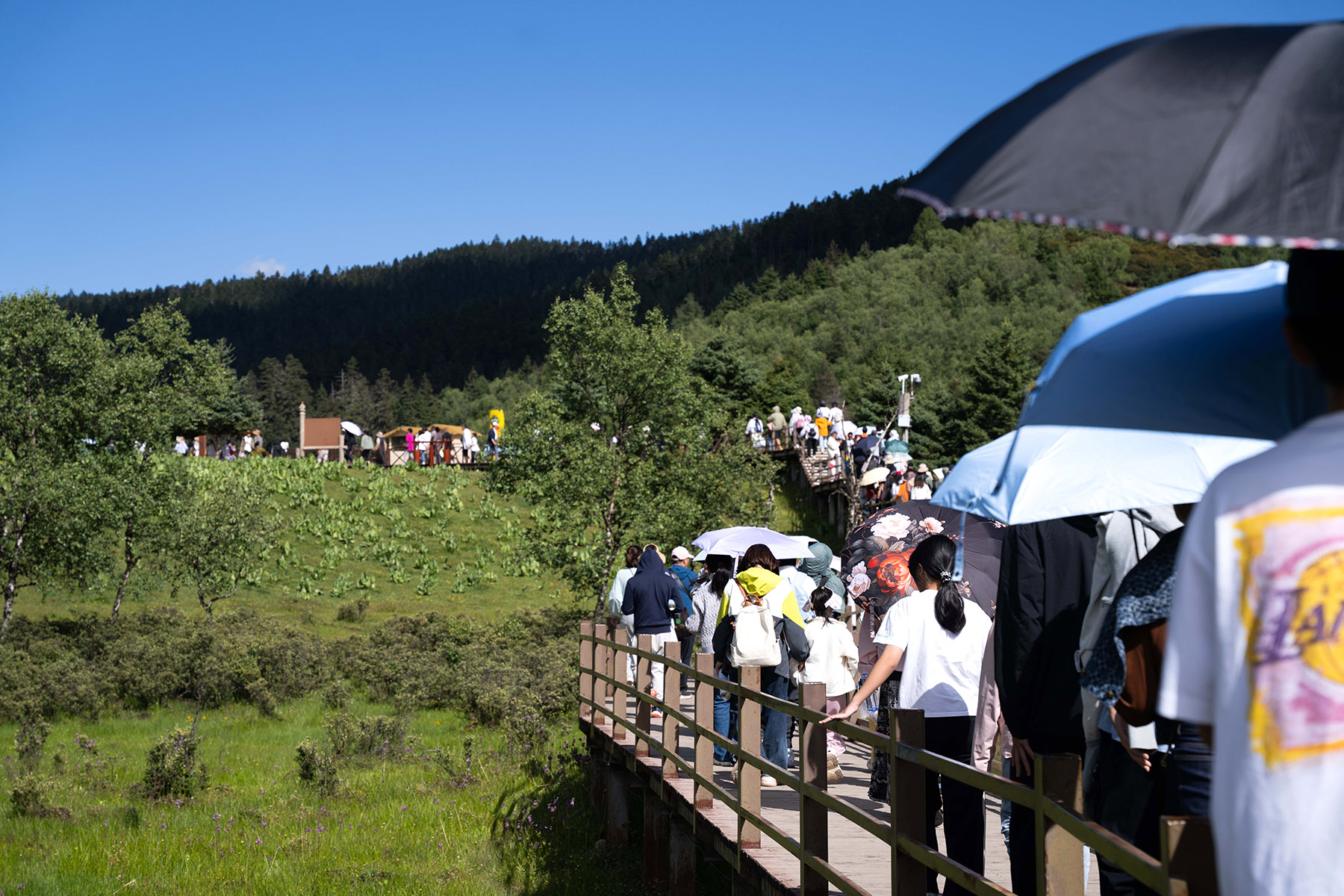
Wang Guoxian knows this better than anyone. She has been guiding visitors through these forests for nearly two decades. As summer vacation arrives, she has been increasingly busy, taking at least three groups of guests each day across the park's varied landscapes — a quick tour still takes four hours.
"We start at 7 am, and during peak season like now, we don't finish until 7 pm. But being tired is good — it means visitors are here," she says. Her monthly salary increases by about 3,000 yuan ($444.6) during the peak summer season — enough to make a real difference in the mountainous region.
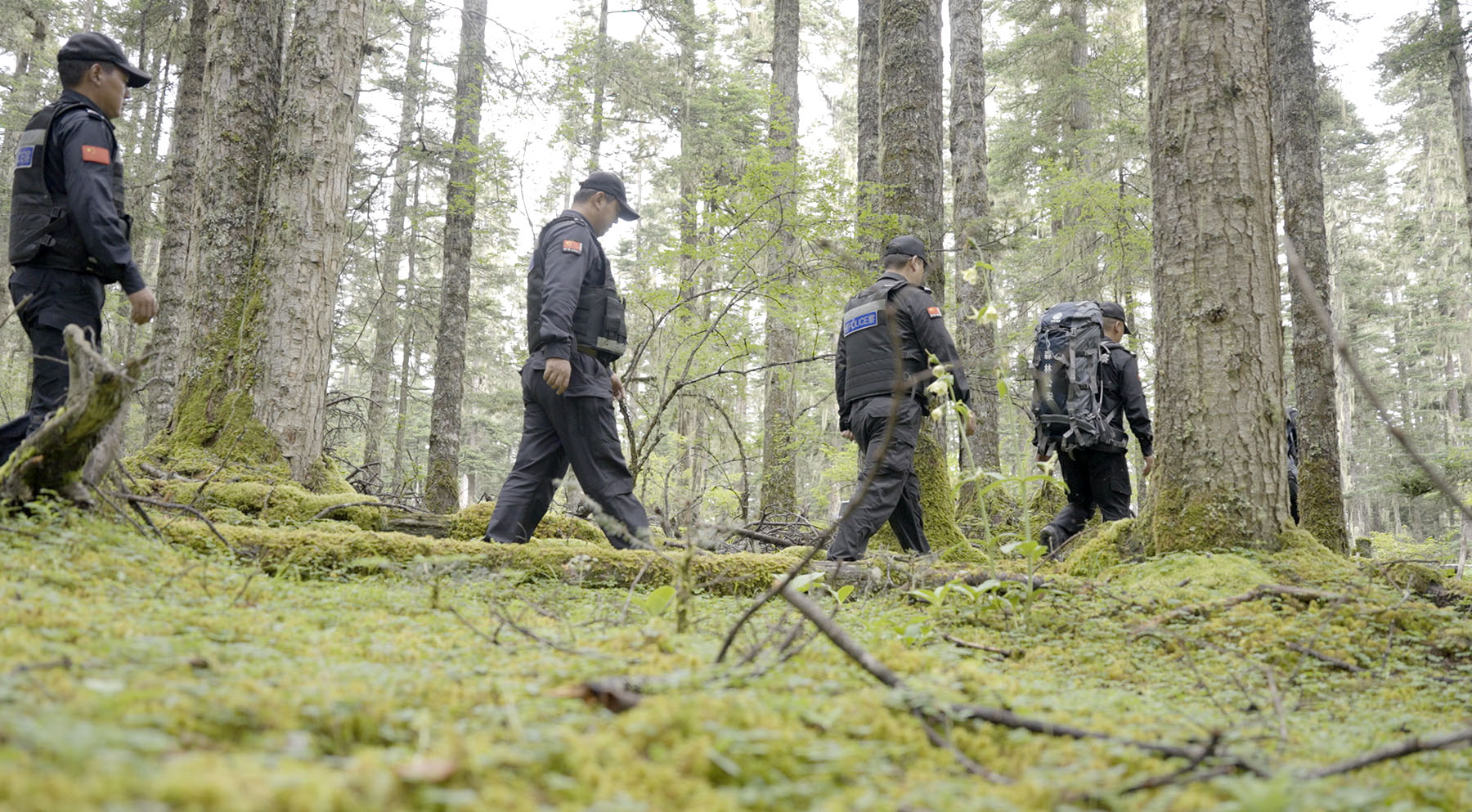
She makes a point of telling guests that the facilities and management have changed over the years.
"Twenty years ago, we had only a few vehicles," she says, adjusting her cap against the midday sun. "Now we have more than 100."
But she says the one thing that has never changed is that "protection always comes first".
At the entrance to the Youyou Trail, a 2.2-kilometer route of packed earth and wood winding through ancient trees, Wang points out the wooden decks to her guests.
"When we built these trails, we didn't cut a single tree. We built around them. You can see the planks curve around the trunks. The trees stayed," she says.
Asked what changes she has noticed in the landscape over the years, Wang thinks for a moment.
"Visually, not much. It looks the same to me," she says. "But the data tell a different story. The forest is denser. The numbers show it is improving, just slowly."
Decades to flower
That slow rhythm is written into the very biology of this place.
A short walk from the main trail, Wei Jiansheng, an executive with the park's operating company, stops beside a cluster of green leaves.
"This is shuihuang, or Rheum alexandrae," he says.
Wei visits the park regularly to oversee operations, safety and conservation. He speaks about the plants here the way someone might speak about old friends.
"Most of its life — 30 years, sometimes 35 — it does nothing but grow ground-level leaves," he says. "Then, in its final year, it puts everything into one flower stalk."
He describes how the plant's translucent bracts wrap around the flowering stem like a greenhouse, trapping heat and blocking UV radiation in the harsh alpine environment.
"One bloom after decades of waiting. It teaches you that some things are worth waiting for," he says.
Potatso covers more than 600 square kilometers and contains a range of ecosystems, including forests, lakes, wetlands, meadows and snowcapped peaks. Its elevation ranges from 2,300 to 4,670 meters, creating a natural laboratory where scientists monitor water, air, soil and wildlife around the clock.
One of the clearest signs of the forest's health hangs from the branches above.
Wang points to pale gray-green lichen draping from spruce and fir trees.
"We call it 'tree beard'," she says. "It only grows where the air is clean. Scientists use it as an indicator of environmental conditions."
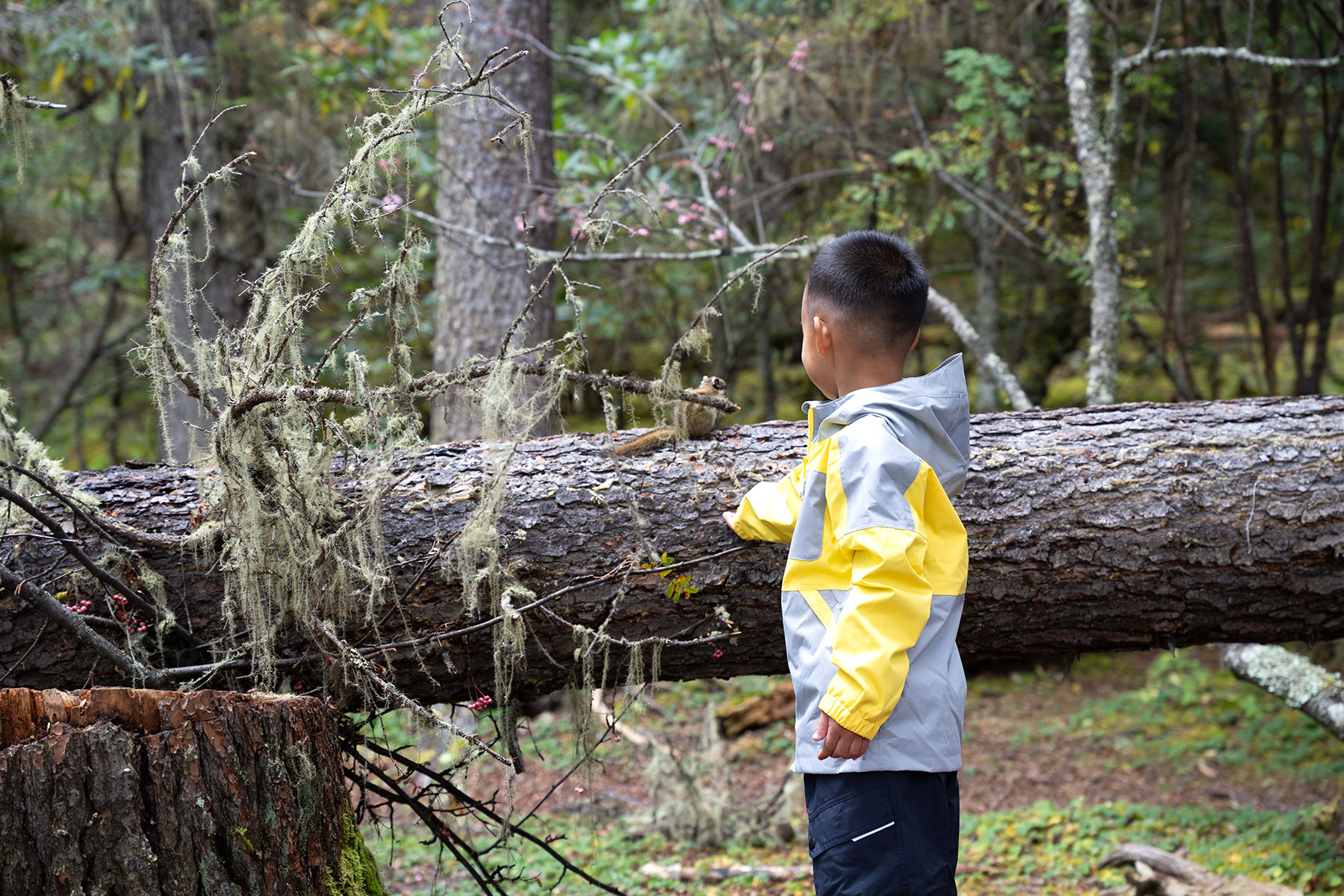
The park is home to a wide range of wildlife, including black-necked cranes, clouded leopards and red pandas. The most visible residents, however, are often the small squirrels darting across the boardwalks.
"Don't feed them," Wang reminds her visitors. "They are wild animals and need to forage naturally. If they become dependent on human food, they may lose their ability to survive on their own."
Changing lives
After years of guiding visitors through the park, Wang has come to see Potatso's story not only as one of forests and wildlife, but of people learning to live alongside nature.
For generations, local Tibetan, Yi, Naxi and Lisu communities depended on the surrounding forests for timber and grazing. Today, many residents have become partners in conservation.
The park provides about 17 million yuan annually in direct compensation to 30 surrounding villages, benefiting more than 4,500 villagers from over 1,000 households. It has also created more than 340 permanent positions, 99 percent of which are held by local residents, as well as more than 500 seasonal jobs during peak tourism periods.
Some former loggers now work as rangers, protecting the same forests they once harvested. Others perform traditional Tibetan songs and dances for visitors, preserving local culture while earning income.
In Langrong village, residents share dividends from a jointly operated guesthouse, with each household receiving about 25,000 yuan a year.
"People ask me how we measure success," Wei says, walking past a poplar tree scarred by lightning and fire but still alive.
"It is not just the data. It is things like this."
He touches the trunk gently. "This tree was hit by lightning. Most of it died. But one strip of bark kept it alive. It reminds us that resilience can come from a single thread."
The park has also supported education in surrounding communities, providing scholarships totaling 2.67 million yuan for 1,189 students from high school to university.
For many families, this support has been life-changing. One local ranger described the shift simply: before, he cut wood to sell. Now he walks the same forest and gets paid to protect it — and his children can go to school because of it.
Ever-shifting views
The bus winds toward Bitahai Lake, the park's crown jewel. At 3,500 meters above sea level, the lake stretches three kilometers from north to south, its surface so still it mirrors the surrounding spruce forests and the tiny island at its center — an island that local lore says was once visited by an 8th-century Buddhist master.
Wang stands at the front of the bus, pointing out details along the route: the places where larches turn golden in autumn, where black-necked cranes spend winter, and where rhododendrons bloom in spring.
ALSO READ: National parks to reinforce 'beautiful China' program
She has taken this route countless times, but she is never tired of it — its scenery varies with every season.
"Winter brings a different Potatso," she says. "It's snow-covered and silent, and the sky is so blue. This place is never the same twice. That's what makes it worth coming back again and again."
Contact the writers at yangfeiyue@chinadaily.com.cn
