

Writer pens book about Qilian, sharing not only his research but also his personal journeys, offering a new perspective on Chinese civilization, Yang Yang reports.
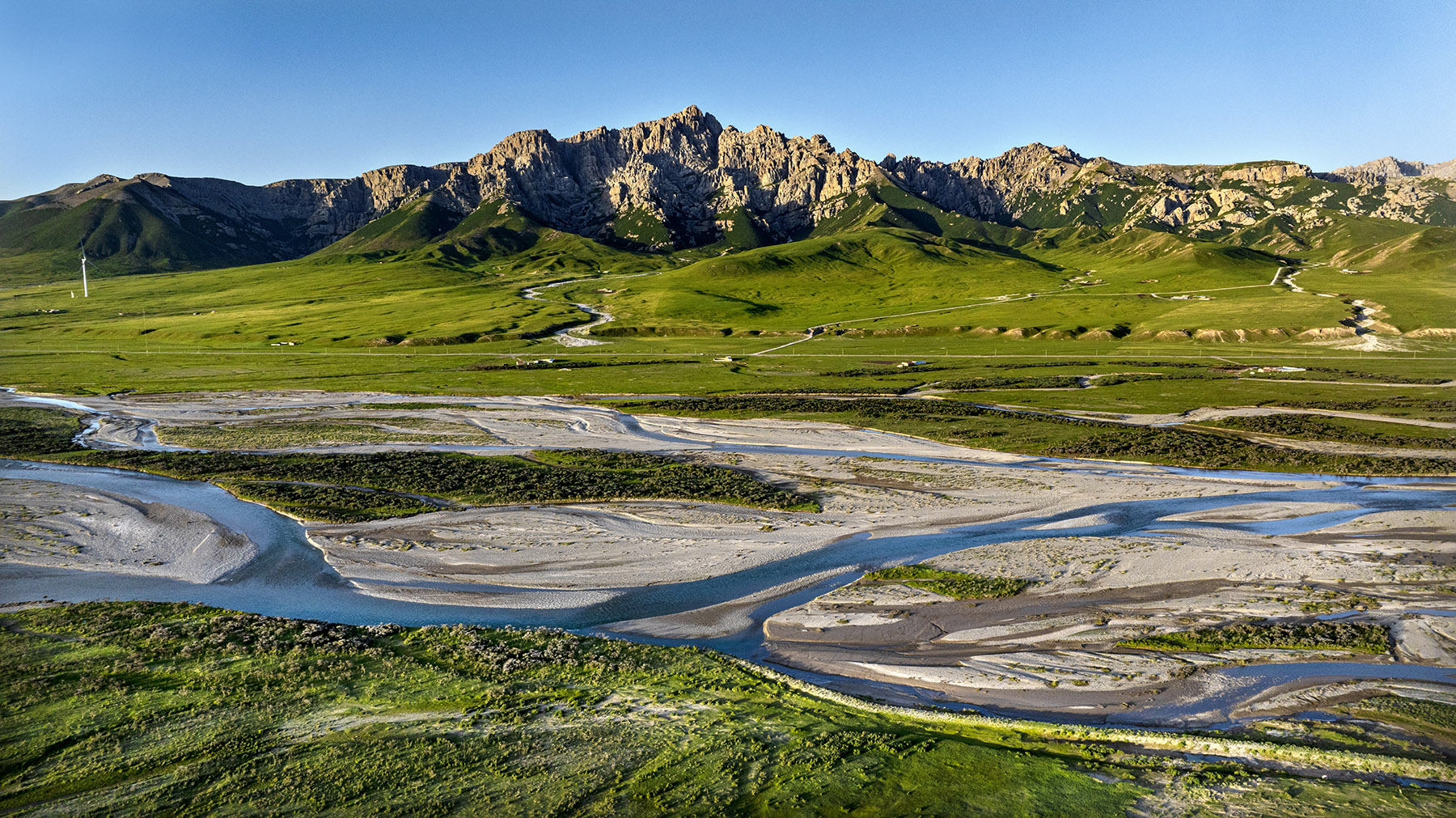
Between the northeastern part of Qinghai province and the western border of Gansu province lies the Qilian Mountains, which extend about 800 kilometers from east to west and 200 to 400 km from north to south. In the language of ancient Xiongnu nomads, Qilian means heaven, or tian, and was once called the Tianshan Mountains.
They are the mountains that the great poet Li Bai (701-762) of the Tang Dynasty (618-907) wrote about in Guan Shan Yue (Moon over the Border Mountains), "The bright moon rises over the Tianshan Mountains, amid the vast, misty sea of clouds". The poem depicts the mutual longing between frontier soldiers far from home and their wives, a bleak image of a millennium of endless border warfare between agricultural and nomadic groups.
READ MORE: New code set to bolster eco-rehabilitation efforts
Glacial meltwater from the Qilian Mountains has been an important water source for the cities along the Hexi Corridor from Wuwei to Dunhuang. It supported various activities along the 1,000-km-long Hexi Corridor, part of the ancient Silk Road, facilitating the long-distance transmission of civilizations.

Standing between two distinct production modes on its northern and southern slopes, the Qilian Mountains, a key geographic landmark, have witnessed the formation and evolution of the history, culture and ethnic landscape of not only China but also the eastern part of the Eurasian continent.
This geopolitical landmark dictated the expansion and contraction of national territories over history: when the Han Dynasty (206 BC-AD 220) held it, they "cut off the Xiongnu's right arm"; when the Tang lost control, the Silk Road was obstructed; and when the Ming Dynasty (1368-1644) built the Jiayu Pass, they took the mountains as the frontier.
The Qilian Mountains are not merely a backdrop, but a shaping force, as portrayed by Qiu Huadong in A Biography of the Qilian Mountains, a book recently co-published by Yilin Press and Qinghai People's Publishing House.
At a book launch ceremony in Hangzhou, Zhejiang province, in late July, Qiu shared the motivation behind writing this book. As a writer born at the foot of the Tianshan Mountains in the Xinjiang Uygur autonomous region, he has long dreamed of creating a literary map focused on the Xiyu (Western Regions), which encompassed today's Xinjiang and parts of Central Asia.
In 2024 and 2025, he published three novels about the six ancient cities associated with Xiyu and the ancient Silk Road — Kucha (or Qiuci), Gaochang, Niya, Loulan, Hotan, and Dunhuang. When reportage author Xu Jian asked him to join other writers, including A Lai and Shi Yifeng, in writing books about Qinghai province, he shifted his focus to the Qilian Mountains, which served as both a bridge and a boundary between the Central Plains and Xiyu in ancient times.
To write the book, Qiu, 57, spent several years making multiple journeys into the heart of the Qilian Mountains. Places such as the edge of the Gobi Desert in the Hexi Corridor, the alpine pastures, salt lakes, glaciers, the Dunhuang cave murals, and the Heishuiguo site ruins in Zhangye, Gansu province, where archaeological excavations have revealed a Chalcolithic and Bronze Age settlement dating to approximately 2100-1600 BC, have all become crucial points in verifying the historical documents he studied.
Drawing from sources such as Records of the Grand Historian, Book of Han, A Comprehensive History of Qinghai, and Chronicles of Qilian County, as well as plant identification manuals, mineral exploration reports, Tang Dynasty transportation studies, and the expedition records of the 19th-century Russian geographer and explorer Nikolai Przhevalsky, Qiu blends historical records and rigorous scientific research with vivid firsthand experiences.
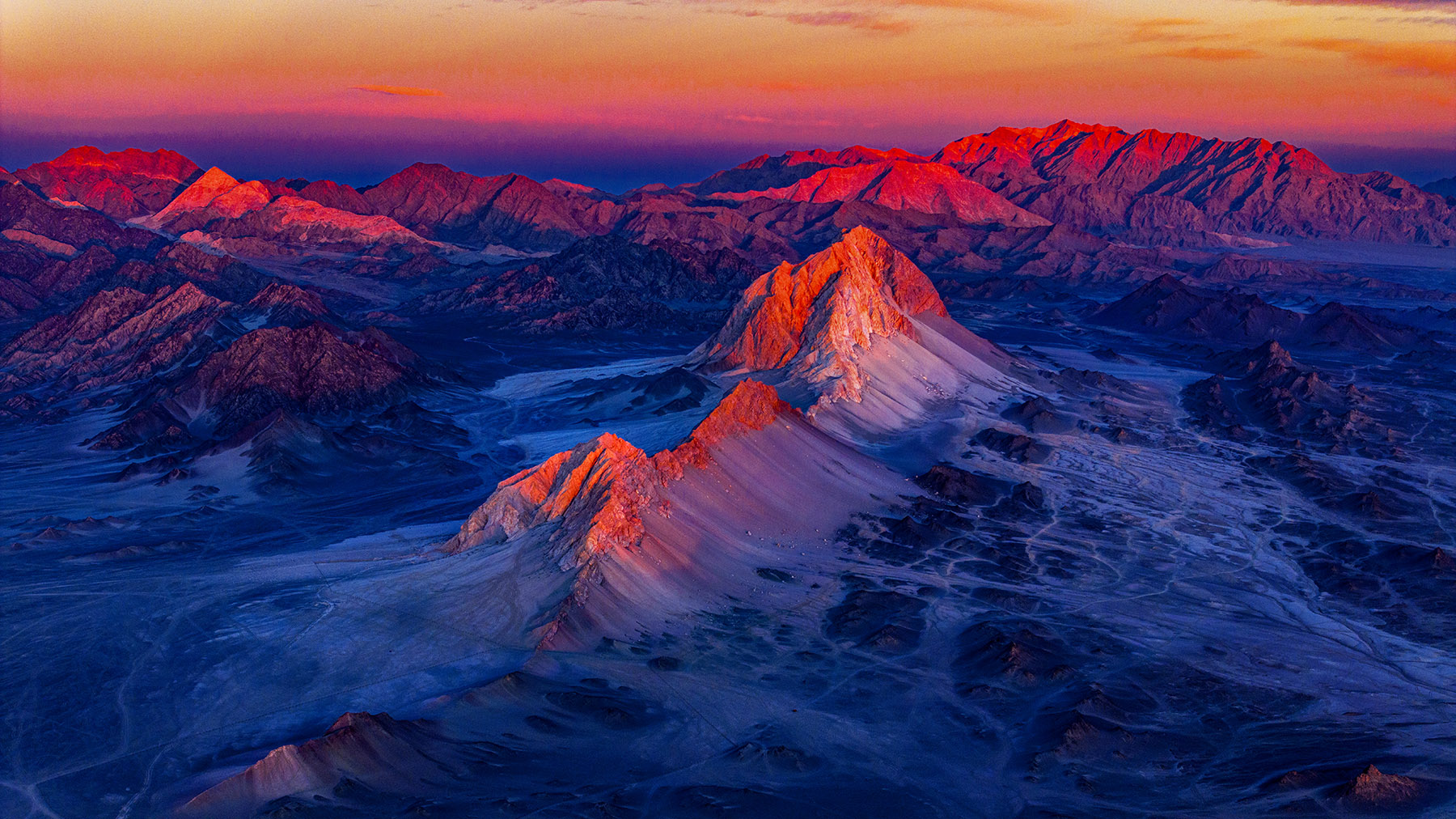
The author's candid personal travel reflections impart warmth to this biography. The glaciers, meadows, rock paintings, and beacons of the Qilian Mountains transform from objects of observation into internalized life experiences.
Qiu spent over a year thinking about the best way to structure the book.
"The mountains have existed far longer than the history of humanity; they will always be there, while we are just temporary visitors. We humans should not be too arrogant, for we are so small in comparison," he says.
As a result, he moves away from a "human-centered" narrative, allowing the mountains themselves to become the story's main focus and offering a comprehensive exploration of the Qilian Mountains through seven perspectives: geology, plants, animals, history, culture, literature, and travel experiences.

At the launch ceremony, poet Shen Wei commented that the book's most valuable quality lies in "the spirit of humility in the face of the mountains". Prizewinning author Shi Yifeng also noted, "What's most brilliant about the book is its layered and evolving logic."
The author explores the mountain starting with its geology, then its life, history and culture, concluding with its role in civilization, Shi noted.
The book provides an in-depth, multidimensional mapping of the region, delving into the formation of the mountains and the evolution of their landscapes driven by geological activity, as well as the intricate survival networks of plants and animals in the harsh alpine ecosystem.
It also discusses the historical strategic battles involving the Xiongnu cavalry, the Tubo regime that ruled the Qinghai-Tibet Plateau from the 7th to the 9th centuries, and the Han and Tang dynasties, as well as the migration, integration, and everyday life of diverse ethnic groups such as the Tibetan, Yugur and Mongolian. Additionally, it explores the changing literary imagery found in frontier poetry and includes the author's personal travel accounts from multiple journeys through the Qilian Mountains.
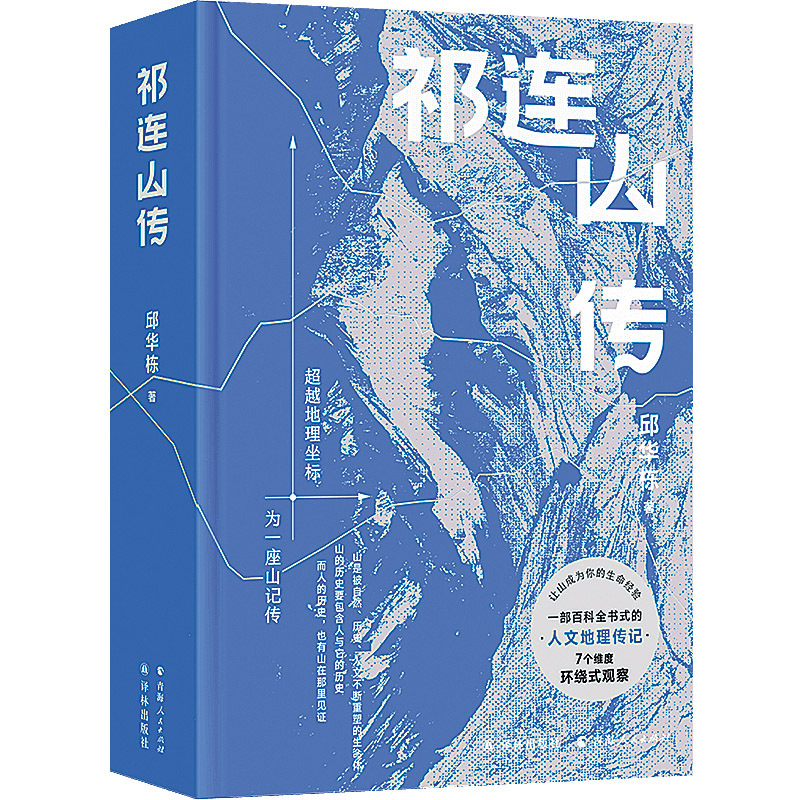
The author blends various literary styles, such as dictionary entries, Q&A formats, narratives, and second-person travelogues, creating a dynamic, engaging reading experience.
ALSO READ: The Great Wall of man and nature
"The book's significance goes beyond simply depicting a mountain range. It offers a fresh perspective on Chinese civilization by creating a 'history-culture-ecology' framework through literature," says Song Jishu, general manager of Phoenix Publishing & Media.
"Qilian" is more than just a geographical term; it is a crucial source of Chinese civilization, rich with the legacy of diverse cultures blending and thriving together, Song adds.
Contact the writer at yangyangs@chinadaily.com.cn
