

For young followers anxious about falling behind, Suzi de Givenchy's journey offers proof that life does not unfold on a fixed timetable.
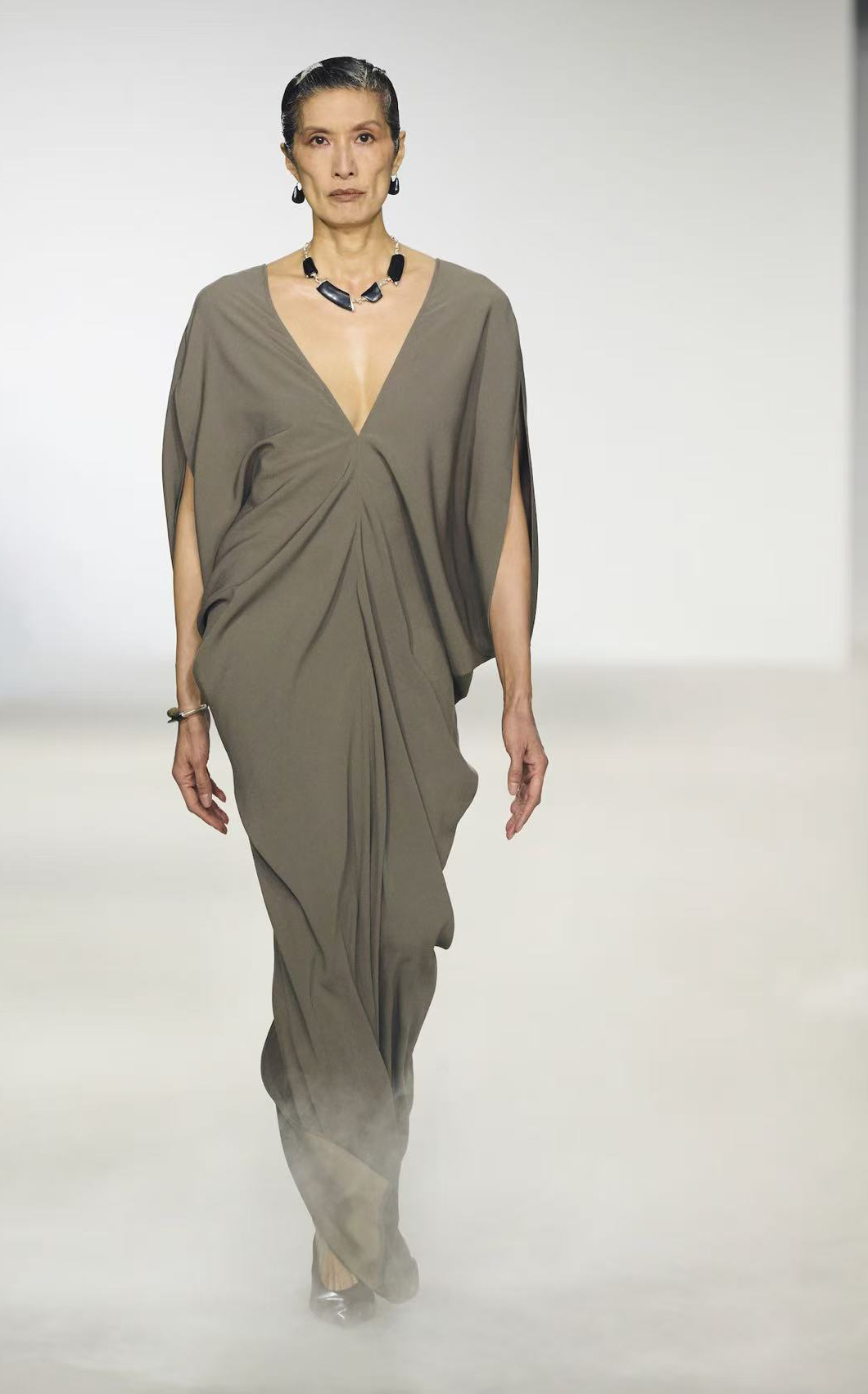
During the 79th Festival de Cannes, Suzi de Givenchy (Chinese name Huang Xianxi) joined a forum organized by The One International Women's Film Festival on narratives by Asian women in cinema. Around her were directors, writers and journalists. Suzi, however, was a fashion model.
At first, she wondered why she had been invited.
"I'm not an actress. I'm not really from that field," she recalled. But as the discussion unfolded, she began to understand what she brought to the conversation. "I think I represented the spectator — the person who goes to the cinema, the person who loves films."
For Suzi, finding herself in an unfamiliar room was nothing new. Her life has been shaped by unexpected turns.
Born in Hong Kong, Suzi moved to New York with her single mother at the age of 4. As the eldest child, she began taking part-time jobs at 14 to help support the family. At 20, she traveled to Paris to celebrate her birthday, where she met a nephew of the French designer Hubert de Givenchy. The two married, raised three sons and settled in the French countryside.
For decades, Suzi's world revolved around her children, her husband and their life together. Then, in 2016, her husband died suddenly of a heart attack.
Writing became one way through her grief. She began keeping a journal, a practice she later described as therapeutic, saying it helped her process the loss and put it into perspective.
Three years later, her life took another unexpected turn. At a gathering, a casting director noticed her and encouraged her to pursue modeling professionally.
She was 52.
In an industry long defined by youth, Suzi stood out precisely because she did not fit the conventional mold. Her wrinkles, high cheekbones, freckles and gray hair were not hidden — they became part of her visual identity. She went on to work with fashion houses including Balenciaga, Lemaire and Off-White, and appeared on the cover of Vogue.
The sudden visibility made her biography easy to package as an inspirational transformation. But Suzi is wary of that framing.
"At times, my story can be perceived like a fairy tale, like a movie story," she said. But she believes many lives contain remarkable turns. What makes a story seem extraordinary is often not the life itself, but the attention it receives.
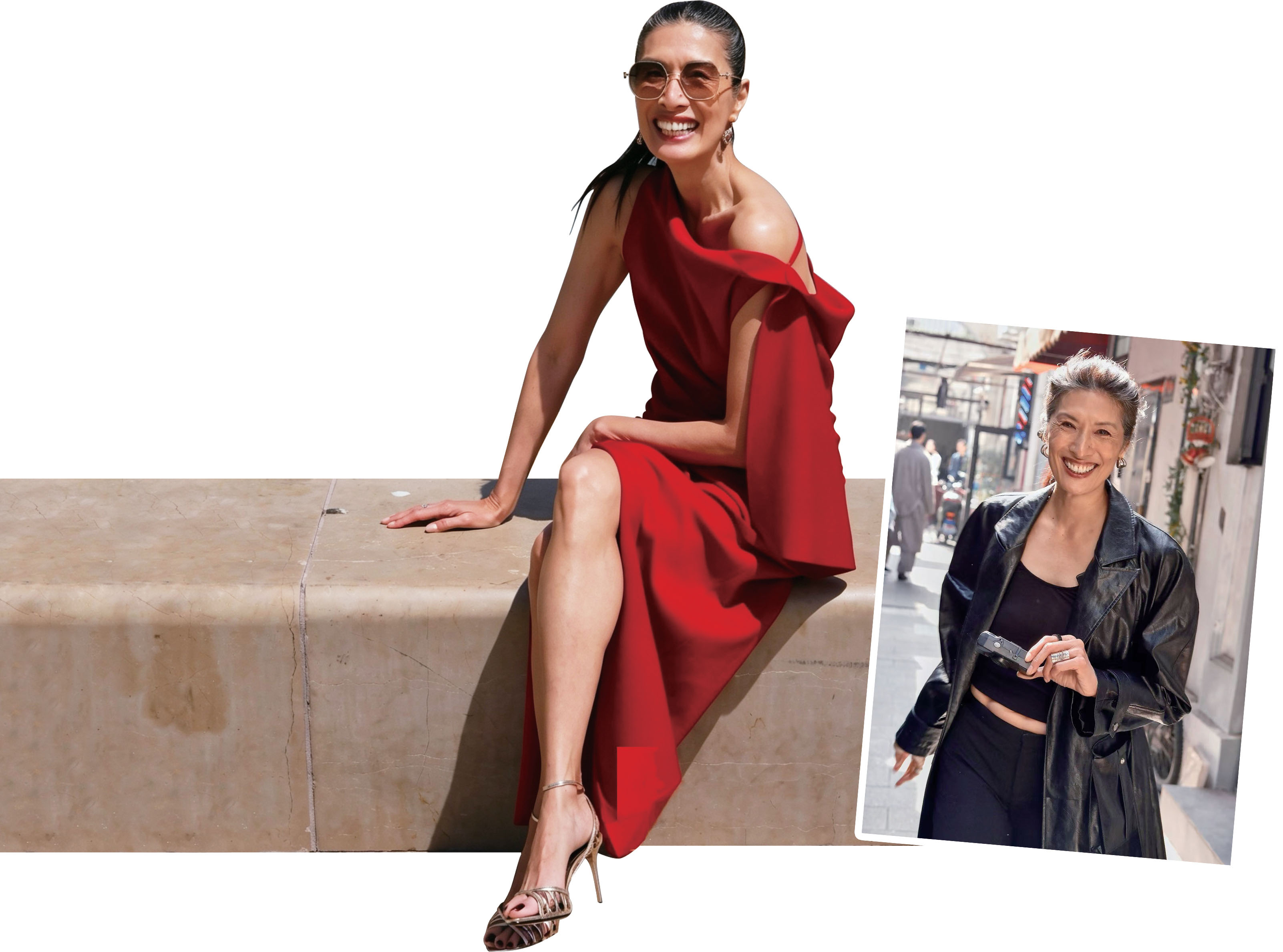
That may be why the film forum felt less like a detour than another extension of her story. Rather than seeing herself as someone deliberately crossing industries, Suzi says she simply follows her curiosity wherever it leads.
"My life has been about getting outside of a box," she said.
More important, perhaps, is how she approaches what comes next: with humility.
She assumes others may have studied longer and know more, so she listens, asks questions and tries to set aside her preconceptions. Rather than needing to arrive as an expert, she is comfortable starting from a place of not knowing.
"I always try to go into a space as a student," she said.
This willingness to begin again has shaped a life trajectory that runs against the fear that every important choice must be made early — and may also help explain her appeal to younger followers.
Yet her advice to them is grounded in practical realities rather than simply telling them to "follow your passion".
"Everyone has to pay their bills. Everyone has to eat," she said. Instead of waiting for a single, perfect calling, she suggests finding something they are good at and enjoy, then building their skills in it — even if it cannot immediately become a career.
"Things are meant to happen when they're supposed to happen," she added.
Owning her place
Suzi's years across Hong Kong, New York and France have also shaped how she thinks about identity. For much of her life, she tried to work out where she belonged. Over time, she realized the search was not about finding a country or a place to call home.
"What I was looking for was myself," she said. "I feel most at peace with myself."
That answer may resonate with young people facing anxieties about identity, appearance and age, but Suzi does not pretend that self-acceptance, once found, comes effortlessly or lasts forever. Some days are less peaceful than others. Her message to her 20-year-old self — and to young women now — is simple: trust yourself, ask questions, be kinder to yourself and surround yourself with people who appreciate you.
That self-acceptance matters especially in an industry built around appearance. Even as an established older model, Suzi describes holding her ground as a continuing battle: asserting that she has a place and deserves it.
Her next chapter may return to the medium that helped her through grief: writing. She has taken a workshop and is interested in exploring this further, drawn to the introspective nature it offers.
"Writing is a very interesting process because you do learn a lot about yourself," she said.
At Cannes, Suzi arrived as neither a filmmaker nor an industry expert. She came as a model, reader, cinema lover, mother, widow, grandmother and a woman who remains curious about what might come next.
That may be the clearest thread running through her life. Beginning again, for Suzi, is not about erasing what came before or pretending age does not matter. It is about refusing to see age as the end of possibility — and being willing to enter the next unfamiliar room as a student.
Contact the writers at guiqian@i21st.cn
