

A childhood legacy becomes a new business as one biochemistry graduate works to reshape Miao embroidery, Yang Feiyue reports.
Tang Feiyang grew up watching his grandmother and mother embroider.
Every afternoon in Taijiang county, deep in the mountains of southwestern Guizhou province, the women in his family would sit where the sunlight fell best, drawing threads through soapberries to stiffen them before stitching intricate patterns onto cloth.
"We didn't pay much attention to it," Tang recalls.
"It was just something they did — like cooking or washing clothes."
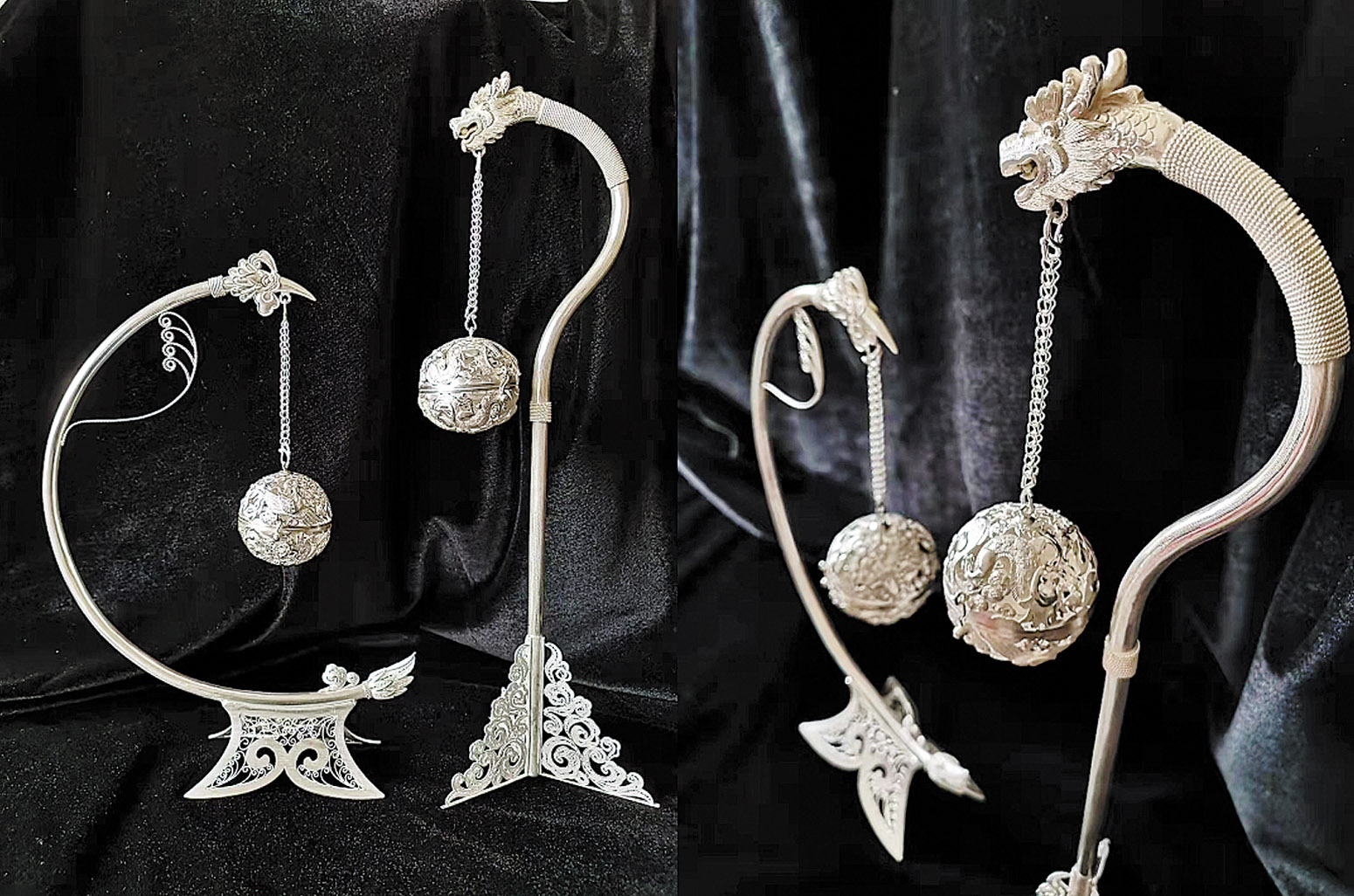
As a child, he never thought of embroidery as art, heritage or business. During festivals, when women appeared in elaborate silver headdresses and densely embroidered garments, he and the other children were more interested in snacks and fireworks than needlework.
After graduating in 2012 with a degree in biochemistry, Tang worked briefly in a lab in Shenzhen in South China's Guangdong province, before moving into sales. A year later, he returned to Guizhou and opened an art gallery.
He noticed that decorative paintings that sold cheaply in Shenzhen could find a ready market in his home province. Soon, he expanded into Taijiang's old county center, where small workshops producing embroidery and silver ornaments lined the streets.
ALSO READ: Breathing new life into brushwork
Something he had once overlooked suddenly looked different.
"After traveling to other cities, I suddenly realized that our local people still make and wear clothing like this, keeping such elaborate traditions in daily life," he says.
The feeling deepened during the annual Sisters' Meal Festival, one of the Miao ethnic group's biggest celebrations. Every spring, tourists carrying cameras poured into Taijiang to photograph the embroidered costumes and silver ornaments.
Watching the crowds, Tang began to sense the market potential behind the tradition.
"I've always been sensitive to business opportunities. I thought maybe this could become something larger," he says.
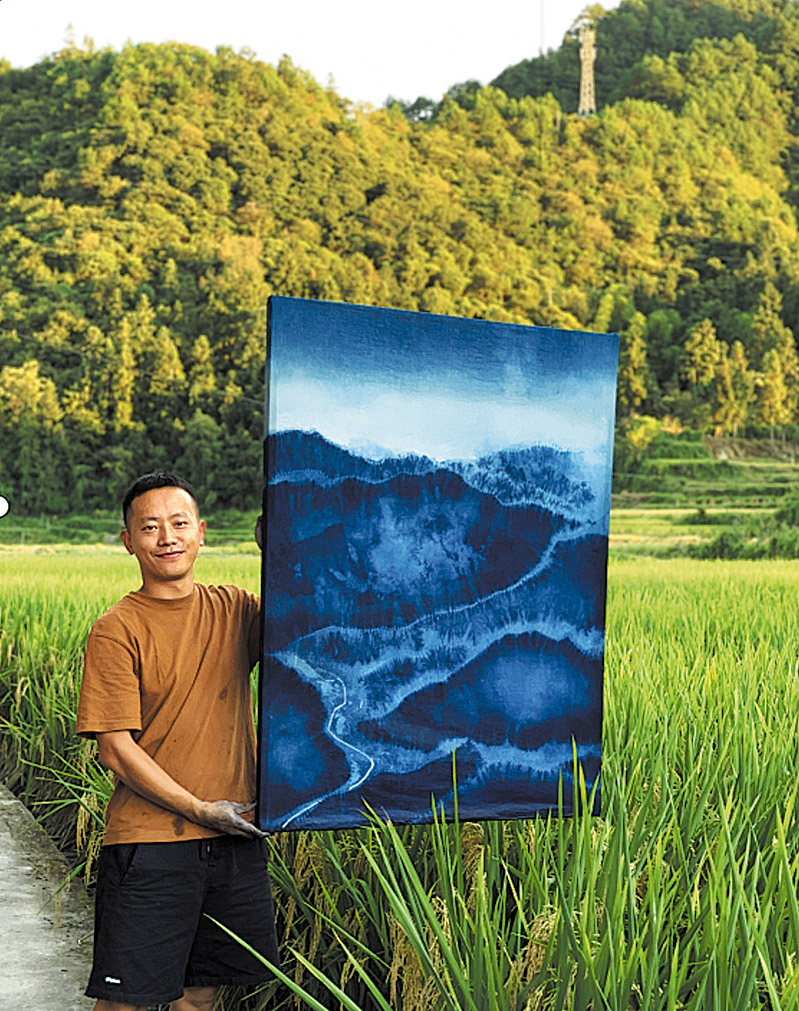
In 2015, Tang founded a company focused on Miao embroidery and plant-dyeing techniques. But he was never interested in simply reproducing traditional crafts for souvenir markets. He wanted to redesign the system behind them.
A different inheritor
Tang does not weave cloth or stitch patterns himself. What he builds instead are processes, from dyeing systems and workshop networks to product pipelines and market connections.
"The older generation's logic was that our ancestors did it this way, so you must do it the same way," he says. "I thought if something is inconvenient, can we make it more efficient? Can we use different tools or materials?"
He attributes this mindset to his scientific training.
When Tang first began studying traditional plant dyeing, he found that most recipes relied heavily on intuition. Older artisans described proportions in vague terms like "a little ash", "a handful of leaves", and "boil it longer".
Tang approached the process like a lab problem. He brought measuring cups, temperature controls and pH test paper, aiming to convert inherited experience into repeatable formulas.
His biggest breakthrough came after a hotel placed an order for uniformly dyed bedsheets.
Traditional methods could not meet the demand. A single worker could dye only around 14 to 20 meters of cloth a day, and achieving even color across large pieces was difficult.
Tang started redesigning the process itself.
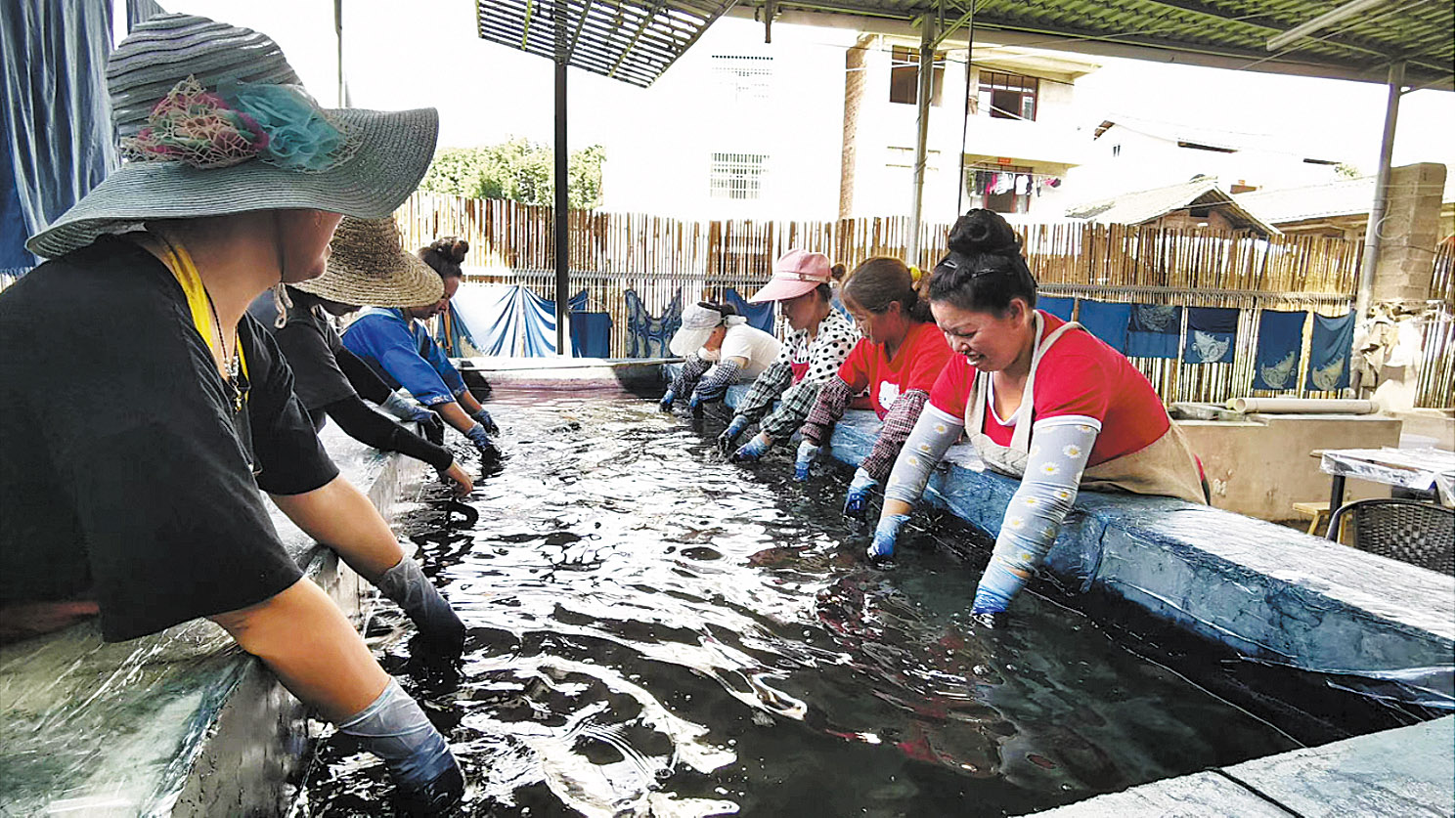
He built a deep dye vat equipped with an electric hoist. Fabric could be fully submerged, then lifted into the air to oxidize evenly before being lowered back into the vat.
"The key to dyeing isn't soaking. It's oxidation," he explains.
In traditional indigo dyeing, fabric turns blue only after exposure to oxygen. Tang found that repeatedly lifting cloth from the vat produced richer, more even color than leaving it submerged for long periods.
"If you soak fabric all day, the color still won't be as deep as lifting it out every 15 minutes," he says.
Later, he developed a folding rack roughly one meter wide that could hold up to 200 meters of fabric at a time. Combined with the hoist system, it allowed a single worker to dye several hundred meters a day.
Compared with traditional methods, Tang estimates the system improved efficiency roughly 40-fold.
For rural workshops trying to survive in modern markets, the changes have breathed new life into an old craft.
Black dye reinvented
Tang's scientific instincts also pushed him to experiment in ways traditional dyers rarely attempted.
One example is black dye.
Historically, artisans produced black fabric by boiling cloth with tea leaves and iron in iron pots. The chemical reaction darkened the fabric, but results varied from batch to batch.
Tang wanted greater control.
"Tea itself creates a yellow-brown color," he explains. "But when it reacts with iron, it turns black. So I started asking if we could shape that reaction more precisely."
He eventually transformed the dye mixture into a paste.
Using molds and stencils, his team could apply the black dye in controlled patterns, creating geometric designs, Chinese characters and calligraphy-like motifs directly on fabric.
Tang's decade-long effort sits within a quiet wave of innovation that is transforming how Miao embroidery is made, sold, and sustained.
Taijiang has established more than 10 intangible cultural heritage workshops that combine traditional crafts with the explosive popularity of the "Village Basketball Association", or "Village BA" basketball tournament. The grassroots sporting event has drawn more than 8 million visitors and generated billions of online views in recent years, according to local authorities. The county's embroidery program has trained over 1,000 women in advanced stitching techniques, established 16 industry bases, and helped more than 5,000 embroiderers find stable employment.
Tang's central concern is economic survival.
Between 2016 and 2018, he identified women across Taijiang and neighboring counties who could organize local embroiderers. Around them, he established small "Miao embroidery workshops" operating from homes or village public spaces.
"We trained one organizer in each village," Tang explains. "We provided patterns and orders, and they coordinated production locally."
At its peak, the network included more than 15 workshops and over 400 embroiderers.
For many rural women, especially during slow farming seasons, the workshops provided supplementary income ranging from 500 to 800 yuan ($74-118) a month.
"What we built was a bridge between villages and the market," Tang says. "Heritage commercialization is hard. But we've stayed with it for 10 years."
Choosing what lasts
Over the years, Tang's team experimented with almost every product category imaginable, from leather bags and notebooks to shirts, suitcases and scarves.
One of his most unusual creations was a tracksuit made from liangbu, a traditional Miao fabric treated with egg whites and repeatedly beaten with wooden mallets until it develops a glossy, water-resistant surface.
Historically, villagers used the fabric for outdoor work in the mountains.
Tang saw something else in it.
"It felt cyberpunk to me," he says.
So he transformed the material into modern sportswear.
The tracksuit attracted national media attention and was eventually acquired by the China National Silk Museum in Hangzhou, East China's Zhejiang province.
Tang has been constantly calculating what can realistically survive modern markets and what cannot.
While keeping close tabs on the latest market developments, Tang has grounded his priorities in production systems.
Recently, his company has narrowed its focus to products with more stable long-term demand: canvas bags, towels, accessories and household goods.
Tang has also partnered with Tencent to digitize his Miao embroidery patterns and license them for use in digital products, from game skins to virtual merchandise. Under the arrangement, the patterns are documented, tagged with their cultural stories, and made available for Tencent to use in exchange for a share of the revenue.
"Their approach emphasizes the stories behind the patterns," Tang says. "That adds value beyond the visual."
Chen Ping, director of the Academy of Cultural Heritage and Creativity of Jinan University and chair of the International Organization of Folk Art, has a name for what Tang is doing.
"Don't turn 'protection' into 'preservation in formaldehyde'," Chen says.
ALSO READ: Experience Guizhou's gifts
"Preservation in formaldehyde means keeping crafts in a glass case — beautiful but lifeless. True protection acknowledges that tradition itself has the capacity for self-renewal."
For Chen, the ultimate test of heritage revival is not how many artifacts are stored in museums. It is how many products find their way into ordinary homes.
Recently, Tang's products have also made their way to Yuxun, a cultural retail space in downtown Beijing, sitting on shelves beside other heritage-inspired brands.
Sales remain modest. But for Tang, visibility itself matters.
"A decade ago, very few people in Beijing were buying Miao embroidery accessories," he says. "Now at least people stop and look."
Contact the writer at yangfeiyue@chinadaily.com.cn
