

An environmental campaign staged in Cangyuan county, Yunnan
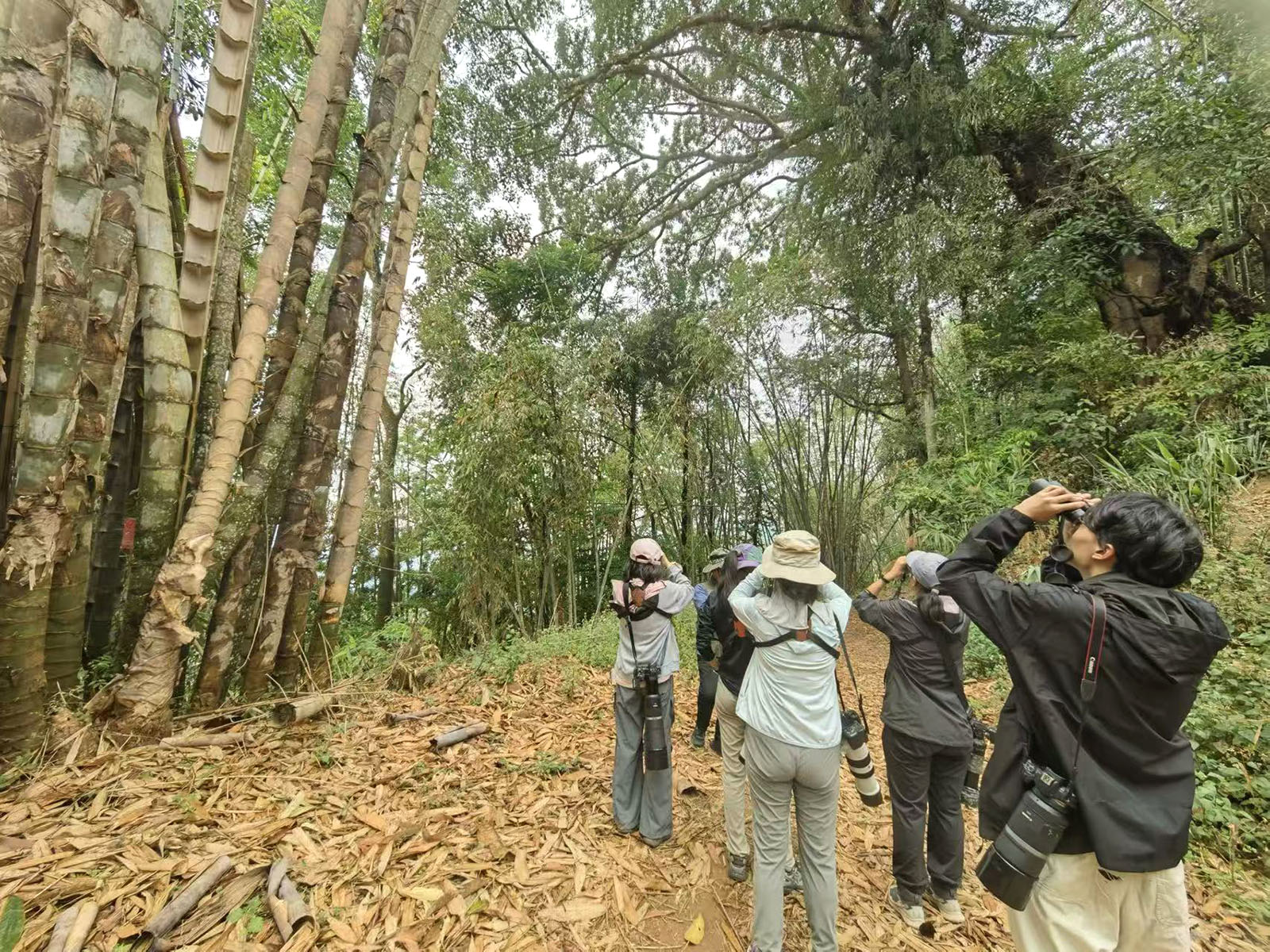
Shortly after this year's Spring Festival, Zhong Jia, a founder of the Rosefinch Center, a national nonprofit dedicated to promoting birdwatching and conservation, met with Qin Jianchun, deputy director of the Nangunhe National Nature Reserve in Cangyuan Va autonomous county, Yunnan province.
Qin was planning a rapid bird survey around the reserve, which is known to be the sanctuary of an isolated population of about 20 Asian elephants, and sought the expertise of the Rosefinch Center. He explained to Zhong and her colleague, Wei Ming, that the reserve envisioned more than just a bird survey, and hoped the center could help launch a broader environmental campaign.
READ MORE: 'Citizen scientists' map China's avian landscape
"The communities surrounding our reserve are primarily Va people, who have practiced hunting and gathering for centuries," Qin said. "This tradition has led to a few human-wildlife conflicts in recent years. Along with the growth of our Asian elephant population, more conflicts are foreseeable. So we want to introduce birdwatching as a viable alternative, one that can improve the local economy while protecting our natural resources."
In response, Zhong suggested adding "socially engaged" to the survey's title, emphasizing its community focus.
"Our surveyors aren't professional ornithologists; they're volunteers from diverse backgrounds," Zhong said. "By carefully designing our survey routes, we aim to reach and engage as many local communities and individuals as possible. So it might help raise the locals' environmental awareness."
Interacting with locals
Seeking local expertise, the organizers turned to Zhao Haixuan for assistance. A dedicated birding enthusiast from Lincang city, he possesses extensive knowledge of Cangyuan, a county bordering Myanmar and under Lincang's administration.
Zhao has frequented the area to observe its diverse avian life, having explored numerous locations in and around the Nangunhe reserve. He told China Daily the reserve encompasses roughly one-third of Cangyuan, covering over 508 square kilometers. "The reserve, straddling Cangyuan and Gengma counties in Lincang, boasts numerous birding sites," he said. "Exploring the majority of these locations could easily consume a month."
Given the constraints of the 60-hour survey, Zhao's local knowledge proved invaluable. He assisted in designing 15 survey routes, covering elevations ranging from 500 to nearly 2,100 meters above sea level, primarily within the county's two townships.
As the more than 50 survey participants arrived in Cangyuan, they were asked to attend the opening ceremony of the Gongxiang (Elephant Worship) Festival of the Va ethnic group before formally launching their survey.
The annual festival, held in Banlao township, showcases the community's commitment to protecting the local ecosystem and fostering harmonious coexistence between humans and nature, including the flagship species in the area, Asian elephants.
"Following the annual Water-Splashing Festival, the event is a key part of the local New Year celebration," Wei said.
"Because many residents who have migrated to cities for work return home for the festival, it presents an ideal opportunity to promote initiatives within the local communities."
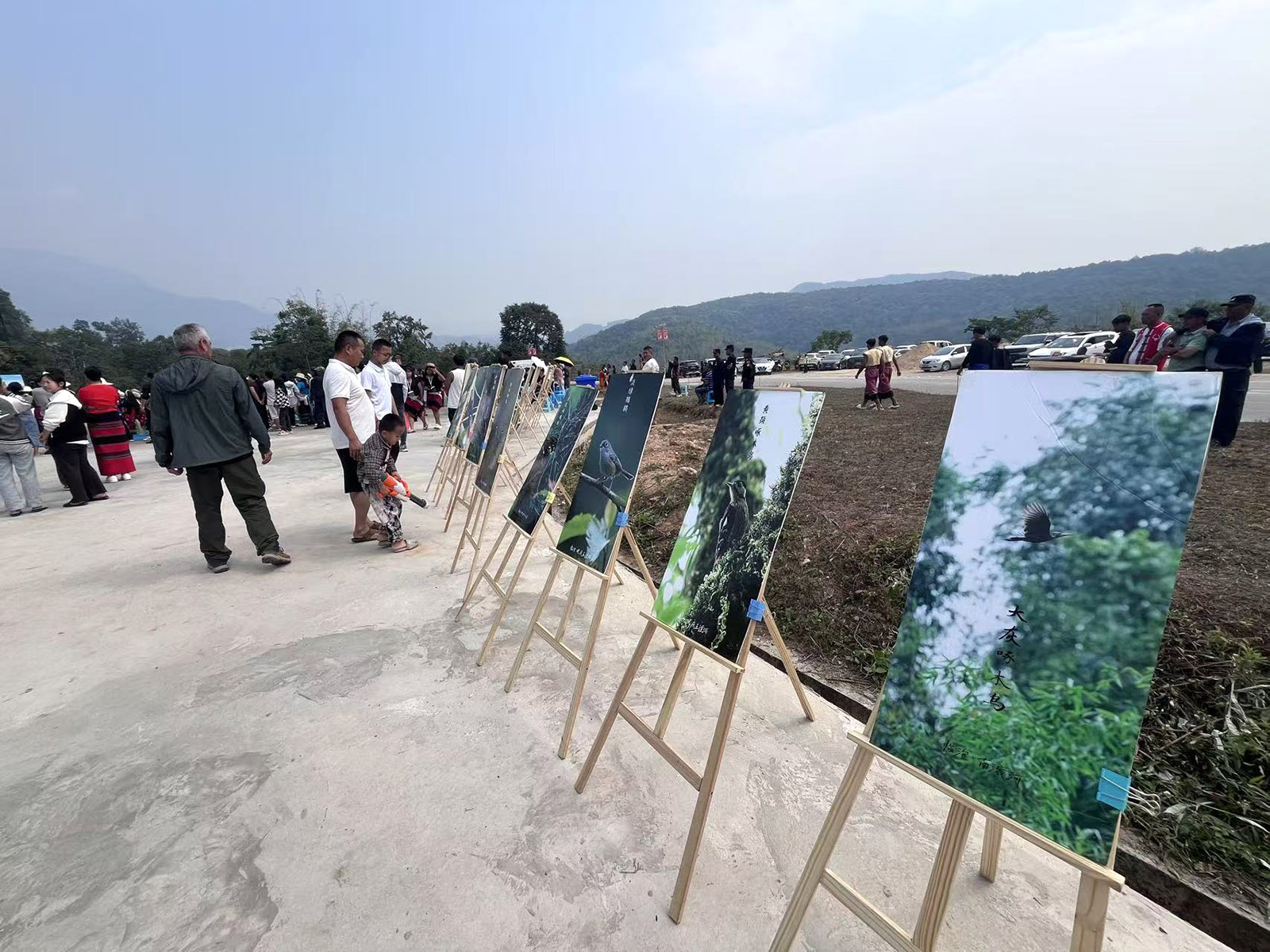
The survey team departed the county seat early on April 18, bound for Banlao. After birding along the two-hour journey, they arrived at open ground nestled among rolling tropical mountains. They found themselves immersed in a vibrant scene: local Va people, adorned in their finest holiday attire, were gathered to watch an award ceremony for the township soccer championship, followed by a series of lively song and dance performances by local students and young villagers.
Meanwhile, the Rosefinch Center hosted a bird photo exhibition on the square. Some members of the survey team demonstrated the use of binoculars, allowing the locals to experience bird-watching firsthand.
"This kind of interaction between the surveyors and the community is exactly what we were hoping for," Qin said.
Impressive records
The surveyors enjoyed the birding opportunities around Nangunhe.
"The survey routes traverse varied elevations, offering stunning scenery and diverse habitats teeming with birdlife," remarked Han Jing, from Beijing. "Birding here is challenging, yet full of surprises and immensely rewarding."
The survey concluded on the evening of April 20. Following the fieldwork, a panel of expert reviewers, led by Han Lianxian, a retired ornithologist from the Southwest Forestry University in Kunming, Yunnan, meticulously examined and verified all recorded data submitted by the teams.
The survey yielded a total of 307 bird species identified, adding seven new species to the Lincang list and 37 to the Nangunhe reserve list. "This survey has significantly expanded and refined our understanding of the reserve's birdlife, providing crucial data for future conservation efforts and scientific research," Qin said. "We can now confidently say our reserve boasts a total of 451 bird species."
ALSO READ: Bird survey takes wing to produce comprehensive record
During a comprehensive critique of the survey process, professor Han stressed the importance of strengthening foundational knowledge in bird classification. He urged participants to thoroughly familiarize themselves with A Checklist on the Classification and Distribution of the Birds of China (Fourth Edition), paying particular attention to order, family, species classification and nomenclature updates to ensure the scientific accuracy of their records.
Han further emphasized the need to hone basic bird identification skills. "Dedicate more time to studying field guides and distribution maps to improve your identification abilities," he said during the closing ceremony.
"Furthermore, research the geographical distribution of birds within the survey area beforehand to minimize errors when identifying rare species based solely on prior experience."
He also cautioned against overreliance on artificial intelligence identification tools.
"While bird identification software can be a valuable aid, do not depend on it blindly," Han said."Persist in independent observation and identification to fully experience the true joy of birding."
Contact the writers at chenliang@chinadaily.com.cn
