

Through trial and error, Kang Xiaolong continues to learn alongside his humanoid students. The goal is to make robots interact better with people.
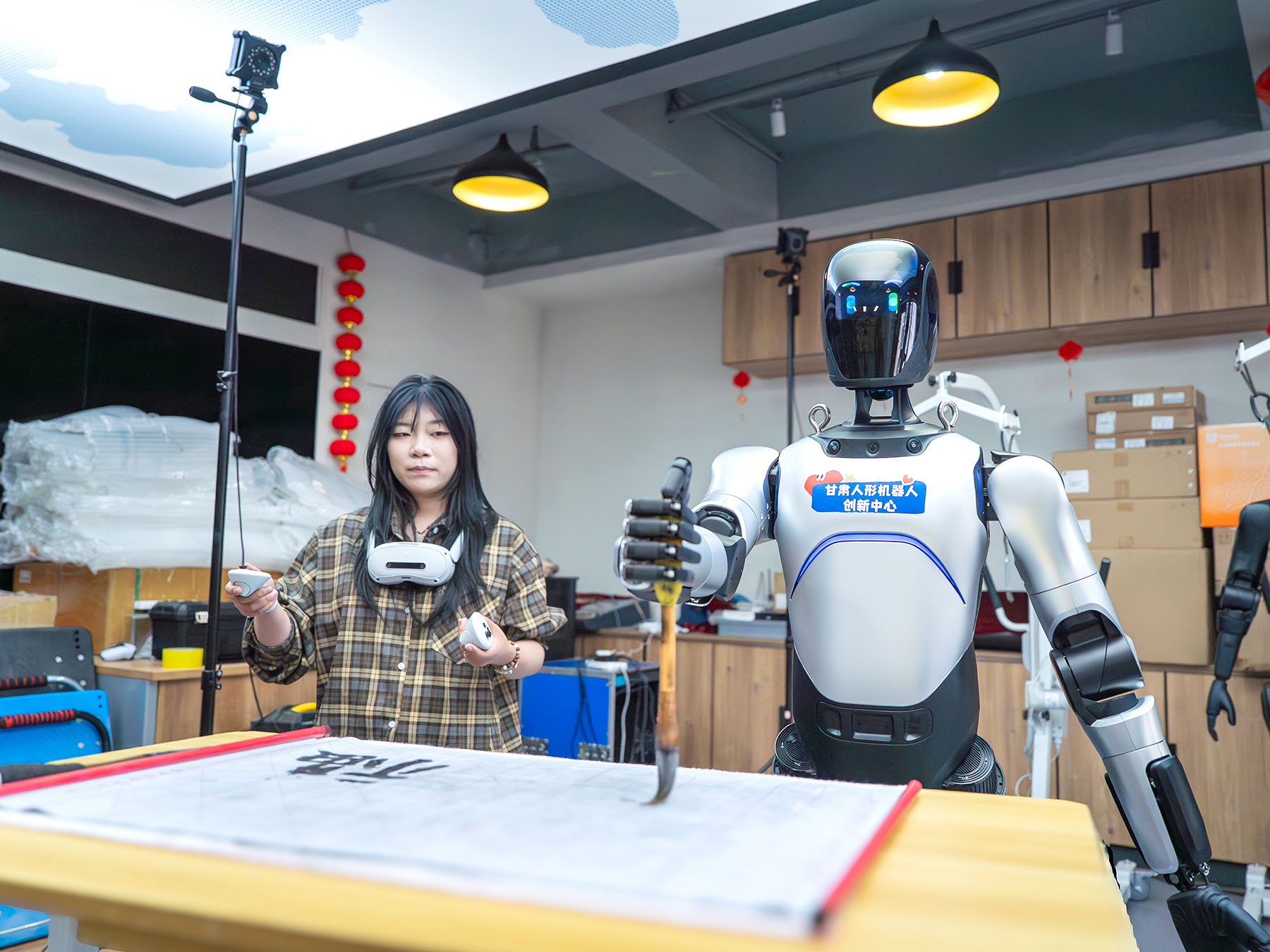
In a lab in Lanzhou, Gansu province, a humanoid robot sways slightly as engineers gather around One engineer demonstrates a movement, arms stretching out and body leaning in, while another tweaks parameters on a computer. The motion is recorded, translated into code and sent back to the robot, which attempts to follow the command.
This is part of a typical day for Kang Xiaolong, a robot trainer at the Gansu Humanoid Robot Innovation Center, one of the largest robot training hubs in Northwest China.
"It's a bit like teaching kindergarten kids," Kang said. "You guide them step by step, again and again, until they get it."
READ MORE: Amid tech boom, young Chinese gear up for new job opportunities
Kang, 31, graduated from Lanzhou University in 2020 with a degree in electronic information science and technology. He began his career in control software, working across fields such as new energy and industrial sensors, before joining the innovation center in 2025. The work was stable, but something was missing.
"Robotics is something new and exciting," he said. "It brings together mechanical engineering, electronics, software and AI models. You must continue to learn, but that's also what makes it interesting."
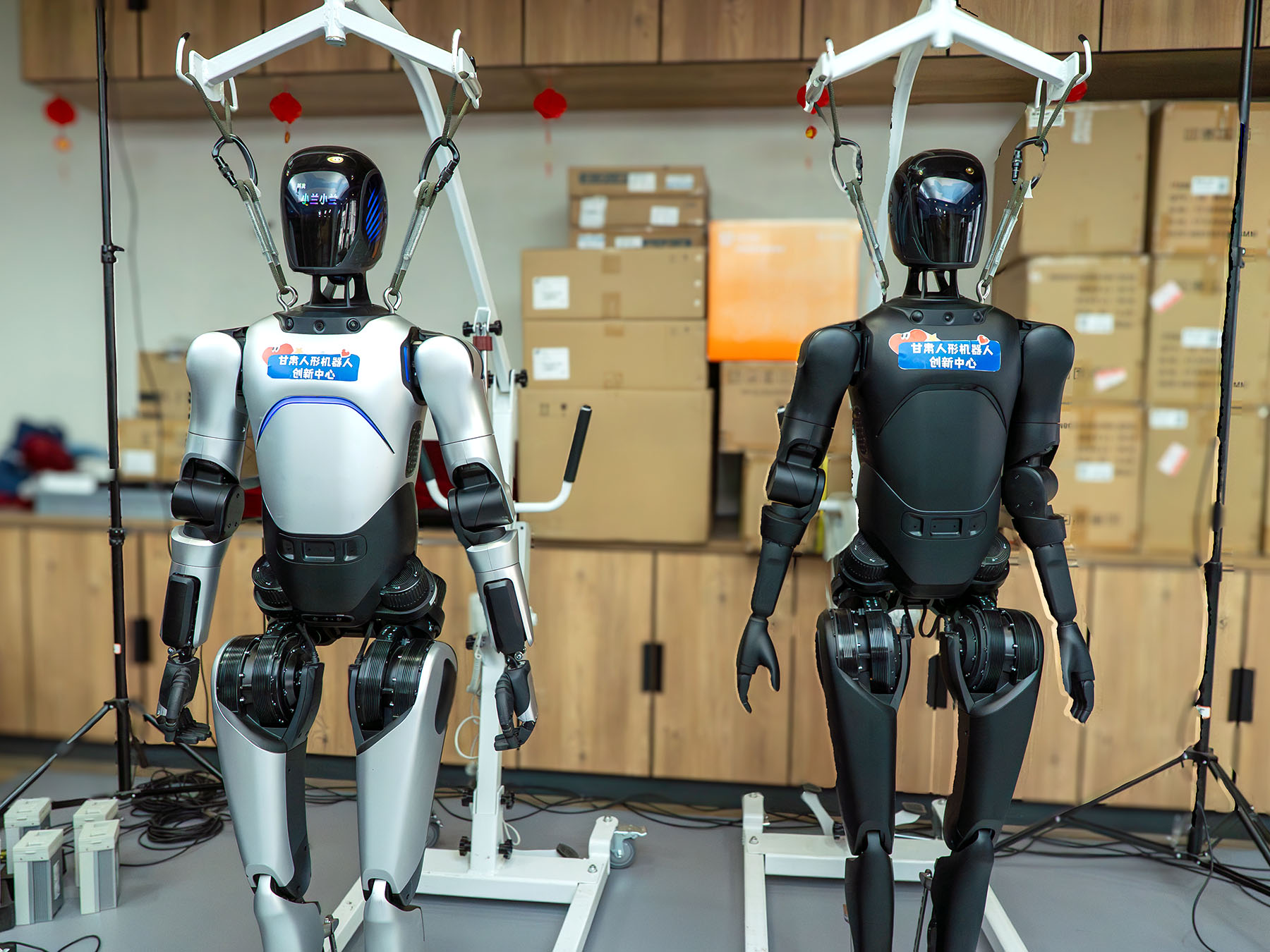
Training a robot is far from straightforward. A single movement can take days to refine, he said. The process often begins with a human demonstration, sometimes captured through motion-tracking systems. Engineers then retarget the motion — adapting it to the robot's proportions and mechanical limits — before testing it in a simulation.
Only after that do they try it on a real machine.
"We always have someone standing behind the robot, ready to support it," Kang explained. "If something goes wrong, we immediately hit an emergency stop. These machines are expensive and fragile."
Even with precautions, unpredictability is part of the job. "If you're not careful, you might get bumped or kicked," he said with a laugh. "So far, I've been lucky."
Kang's team focused on training robots for performances and public events — one of the more mature applications in the industry. But beyond commercial use, he is particularly interested in something more ambitious: blending robotics with local culture.
"In Northwest China, we have rich cultural resources," he said."We want robots to reflect that — maybe through regional dances or dialects."
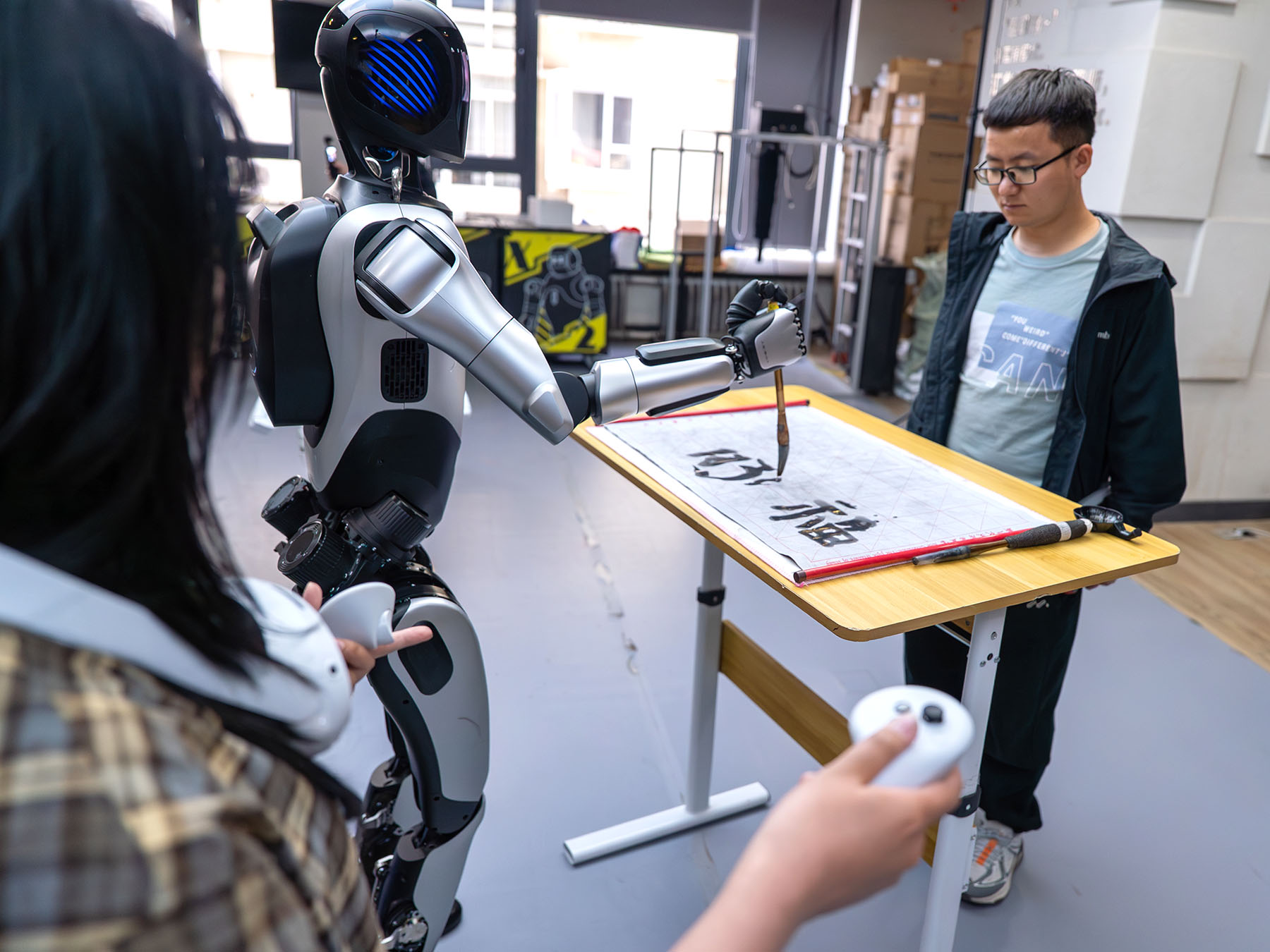
The idea of teaching robots to dance is appealing, but also technically demanding. Some styles, such as the iconic "playing the pipa behind the back" pose from Dunhuang murals, require fluidity and subtle expressions that robots still struggle to replicate. Limitations in joint flexibility and hardware design make certain movements difficult, if not impossible.
"Even if a robot can copy the shape of a movement, capturing the 'spirit' is much harder," Kang said.
Despite these challenges, progress is visible. Compared with earlier models, today's humanoid robots are more agile and expressive. In some cases, Kang said, their movements can look almost human."It's not about replacing humans," he explained. "It's about teaching machines to work with us better."
ALSO READ: Robots outrun humans at Beijing half marathon
Beyond the lab, the robots are increasingly meeting the public. Children are often the most enthusiastic, drawn to the machines' interactions.
Some even pose surprisingly profound questions.
"We've had kids ask if robots can solve the Goldbach conjecture," Kang said, "or even how a robot defines the unknown if it knows everything."
For him, the most rewarding moments come when the robots that he has trained step into the real world and are met with genuine delight. "It does feel like watching something you've taught being appreciated," he added. "It's not just about the technology, but how it can bring people happiness."
Contact the writers at huyumeng@chinadaily.com.cn
