

Predawn observations take stock of nation's urban bird populations

Editor's note: As protection of the planet's flora, fauna and resources becomes increasingly important, China Daily is publishing a series of stories to illustrate the country's commitment to safeguarding the natural world.
Long before the first commuters hit the streets of Beijing or the sun touches the skyscrapers of Shenzhen, small teams of three to four people move silently through the outskirts of Chinese cities. They carry binoculars, notebooks and a singular, rigorous mission. They aren't just hobbyists; they are the front line of a scientific effort to answer a deceptively simple question: Is China getting louder or quieter?
"While it appears that our urban environments are improving and more birds are inhabiting our cities, we lack the scientific evidence to support any definitive conclusions," said Que Pinjia, an ornithologist with the Chengdu Research Base of Giant Panda Breeding in Sichuan province.
READ MORE: Restored wetlands welcome new flocks of migratory birds
Que is one of the two primary initiators of the China Breeding Bird Survey, a standardized monitoring network launched in 2025. For decades, bird surveys in China were largely confined to isolated nature reserves or conducted by small, academic teams. The CBBS changes the "topography" of research by turning the city itself — and its residents — into a living laboratory. Alongside co-initiator Professor Liu Yang of Sun Yat-sen University's School of Life Sciences, Que is attempting to build a "geologic pulse" of the nation's avian health from the ground up.
Midnight method
To a casual observer, bird-watching is a leisurely pursuit. For a CBBS volunteer, it is a disciplined exercise in stewardship. Teams must select a sample area on the map, typically spanning 10 square kilometers. Once chosen, they visit the site to familiarize themselves with 10 to 15 specific sample spots scattered throughout, planning a precise transect route.
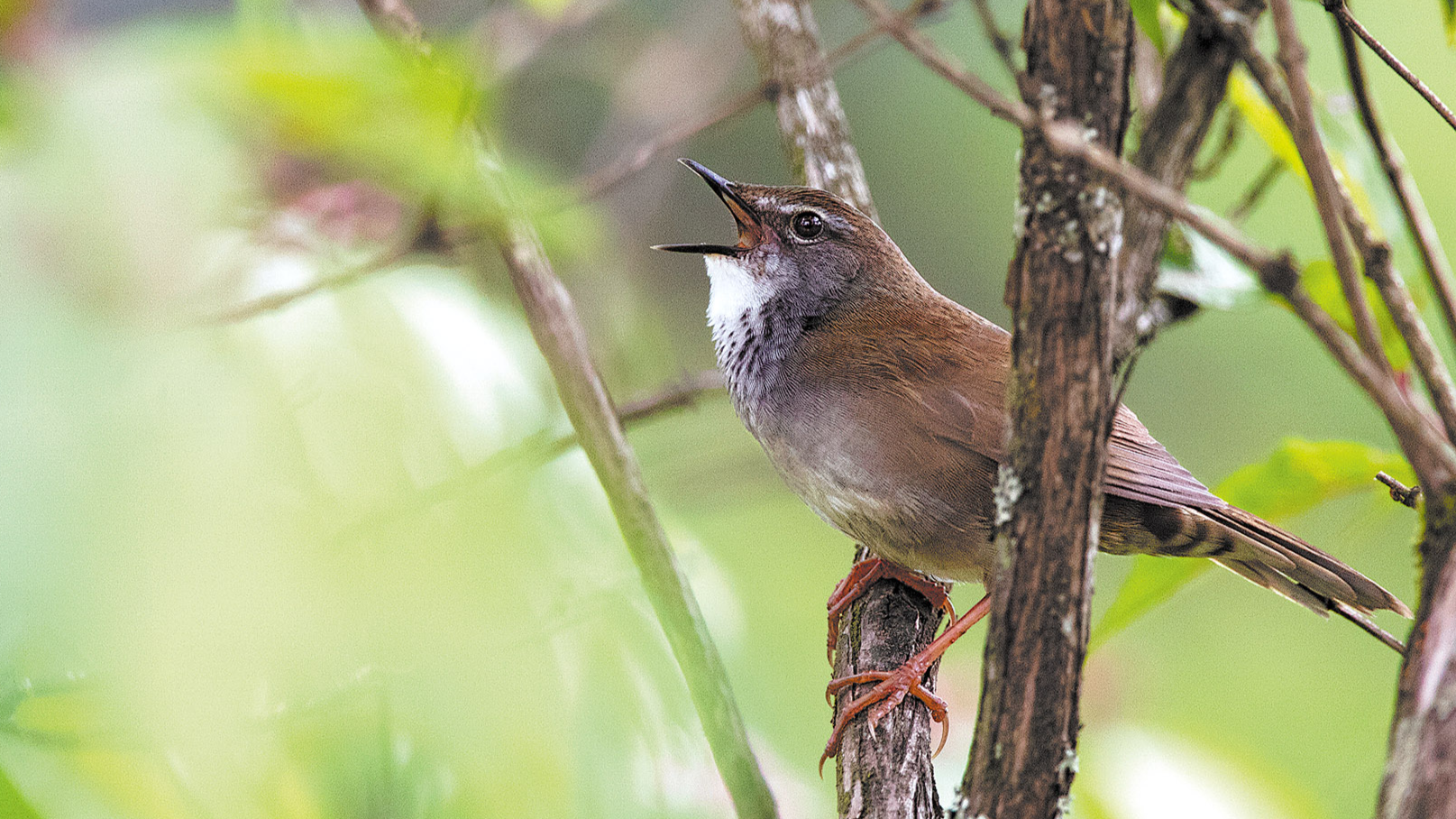
On the day of the survey, the team must rise in the early hours of the morning, reaching the survey area under the cover of darkness. The survey must start at the first sample spot half an hour before sunrise. At each spot, surveyors stand for precisely 12 minutes. Because visual identification is difficult in the predawn gray, they rely on "ear-birding" — identifying species purely by their calls and songs. While one team member documents observations, the others maintain a constant count.
After completing the 12-minute survey, the team moves to the next sample spot and repeats the process.
Typically, it takes a team about four hours to complete a survey in a sample area. Since the survey focuses on breeding birds in cities and many survey areas are urban, most of the birds observed are common species.
"Our survey method must be followed rigorously, making the process quite tedious," Que said. "Our volunteers need to be dedicated, patient and experienced bird-watchers, as there is little chance of discovering a new species during our surveys," said Que. "Since the project's launch last year, our volunteers were mainly 'using love to generate electricity' (meaning working for little or no reward). So our biggest concern has been whether we can sustain enough volunteers to continue the survey for the long term, and how we can build up a robust team of volunteers to expand our project to more cities in the future."
In search of solutions to these challenges, the Chengdu Research Base of Giant Panda Breeding and Sun Yat-sen University held the CBBS 2025 annual meeting in Chengdu on March 14-15.
The gathering brought together 100 participants, including 40 joining online, to summarize the first year of data and chart a course for the next decade.
'Sandcastle' data
At the meeting, Que explained that the impetus for the survey stemmed from a straightforward yet challenging question frequently posed to Chinese ornithologists: "Are wild bird populations increasing or decreasing?"
"To be honest, I can't answer that,"Que said.
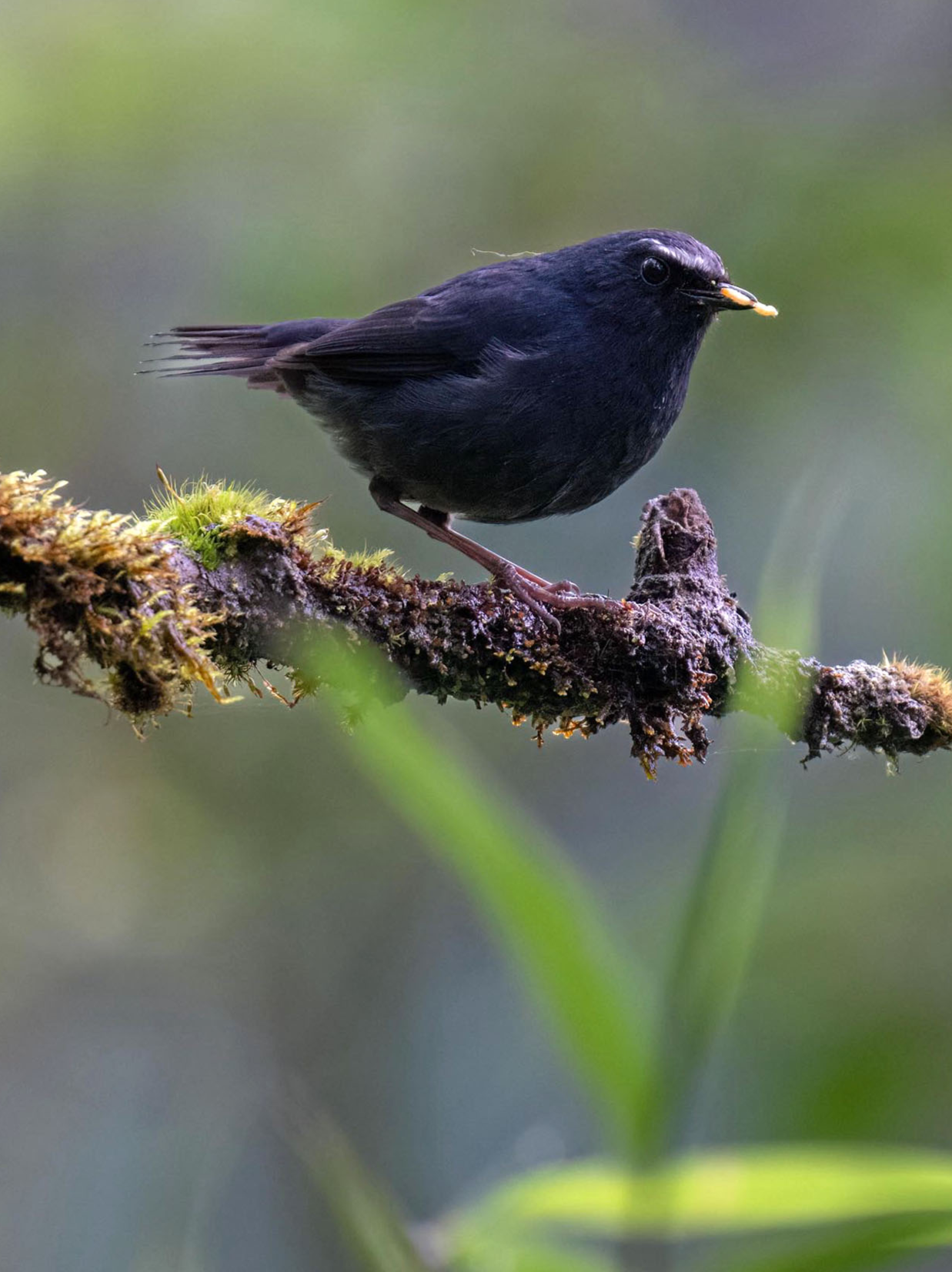
He highlighted the plight of certain species, such as the rufous-headed robin and the streaked reed warbler, which have become exceedingly rare, with few sightings in recent years. A century ago, a birdwatcher from the United States documented over 100 bird species in Chengdu, noting that certain species, such as the collared crow, were once common. "Today, the bird in Chengdu is a rarity," Que said. "This underscores the need for comprehensive, long-term monitoring rather than simplistic answers."
Que said that the US initiated its breeding bird surveys 60 years ago. "Although we are starting later, we might only need 10 to 20 years to effectively address this question," Que said. "This endeavor is akin to building a sandcastle, where small, consistent contributions gradually create a robust monitoring network."
The project comes at a pivotal time for China's environmental governance. As the nation moves toward the goals of the 15th Five-Year Plan (2026-30), biodiversity indicators are becoming as essential as economic data. In a video message to the meeting, Professor Zhang Zhengwang from Beijing Normal University highlighted that traditional surveys were typically conducted in specific reserves, lacking a national scope.
"I am thrilled to see this project finally launched," said Zhang, a leading figure in Chinese ornithology. "I believe this initiative will unveil the true status of breeding birds across the country. This task cannot be accomplished by scientists alone; it requires the involvement of 'citizen scientists'."
The three-year project (2025–27) is currently funded by the Zhilan Foundation, a nonprofit dedicated to biodiversity conservation. With a grant of 1 million yuan ($145,000), it stands as the foundation's largest project to date. Despite additional funding from the panda base and Sun Yat-sen University, resources remain tight for a truly nationwide survey. Consequently, the project launched in only six pilot cities in 2025: Beijing, Shanghai, Chengdu, Zhengzhou, Guangzhou and Shenzhen.
From social media to field
Liu from Sun Yat-sen University said that the CBBS project team has focused on designing a standardized survey method, training volunteers, promoting the initiative through social media, and creating a platform to enable expansion to more cities in the future.
"In one city, a local bird-watching society might lead the survey; in another, a university research team; or it could be part of a broader survey by the local forestry department," Liu said. "By involving diverse partners, we can potentially reduce funding needs and expand the survey to more cities after three years, ultimately developing it into a long-term project."
During the meeting, Liang Zhijian, a doctoral student from Liu's research team, introduced the breeding bird surveys conducted in other countries. More than 30 countries are conducting similar surveys, he said. In the US, after 60 years of development, more than 5,000 transect lines have been mapped out, covering the whole country, and each year the survey involves more than 2,500 volunteers. In Europe, the Pan-European Common Bird Monitoring Scheme recently updated its indices based on 168 species across 30 countries.
He said that CBBS data can support the update of China's Red List of Birds, help explore the reasons for changes in bird populations, assess the effectiveness of conservation actions and serve as an indicator of environmental health, "helping to keep common birds common".
Ren Xichan, one of Liu's doctoral students, introduced the project team's efforts to promote the CBBS through social media platforms. Over 100 articles about the survey have been published on these platforms, reaching tens of thousands of readers. Additionally, more than 3,000 people have viewed the project's online lectures, he said.
"When I met our volunteers, I realized that many of them lacked general knowledge about birdwatching and bird identification," Liu said. "This drove us to launch open lectures aimed not only at training our volunteers but also at supporting a broader community of bird enthusiasts."
On the afternoon of March 14, a round-table discussion session was held, with participants sharing their insights on organizing volunteers and enhancing their sense of engagement.
Lei Jinyu, the secretary-general of the Rosefinch Center, a nonprofit dedicated to promoting bird-watching and conservation, emphasized the importance of volunteer training and suggested establishing a certification system for volunteer surveyors. "Due to a shortage of qualified volunteers, the survey should focus on urban areas," he said. "It should prioritize the continuity of the survey over its coverage."
ALSO READ: 'Oriental gem' makes wetland comeback
Shen You, president of the Chengdu Bird Watching Society and a participant in last year's CBBS, observed that the survey volunteers derived more satisfaction from being part of a citizen science initiative than from the bird-watching itself. "We should consider organizing more gatherings for volunteers to foster a sense of community and camaraderie," he said.
Professor Liu announced that Foshan and Dongguan in Guangdong will join the survey this year, and that several other cities, such as Xiamen in Fujian province, Wuhan in Hubei province and Qingdao in Shandong province, are considering participating as well.
He Fenqi, a renowned ornithologist, remarked at the meeting, "If the survey continues for 10 years, I believe the results will be truly remarkable."
Contact the writers at chenliang@chinadaily.com.cn
