

Work at Shanghai airport terminal a model for major 'smart' construction, experts say
At the vast construction site of Shanghai Pudong International Airport's Terminal 3, a group of construction robots is racing against the clock alongside human workers — the ideal choice for carrying out repetitive, efficiency-intensive, and hazardous tasks.
As the first large-scale application of robots in civil aviation infrastructure construction, their deployment highlights the significance of intelligent manufacturing and smart construction in building mega projects, experts said.
Consisting of 37 types of robots with different functions, they are under the command of a unified "brain" known as a construction robot cluster management system. It is the first application of such a system in a large aviation project.
READ MORE: Shenzhen airport launches China's first robot food delivery service
Tang Shengling, senior consulting adviser at the Shanghai Artificial Intelligence Research Institute's digital economy research center, said the use of robots in the airport construction project is a significant step.
"The landmark application of clustered and systematic construction robots will provide a replicable Chinese model for the development of intelligent robotics and the smart upgrading of the construction industry," Tang said.
Efficiency improved
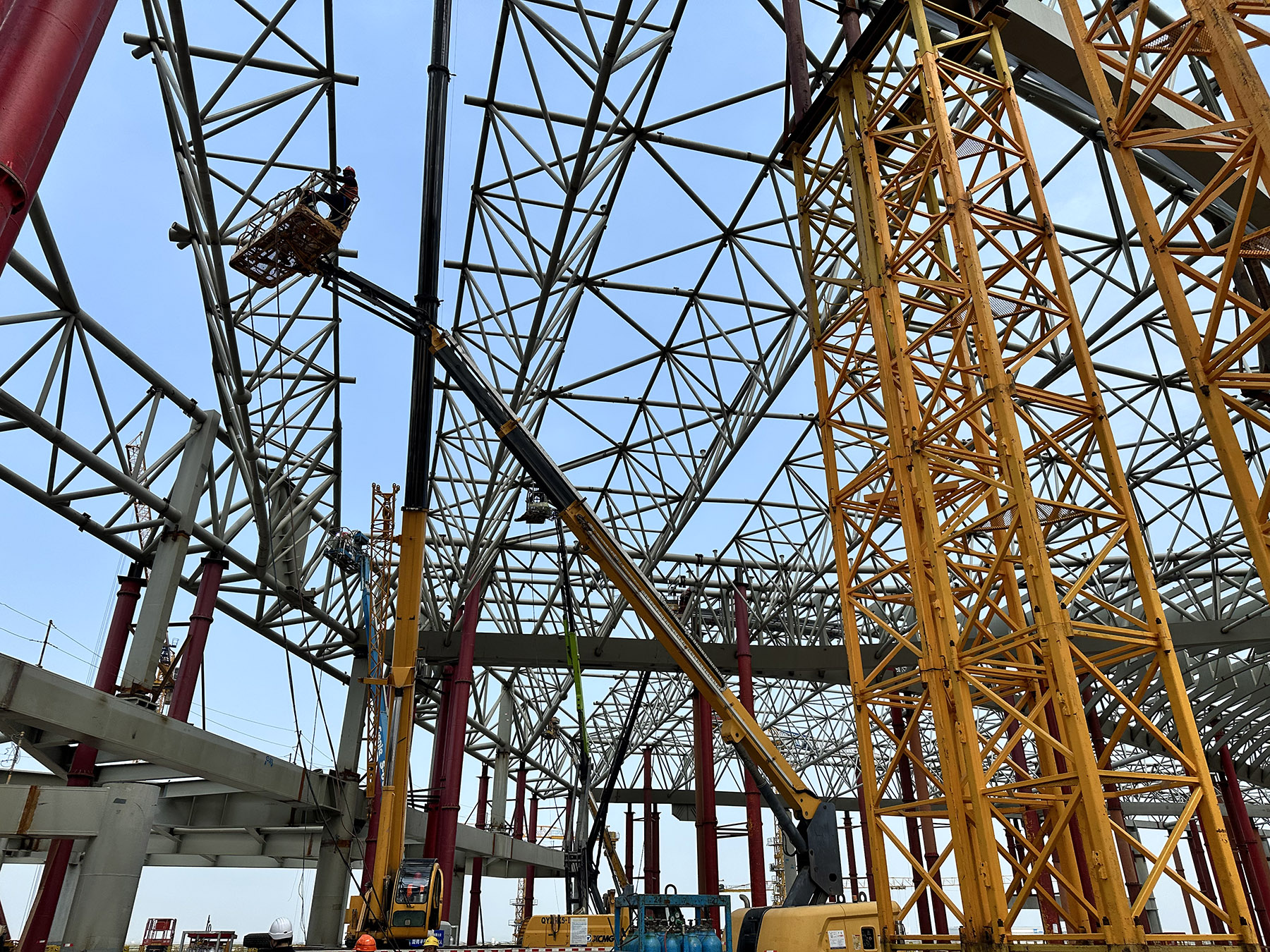
The terminal under construction covers nearly 1.5 million square meters, with a total floor area of about 1.96 million sq m, according to Zhang Yi, deputy director of the terminal engineering department of Shanghai Airport (Group)'s construction division.
"One of its most distinctive architectural features is the international terminal's bird-shaped roof. Together with 17 gigantic bird-shaped columns, it creates the impression of a bird soaring through the sky," Zhang said.
"The project is expected to be ready … in 2028, further supporting Shanghai's development into an international aviation hub," added Zhang.
Qin Yi, deputy general manager of Shanghai Construction Group's general contracting department, said the number of robots and the scale of their application in the project are unparalleled.
Qin, who is also the executive deputy head of the Shanghai Pudong International Airport's Terminal 3 project, said the robots would reduce construction time by 20 percent, and trim the on-site workforce by about 35 percent.
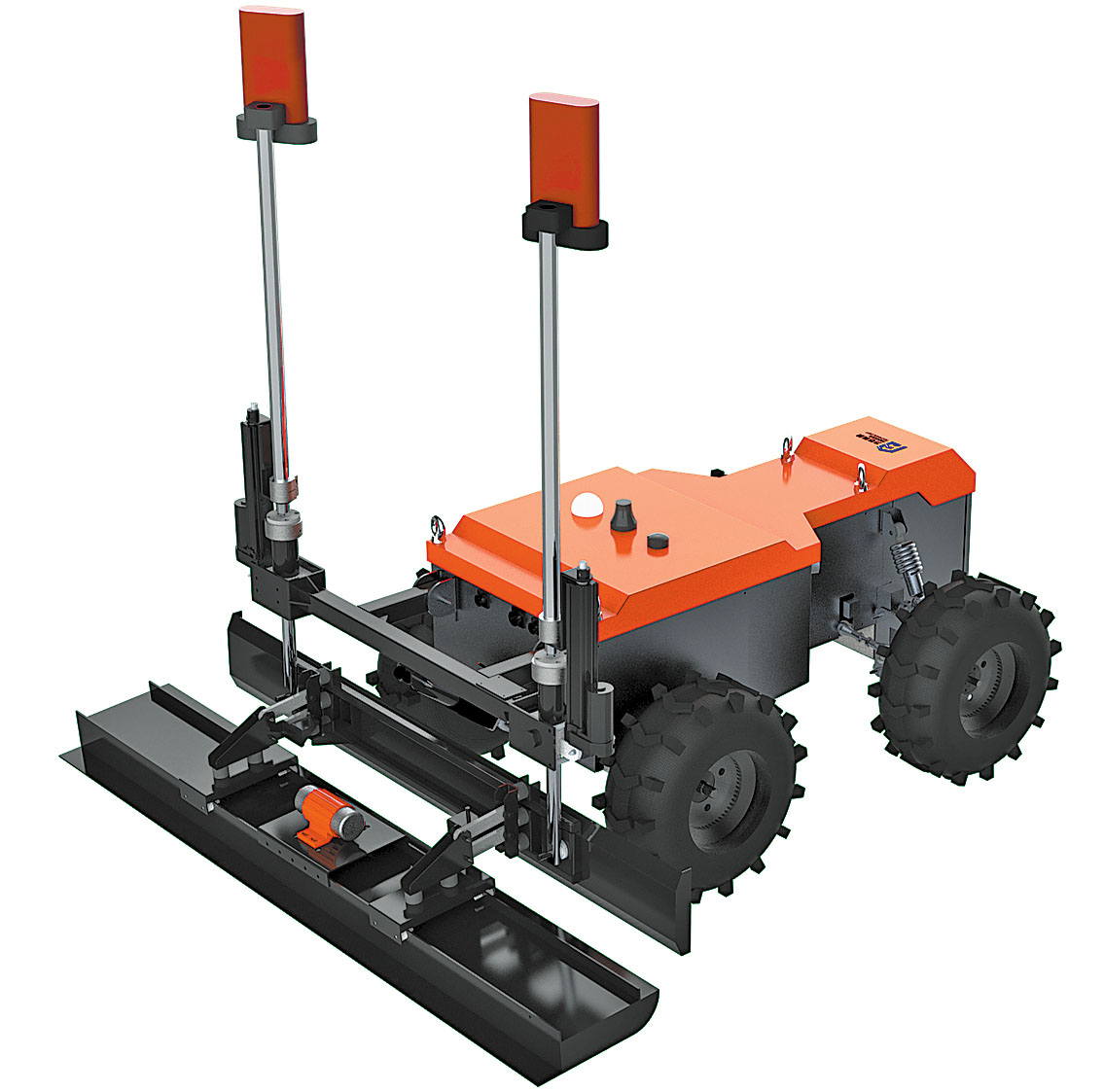
For instance, a crew of three robots is doing the concrete flooring works continuously and efficiently in carrying out tasks of leveling, surface finishing and polishing. The crew is expected to complete about 700,000 sq m of structural and architectural flooring work for the project.
The team consists of a four-wheel laser leveling robot, a crawler smoothing robot and a floor polishing robot, Qin said. The crew can process more than 1,000 sq m of flooring per day, and keep deviations in flatness to within a millimeter.
The use of robots has not only saved construction time but also significantly reduced reliance on specialized labor, further ensuring the stability and quality of the construction process. "The introduction of robots for the project has made the construction process more advanced and intelligent, therefore improving the overall project's quality and standard," Qin said.
When comparing manpower and robot performance, for example, robots can significantly improve first-pass welding qualification rates and overall welding quality, he said. The rework rate in traditional manual welding is typically close to 10 percent, but welding robots have virtually eliminated reworking.
Eradicating human risk
The use of construction robots demonstrates their application possibilities not only in airport infrastructure, but also in other industries, said Duanmu Haiying, director of the Shanghai Meta-Now Metaverse Industry Promotion Center.
"This extensive application of robots of multiple brands and multiple types of systems will enable end-to-end connectivity across the data chain, further optimizing costs," Duanmu said.
Cao Qixin, a professor specializing in robot research at Shanghai Jiao Tong University, said:"The construction industry involves highly complex workflows, and integrating multiple types of robots through an intelligent platform has significant importance."
Twenty-four robot models are currently being used in the terminal construction project. Based on their functions and applications, they are classified into three categories: on-site construction robots, construction management robots, and processing robots, Qin said.
Working in risky scenarios, they can perform highly difficult operations, eliminating the need for human workers to be directly exposed to hazardous environments such as high temperatures, toxic gases and flying sparks.
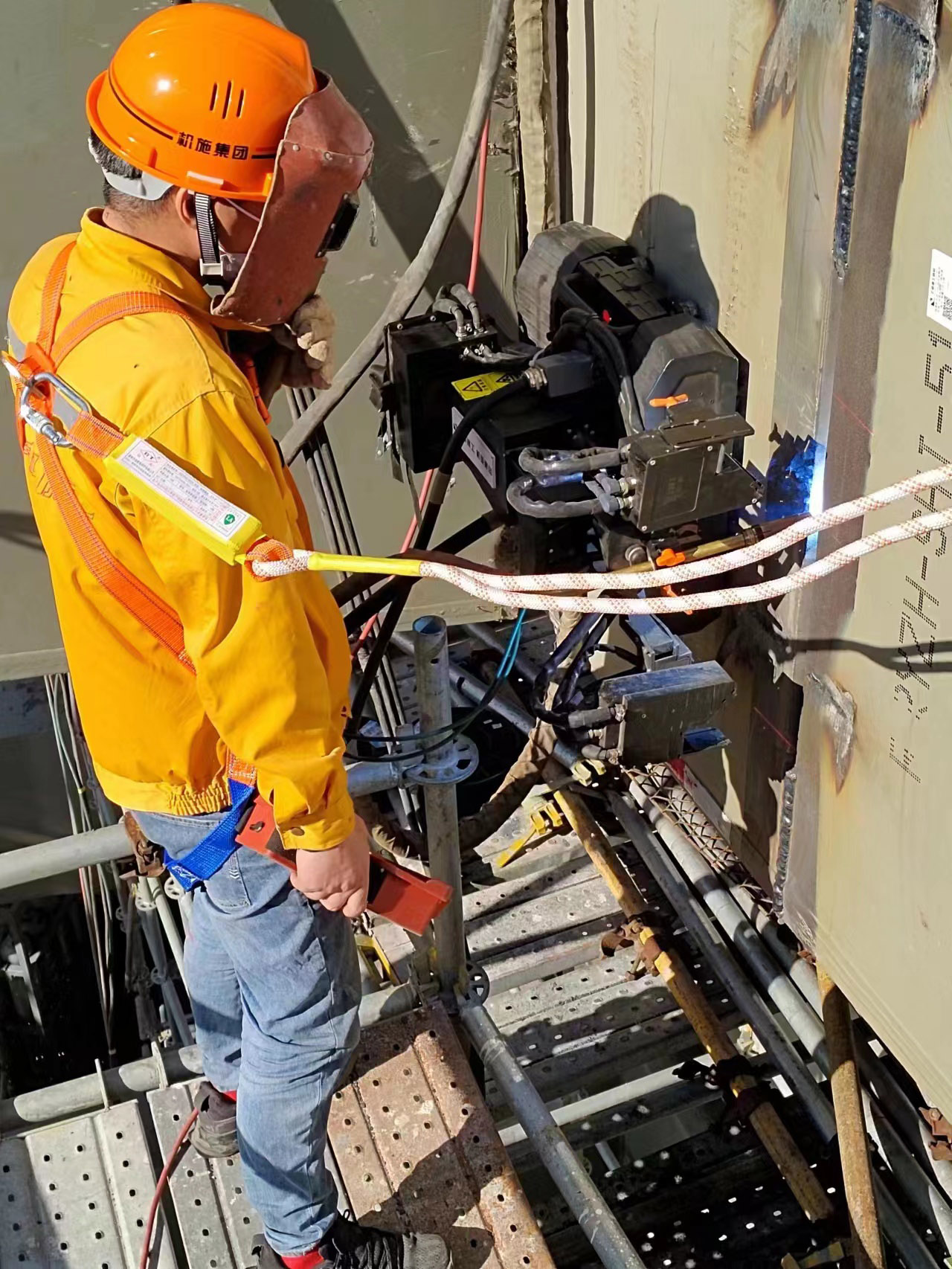
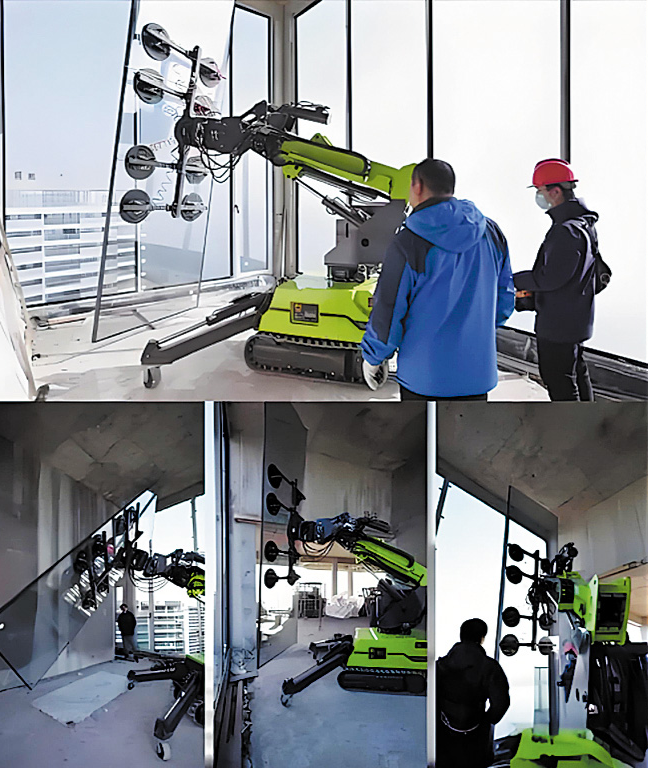
In complex areas such as the bird-shaped columns, elevated facade panels and skybridge truss structures, multiple welding robots can play important roles, Qin said. In traditional high-altitude operations, the aerial-work robots are capable of carrying out tasks such as coating surfaces and decoration, curtain wall water-spray testing, and cleaning maintenance.
"Civil aviation engineering has the highest requirements for safety and precision, so robots must undergo reliability verification in real-world scenarios," said Duanmu, adding the Shanghai project can serve as a model for the intelligent upgrading of infrastructure projects nationwide.
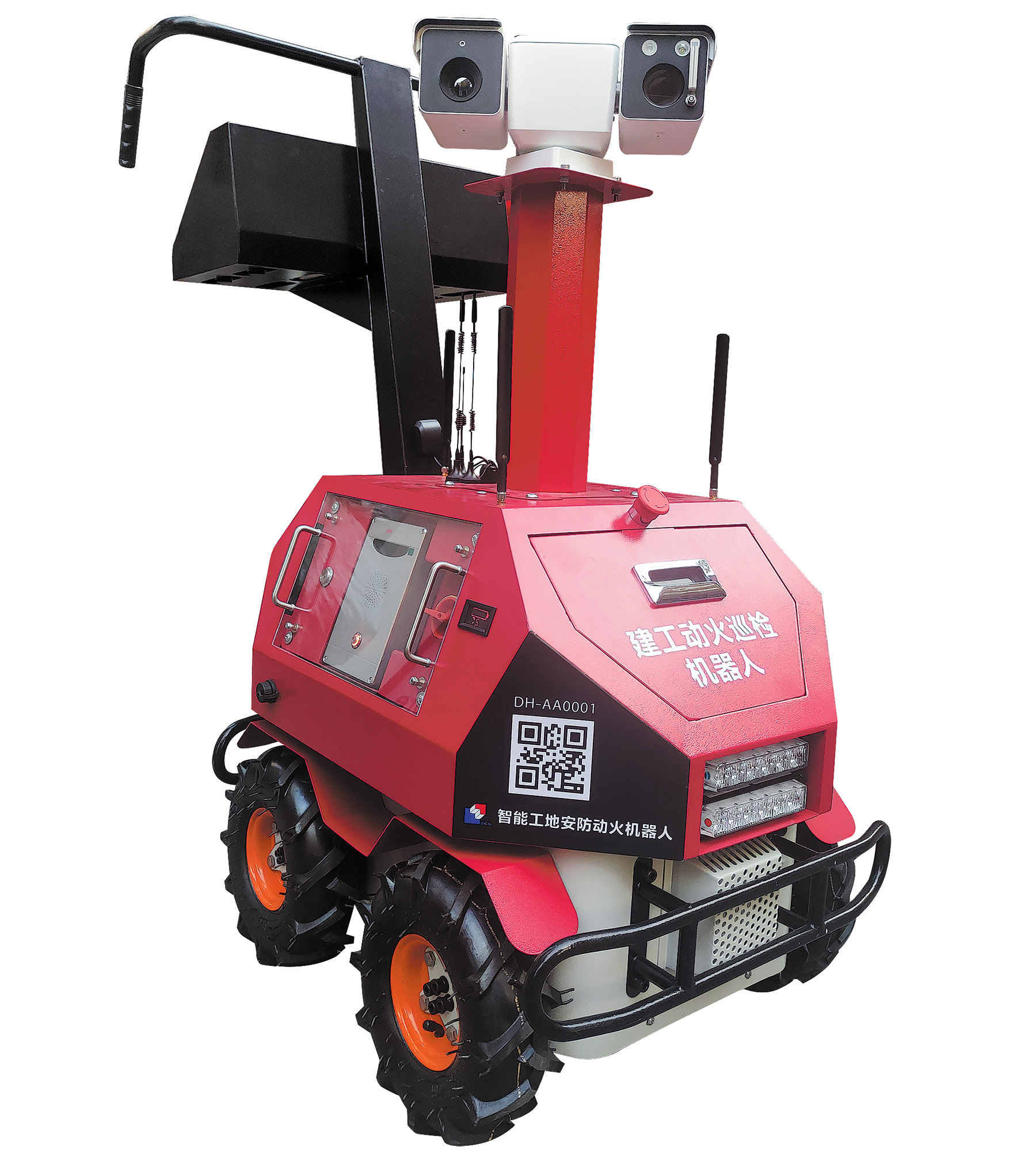
In highly repetitive tasks, robots are all-rounders capable of handling everything, including trivial chores. A security inspection robot, for example, has agile movement and can take panoramic images on a construction site, allowing management to view any alarming scenarios and on-site conditions in real time.
Another example is the cleaning robot, which can remove small stones and dust from construction floors via a fully automated operating system. The machine is capable of cleaning up to 500 sq m of floor area per hour.
As for underground work, the welding robots can reduce the workforce by 50 percent and improve efficiency by 30 percent.
"During the construction of Shanghai Pudong International Airport's Terminal 3, various robots were extensively used, particularly in floor leveling and steel structure welding," Qin said. "The use of robots also includes our on-site unmanned inspection management, as well as our backstage digital management matrix. The introduction of robots into the project has effectively transformed the construction process into advanced manufacturing and intelligent construction, and has improved the overall project's quality and standard," he added.
Setting high standards
Qin is proud that a large proportion of the robots being used on the project are made in China or have Chinese origins.
"The robots we are using can be categorized into three types. The first is robots that have been independently researched and developed by ourselves, such as molding robots and robots that weld wall foundations. The second is those we jointly developed with (domestic) robot manufacturers. And the third is those we directly purchased from the market, including some imported equipment," Qin said.
Shanghai is looking to transform and upgrade its advanced manufacturing over the coming three years. The use of robots in the terminal construction perfectly fits this agenda. The three-year action plan was unveiled by the municipal government early in January.
The plan has set ambitious goals, including nurturing 100 manufacturing enterprises, each with an annual output of above 1 billion yuan ($147 million), and raising the city's robot density to 600 robots per 10,000 employees by 2028. The measures are expected to consolidate and enhance the city's industrial chain and turn it into a global high-end manufacturing center.
Robot density, a key gauge of the adoption of automation in manufacturing, is the number of robots per 10,000 people in the manufacturing industry.
China has a robot density of 166 per 10,000 workers, ranking sixth in Asia and 22nd globally, according to a report from International Federation of Robotics.
South Korea tops the rankings at 1,220, followed by Singapore at 818. Shanghai's current density level of robots is 500 according to Xinhua News Agency. If it reaches the target of 600 by 2028, it would rank third behind South Korea and Singapore.
Transportation face-lift
The extensive deployment of robots at the terminal construction project offers three key insights, said Tang Shengling, senior consulting adviser at the Shanghai Artificial Intelligence Research Institute.
"First, it provides a reference model for large public infrastructure, offering practical experience for future major projects such as airports, rail transit and large-scale public buildings. Second, the clustered use of robots is reshaping the construction industry's long-standing reliance on labor-intensive methods. Finally, it will help drive the development of upstream and downstream technologies and the broader supporting ecosystem," Tang said.
When operational, Terminal 3 is expected to further enhance Shanghai's position as an international aviation hub, and be a crucial cog in the Yangtze River Delta's regional airport cluster.
Zhang, the deputy director of the terminal engineering department, said after completion, the new terminal will add 50 million additional annual passenger trips to the airport's capacity. Shanghai Pudong International Airport received nearly 85 million passenger trips by the end of 2025, exceeding its design capacity of 80 million, he said.
"Terminal 3 is designed to enable Shanghai Pudong International Airport to handle 130 million passenger trips annually by 2035," Zhang said.
Shanghai's two airports recorded more than 135 million passenger trips, and handled 4.5 million metric tons of cargo-and-mail throughput in 2025, according to the Shanghai Airport (Group).
ALSO READ: Robotics success on track
The airport group currently operates an aviation network that reaches a record 302 destinations in 54 countries.
The construction of Terminal 3, which is the core project of the airport's phase-four expansion, officially started on November 20, 2024, and is scheduled for completion in 2028.
Shanghai is undergoing a face-lift of its transportation system with other major facilities scheduled for completion in the coming two years, including the Shanghai East Railway Station.
With the main structure more than 50 percent complete, the project is expected to finish construction by the end of this year, and is slated to begin operations by July 2027, according to local officials.
Baoshan Railway Station, the starting point of the 2,000-kilometer, 500-billion-yuan high-speed railway linking Shanghai and Sichuan province, is also set to be put into operation next July. The new station is expected to improve the integration of the Yangtze River Economic Belt.
Contact the writers at wang_ying@chinadaily.com.cn
