

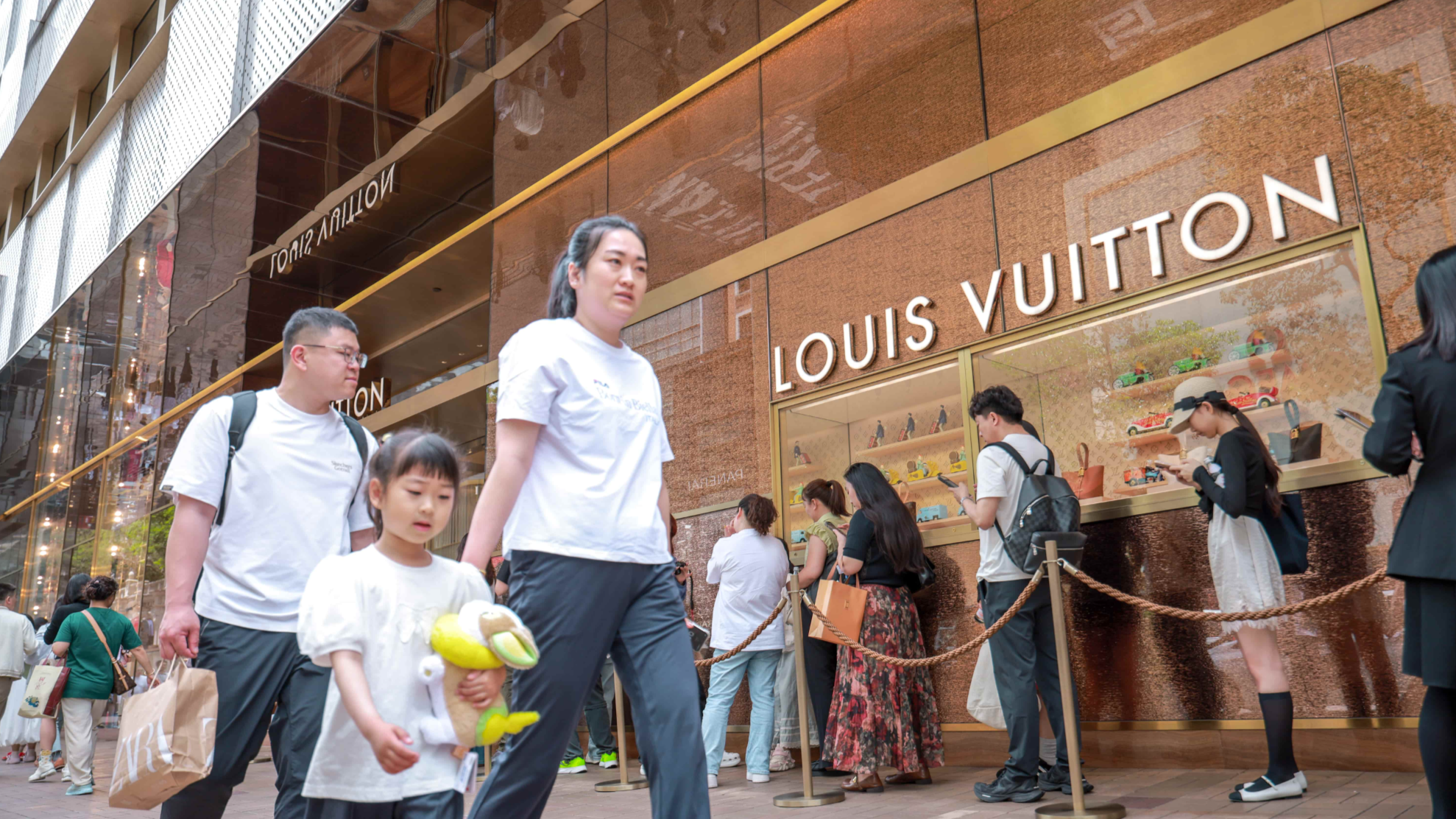
Hong Kong’s retail sales strengthened further in March, buoyed by improving local demand and sustained growth in inbound tourism, though a separate survey showed business conditions in the private sector like manufacturing remained under pressure from rising costs linked to the Middle East conflict.
The value of total retail sales rose 12.8 percent year-on-year to HK$33.9 billion ($4.3 billion) in March, with most major retail categories posting gains, according to the Census and Statistics Department on Wednesday. For the first quarter, retail sales grew 12.1 percent from a year earlier.
A HKSAR government spokesperson said sales of motor vehicles recorded particularly robust growth of 80.8 percent, as purchases surged ahead of the expiry of first registration tax concessions for electric private cars at the end of March.
“The near-term outlook for retail sales is broadly positive, underpinned by recovering local demand, sustained growth in inbound tourism, and a favorable macro-financial environment,” the spokesperson said.
ALSO READ: Experts striking upbeat tone on Hong Kong’s economic outlook
Annie Tse Yau On-yee, chairwoman of the Hong Kong Retail Management Association, said the HKRMA’s latest monthly survey — covering about 3,600 stores and 72,000 employees — showed that half of retailers expect sales to rise by a single digit to low double-digit percentage in April.
She said the projected increase partly reflected a low comparison base a year earlier, as well as a pickup in visitor arrivals during the Qingming Festival holiday, although local spending was subdued during the early-April Easter break when many residents traveled overseas.
Gary Wan, principal economist and strategist at Dah Sing Financial Group, said the group is maintaining its forecast of around 5 percent retail sales growth for 2026, as robust first-quarter performance has provided a cushion for the rest of the year despite downside risks from persistently high oil prices.
In contrast, business conditions in the private sector including manufacturing and construction worsened. The S&P Global Purchasing Managers’ Index (PMI) released on Wednesday fell to 48.6 in April from 49.3 in March, marking a second consecutive month of contraction and the steepest deterioration in 10 months. A figure below 50 indicates contraction from the previous month.
READ MORE: Economists raise Hong Kong's 2026 growth view on budget support
The index, based on a survey of purchasing managers at around 400 companies in Hong Kong, pointed to renewed declines in output and new orders, with production shrinking at the fastest pace since June 2025.
“Firms commonly linked the latest deterioration in conditions to the war in the Middle East and its associated impact on prices, in particular for oil and fuels,” said Usamah Bhatti, an economist at S&P Global Market Intelligence.
The mixed readings come a day after data showed Hong Kong’s economy grew 5.9 percent year-on-year in the first quarter, the fastest pace in nearly five years.
The divergence suggests that “firms remain cautious about the outlook despite the seemingly stable economic situation,” said Gary Ng, senior economist for APAC at Natixis CIB.
The shock from the conflict involving Iran is not very apparent to Hong Kong’s corporates, but it can affect sentiment toward placing orders and expanding, Ng added.
In a research note, Deutsche Bank economists Xiong Yi and Ou Deyun said consumption and investment were the primary drivers of first-quarter growth, while strong trade flows have also contributed.
The bank revised up its full-year growth forecast for Hong Kong to 4 percent from 3.5 percent, raising its projections for both private consumption and investment accordingly.
Contact the writer at irisli@chinadailyhk.com
