

By updating fragile ancient crafts, passionate artisans successfully transform fading cultural history into modern daily routines, Yang Feiyue reports.
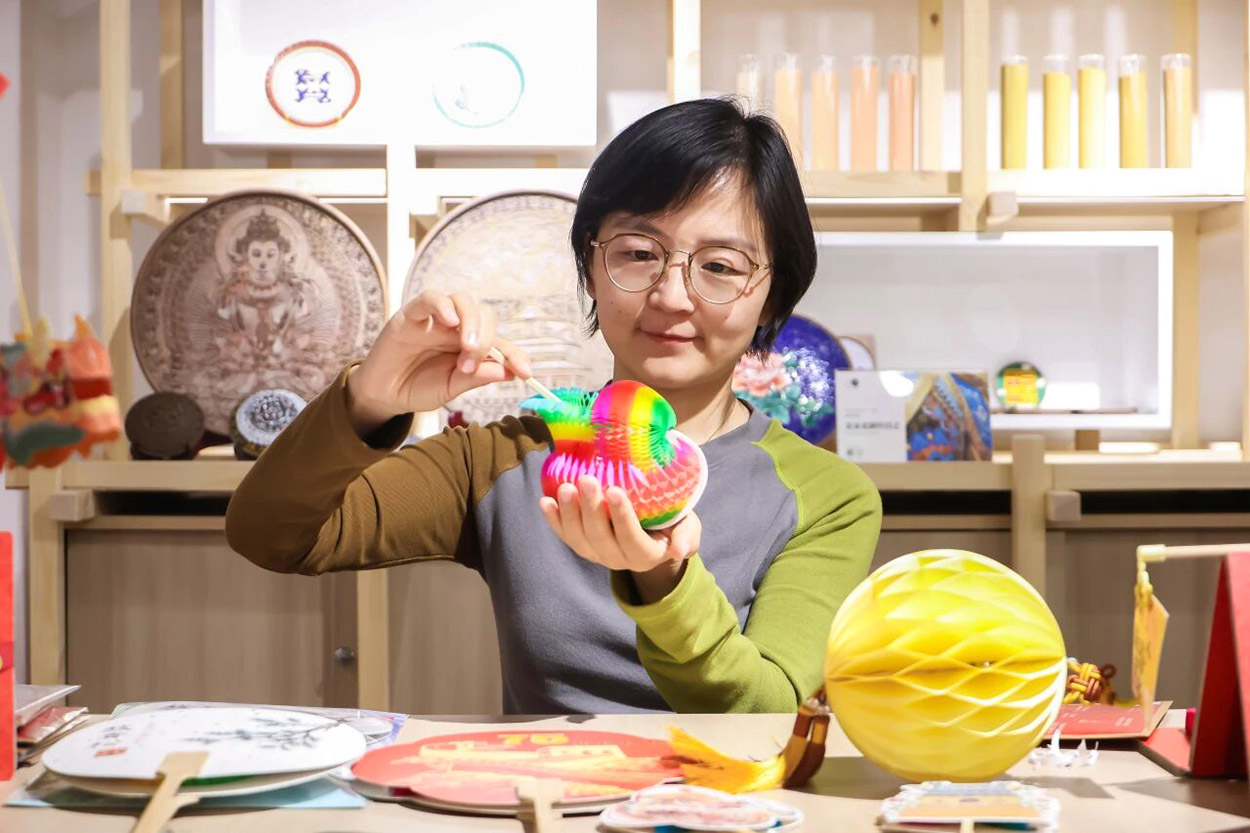
Li Mei spent 12 years teaching English to children before deciding to take a completely different path.
Her father-in-law, a fourth-generation inheritor of fanlihua — a traditional Beijing paper toy that transforms with a flick of the wrist — was preparing to close his small workshop in eastern Shandong province.
The profits were thin. The work was exhausting. The craft, which had once been a familiar sight at Beijing's temple fairs, had all but faded from memory.
Yet, Li thought the toy deserved another chance, but she was not acting on impulse.
READ MORE: Joining ingenuity with culture
"I had been an English teacher for nearly 12 years," she says. "That career would always be there for me. If trying to revive fanlihua didn't work out, I could always go back."
So she decided to test the waters — bringing the craft back to Beijing, its place of origin, to see whether people still cared.
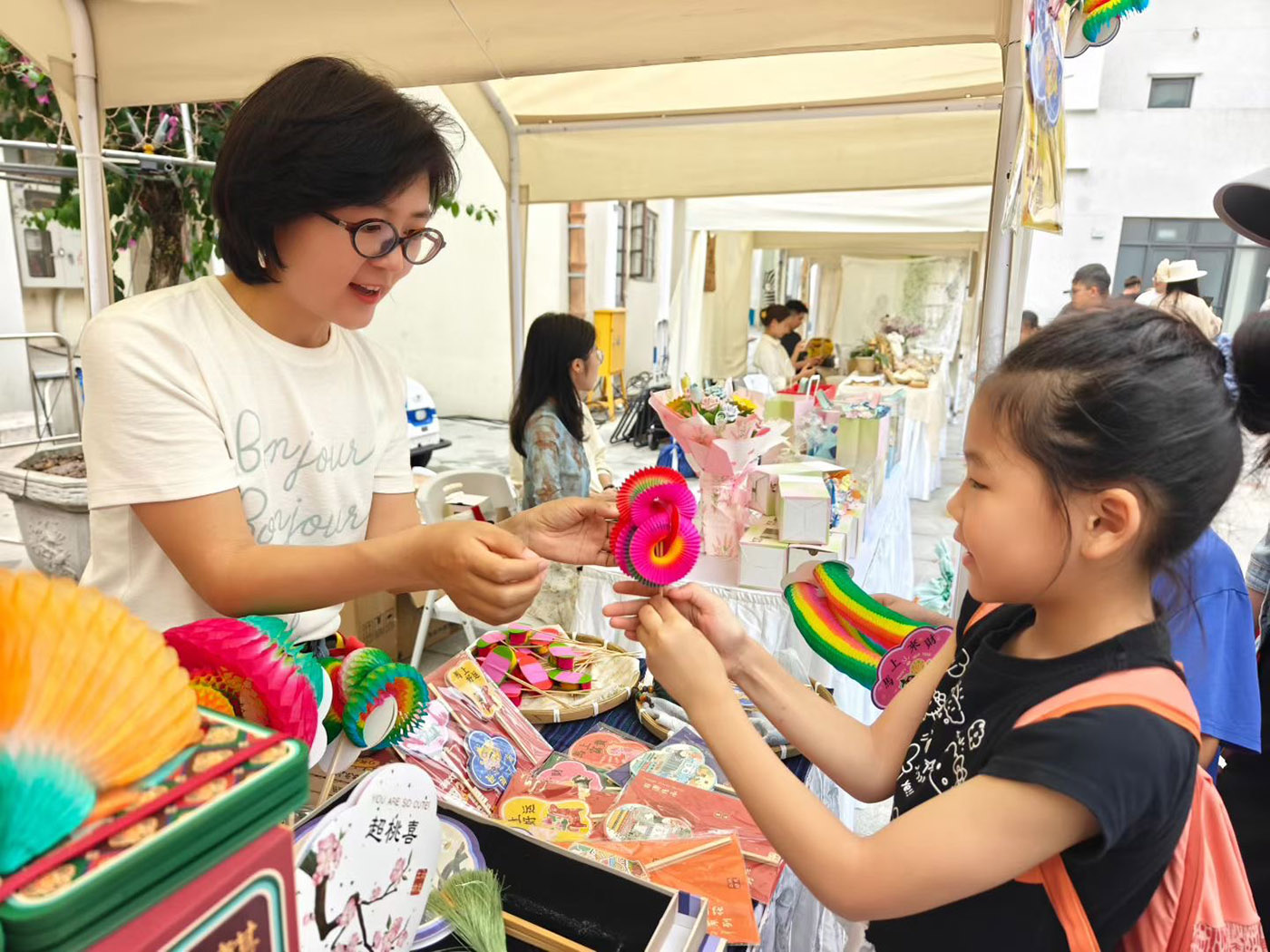
The answer came during the 2024 Spring Festival holiday at Beijing's Ditan Temple Fair.
Her tiny booth quickly drew crowds. Children squeezed through adults for a closer look. Elderly visitors pointed excitedly toward the colorful paper toys stacked behind the counter. Some customers bought them before even asking how they worked.
For hours, Li barely paused, repeating prices almost mechanically as her stock disappeared.
At Beijing's Ditan and Longtan temple fairs that year, Li's family earned between 150,000 and 200,000 yuan ($22,130−29,500) in just 15 days. What stayed with her, however, was not the sales figure.
"I realized that a toy many people assumed had faded into history could still spark such instant recognition and excitement," she says.
The response convinced her to leave teaching behind and devote herself to reviving the craft.
Two years later, she sees that moment in a different light. "It made me realize these traditions were never truly gone," she says. "People were simply waiting to rediscover them again in a new way."
Living heritage
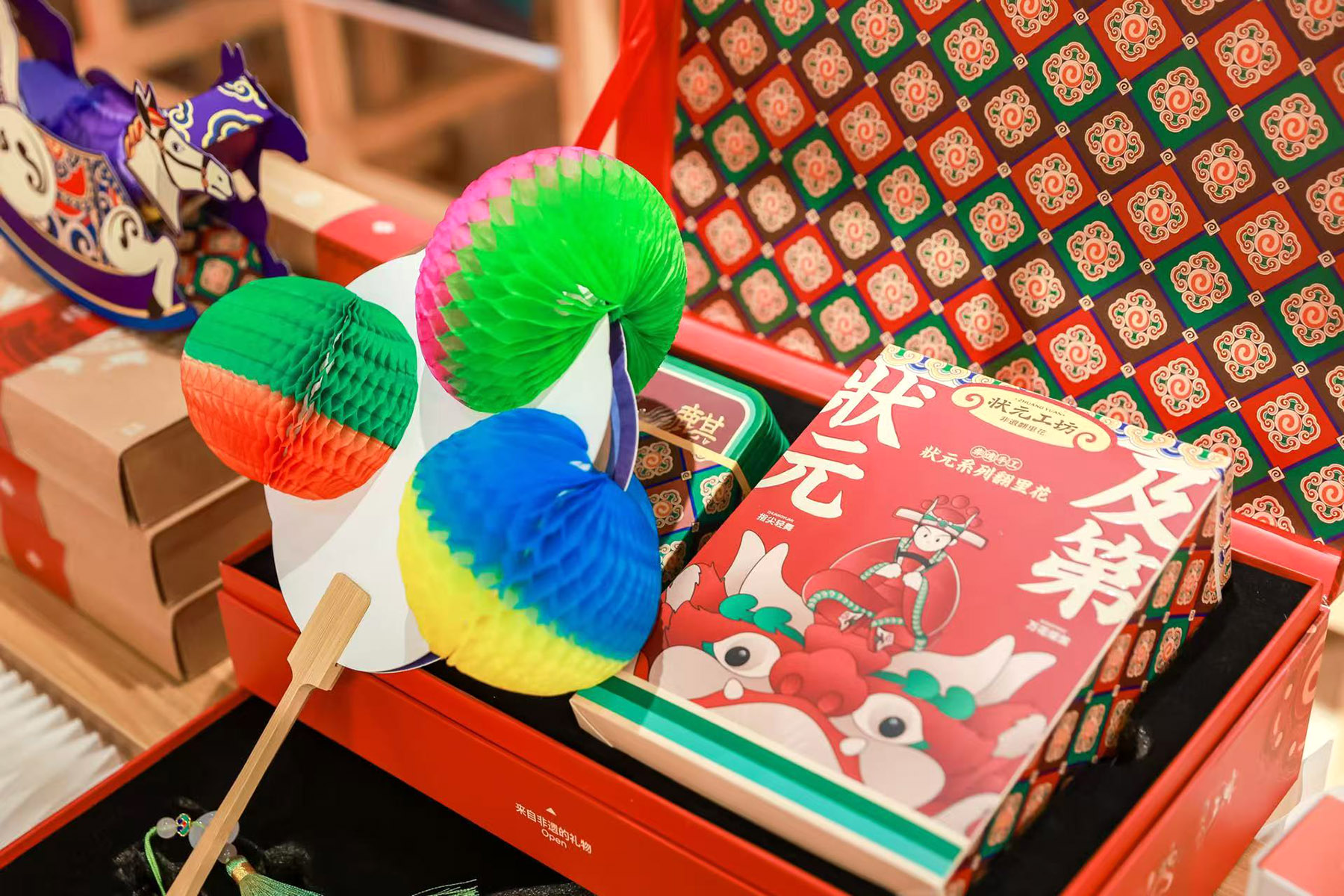
Across China, similar stories are unfolding. Intangible cultural heritage, once associated mainly with museums, official exhibitions or aging artisans' workshops, is reappearing in shopping malls, coffee shops, lifestyle stores and weekend workshops that cater to young urban consumers.
On the fourth floor of Gongmei Building on Beijing's Wangfujing shopping street, visitors spend entire afternoons making paper toys, learning embroidery techniques or browsing heritage-inspired products inside a cultural space called Yuxun Jingxi, established by the major arts and crafts player Beijing Gongmei Group.
Some come for photos. Others simply want a relaxing weekend activity. Few arrive thinking they are engaging with intangible cultural heritage, observes Wang Jingjing, deputy general manager of Gongmei.
"That is precisely the point. We don't want to sell intangible cultural heritage as heritage. We want to present it as a lifestyle," she says.
Since opening in 2025, Yuxun Jingxi has hosted more than 100 heritage-related events, attracting tens of thousands of visitors through workshops, exhibitions and lifestyle experiences designed for younger consumers.
The approach reflects a broader shift in how traditional crafts are being revived in China today — not as static cultural symbols preserved behind glass, but as products and experiences woven back into everyday life.
"The moment heritage is placed too high on a pedestal, people feel disconnected from it," Wang says. "Lifestyle is immersive. It's participatory."
That participatory approach is increasingly resonating with younger consumers. A recent survey by China Youth Daily found that 81.1 percent of respondents view intangible cultural heritage activities as a new way to socialize, while nearly half share their experiences on social media.
Demand has grown rapidly. During the 2026 Spring Festival holiday, group-purchase sales for activities combining intangible heritage and traditional markets surged 764 percent year-on-year on Douyin, according to platform data.
"It has to be fun first," Wang says. "Only then will people discover how remarkable these traditions really are."
Innovative patterns
Li's paper toy was never meant to be remarkable. It was simply a paper-and-bamboo toy designed to flip.
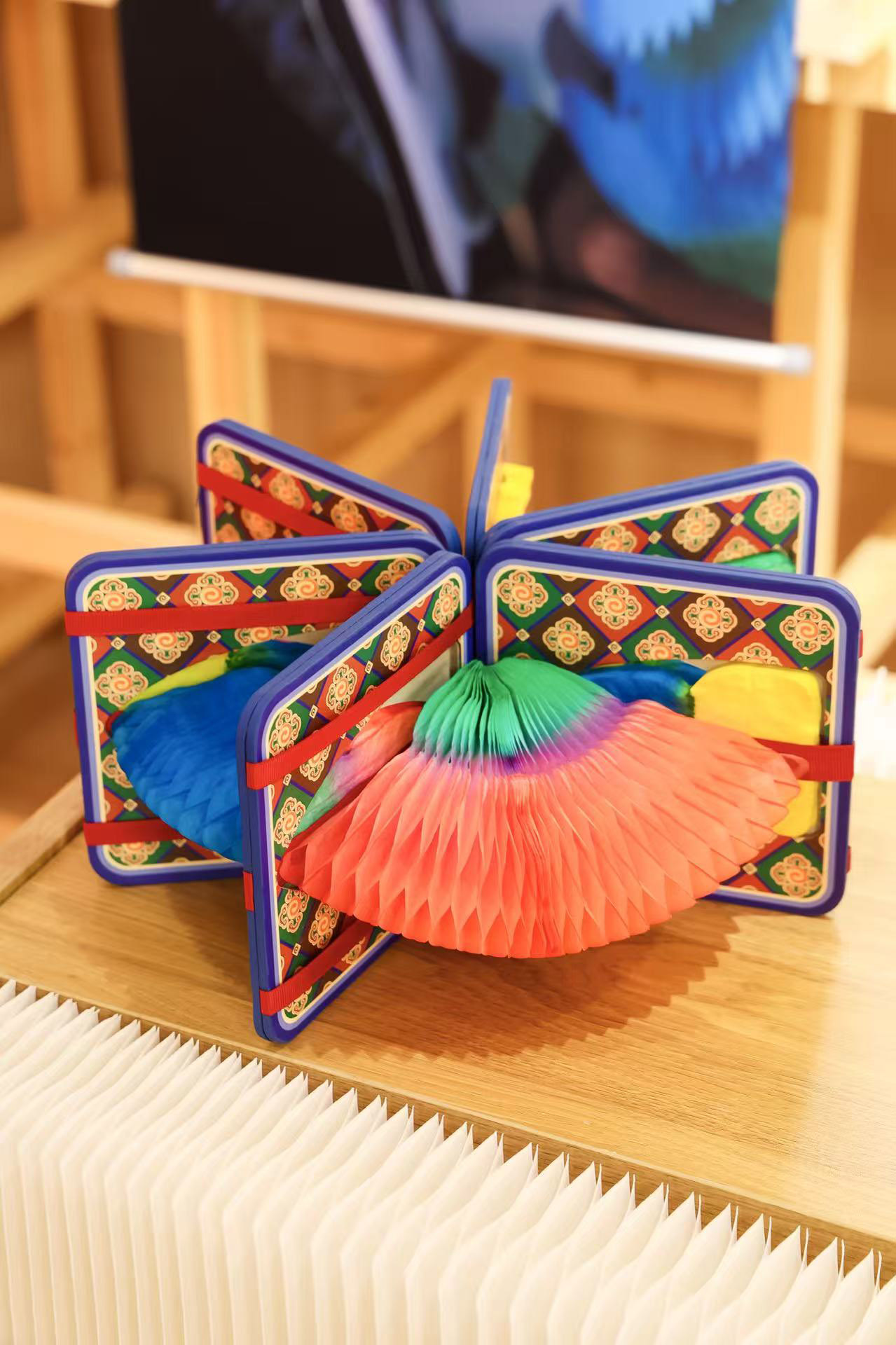
The craft, also known as "18 flips", dates back to the Qing Dynasty (1644-1911). Once enjoyed in imperial courts before spreading among ordinary residents, the toy later became a familiar feature at Beijing's temple fairs. Its charm lies in transformation: folded paper structures suddenly bloom into dragons, flowers or geometric forms with a series of deft hand movements. Yet, by the early 21st century, the craft had all but disappeared from Beijing.
As Li immersed herself in the trade, she found several practical obstacles. Traditional designs offered little variety. The toys were made from fragile xuan paper that tore easily, prompting many buyers to treat them as disposable. Their appearance had changed little over the decades. "The complexity of the craft no longer matched its economic value," she says.
Rather than thinking like a heritage inheritor, Li approached the challenge as a consumer.
Before bringing the toys back to Beijing's temple fairs, she extensively redesigned them, creating dragon editions, AI-assisted lion dance motifs, carp patterns symbolizing good fortune, and shapes inspired by traditional Chinese fans and jade ornaments.
She also replaced delicate xuan paper with sturdier pear paper, a tissue paper originally used for wrapping fruit and durable enough to last for years. She enlarged the outer sleeves that encase the folded toy, transforming what had once been plain red or green covers into canvases featuring Beijing snacks, city landmarks and customized designs.
Most importantly, she stopped marketing the toys primarily as "heritage". "I want people to think the product is interesting at first," she says.
Unexpectedly, her years as an English teacher proved invaluable. "Heritage workshops and teaching are actually very similar," she explains. "You have to think from the user's perspective and ask how people can most easily understand and enjoy something."
The strategy paid off.
Li has since taken fanlihua beyond temple fairs and retail shelves. She has designed a do-it-yourself kit that guides users through every step, from gluing the paper honeycomb to dyeing the "flower buds", allowing even children to make their own paper toy from scratch.
She has led workshops on university campuses, including Renmin University, where students who had never heard of fanlihua spent hours folding and flipping the toys.
She is now developing English-language experiences for international visitors. "The first time foreigners see it, their reaction is the same as mine was," she says.
"Such simple materials — paper and sticks — yet so many transformations. They're fascinated."
That transformation reflects a larger trend. Traditional crafts, once regarded as old-fashioned or remote, are being redesigned through contemporary aesthetics, interactive workshops and social media-friendly spaces, experts say.
The rise of guochao, or China chic, has also encouraged younger generations to reexamine traditional culture with fresh curiosity and confidence, they agree.
But for Wang, the real problem is not whether heritage looks fashionable. It is whether it remains relevant. "Heritage cannot survive only as something displayed. It has to become part of people's lives again," Wang says.
That may explain why some of the most successful revivals in recent years have involved objects tied to everyday life rather than ceremonial symbolism — toys, accessories, stationery, teaware or textiles, she notes.
Contact the writer at yangfeiyue@chinadaily.com.cn
