

A leather carving workshop in Xinjiang's pastoral area is helping herders supplement their incomes and preserve a tradition that stretches back millennia, Yang Feiyue reports.
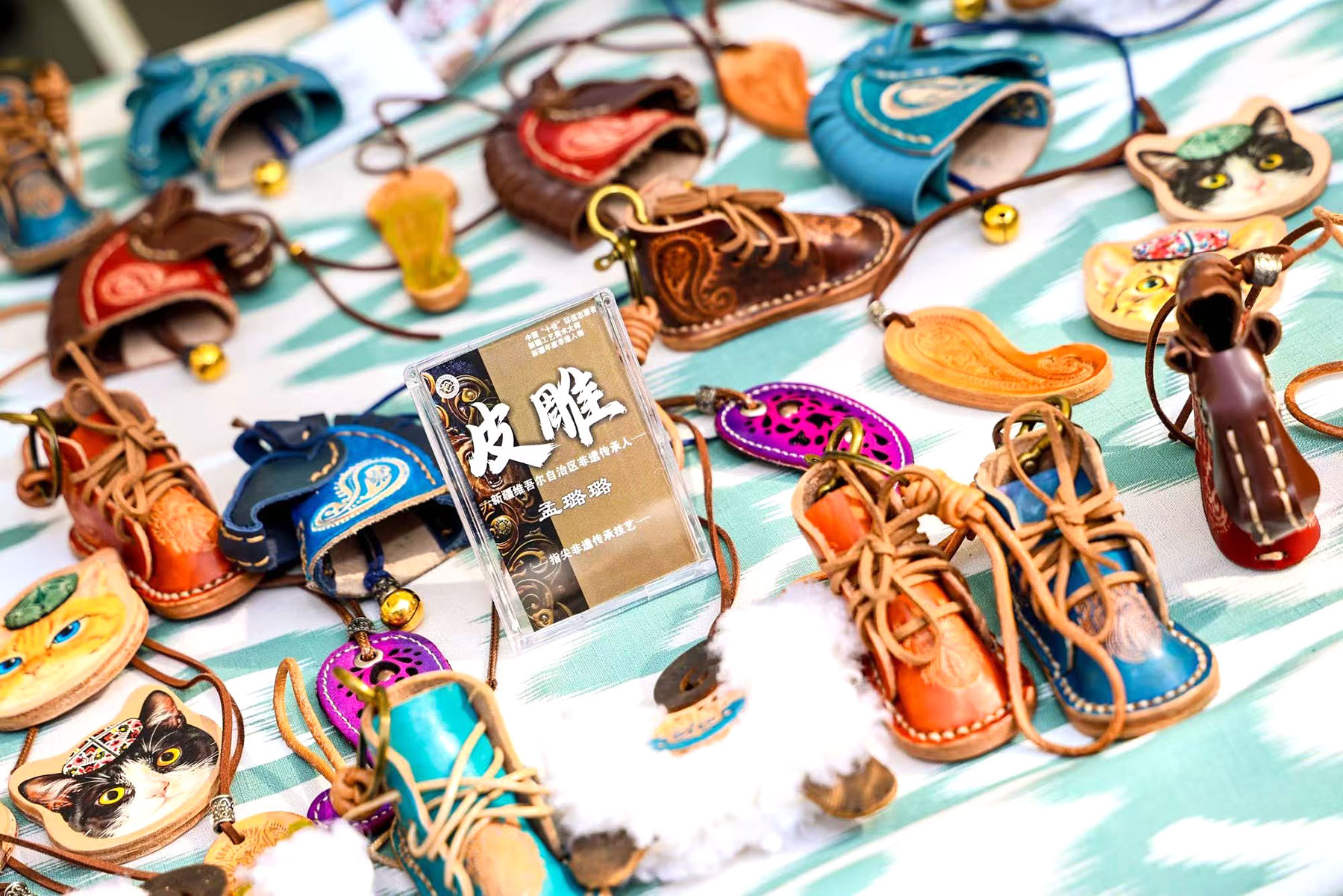
Alzugul, a mother of two from a village in Shule county on the outskirts of Kashgar, Xinjiang Uygur autonomous region, used to divide her days between household chores and the school run. Six months ago, she had never held a carving knife.
Today, she spends eight hours a day at a wooden workbench, cutting and stamping intricate patterns into cowhide — almond-shaped motifs once used to decorate horse saddles and geometric designs passed down through generations. She now completes six or seven bags each month.
"I didn't know leather could be turned into so many things," she says.
In June, she earned 2,000 yuan ($295) — a modest sum by urban standards, but a transformative one for a rural woman who had been a full-time homemaker. "When I sell my products, it makes me happy," she says.
READ MORE: Leather art connects past and present
Behind that transformation is Meng Lulu, a designer from the regional capital of Urumqi. As a child, the woman, now in her 30s, often traveled with her father from Kazak and Mongolian pastoral regions to Uygur farming villages. When his work kept him away for long periods, he would leave young Meng with local herder families. She grew up watching them make saddles, whips, leather buckets and boots.
"I was fascinated by the intricate patterns they carved. Every piece of leather has its own life and character," she recalls.
But it was during university, where she studied graphic and product design, that those childhood memories took on new meaning. As she explored the history of Chinese and world art, she realized many iconic decorative motifs could be traced to excavated artifacts and ancient stone carvings.
"That gave me an idea. I wanted to take those patterns and techniques and put them into products people could use today," she says.
After graduation, she worked for a newspaper and its advertising company, where she encountered international exhibitions. Meng noticed leather carving had established systems and recognition across Europe and North America. Xinjiang's own heritage, despite archaeological evidence dating back over 3,000 years, was categorized as little more than "leather tool and harness making".
Conversations with museum researchers and art scholars confirmed the craft's ancient lineage. In 2012, she left her job and, a year later, opened her own studio.
Learning from the master
But Meng soon realized passion alone wasn't enough; she needed training. She had learned from elderly craftspeople scattered across Xinjiang's pastoral regions, but her knowledge remained fragmented.
Then, in 2014, at an exhibition in Shenzhen, Guangdong province, she met Li Siqin, a national-level master craftsman from the Inner Mongolia autonomous region. Impressed by Meng's large-scale works inspired by Xinjiang's culture, Li took her on as an apprentice.
He offered two pieces of advice that would shape her career.
First, he urged her to document the work of aging craftspeople through videos and written accounts and master their techniques faithfully. Second, he encouraged her to develop her own creative system from everything she had learned.
Li also reminded her that Xinjiang leather carving drew on more than 3,000 years of history.
"That gave me the final push, and I decided to commit fully to this path," Meng says.
Over the following years, several of the elderly masters she learned from passed away, reinforcing the urgency of preserving their knowledge.
For the past decade, she has traveled from one pastoral community to another — Ili Kazak autonomous prefecture, Tacheng prefecture, Altay, and now Kashgar — setting up workshops and training local residents.
'Backward energy'
One of the places Meng works is Habahe county, less than 20 kilometers from the Kazakhstan border. It has six or seven border checkpoints and a dozen summer and winter pastures.
In the 1980s, Habahe had a leather factory, and nearly every family knew how to work with hides. When the factory closed, the craft gradually faded.
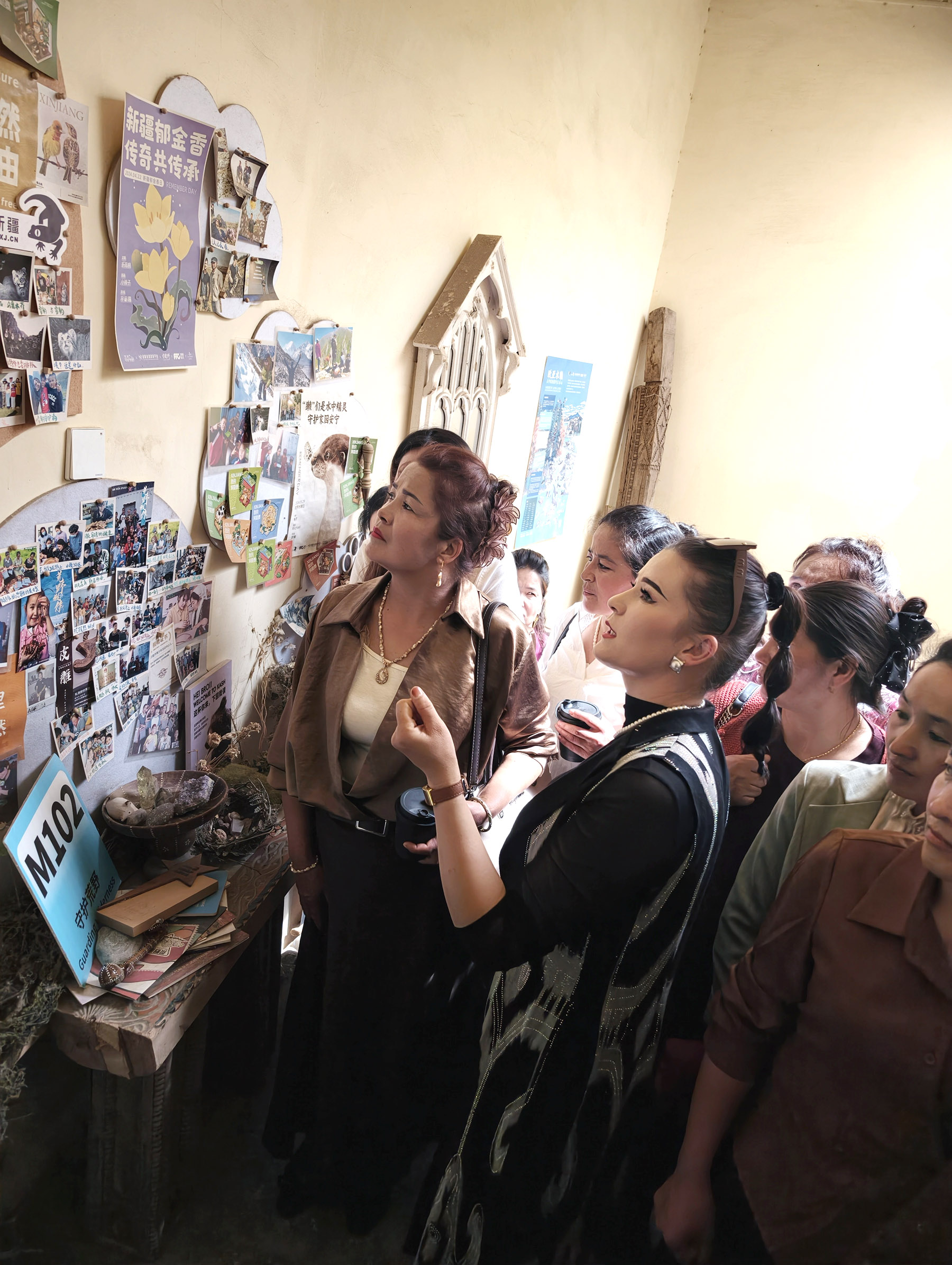
In 2021, Meng launched a model that combines cultural heritage, natural ecology and community, an approach shaped by her years as a wildlife conservation volunteer.
"This framework gives us what I call 'backward energy'," she explains. "We're always told to move forward — to embrace AI, follow trends, compete for markets. But when you stop and look back, there's so much more to discover. We don't have to rush ahead. Sometimes we can draw strength from the past before moving forward again."
Her team works where the craft already has roots, bringing better tools, training anyone interested, and helping connect their products with the market.
Meng and her colleagues drive from house to house with tools and leather for training. In winter, when snow blocks the roads, she stays with herder families for up to two weeks at a time.
"You can't expect them to sit for eight hours straight," she says. "They have sheep to tend, hay to stack, and children to feed. So we work around their daily lives."
Over 700 people have been trained across the region — herders, retired border patrol guards, and increasingly, women. More than 1,000 households have seen their incomes rise. In Habahe and Ili, each participant earns an extra 30,000 to 40,000 yuan a year.
Alzugul, the homemaker from Shule county, was one of Meng's students.
"She was always patient and encouraging. She never got angry," Alzugul says of Meng.
Now she can make a leather bag from start to finish, from tracing the pattern onto the hide to cutting and stamping it herself.
"Next month I'll make something different," she says.
The next chapter
Meng has made a point of adapting traditional techniques for contemporary use.
In Ili, she collaborates with Kazak herders to preserve traditional rope-braiding skills by using them to make keychains and handbags. In Uygur communities, she reimagines almond-shaped motifs found on embroidery, boots and wine flasks as contemporary bag designs.
Meng divides her work into three tiers. Artworks tell the stories — large-scale pieces intended for museums and exhibitions. Showpieces debut at fashion weeks — attention-grabbing but not yet accessible. Everyday products bring the craft into people's lives.
One of her best-known creations is a handbag that replaces kingfisher feathers — traditionally used in the Chinese diancui inlay craft — with carved and painted leather.
The idea grew out of her work in wildlife conservation. Meng has logged over 7,000 hours as a wildlife volunteer, participating in snow leopard and Eurasian otter protection projects.
"People ask me, 'Aren't you using animal hide to make animal images?'" she recalls.
"We use those conversations to raise awareness. People use leather products every day, from shoes to belts. What we need to protect is wildlife diversity. That's what conservation is about."
A portion of the proceeds from her leather products supports snow leopard and otter conservation efforts.
New connection
In July 2025, Meng opened a guesthouse in Kashgar's Old City, transforming 10 courtyard houses restored from centuries-old Uygur dwellings.
Guests are welcomed with a traditional water-sprinkling ritual, a custom in a city often blanketed by desert dust. Young Uygurs who grew up in the neighborhood serve as guides.
"The idea is to let visitors be 'neighbors for a day'," Meng says.
ALSO READ: Leather artist carves a niche with pet owners
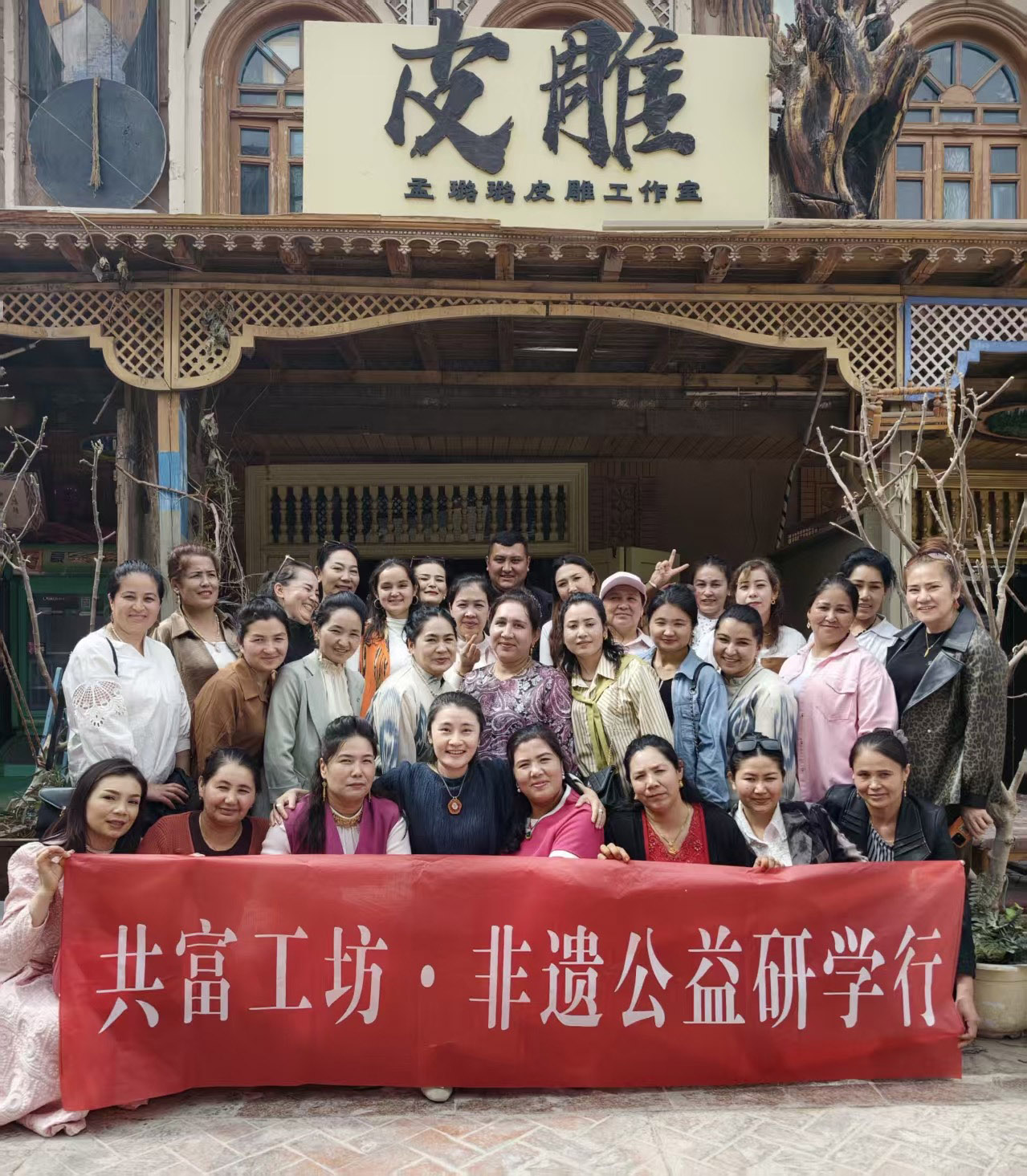
One experience includes a one-hour drive to Alzugul's village, where visitors spend a day learning leather carving alongside women in the workshop.
One young visitor from Hong Kong was moved to tears, saying one of the women reminded him of his mother as she was "so patient and kind".
Meng spent six years in Habahe, another six in Ili. She is now beginning another six in Kashgar.
"My biggest fear is that this work might fail halfway," she says. "I just want to keep it going."
Her goal is not just to keep her own work alive.
"I want the herders and farmers we've worked with to live better lives, keep telling their own stories, and see the world beyond their villages," she says.
Contact the writer at yangfeiyue@chinadaily.com.cn
