

Veteran actor Yang Lixin directs a revival of a landmark drama, encouraging young actors to find fresh interpretations of Cao Yu's enduring masterpiece, Chen Nan reports.
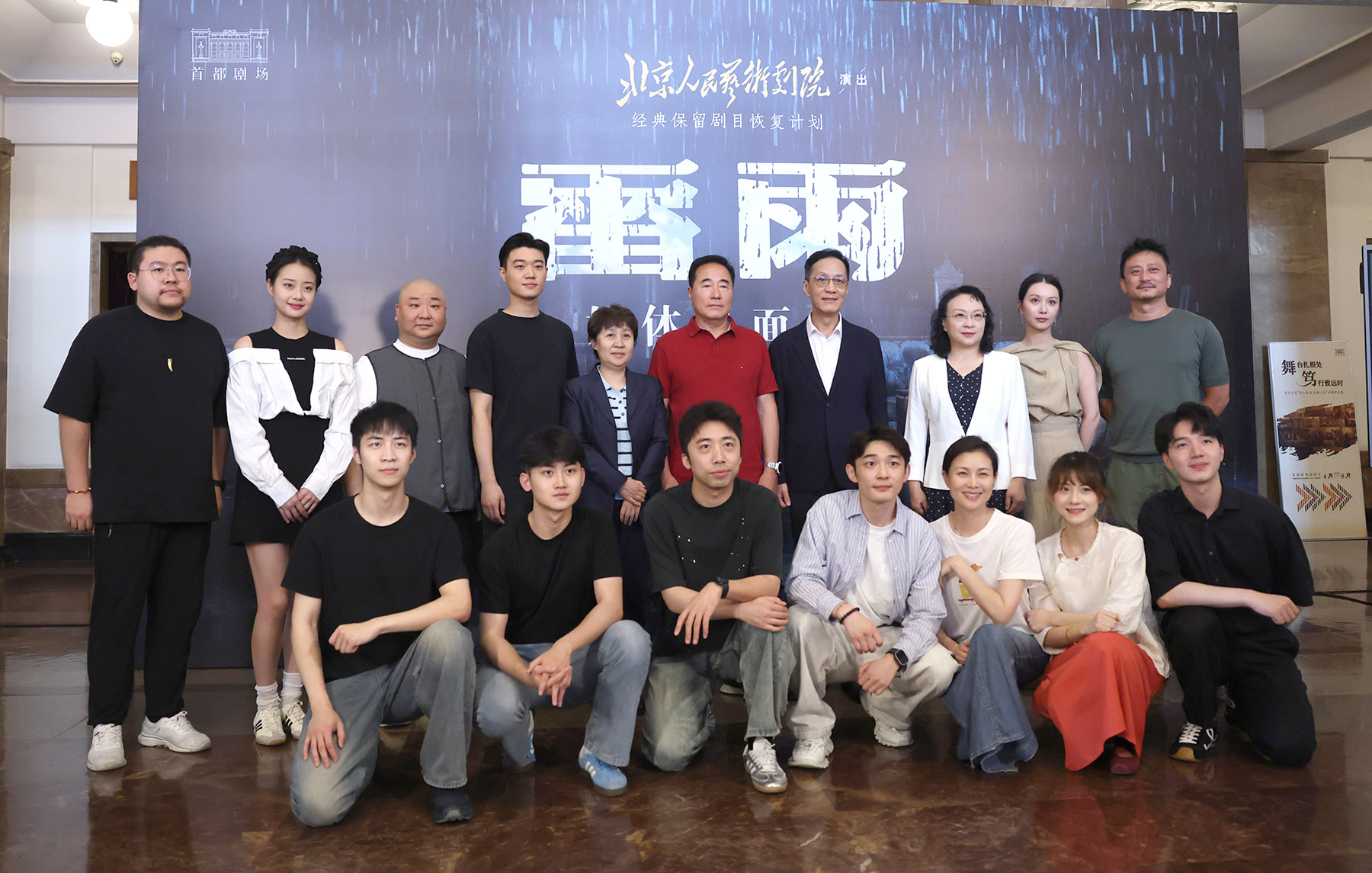
For the past 15 years, actor Yang Lixin has lived with one of Chinese theater's most formidable characters: Zhou Puyuan, the wealthy industrialist and stern patriarch at the center of Thunderstorm, Chinese playwright Cao Yu's landmark modern drama.
This summer, however, the 69-year-old actor returns to the play not as its leading actor but as its director, entrusted with guiding a new generation of performers in one of the Beijing People's Art Theatre's most treasured productions.
"It's never possible to prepare enough for this play," Yang says as the theater unveils its latest revival of Thunderstorm, which will open at the Capital Theatre on Aug 5 with shows running until Aug 21.
For Yang, the assignment is both deeply personal and artistically significant. Over decades, he has worked alongside nearly every generation of actors who helped define the theater's interpretation of Thunderstorm. Now, he finds himself passing that tradition forward.
READ MORE: Drama as dance in new production of Thunder and Rain
His mission echoes the words of playwright Cao Yu himself. In his 1979 book, Cao Yu on Thunderstorm, the dramatist wrote: "A script is a living thing. As long as it continues to be performed and retains its vitality, it can continue to be re-created."
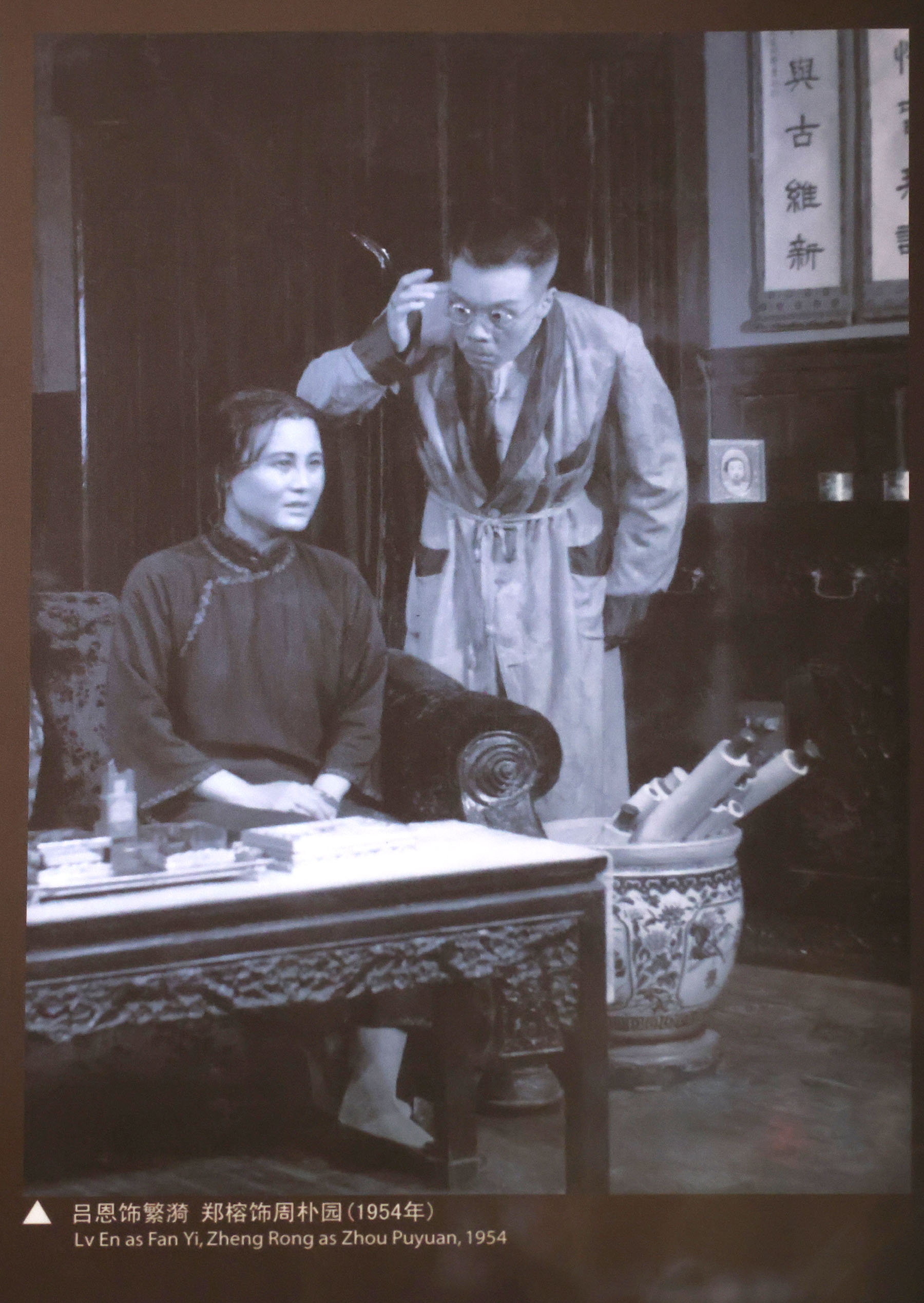
Often regarded as the father of modern Chinese drama, Cao Yu became director of the Beijing People's Art Theatre when it was founded in 1952. Two years later, the company premiered Thunderstorm under the direction of Xia Chun and Cao Yu's supervision, establishing what would become one of the theater's defining productions.
Written in 1934 when Cao Yu was just 24, Thunderstorm remains one of the most influential works in modern Chinese drama. Set over a single day in 1925, the play unfolds inside the home of the wealthy Zhou family, where long-buried secrets, forbidden love and class conflict erupt into devastating tragedy. Its psychological depth, explosive dramatic structure and sharp social critique have captivated audiences for generations.
Since its 1954 premiere, the Beijing People's Art Theatre production has been revived in 1979, 1989, 2004 and 2020, accumulating more than 600 performances over seven decades.
Each revival has introduced the classic to new audiences while serving as a training ground for successive generations of actors, directors and designers.
"Thunderstorm is one of the cornerstones of the Beijing People's Art Theatre," says Feng Yuanzheng, veteran actor, director and the theater's president. "Its literary value and artistic spirit deserve to be passed on."
The latest production is part of the theater's initiative, "Classic Repertoire Restoration Program", launched in 2025 to ensure landmark productions remain living works rather than museum pieces. The first production under the initiative, Returning Home on a Snowy Night, premiered in May 2025. Originally written in 1942 by playwright Wu Zuguang (1917-2003), the play was first performed by the theater in 1957. In July 2025, the theater restaged one of its most iconic productions, Rickshaw Boy, which also premiered in 1957, and was adapted from the beloved novel of the same name by Lao She (1899-1966).
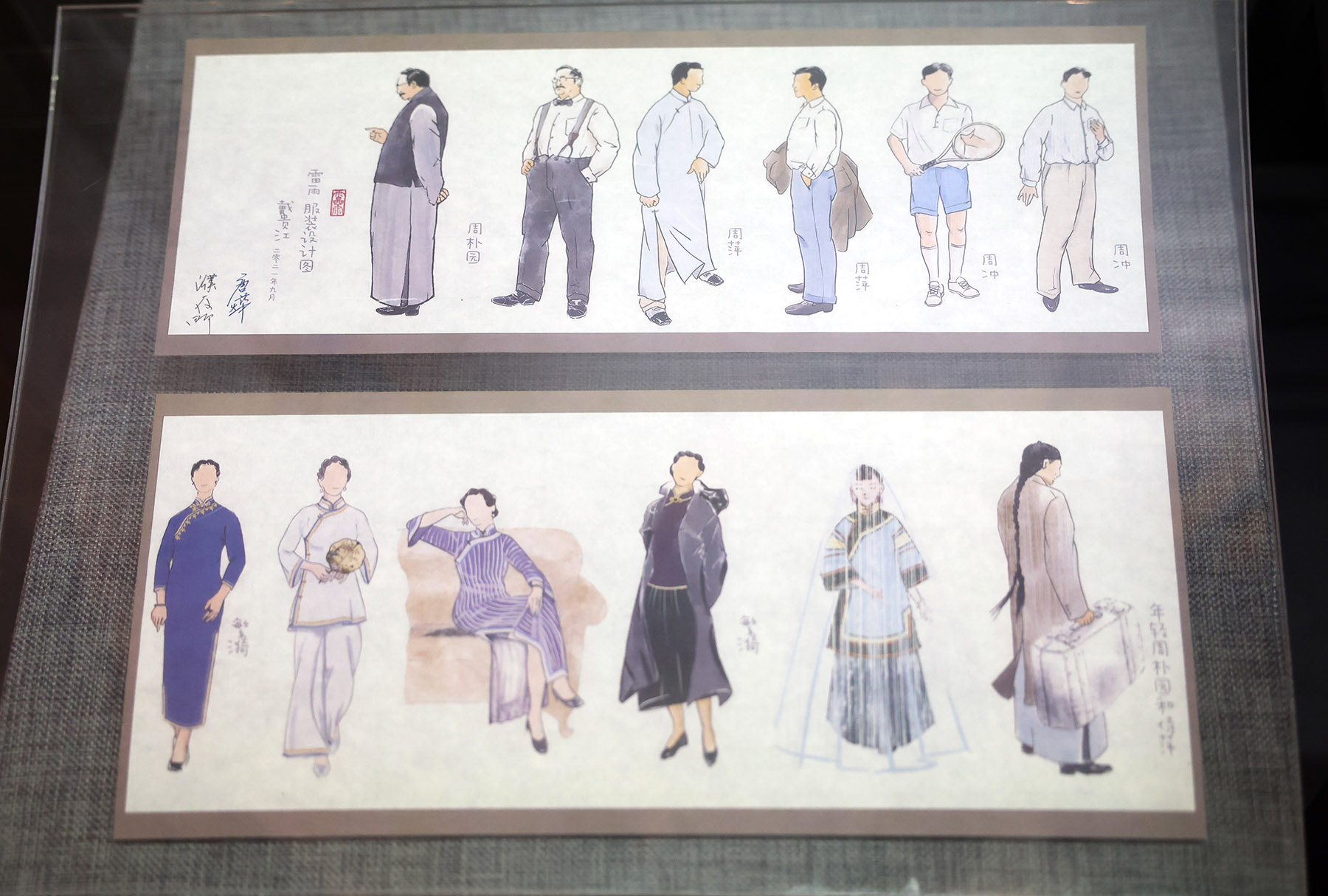
Faithful to tradition, the revival of Thunderstorm preserves the original 1954 set and costume designs, allowing audiences to step into the dimly lit Zhou family mansion much as theatergoers did decades ago. Yet, behind that historical continuity lies months of fresh research.
Preparation began early this year. Yang organized workshops introducing the cast members to Cao Yu's writings, archival materials and recordings of previous productions. The goal, he emphasizes, was never imitation.
"The greatest asset of any stage production lies in the script," Yang says. "Actors should use their imagination, but they should never invent what the playwright did not write."
To deepen the theater's understanding of the play's historical setting, the creative team consulted drama scholars and experts on China's labor movement. They revisited decades of criticism on Thunderstorm and immersed themselves in the social realities of the 1920s.
Research also took them beyond the rehearsal room.
Yang and actor Liu Hui traveled to Harbin, Heilongjiang province, to visit a bridge mentioned by the character Lu Dahai in the play, a seemingly small detail that Yang believes enriches an actor's understanding, regardless of Cao Yu's original intention.
The theater also visited Wuxi, Jiangsu province, to learn about the city's early industrial development and prominent family businesses, and toured the Cao Yu Memorial Museum in Tianjin.
"These experiences stay with the actors, quietly taking root in their minds, enriching their imagination and lending greater depth to their performances," Yang says.
Historical authenticity extended into rehearsals. Actors frequently arrived wearing cloth shoes, long gowns and qipao (traditional long dresses) so that everyday movements — walking, sitting or simply crossing the stage — would gradually become second nature within the world of the play.
For Yang, every detail ultimately serves one purpose: revealing the emotional truth already embedded in Cao Yu's writing.
The production also represents another passing of the torch.
Liu Hui takes over the pivotal role of Zhou Puyuan, joined by Liu Wenyi as Fanyi, Gong Yuquan as Zhou Ping and Huang Wei as Lu Shiping. Together, they inherit characters shaped by generations of legendary performers while seeking interpretations that speak to contemporary audiences.
ALSO READ: Presenting plays for the people
"Every actor at the Beijing People's Art Theatre knows the history of Thunderstorm, so stepping into Zhou Puyuan naturally comes with pressure. But director Yang encouraged us to return to Cao Yu's script and discover the character for ourselves. That gave me the confidence to find my own interpretation," says Liu Hui.
"Through our research and discussions, I began to understand the social constraints and emotional isolation she (Fanyi) lived with. That changed the way I approached every scene. I hope audiences will see not only her intensity, but also her vulnerability," says actress Liu Wenyi.
"The moment the makeup was finished and I put on the qipao, my posture changed without me thinking about it," Liu Wenyi adds. "The clothes affected how I walked, how I sat and even how I spoke. They helped me understand Fanyi's elegance and restraint."
Contact the writer at chennan@chinadaily.com.cn
