

Vienna's Belvedere brings floral masterpieces to Beijing, celebrating enduring artistic connections across centuries, Lin Qi reports.
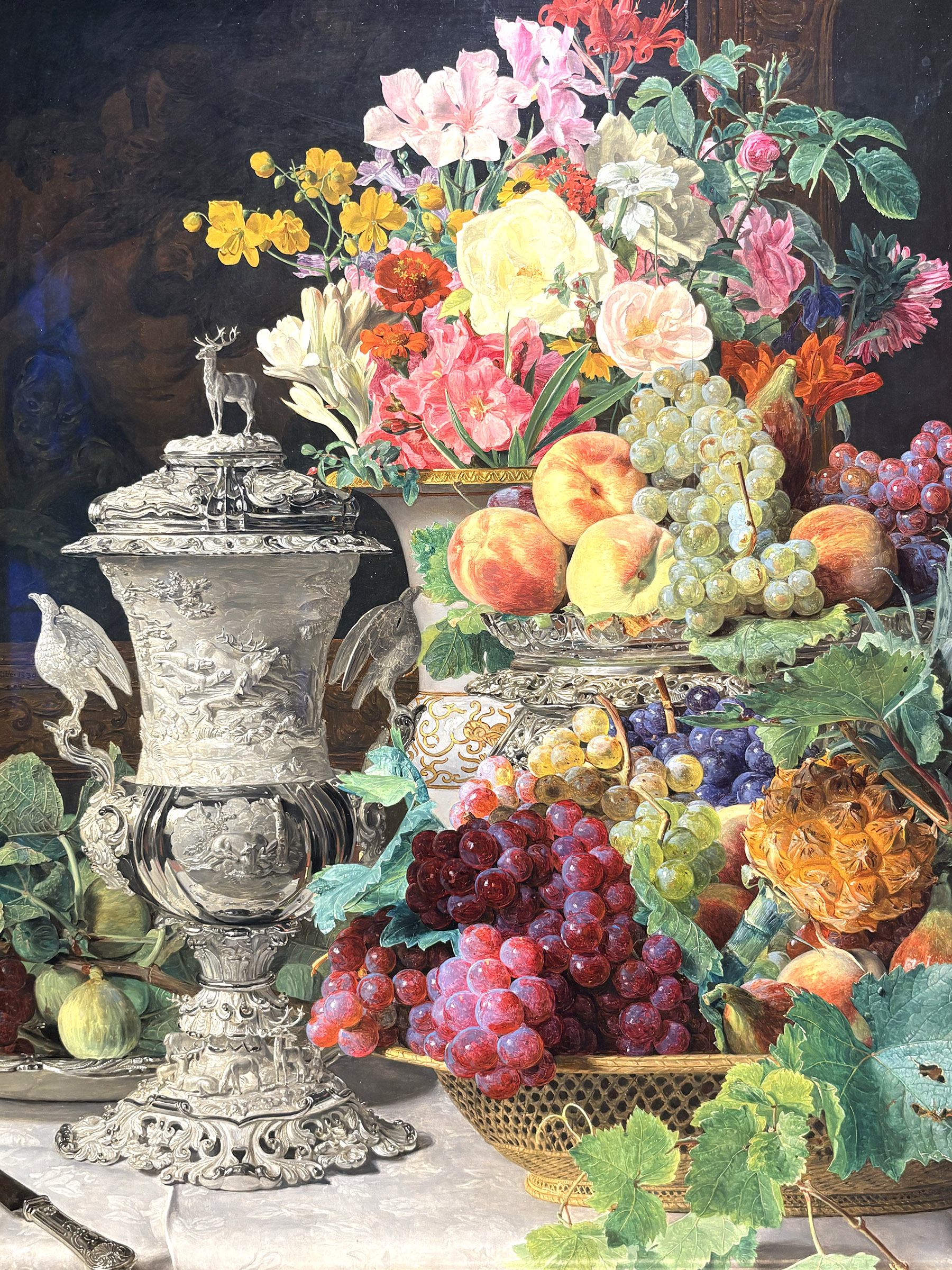
Flowers have long spoken a language that transcends geography. Across East and West, artists have turned to blossoms to express beauty, emotion and the rhythms of life, creating works that continue to "bloom" centuries after they were painted.
As Johann Wolfgang von Goethe wrote: "Flowers are the beautiful words and hieroglyphs of nature. "That sentiment is resonated through an exhibition in Beijing that brings together European floral masterpieces while inviting dialogue with China's own rich artistic tradition.
In the collection of the Palace Museum, a Song Dynasty (960-1279) flower-and-bird painting captures the vitality of summer, with pink hibiscus, white gardenias and yellow lilies competing for attention. Court painters of the period produced countless works that, like the dynasty's lyrical ci poetry, evoke serenity, refined beauty and enduring artistic vision.
READ MORE: Masters in the frame present a picture of variety
At Vienna's Belvedere Museum, floral paintings reveal a distinctly European interpretation of nature's splendor.
Now, to mark the 55th anniversary of diplomatic relations between China and Austria, the Belvedere has brought 60 floral paintings by 35 artists, spanning the 18th to the early 20th centuries, together with sculptures and vintage decorative objects, to Beijing.
The exhibition, Blooming Hearts Through Centuries: From Waldmuller to Klimt, Floral Masterpieces from the Belvedere in Vienna, is on view at the China World Art Museum inside the China Millennium Monument on Chang'an Avenue until Sept 19.
Originally built in the 18th century as the summer residence of Prince Eugene of Savoy, a military commander and diplomat of the Habsburg monarchy, the Belvedere is now one of Europe's leading museums. Its renowned collection is housed in a Baroque architectural masterpiece in the historic center of Vienna, a UNESCO World Heritage site.
Stella Rollig, general director of the Belvedere, says flowers offer visitors an immediate connection to art. "You don't have to be an art historian or know much about Austria or Austrian art history," she says. "You can simply enjoy these paintings because flowers are such a universal language.
"We have great admiration and respect for China's long tradition of flower-and-bird and landscape paintings. This exhibition is a meaningful cultural exchange that audiences can appreciate both emotionally and intellectually," she adds.
The exhibition opens with Baroque art, reflecting not only the style of the Belvedere itself but also the tastes of 18th-century Vienna. Floral still lifes from the period often pair blossoms with fruit, insects, small animals, silverware and glass vases. These lavish arrangements celebrated prosperity while also serving as reminders of life's fleeting nature, where beauty inevitably gives way to decline.
Among the highlights are the still lifes of German-born painter Franz Werner Tamm, who worked for the Austrian court. His richly saturated flowers emerge dramatically from dark backgrounds, demonstrating the Baroque mastery of light, shadow and meticulous detail.
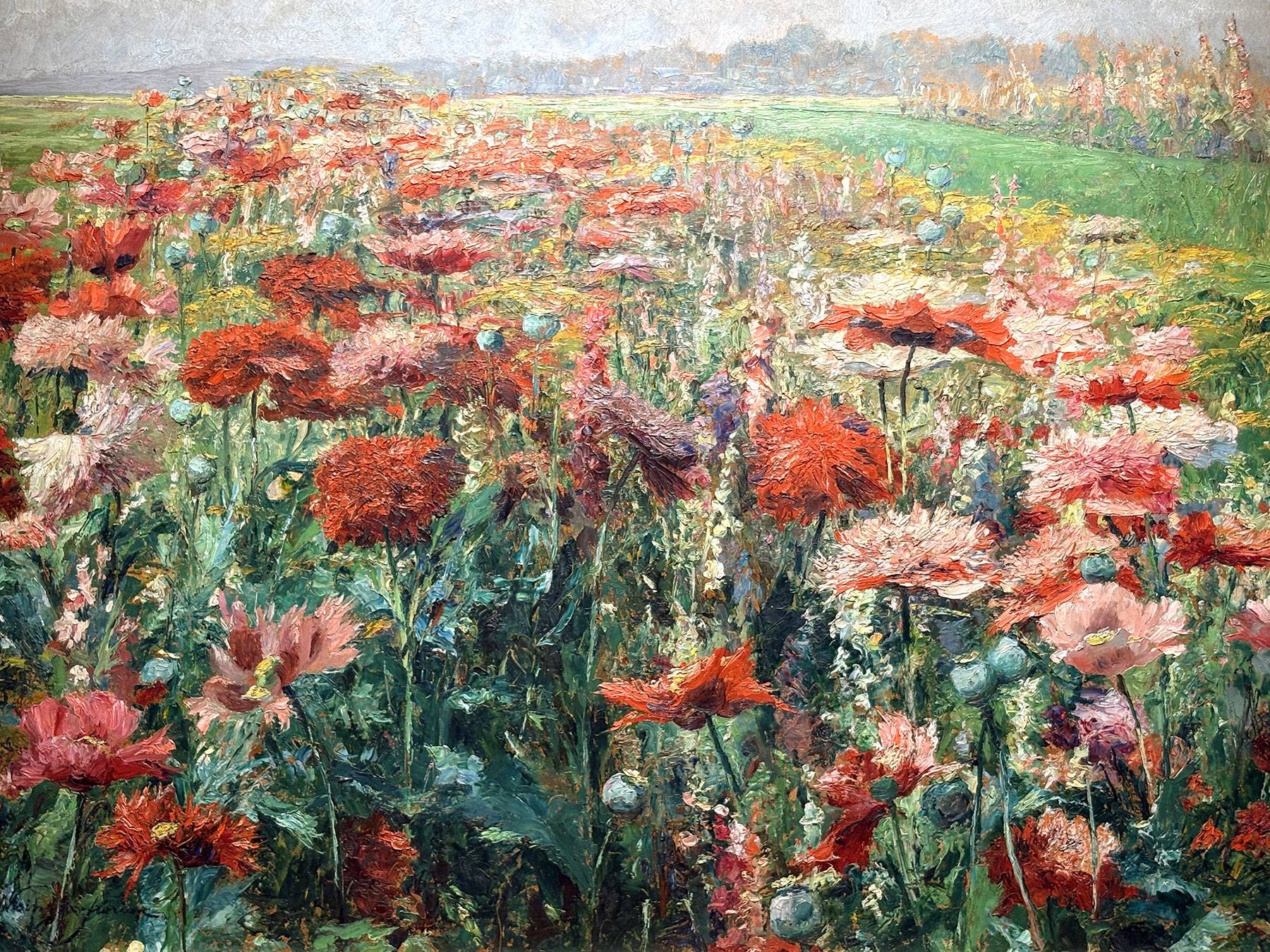
As the middle class expanded in the 19th century, artistic tastes evolved. Floral paintings retained their decorative appeal but adopted softer colors and more intimate settings, often portraying flowers in comfortable homes or natural landscapes.
Ferdinand Georg Waldmuller, several of whose works are on display, became one of the pioneers of this shift, believing that art should faithfully reflect nature.
While Waldmuller often portrayed flowers flourishing vibrantly in nature, bathed in sunlight alongside other living things, he also placed them within narrative scenes that reflected social concerns.
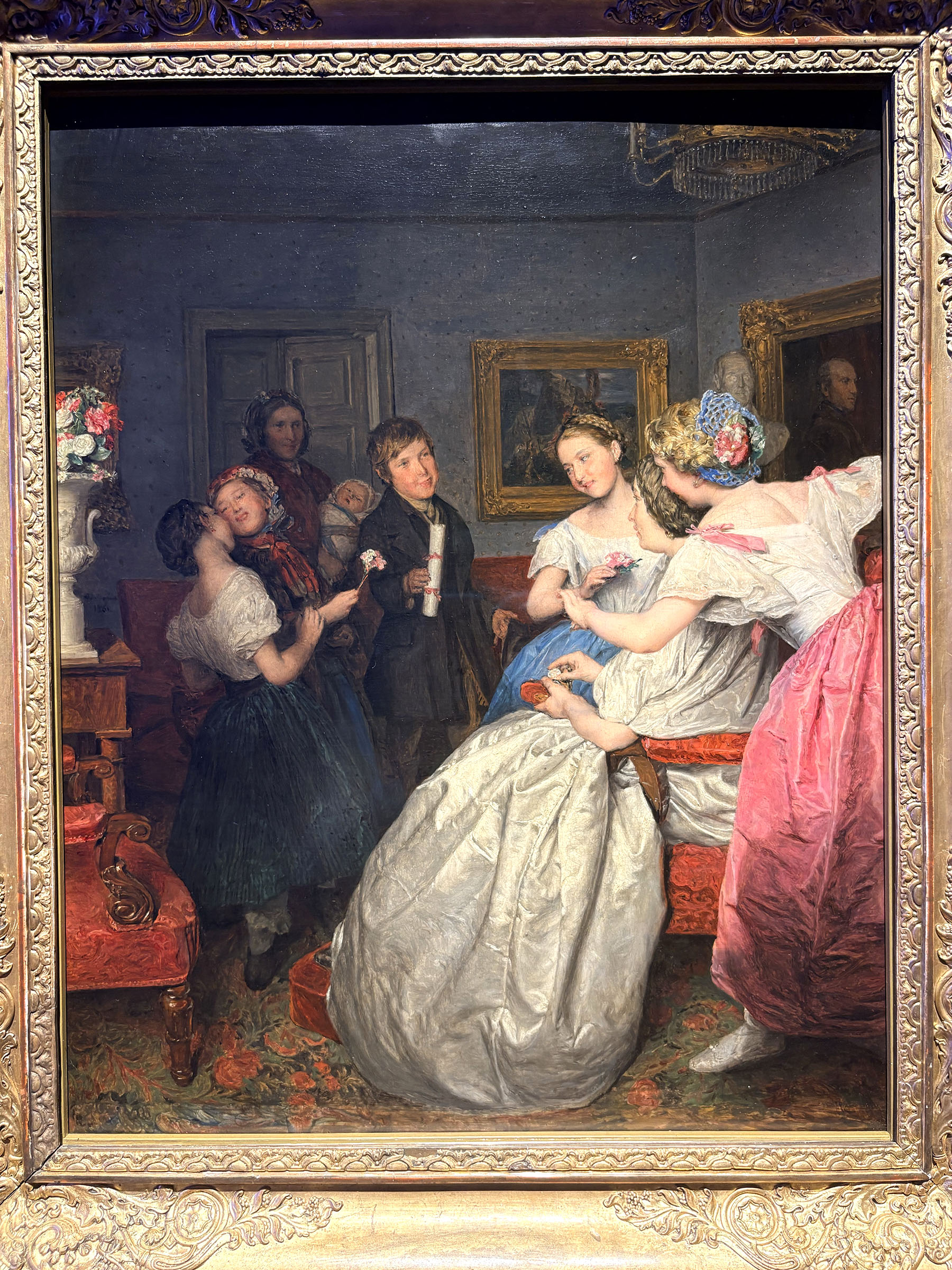
One of his works on show, Poor Well-wishers, portrays a middle-class Viennese salon where guests offer blessings and receive coins in return, subtly highlighting social inequality. In Wreath Maker, a barefoot young woman quietly weaves a floral wreath outside her modest home. Her calm expression contrasts sharply with the dark, dilapidated interior behind her, underscoring the hardships of everyday life.
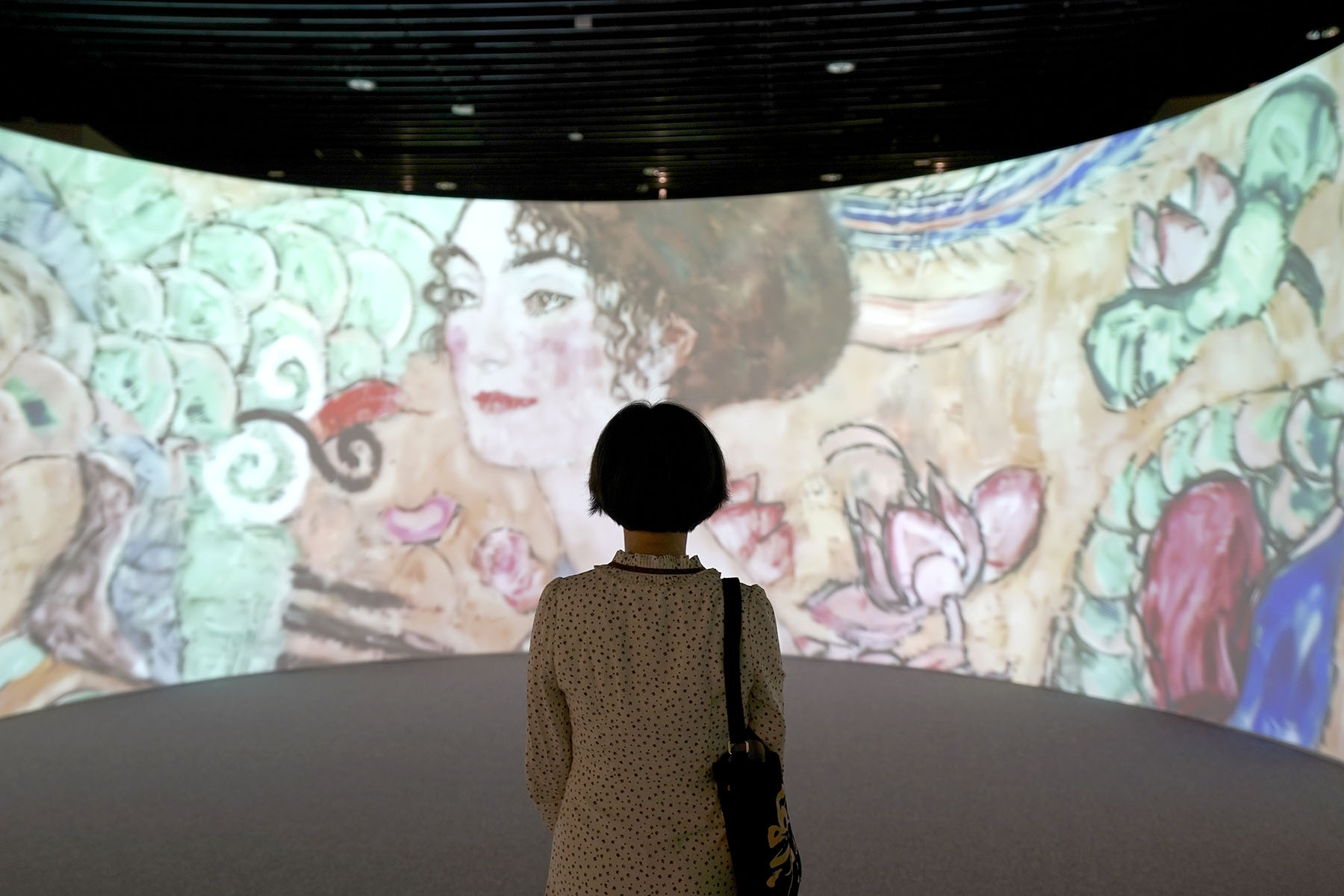
The Belvedere is perhaps best known for Gustav Klimt's iconic The Kiss. While Chinese audiences are familiar with his gilded portraits, this exhibition presents another side of the artist. The featured work, After the Rain, reflects Klimt's love of the countryside, where he spent his summers. Inspired by a trip in 1898, the painting depicts chickens pecking among wildflowers and trees shrouded in mist. Its softened forms and atmospheric brushwork capture the quiet freshness of a landscape after rainfall.
ALSO READ: Garden exhibition shows seeds of culture
Franz Smola, a member of the curatorial team, notes that Klimt is among Europe's most celebrated artists and that his works command extraordinary prices. The Belvedere holds 24 Klimt paintings, many too fragile to travel.
"It is very rare to send a Klimt abroad," he says, adding that the artist used landscape not simply to depict nature but to convey emotion and aesthetic experience.
Song Xiaoyan, one of the exhibition's chief coordinators, says every detail of the exhibition design enhances the viewing experience. Gallery walls are painted red for the Baroque period, violet for Romanticism and green for the avant-garde, while subtle scents of wild grass fill the space, creating an immersive journey that engages sight, smell and emotion.
Contact the writer at linqi@chinadaily.com.cn
