

Advanced technology brings convenience and awe to a young city outside Beijing, Deng Zhangyu reports in Xiong'an.
Before visiting Xiong'an New Area, a 9-year-old city just over 100 kilometers from Beijing, I had only encountered it through news reports and short videos. Established in 2017, it's been called China's "city of the future" — a title that sounds futuristic yet abstract.
It wasn't until I spent two days immersed in it that I truly understood: Xiong'an's future isn't some cold blueprint; it's a living, breathing entity where technology is etched into the city's DNA, and every step makes it tangible.
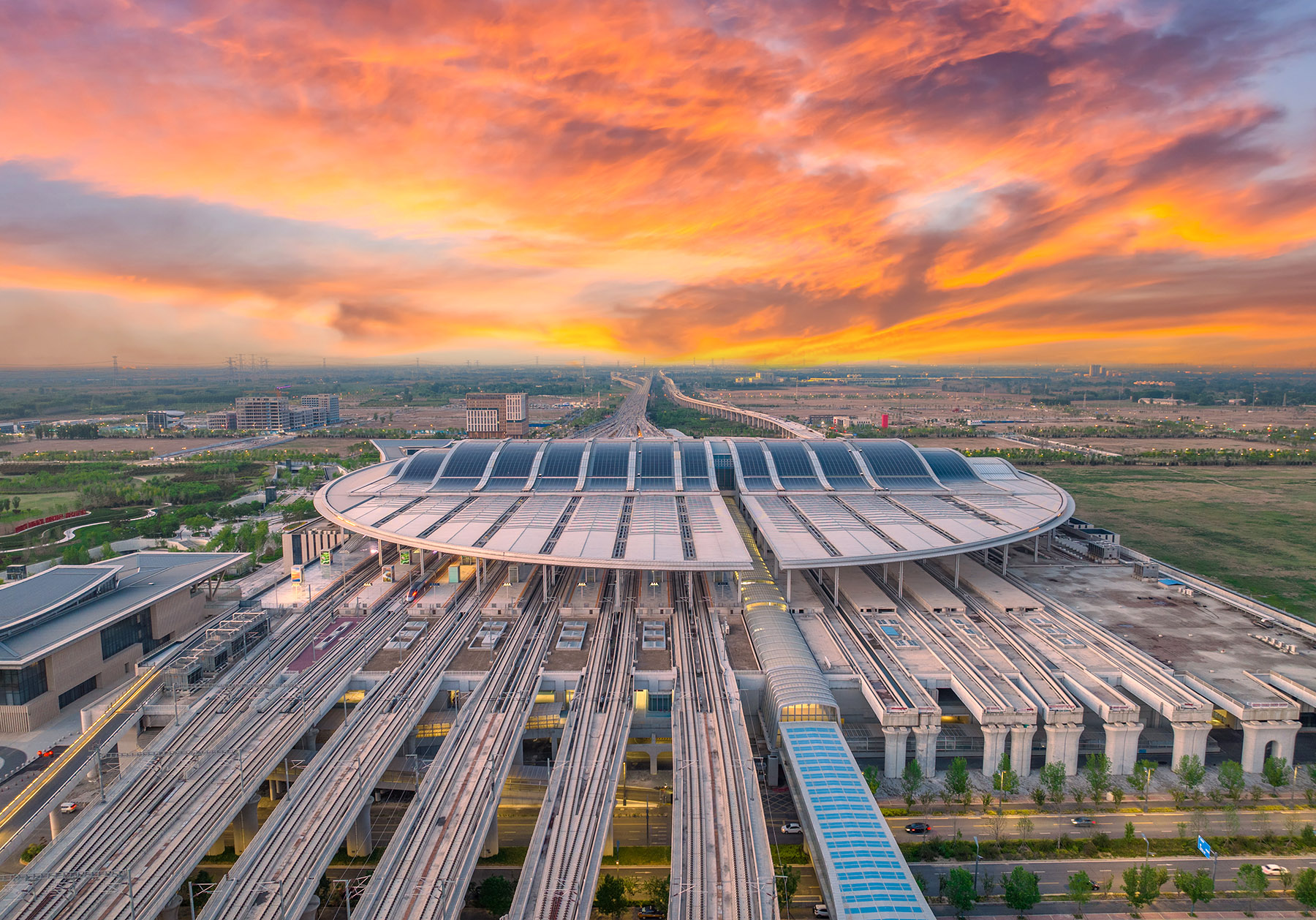
From Beijing Daxing International Airport, a half-hour high-speed train ride brought me to Xiong'an. As I started booking my accommodation, I discovered the city's first small surprise: a smart robot service that is not a gimmick exclusive to luxury hotels; it is standard in most hotels in Xiong'an. The Xiong'an Convention and Exhibition Center Hotel, where I stayed, elevated this smart experience to the next level.
READ MORE: The city of tomorrow
I arrived around lunchtime and, feeling too lazy to go out to eat, ordered delivery to the hotel. Half an hour later, the room's phone rang with a robotic voice reminding me to pick up my meal. Opening the door, I found a waist-high cylindrical delivery robot waiting. Following its voice prompts, I pressed a button on its head and easily retrieved my warm lunch. After completing its task, the robot asked for my satisfaction rating, then gently wished me a pleasant stay — polite, warm, every bit a responsible concierge.
More than just reading
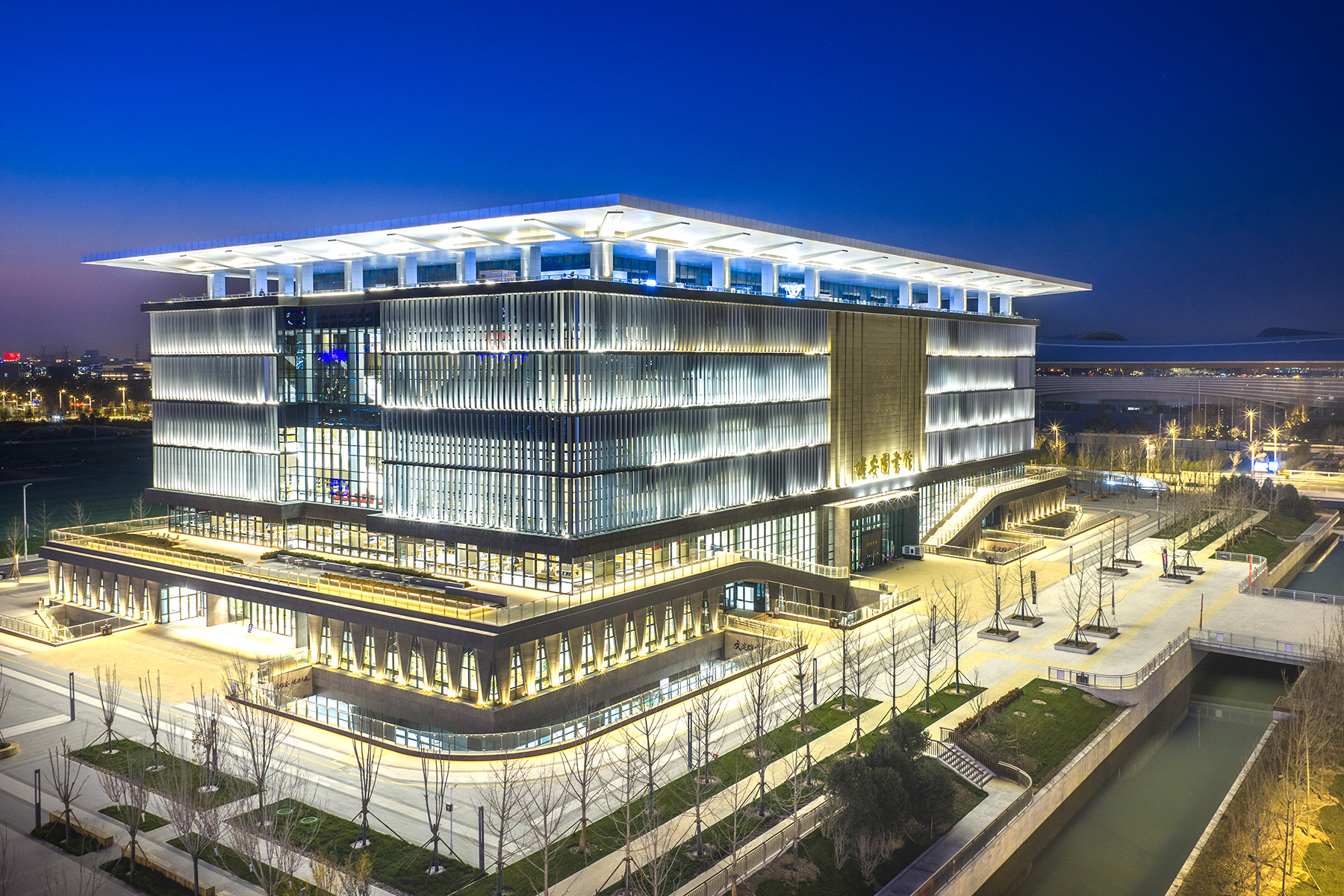
My first stop in the city after lunch was the Xiong'an Library, currently one of the most technologically advanced libraries in China. I met Mi Wei, a friend working in the library's event planning department, who guided me on a tour.
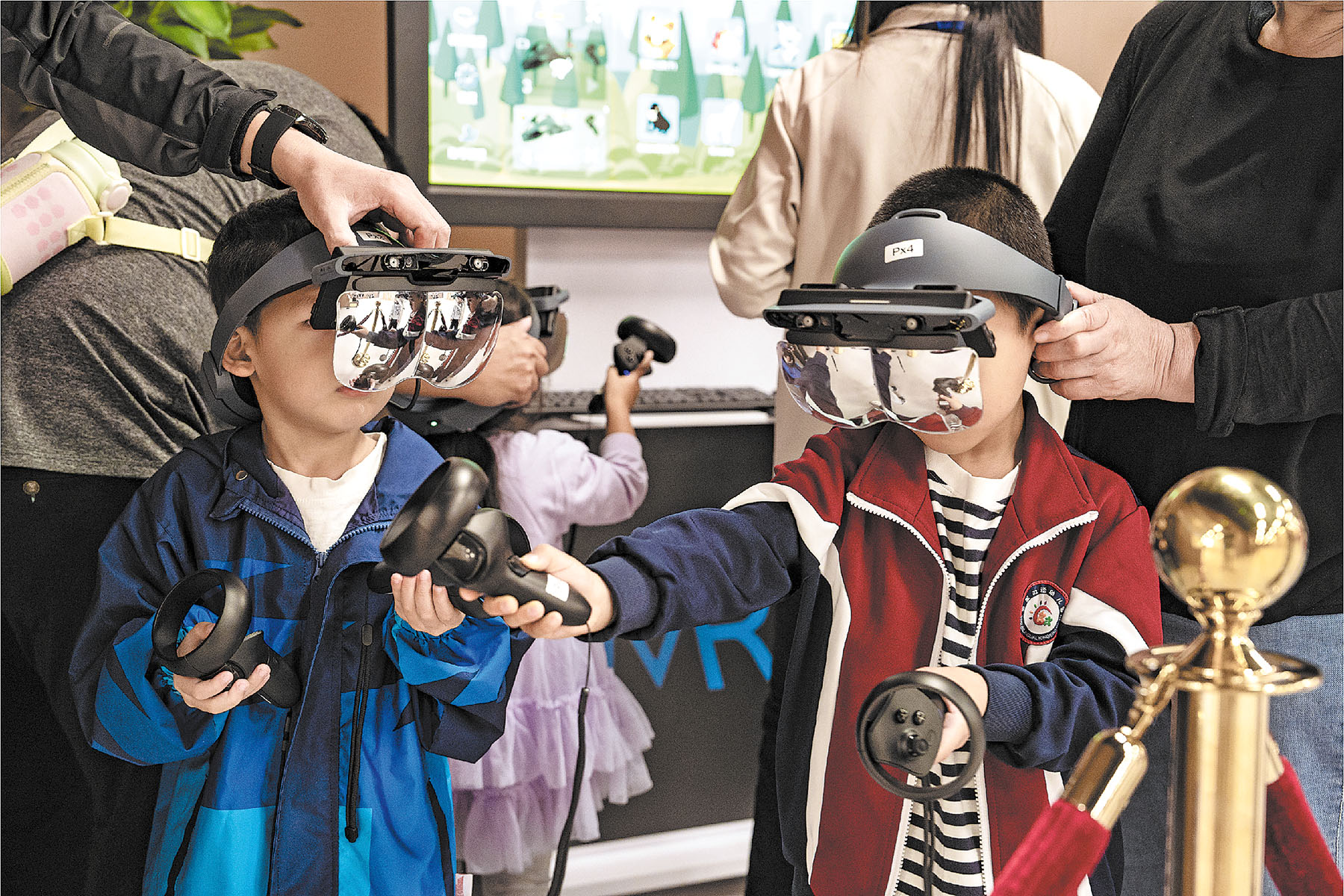
The library opened to the public last September and has received over 660,000 visitors. It isn't just a place for reading and studying; it is also a popular cultural landmark that attracts out-of-town tourists.
As I walked into this seven-story building, the large screen in the lobby immediately caught my attention, clearly displaying the real-time number of visitors. At the time of my visit, it showed 3,028 visitors inside, along with real-time updates on popular borrowing lists and book circulation data.
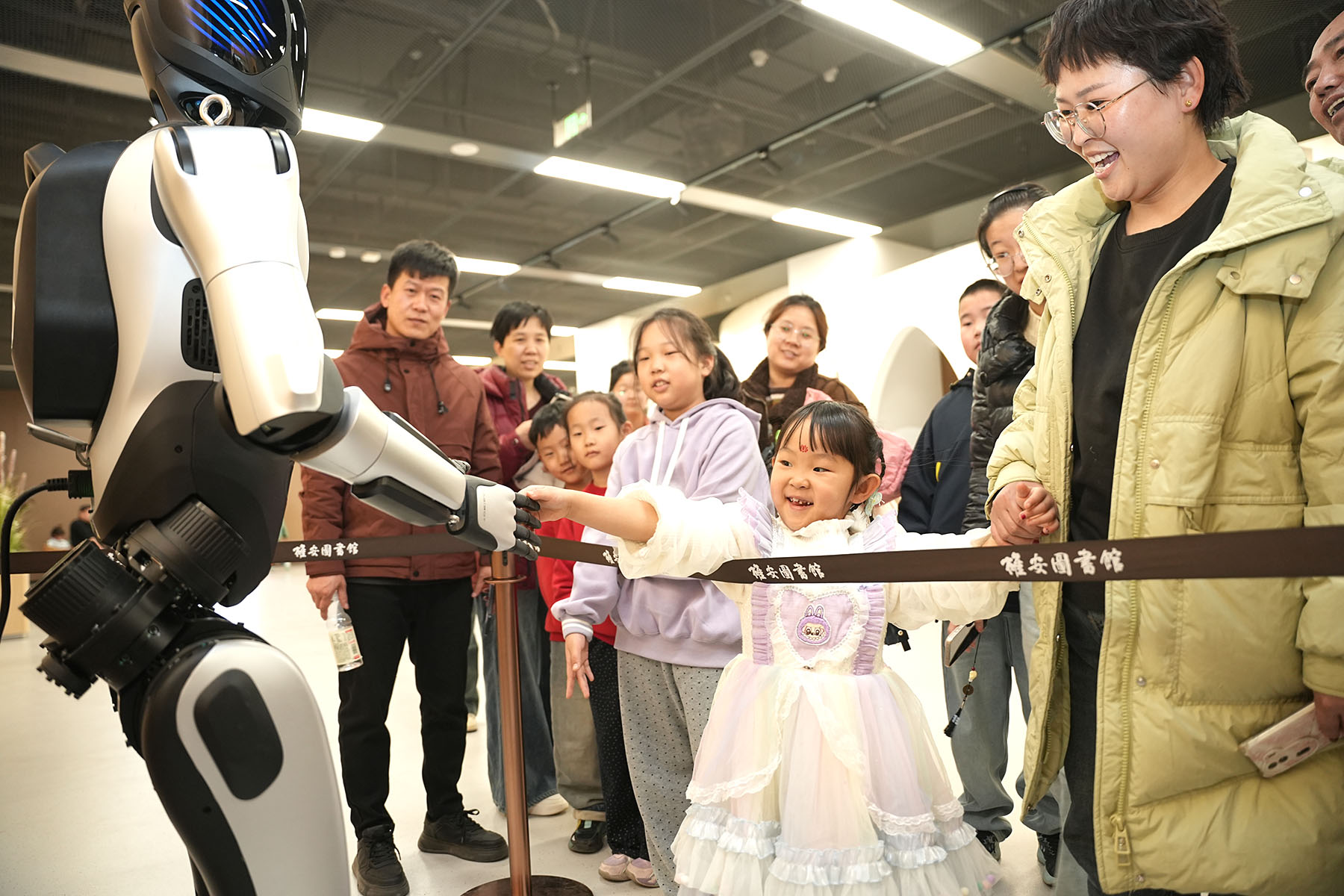
Smart service devices are scattered throughout the lobby. I tried a librarian robot that handles all queries via voice — no typing needed. Whether I asked for the total number of copies of the Chinese classic Journey to the West, the floor and specific bookshelf for each copy, or personalized tour route based on my interests, it answered fluently, accurately and efficiently.
Seeing my excitement and disbelief, Mi took me to a highlight: a high-end humanoid service robot. It answers any questions about book borrowing and facility navigation, and even leads the way to any reading area or functional zone in the library — a capable personal smart guide.
The most impressive feature is the self-service book return area. Rows of return machines look ordinary, but behind them lies a fully automated book-sorting and distribution system. Each returned book is transported by dedicated carts to the library's second through sixth floors, where it is accurately sorted and returned to its original shelf.
Mi explained that every book has an electronic ID, with the entire process running on machine recognition, automated sorting, and precise placement. Smart bookshelves are everywhere. Instead of searching row after row, I simply typed a title into the shelf's accompanying screen, and a bright green indicator light instantly lit up under the book's location — saving time and effort.
After curiously exploring, Mi took me to the third-floor reading area.
The entire floor features panoramic floor-to-ceiling windows, offering plenty of natural light and great views. By the windows are rows of soft lounge chairs. Sitting with a good book and occasionally looking up at the cityscape outside — especially at sunset, when the sky is filled with color — is wonderfully relaxing. I could spend an entire day there just sitting and reading, enjoying the slow pace.
Mi joked that reading also requires energy and pointed out an unmanned chocolate vending machine in the corner. By scanning a QR code, I could choose different shapes — cute bunnies, traditional Chinese knots, and more. After ordering, a robotic arm made the chocolate on the spot; in about a minute, a customized chocolate was ready, for less than 20 yuan ($2.92), making a delicious and fun treat.
I wandered floor by floor, exploring the library's every corner like a treasure hunter. As I left, I spotted a driverless mobile book van. Mi said it was the library's dedicated mobile service vehicle, offering door-to-door book borrowing and returning for nearby communities, bringing convenience right to residents' homes.
Holding about 500,000 books, the library runs with fewer than 60 staff members, thanks to smart systems.
Collision and coexistence
After leaving the library, I headed to the Xiong'an New Area ZGC Science Park, home to many high-tech companies focused on artificial intelligence, robotics and drone applications.
As soon as I entered, I was struck by a large drone hovering high in the sky, steadily spraying cleaning solution onto a high-rise building's glass wall — a safe and efficient alternative to traditional high-altitude cleaning, which can be dangerous. In Xiong'an, drones handle it with ease.
Inside the park's technology exhibition hall, I experienced a variety of cutting-edge products.
First, I tried a smart health scanning device. Standing in front of a large screen for just 10 seconds, I received a detailed health report on my phone, including blood pressure, heart rate, heart and brain function, skin condition, and more. I learned that this device is mainly used for pre-shift health checks for bus drivers to ensure public transportation safety.
The exhibition hall also features several robotic arms with "brains" and "eyes". These can perceive, recognize, and operate flexibly. With a voice command, one arm can quickly and accurately pick out a designated toy from a pile of mixed items. I told it to find an elephant toy; within seconds, the arm located it, gently picked it up, and placed it in the designated spot — smooth and precise, impressive and surprising.
In truth, Xiong'an's technological innovation is not confined to places like libraries or science parks. It subtly permeates every corner of daily urban life.
The most obvious feature is the city's smooth traffic. There are traffic lights everywhere, but I encountered almost no red lights — no frustrating stop-and-wait. Local drivers told me that all traffic lights use an adaptive smart control system that automatically adjusts timing based on real-time vehicle and pedestrian flow, efficiently managing traffic throughout the city.
Driverless taxis are a common sight on the streets. Apollo Go (Luobo Kuaipao) driverless cars have already been deployed on a large scale in Xiong'an, becoming a regular choice for residents and tourists alike.
On my way back to the hotel, I ordered a driverless car through my phone. In two minutes, the car arrived at the exact pickup point. I unlocked it by entering a door code. The car seats up to three passengers and is equipped with a massage seat and voice-activated music. The entire ride was smooth and stable.
The most surprising part was the price: 3 yuan for a 2-kilometer ride. I took it several more times, for its worry-free convenience.
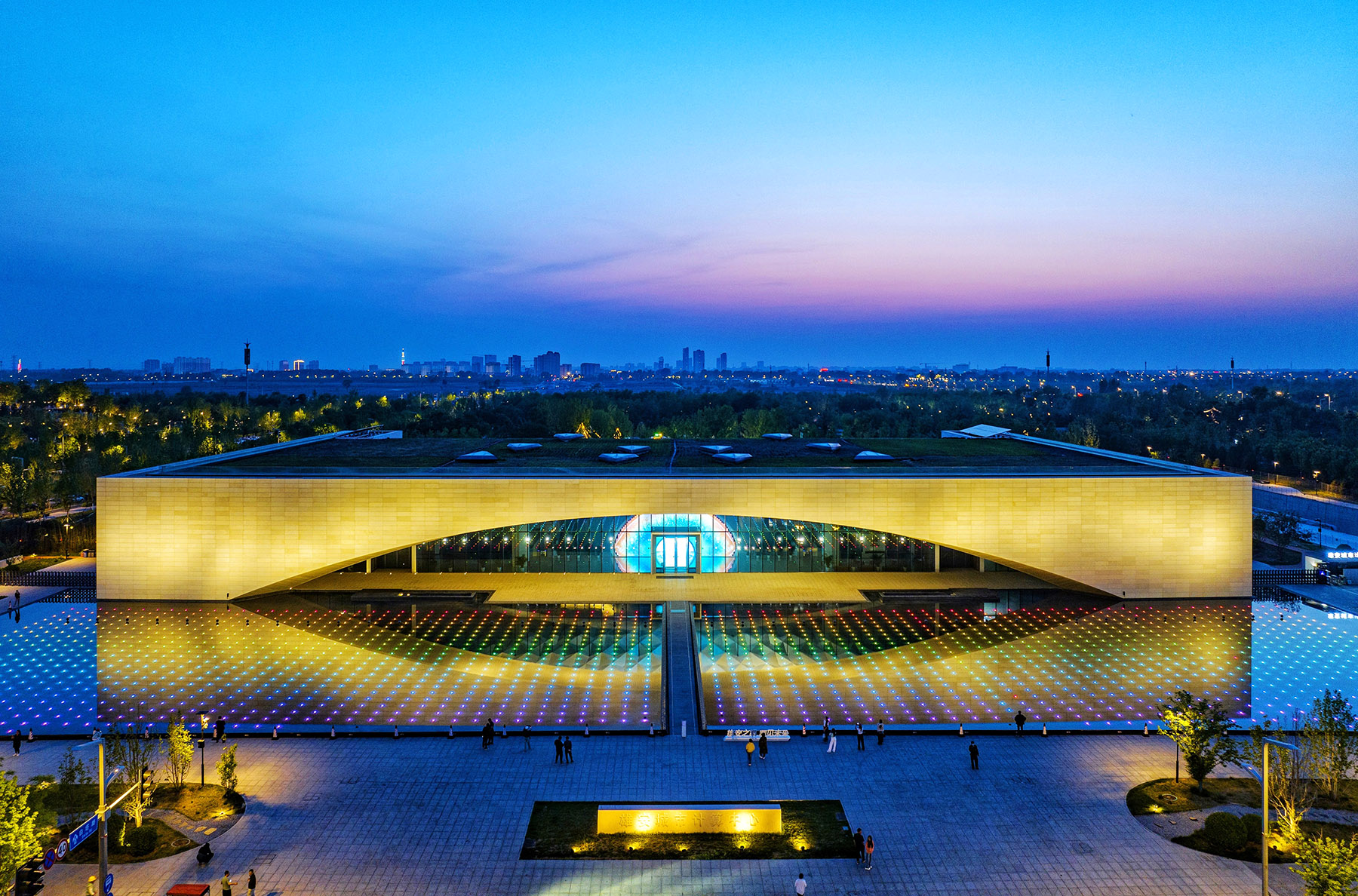
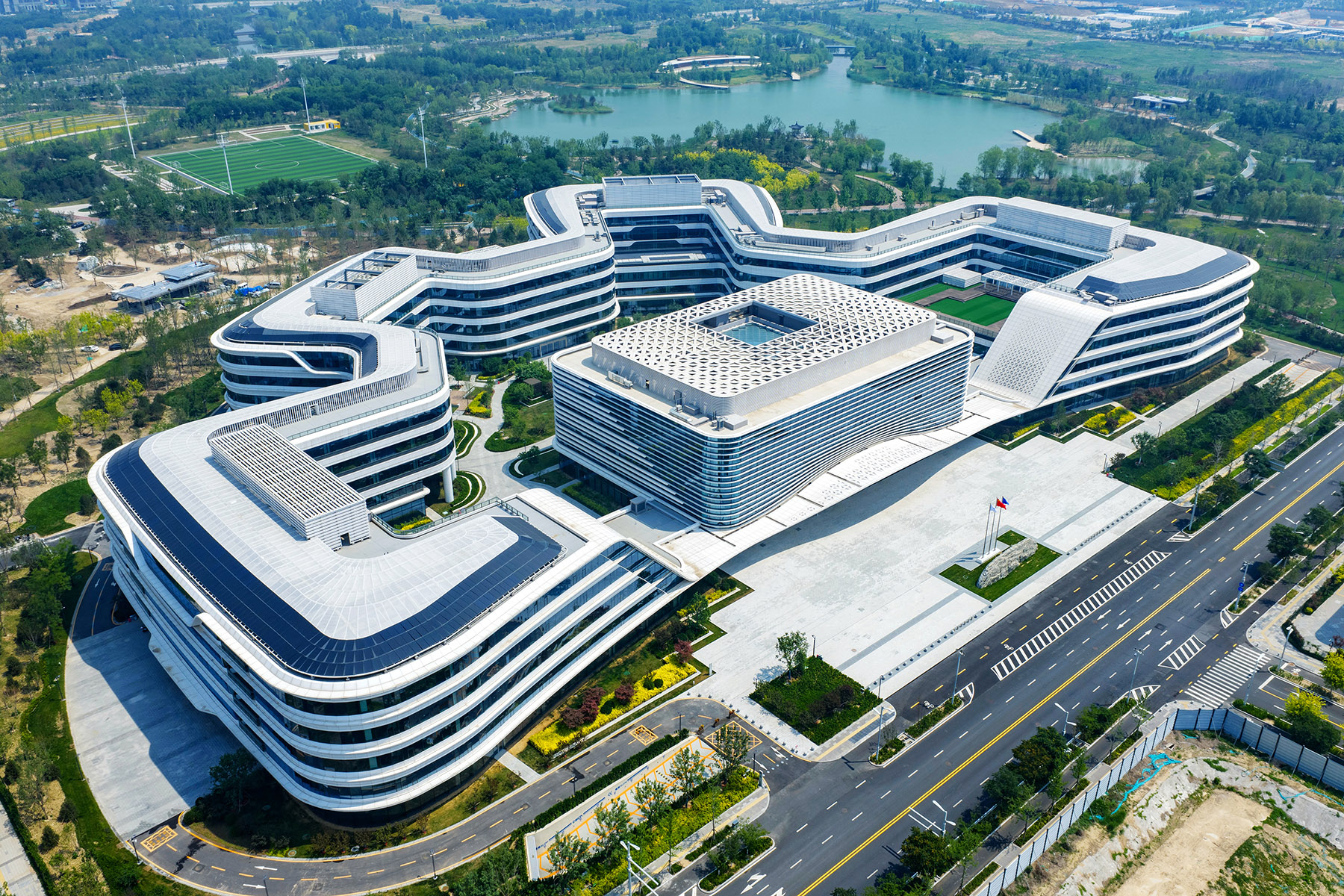
Just a 10-minute walk from my hotel sits the Xiong'an Urban Computing Center. Every night at 8 pm, when its lights come on, the building resembles a giant green eye staring out over the city. This is the super brain of this futuristic city.
In fact, Xiong'an has a digital twin that grows alongside the city itself. It is powered by sensors embedded in buildings, bridges, electrical boxes, and more, all feeding real-time data back to the computing center. Xiong'an's Eye, as it is called, can optimize how the city runs.
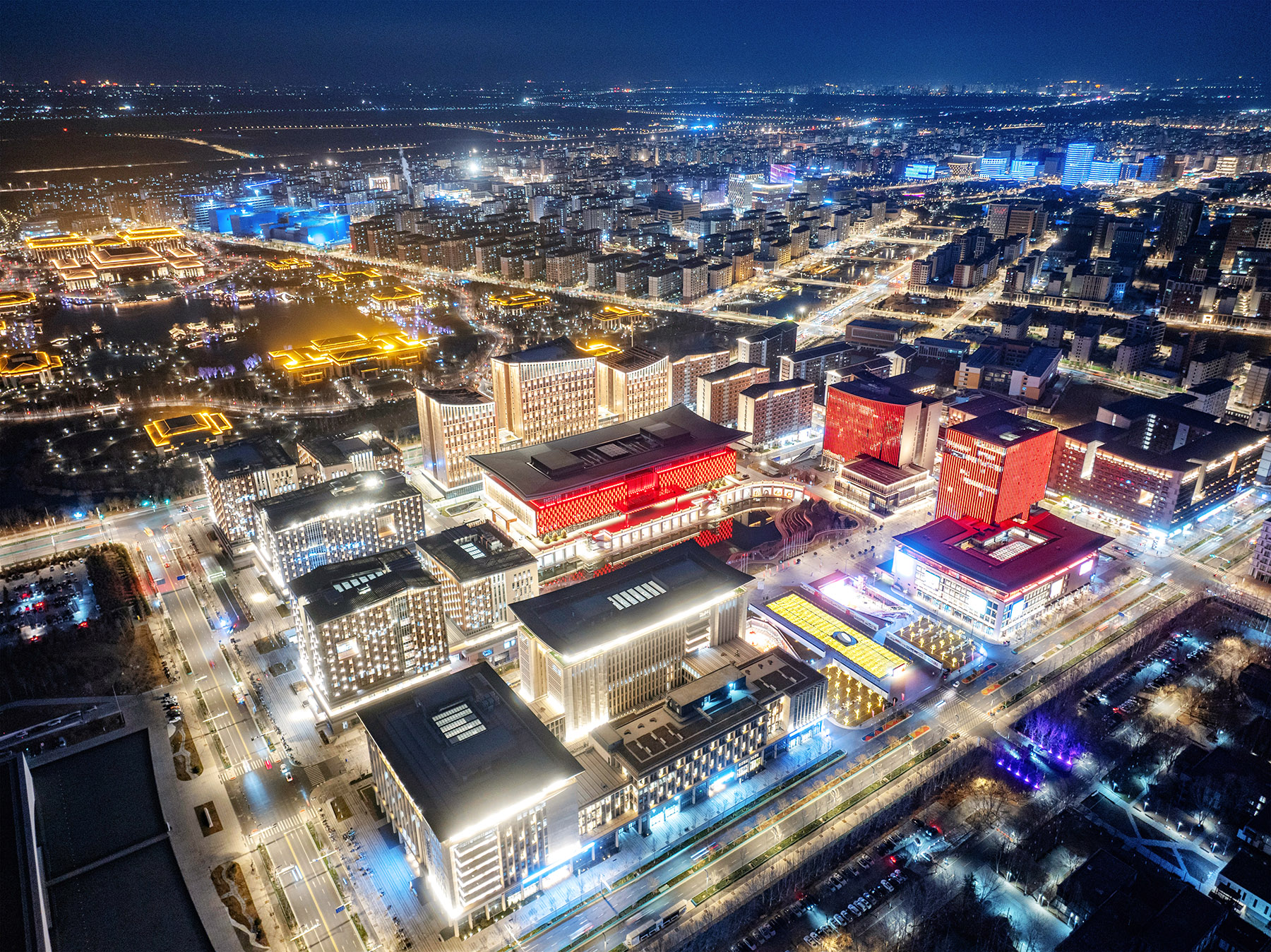
In the shopping mall near my hotel, smart facilities are everywhere: a robotic barista in the cafe precisely brewing each cup of pour-over coffee, and a patrol robot gliding through the corridors 24 hours a day.
The curiosity written all over my face gave me away as a tourist, while local residents barely noticed. This is just their everyday life.
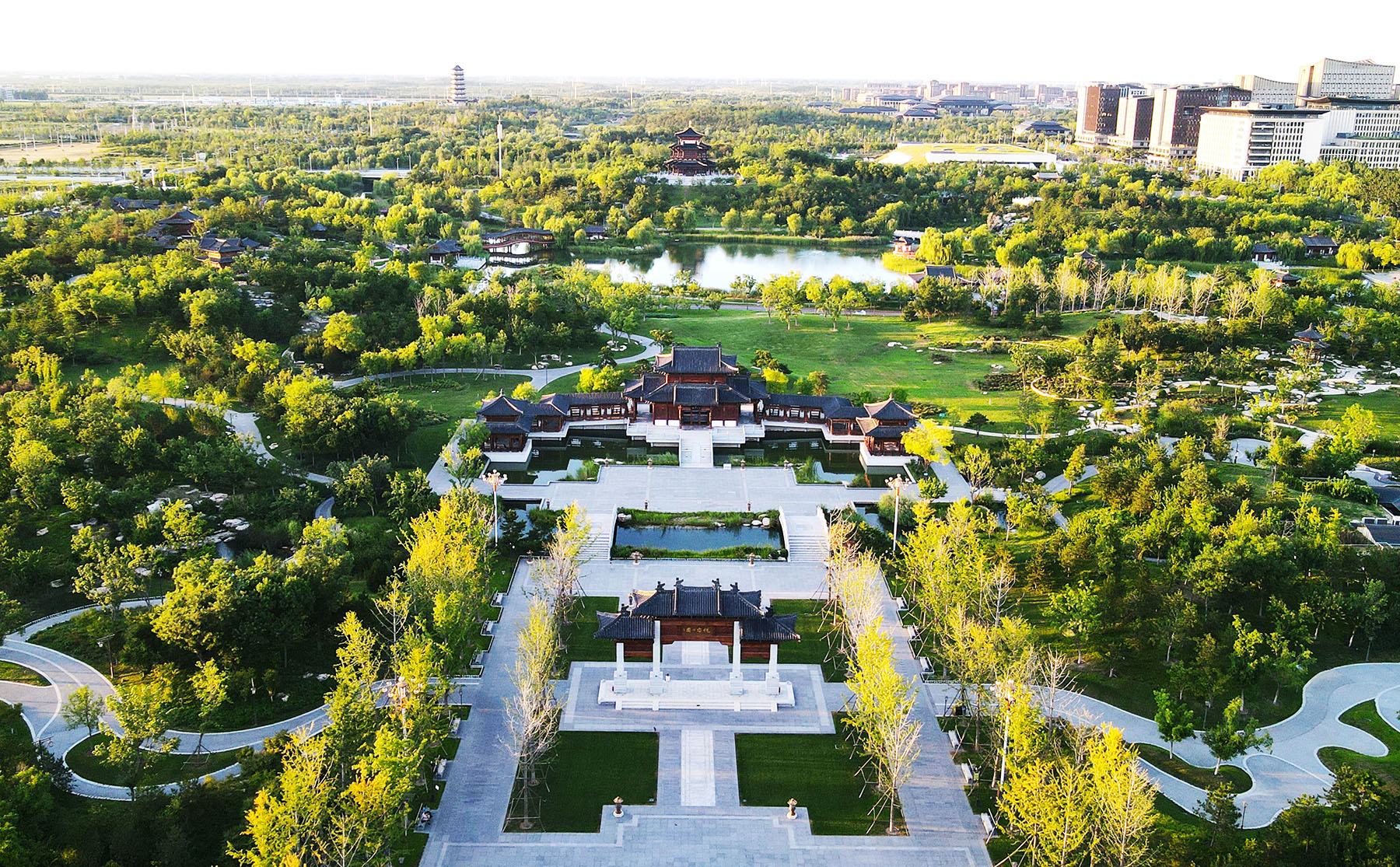
I stepped out of the mall, and in just a few minutes' walk, I entered a completely different world. Hidden behind the Xiong'an Urban Computing Center is Yuerong Park, where nine traditional Chinese gardens of distinct styles are scattered across the grounds — small bridges, flowing water, pavilions, and towers — every inch steeped in classical Chinese aesthetics.
ALSO READ: Archaeologists unearth the ancient past of a 'city of the future'
Walking the entire park takes two to three hours. What makes it fascinating is that the park is also equipped with autonomous tour carts: scan a code, set your route, and a voice guide accompanies you along the way.
There are many such large parks in Xiong'an. Outside the park gates, the city hums with cutting-edge technology and modern life. Inside, all is quiet, with traditional Chinese gardens. This collision and coexistence of tradition and the future is what gives Xiong'an — a city of tomorrow — its most distinctive and memorable character.
Contact the writer at dengzhangyu@chinadaily.com.cn
