

Picture book artist taps her inner child and grandmother's stories to create award-winning works, report Li Muyun and He Chun in Changsha.
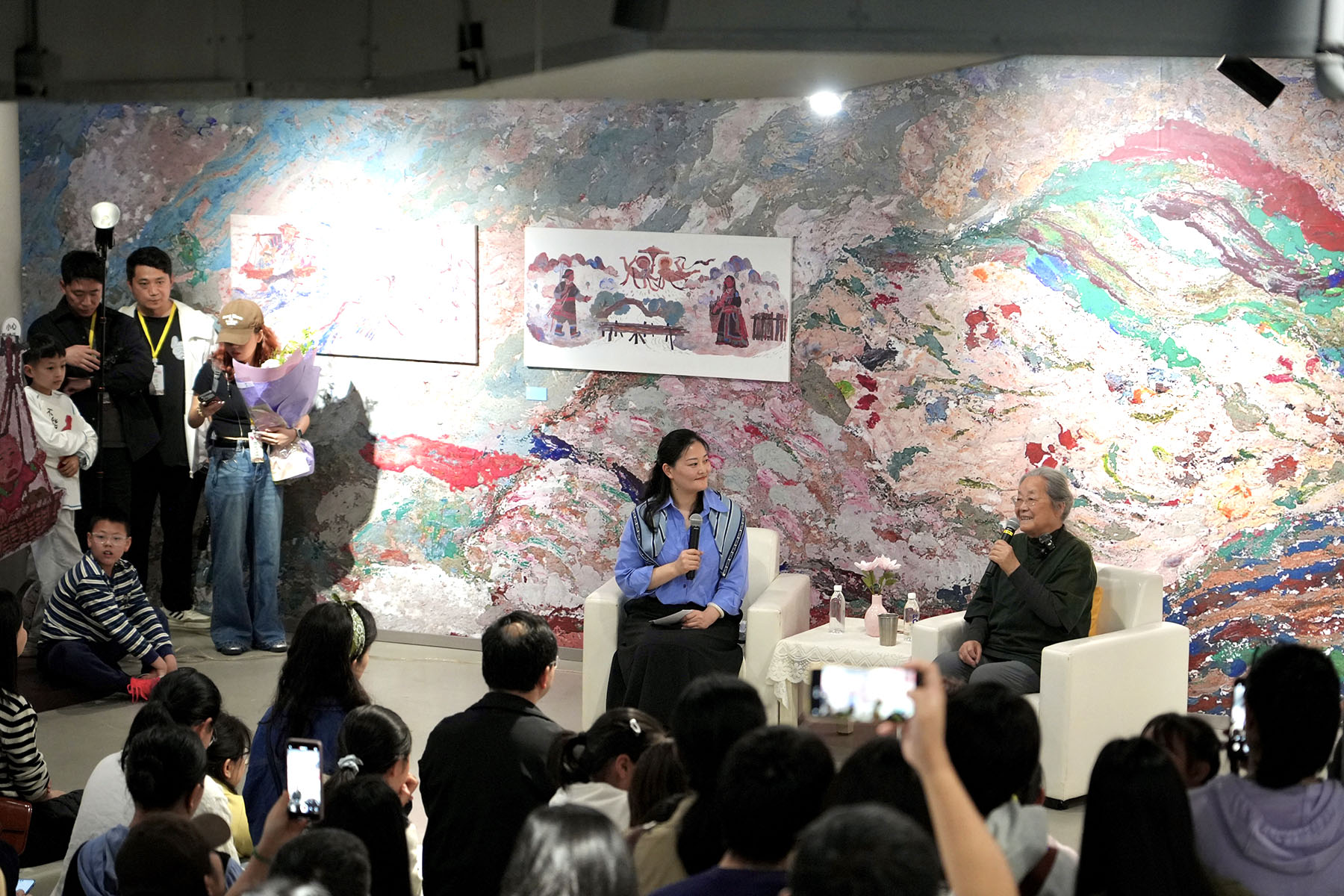
"Everyone has a child inside," says Cai Gao, the 79-year-old renowned picture book artist who has spent decades nurturing her inner child and her work. "Anything that stops me from being a child, I cut it loose. No mercy," she asserts.
This unwavering inner child has propelled her to the pinnacle of her career. On April 13, Cai became the first Chinese illustrator to receive the Hans Christian Andersen Award, the highest international accolade given every other year to writers and illustrators of children's books. The announcement was made at the annual news conference of the International Board on Books for Young People (IBBY) during the Bologna Children's Book Fair in Italy.
READ MORE: Children's books a tale of new cultural confidence
The night she received the news, Cai's thoughts were not on the prize or herself, but on the people and the land that shaped her.
Born in 1946 in Changsha, the capital city of Central China's Hunan province, Cai grew up during the last days of an era when stories were passed down orally from generation to generation. Her worldview was profoundly influenced by the tales her grandmother shared with her while sitting in the courtyard, sewing by hand.
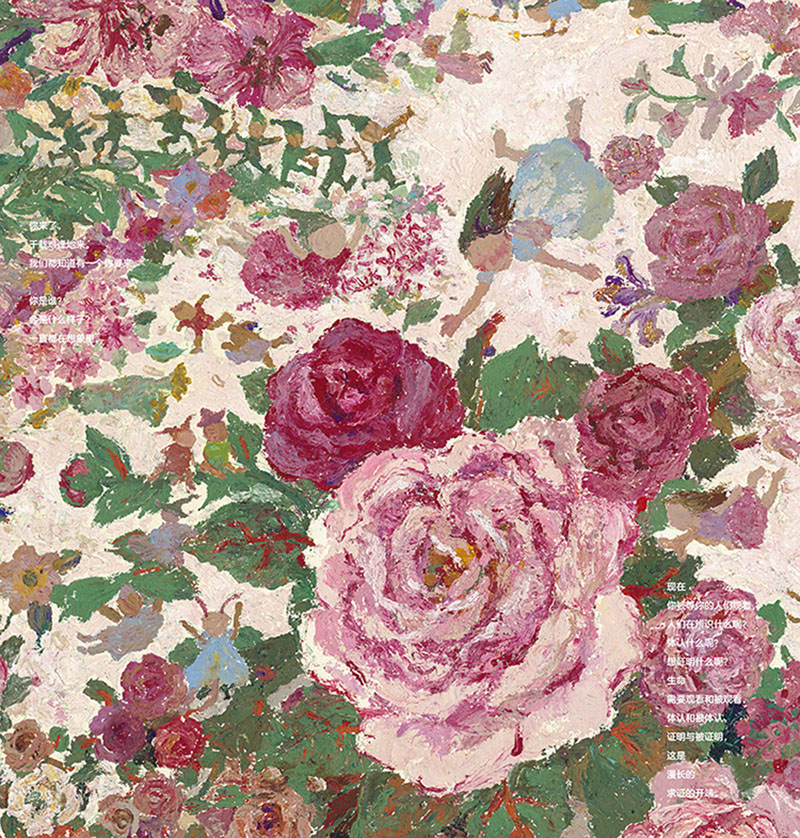
She fondly recalls her grandmother in an immaculate plain blue cotton gown with a fresh flower — either a jasmine or gardenia — pinned to her collar.
"She loved life, and made our daily existence feel like a celebration," Cai reminisces, adding that her grandmother often took her to see both local and visiting opera troupes. This exposure allowed Cai to sketch the characters and preserve the performances in her memory.
Despite never having the opportunity to attend art school, Cai considers her childhood experiences — playing in the courtyard of pomegranate trees, listening to her grandmother's nursery rhymes, and watching theater plays — as the "best education".
"My childhood cannot be replicated," she says. "I'm lucky to have had all of that."
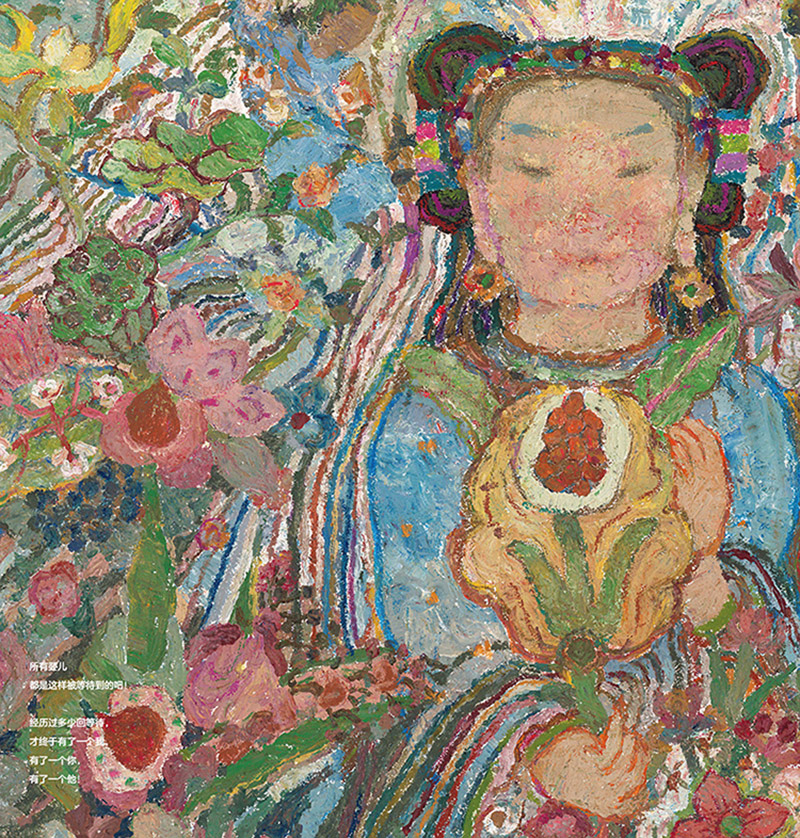
Many of her books echo her childhood memories, including Where the Moon Goes, I Go.
"The girl picking the pomegranate in that book is me," she says with a broad smile. "It's easy to illustrate your own childhood. Art is not such a big deal for me because it is never far from life."
Graduating from Hunan First Normal School (now Hunan First Normal University), Cai began her career as a rural teacher. Despite the challenges of rural life, she found beauty in her surroundings and never abandoned her passion for art. Reflecting on her six years working and living in the countryside, she describes herself as a "Sunday artist", seizing any spare moment outside of her teaching duties to pick up her brush.
In 1982, at 36, Cai started working as an editor for children's books at Hunan Juvenile and Children's Publishing House in Changsha. This position allowed her to delve deeply into the world of picture books, both editing and illustrating. Her talent was internationally recognized in 1993 when her book, Bao'er, won the Golden Apple Award at the 14th Biennial of Illustration Bratislava, making her the first Chinese artist to receive this prestigious accolade.
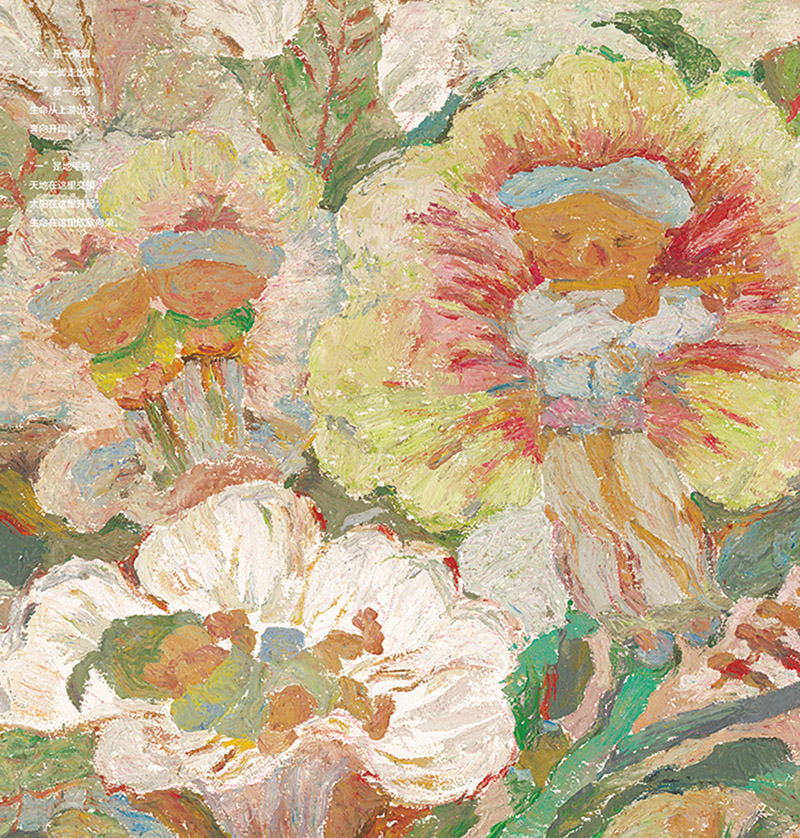
The story of Bao'er is adapted from a tale by Qing Dynasty (1644-1911) novelist Pu Songling's masterpiece Liaozhai Zhiyi (Strange Tales from a Chinese Studio). Cai selected the only story featuring a child as the protagonist and reimagined it, focusing on a boy's love for his mother and his courage in confronting evil and darkness.
In Cai's book, when the boy focuses intensely, his eyes turn a clear blue, symbolizing his determination and insight. "Blue is the color of enchanting, clear water, with sunlight lingering deep inside," Cai explains. "Children's eyes are clear and innocent, allowing them to see through to the essence of things."
Like Bao'er, many of Cai's works are deeply rooted in Chinese folk traditions and classical literature.
The picture book The Land of the Peach Blossom is inspired by the classic essay and poem The Peach Blossom Spring by Tao Yuanming from the Eastern Jin Dynasty (317-420), reflecting the Taoist vision of life. Published in 2001 by Fukuinkan Shoten Publishers in Japan, the book's first edition of 5,000 copies sold out within a month. In 2003, two illustrations from the book were selected for inclusion in Japanese sixth-graders' Chinese textbooks.
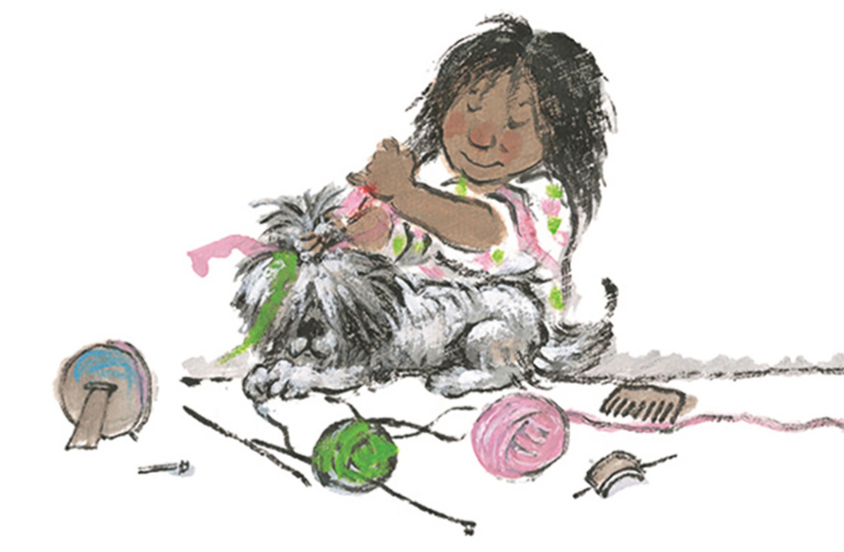
Tan Fengxia, a professor at Nanjing Normal University and a member of the 2026 Hans Christian Andersen Award jury, praised Cai's work as a powerful model for how Chinese stories can transcend borders.
"She has embraced Western artistic influences with an open mind, blending them into a visual language that is distinctly rooted in Chinese tradition, yet speaks across cultures," Tan says. "She crosses cultural barriers by touching on universal themes: the love for our children and the desire to offer them something bright."
"I love Chinese culture. I love every written character of the Chinese language," Cai says. "I hope the world can see more of the finest Chinese works and, through them, gain a better understanding of China."
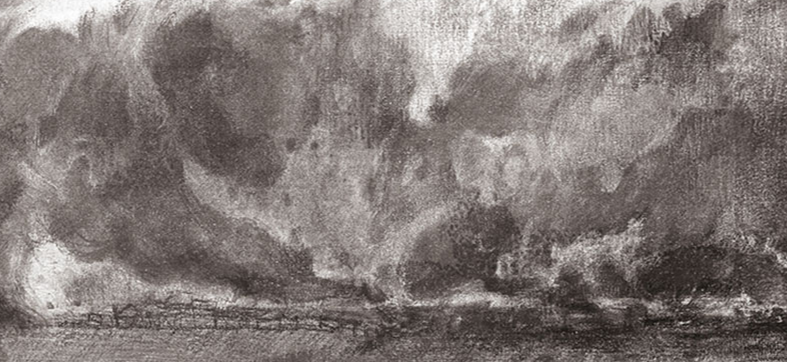
Among the works that most impressed the HCA jury was the 2023 edition of Blazing City 1938, a wordless, black-and-white picture book created by Cai and her daughter Xiao Aozi, who is also a painter. Through the eyes of a little girl, the book revisits the Wenxi Fire, a devastating catastrophe in Changsha during the Chinese People's War of Resistance Against Japanese Aggression (1931-45). The fire destroyed over 90 percent of the houses in Changsha, leaving the city in ruins.
Shereen Kreidieh, president of the HCA Jury, describes Cai's work as "amazing".
ALSO READ: Margaret Atwood, unworried by AI, continues prolific writing career
"With just two colors and no words, it tells a complete story of war, allowing any child anywhere in the world to have a feeling of what's happening," Kreidieh says.
With her books, Cai hopes to convey the Chinese people's love for peace, a message she believes is increasingly important in today's global context.
"Our picture books should serve as bridges of understanding, bringing more harmony to the world," she says.
Contact the writers at limuyun@chinadaily.com.cn
