


Euro-area inflation quickened to the highest level in almost three years, cementing the case for an interest-rate hike by the European Central Bank next week.
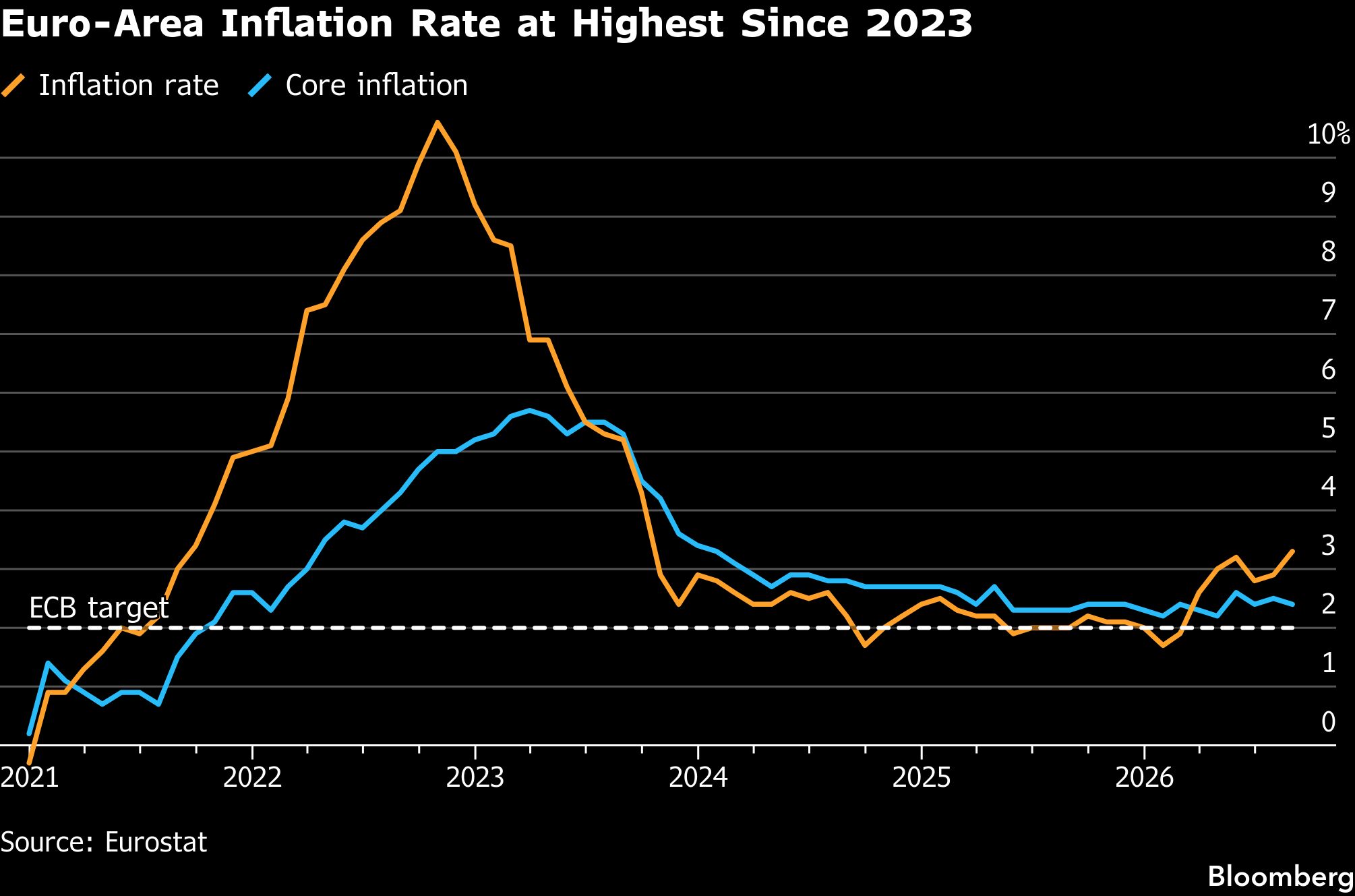
Consumer prices rose 3.3 percent from a year ago in August, up from 2.9 percent the previous month, Eurostat said Tuesday. That’s the highest since September 2023 and in line with the median estimate in a Bloomberg survey.
A core gauge, excluding volatile items like food and energy, unexpectedly edged down to 2.4. percent, however, while the closely watched services gauge fell to 3 percent.
With the Iran war keeping inflation well above the 2 percent goal and the euro-zone economy proving surprisingly robust, investors are betting the ECB is about to add to June’s initial increase in borrowing costs. Another quarter-point hike on Sept 10 is now fully priced by markets, which reckon more will follow.
Executive Board member Isabel Schnabel told Bloomberg last week that borrowing costs must rise further to bring price gains back to target. Other policymakers have expressed similar thoughts.
“Upside risks to inflation have increased again recently,” Austrian central-bank chief Martin Kocher said Tuesday. “If this picture is confirmed in the ECB’s new forecast, I believe another interest-rate hike will be necessary in the near future.”
Elevated oil and gas prices are feeding inflation pressure across the 21-nation euro area. Separate data Tuesday showed a sharp increase in Italy to 3.2 percent from 2.9 percent, while figures published last week revealed a jump in Spain’s reading to 4.5 percent. The bloc’s top two economies, Germany and France, both recorded accelerations in August.
A hike next week would lock in the ECB’s status as the most hawkish central bank within the Group of Seven. Others may be preparing to follow suit, however. Despite not signaling explicit support for a move, Federal Reserve Chairman Kevin Warsh said last week that curbing inflation is the top priority.
In the meantime, monetary tightening is coming from bond markets. Global yields climbed back to the highest level in almost two decades on Tuesday as rising oil prices fuel inflation concerns and wagers on Fed action are ramped up.
A key question for the ECB is whether its deposit rate, currently 2.25 percent, will need to be lifted to levels where borrowing costs restrain activity. Chief Economist Philip Lane has indicated that 2.5 percent is the upper limit of the so-called neutral range.
Officials debated in July whether “mildly restrictive” policy may be needed to get prices back to target, with some indicating recently that rates could rise beyond 2.5 percent. Others, like, Executive Board member Piero Cipollone, urge caution with second-round inflation effects from the war not visible yet and economic damage a risk.
