

Based on the 2025 and 2026 university rankings of both the Times Higher Education and the Quacquarelli Symonds World University Rankings, only one city has five institutions in the global top 100 — the Hong Kong Special Administrative Region. This remarkable achievement is the result of decades of deliberate choices about what kind of city this is and what role it wishes to play in the world. For a city of 7.5 million people to stand shoulder to shoulder with much larger economies in the global knowledge economy is genuinely extraordinary. Why has this happened, what is it doing for Hong Kong, and how easily could it be lost?
 Several interlocking factors explain its success. First and foremost is internationalization, which has been baked into the city’s DNA across trade, finance, regulation, and higher education for decades. English is the common medium of instruction. There are also broad-based curricula and a long tradition of recruiting faculty and students from every continent, creating an enriching, cross-cultural scholarly environment. This has made Hong Kong universities natural partners for collaboration with global elite partners from the Ivy League to Oxbridge and from Tsinghua University to Peking University. This top-level global connectivity is self-reinforcing and has translated directly into coauthored papers, joint laboratories, leveraged projects, and international funding streams that matter greatly in the metrics used by global ranking agencies.
Second is sustained investment in research and infrastructure. Thankfully, the HKSAR government has chosen to treat universities as strategic assets, with competitive, large-scale research grant programs, significant postgraduate places, and modern laboratories. These allow local institutions to specialize and excel across broad swathes in strategic, scientific, technical, and cultural domains. These include biomedicine, fintech, AI, materials science, creative media, and emerging areas such as space sciences via participation in Chinese mainland space missions. The strength of the ecosystem is such that multinational companies set up research and development operations in Hong Kong precisely to tap into that concentrated expertise and talent.
Third is Hong Kong’s unique advantage as a superconnector between the mainland and the wider world. The city’s universities can simultaneously plug into national initiatives like the Guangdong-Hong Kong-Macao Greater Bay Area while remaining deeply embedded in international networks of scholarship and innovation. A laboratory in Hong Kong can collaborate with colleagues in Shenzhen and, in the same week, join a European science consortium or a major, internationally funded research project. This dual connectivity is difficult to replicate elsewhere and is part of the intangible “value-add” that rankings attempt to capture.
The benefits of having five universities in the global top 100 are wide-ranging. They help drive the transition from a trading and financial hub toward a fully-fledged knowledge-based economy. Highly skilled graduates feed into local industries, university spin-off companies populate science parks and coworking spaces, patent portfolios and startups contribute to diversification beyond property and finance. In a world where talent is mobile, a strong university system acts as both magnet and glue, attracting capable people from all over the world and giving them reasons to stay beyond the cuisine, entertainment options, exciting pace of life, and world-class infrastructure.
The impact is also felt in less tangible, but equally important ways, through soft power. This must not be underestimated. When parents in the mainland, Southeast Asia, the Middle East, and elsewhere encourage their children to apply to Hong Kong universities, when top scientists from Europe or North America accept chairs here (think the recent recruitment of two Nobel Physics Laureates to the University of Hong Kong), they are making a judgment about the city’s reliability, quality, and openness. Each successful graduate who returns home with a Hong Kong degree, and each international research collaboration that bears Hong Kong’s name on the resulting publication’s author list, extends the city’s influence. At a time when increased geopolitical complexity elicits narratives about Hong Kong that are contested, the steady, noble and apolitical work of its universities in science, medicine, engineering and the humanities provides a powerful counterpoint and helps anchor the city’s reputation in concrete achievements.
Nevertheless, success also brings challenges, not least the temptation to treat rankings as both compass and destination. Global league tables like the respected QS and THE serve a useful purpose by providing external benchmarks, stimulating healthy competition, and elevating the international visibility of institutions that perform well. However, their methodologies are not neutral. They promote research volume and citation counts, often in English-language journals, and can undervalue teaching quality, community engagement, and impact on local policy or regional development. An overreliance on these rankings risks encouraging universities to optimize for the scoreboard rather than for the real needs of Hong Kong and the nation. Rankings matter for perceived prestige, student recruitment, international partnerships, funding, and philanthropic giving. But we should engage with them critically and realistically. Hong Kong’s universities must continue to perform strongly against global benchmarks, while developing richer, internal measures of success: How effectively do they contribute to the Greater Bay Area’s innovation agenda? How deeply are they involved in solving Hong Kong’s own challenges in public health, aging, inequality, and sustainability, and how well do they nurture not just employable graduates, but thoughtful, globally aware citizens?
At the same time, Hong Kong universities need to deepen their integration with the mainland’s rapidly advancing science and technology landscape without losing their distinctiveness under the “one country, two systems” policy. This is vital. Competition from leading institutions in Beijing, Shanghai, and neighboring cities is intensifying, especially in science, technology, engineering, and mathematics. The smart response is not to retreat, but to lean into areas where Hong Kong’s particular mix of robust common law legal framework, superb international connectivity, and strong academic culture provides local universities with an edge that enables them to build genuinely symbiotic global and mainland partnerships that create value on both sides.
In the end, the rise of Hong Kong’s universities into the global top tier has profoundly shaped the city’s identity and expanded its options. It has bolstered its economic prospects, enhanced its soft power, and provided a powerful symbol of what “Asia’s world city” can mean in practice. However, this position is neither guaranteed nor cost-free. To preserve and build on it, Hong Kong will need to resist complacency, engage intelligently with the somewhat crude instruments of global rankings, and hold fast to the qualities of openness, excellence, and outward-looking confidence that brought it this far. In the laboratory, as in life, complacency is the enemy of excellence.
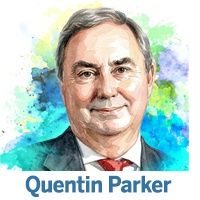
The author is Professor Emeritus at the University of Hong Kong, CEO and cofounder of NGO s3plus1.org, and CEO and founder of Feilong Aerospace and Technology Ltd.
The views do not necessarily reflect those of China Daily.
