

Hermes launches a Beijing store in Sanlitun, inviting visitors into a space shaped by design and built with local artists, Chen Jie reports.
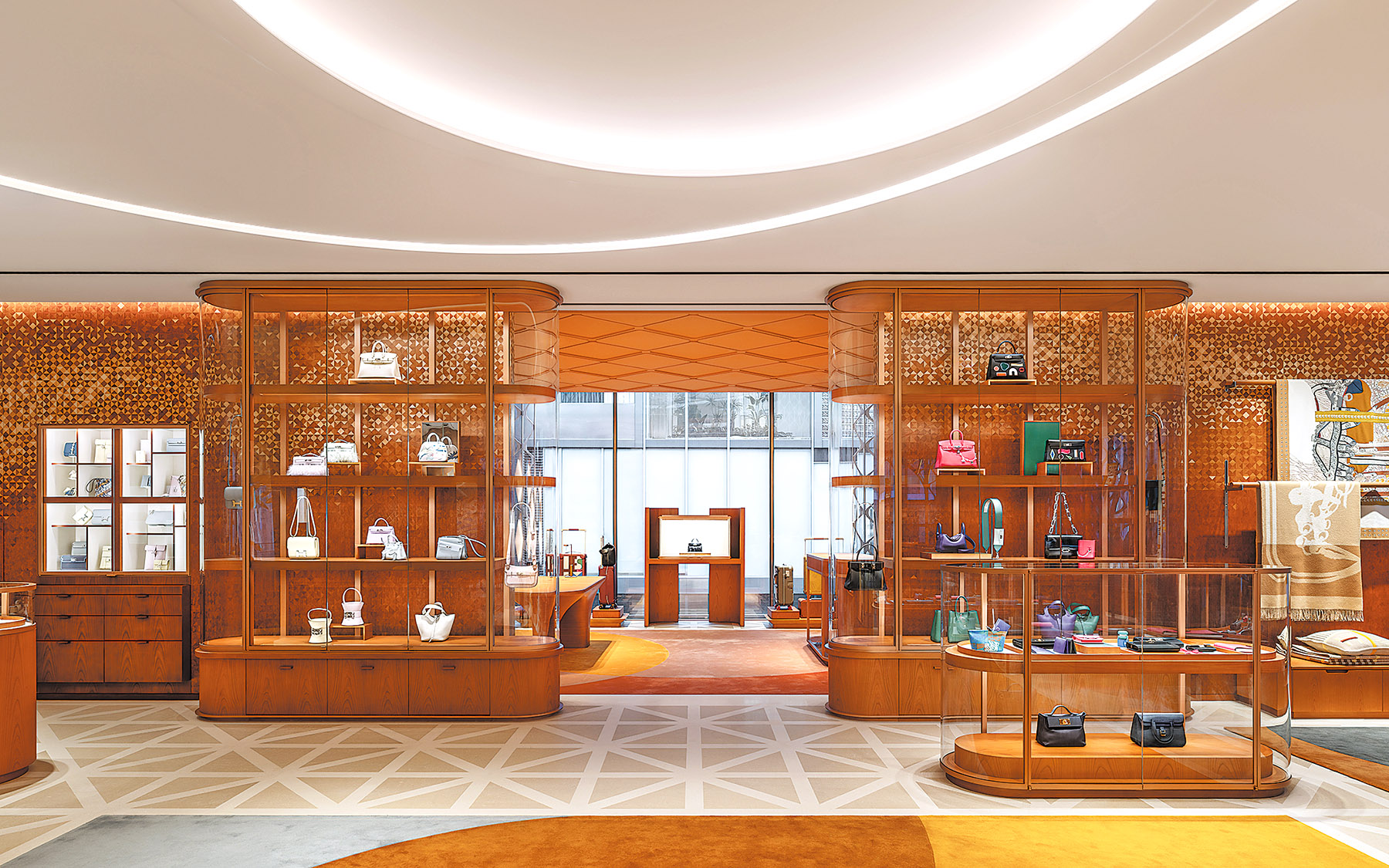
French luxury house Hermes has opened its largest store in Beijing, transforming a long-held vision into a space where architecture, craftsmanship and cultural dialogue intersect.
The freestanding boutique in Sanlitun, which opened on April 2, is the brand's fourth and largest in the capital and its 31st on the Chinese mainland.
More than a retail expansion, it reflects a three-decade personal journey shared by Axel Dumas, chief executive officer of Hermes, and his cousin Pierre-Alexis Dumas, the house's artistic director.
Speaking at the opening, Pierre-Alexis Dumas recalled a visit to Beijing with his father, Jean-Louis Dumas, then-president of Hermes, before the brand opened its first China store at the capital's Peninsula Hotel in 1997.
As they walked through Sanlitun, his father made a simple remark that stayed with him: "One day, we must have a freestanding store here."
"It is deeply emotional to be back," says Pierre-Alexis Dumas.
"You have to understand the past to imagine the future. And we have to keep changing if we want to remain the same. This architecture expresses the new vision of Hermes, which reflects who we are and what we want to be here in Beijing and across China. Because ultimately, we are serving something greater than Hermes: culture. Culture is bigger than all of us. It comes from the past, and it's our responsibility to carry it forward.
"Culture lives through applied arts, fashion, design, and architecture. But our ultimate goal is to build bridges through culture."
The Sanlitun store was first conceived in 2020, and took nearly six years until the Year of the Horse to finally open. "Horse", which is the brand's symbol as well as an important element of Chinese culture, is the "bridge".
"The horse embodies the tradition that nourishes modernity — something that resonates particularly strongly in China today," says CEO Axel Dumas.
Not only the horse, but also the architecture and decoration of the new store, in many ways, create a dialogue between the creativity of the brand and Chinese cultural heritage, blending the past and present.
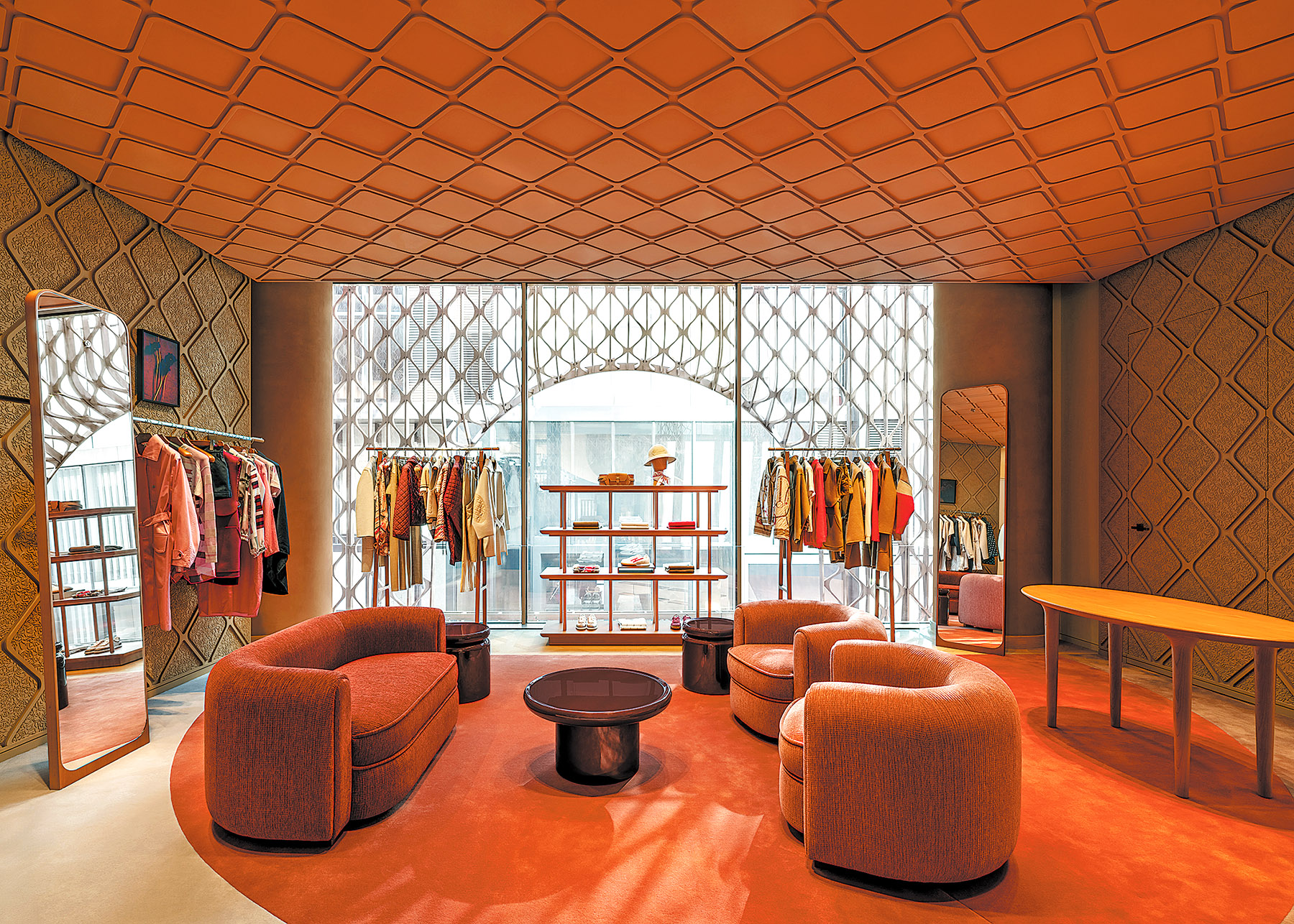
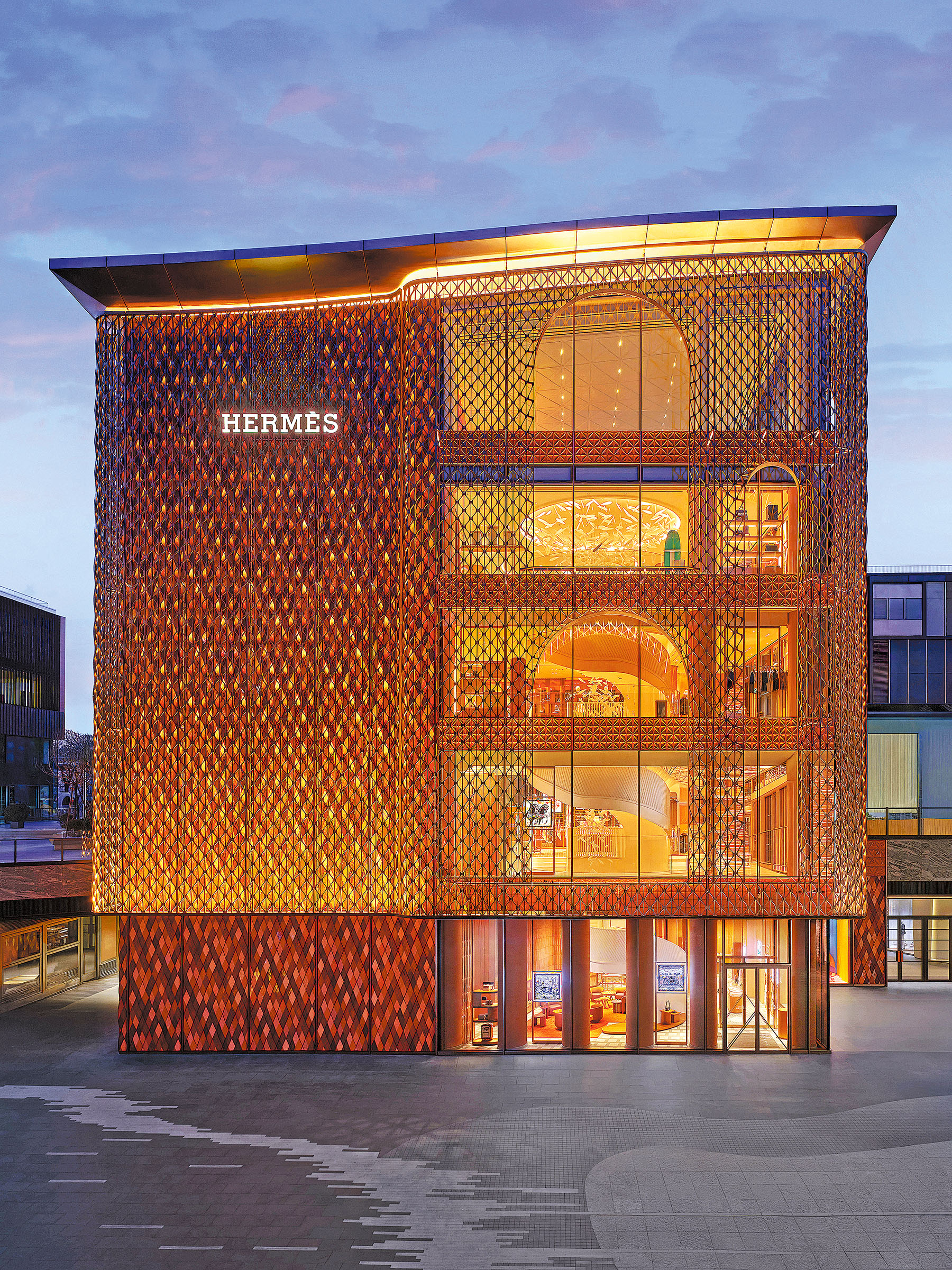
The five-story structure is wrapped in rose-pink and terracotta ceramic tiles that catch and reflect the city's changing lights. Its design subtly references the Forbidden City in Beijing, from the curvature of its rooflines to its layered materials and warm, sunlit palette.
The facade, designed by Paris-based architecture agency RDAI in collaboration with Mamou-Mani Architects, resembles a finely crafted birdcage and forms a semitransparent veil that balances openness and enclosure.
It allows light to filter through while creating a sense of depth and rhythm, echoing both traditional craftsmanship and modern design principles.
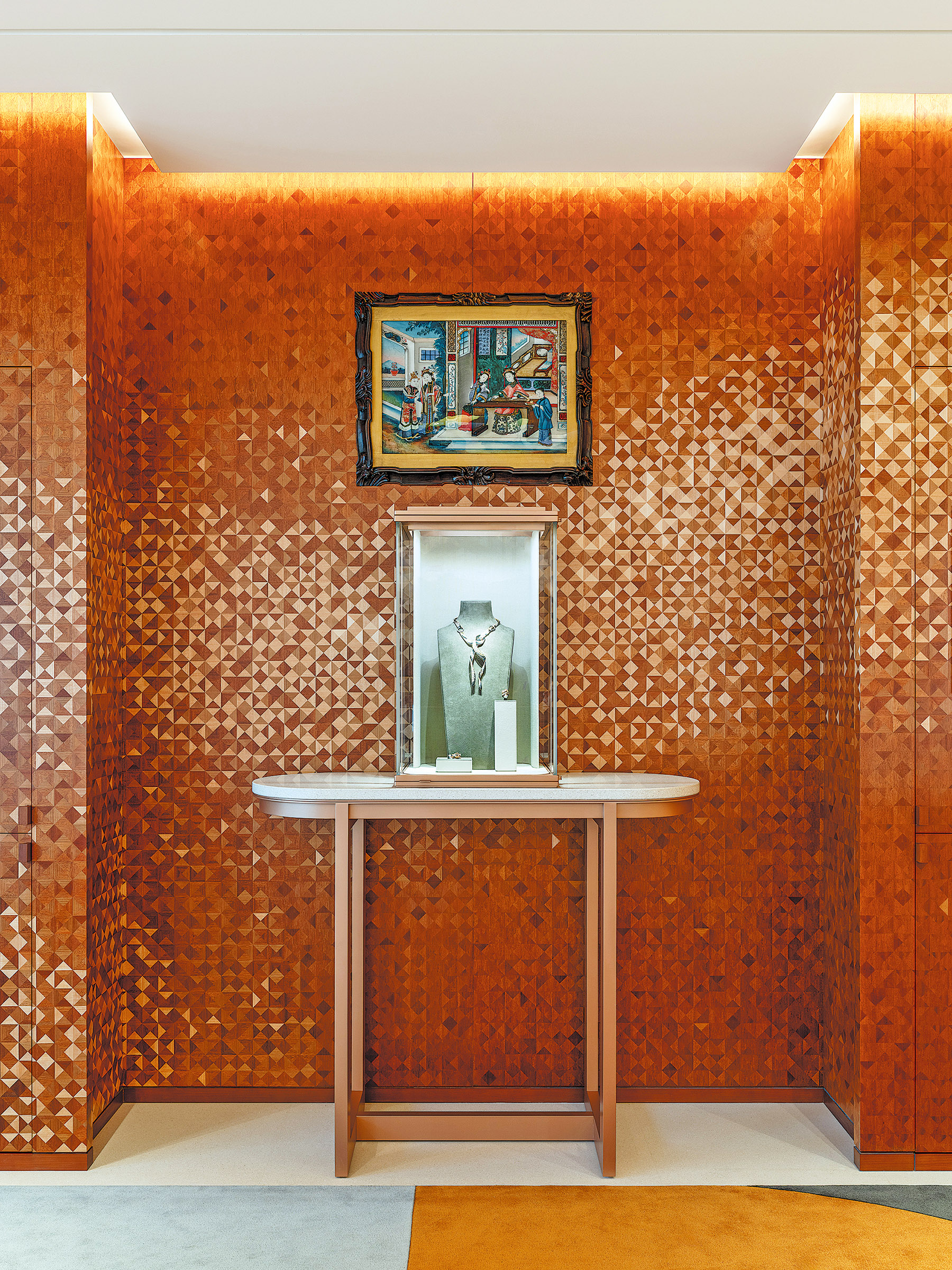
On the third floor, marquetry made from various woods, a lacquered wall engraved with peony motifs, and ceramic brick walls draw inspiration from the personal collection of Emile Hermes, the third-generation leader of Hermes.
Known for his fascination with art and horses, Emile Hermes assembled an extensive collection of objects from around the world, including China.
Eastern inspiration
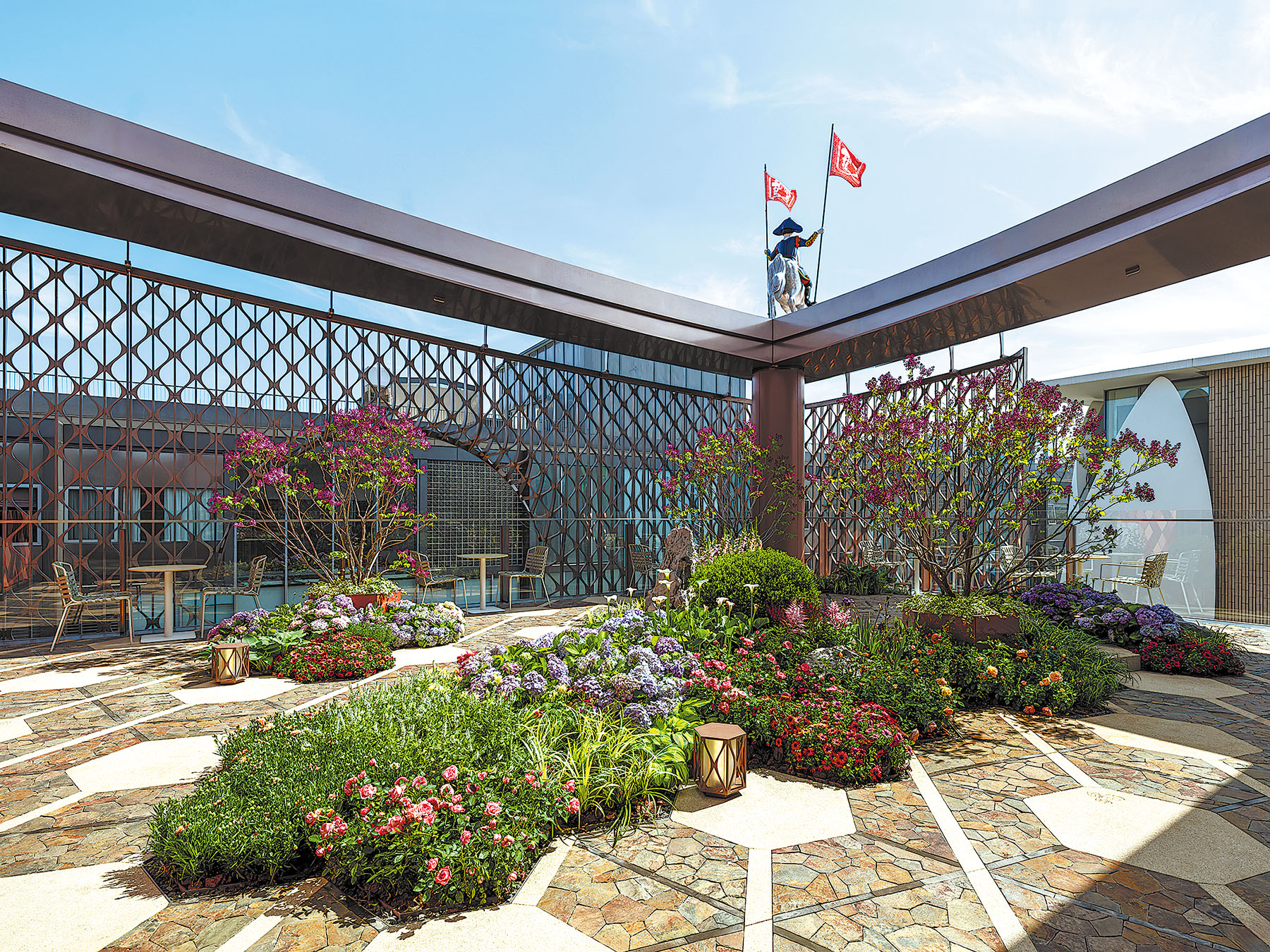
Axel Dumas notes that the terrace atop Hermes' headquarters in Faubourg, Paris, was inspired by a Chinese courtyard.
In the 1920s, Emile Hermes acquired a 19th-century Chinese painting depicting daily life in the imperial palace. That work inspired the store's spatial composition and decorative narrative. Today, the painting has returned to China and hangs in the new Sanlitun store.
In 2023, Hermes invited Chinese artist Liu Jianhua to visit its ateliers in Pantin and the Emile Hermes Museum in Paris, reinforcing the house's long-standing focus on craftsmanship.
Among Emile's collection, Liu encountered a bronze danglu — a Han Dynasty (206 BC-AD 220) horse ornament used in bridles.
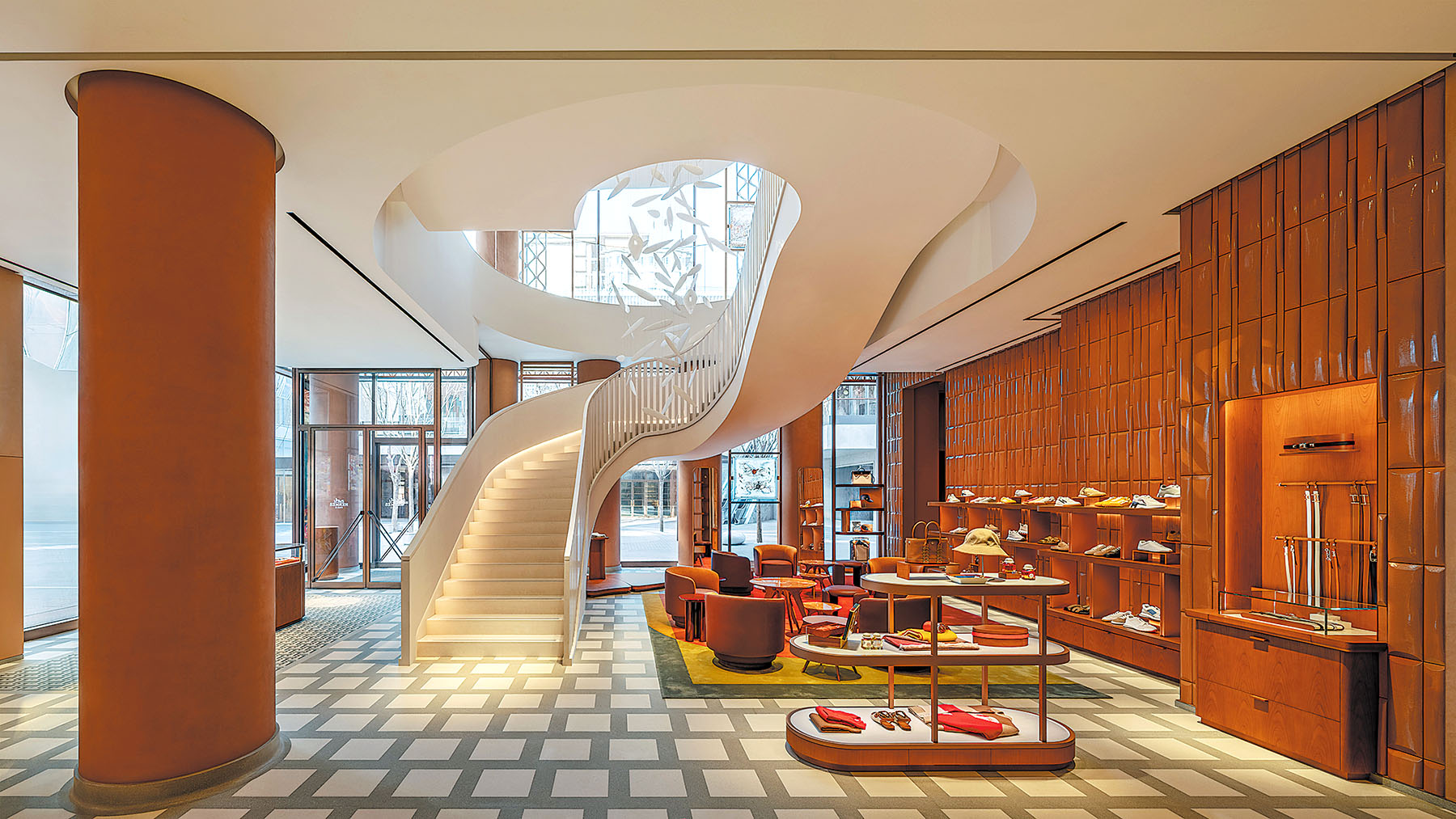
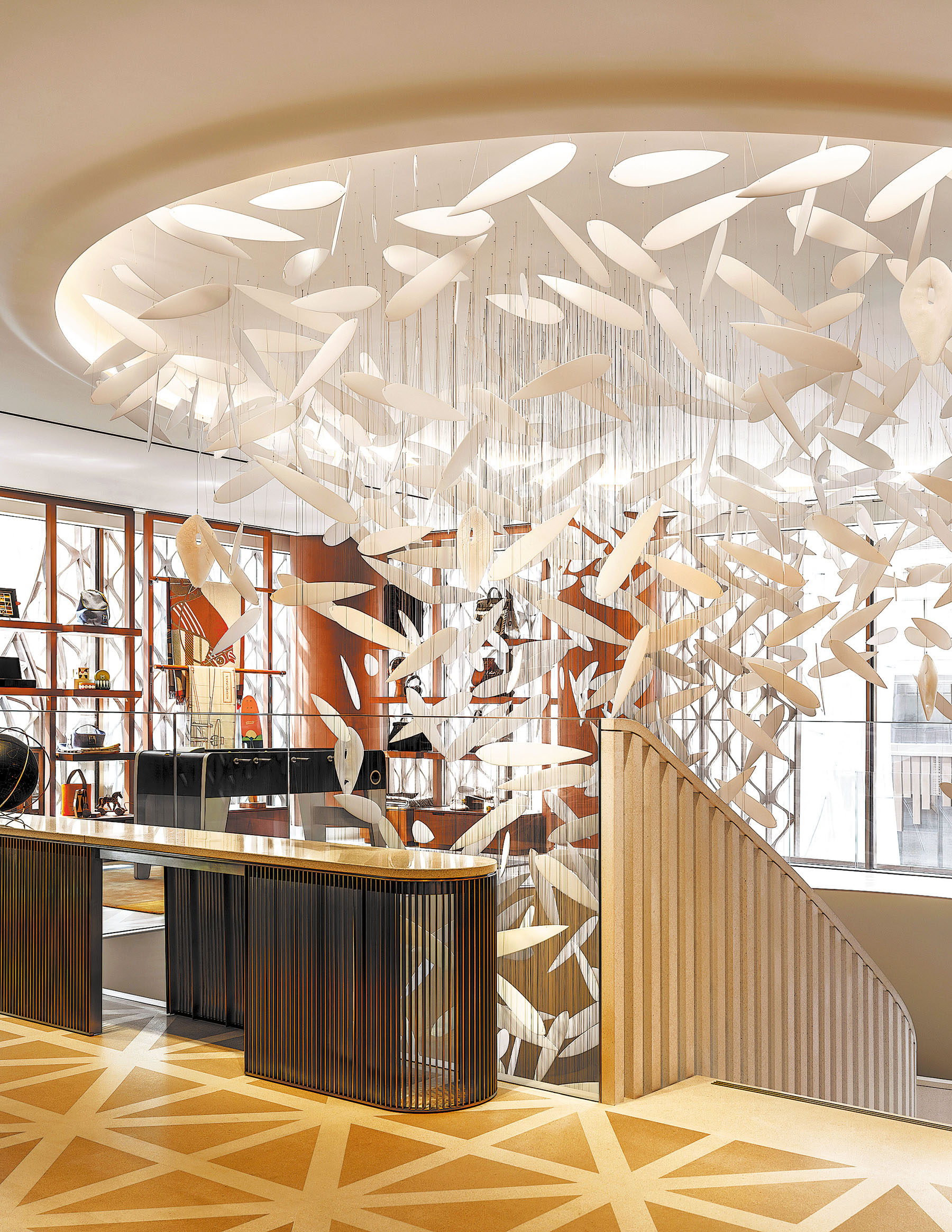
He later incorporated this element into his hanging installation, The Growth of Everything, created for the Sanlitun store.
Suspended from the third floor, the installation flows through the stairwell. Composed of 815 ceramic petals and 24 marble discs engraved with danglu motifs, it suggests the motion of a rider's whip.
"Marble appears in many classical Western sculptures and ancient Chinese ornaments," Liu says.
"By combining ceramics and marble, the work creates a dialogue between East and West, and between past and present.
"The work conveys a sense of breath. The petals are like feathers in an abstract form, as if lifted by a gentle current and rising endlessly. They can also suggest the afterimage of a galloping horse, or the trail of a whip cutting through the air."
As part of its opening celebration, Hermes collaborated with the Central Academy of Fine Arts in Beijing, inviting students to design the Sanlitun store's window displays.
Among 73 submissions, Feng Yu's Opening the Door to the World was selected. Drawing on her interest in science fiction, Feng uses the motif of a "door" — symbolizing transition and direction — to create a surreal interplay between reality and imagination.
"We want to feel local in every country," Axel Dumas says.
"We are not here to expand from Paris and impose our taste. We try to be Chinese in China and American in the United States. That's why we work with local artists for each new store."
Influential experience
While Pierre-Alexis Dumas and his father were envisioning a store in Beijing, Axel Dumas was beginning his own journey in the city.
In 1995, he started his career at the Beijing office of BNP Paribas and lived in Sanlitun, witnessing firsthand the capital's rapid transformation.
"I was constantly amazed by China's ambition and the intellectual curiosity of the people I worked with. Everyone was thinking about new projects, new ideas — developing rural areas, building new infrastructure," he says.
"I felt the palpable excitement of growth and development. It was a feeling I had never experienced in Europe at the time, where things felt more static. China's intellectual vitality and drive were transformative for me. I wouldn't be where I am today without that experience."
China also played an unexpected role in his personal life. While traveling in the Xizang autonomous region, he met his future wife.
"It's romantic that we lived in the same neighborhood in Paris but never met until we traveled in Xizang," he says.
He believes both he and Hermes share a lasting bond with the country. Since entering the Chinese market, the house has maintained a steady, long-term approach — one he has continued since becoming CEO in 2013.
"Hermes is a company, and we make decisions collectively," he says.
"But I hope that for everyone who works here, it is also a personal human journey. Many members of my executive committee have their own stories with China.
"It's very important that you bring your own personality, your own story to the company because ultimately, what we create through craftsmanship is a human connection between the object and the person.
"The Sanlitun store is an achievement for Hermes, but it also expresses our commitment to China, a country that holds a very important place in our hearts."
Contact the writer at chenjie@chinadaily.com.cn
