

Shanghai shop's viral matcha latte whips overseas visitors into a froth of excitement
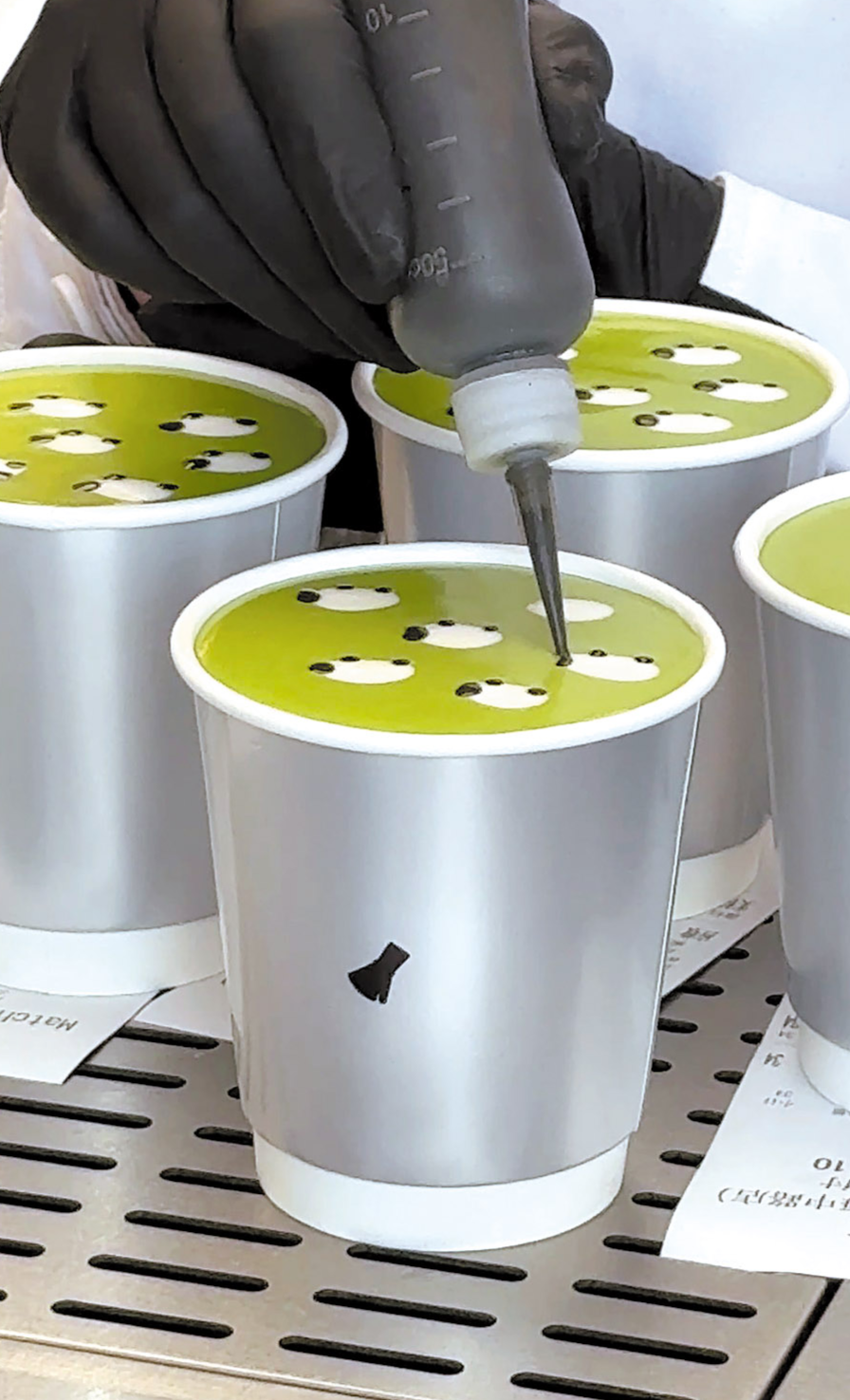
After waiting in line for more than 40 minutes, Polish tourist Joanna Paska smiled when she took the first sip of her matcha latte, but not before carefully positioning her phone to capture a perfect shot of the foam art sheep floating on top of her drink.
"It's delicious, it's lovely," said Paska, who discovered the drink on social media while planning her trip to Shanghai.
"A lot of people recommended it, and sheep are one of my favorite animals, so I decided I needed to try this," she added.
What began as a normal beverage has transformed into a global sensation. The vanilla bean matcha latte, a signature drink created by Shanghai-based drinks company Matcha Wang, has captivated international audiences, with social media posts about the "little sheep latte" garnering thousands of likes and shares. As a result, the small store on Huaihai Road sees young customers waiting outside every day, with foreign tourists making up a large portion of the crowd.
The vanilla-infused matcha latte features several hand-drawn sheep on its foam surface. It first caught international attention when a foreign blogger posted a TikTok video of the latte, playfully dubbing the act of drinking all the foam sheep in one mouthful as the "sheep-killing plan".
This creative framing ignited a viral trend that has international tourists now willingly waiting in line for up to an hour for the experience.
Initially, the beverage wasn't heavily promoted in Shanghai. Foreign residents and visitors who discovered the drink were so captivated by the whimsical foam art that they turned to international platforms such as TikTok and Instagram to share their experiences.
Italian traveler Elisa Giunti discovered the latte through Instagram. "It's a bit sweet, but it's good," she said. What drew her in, she said, was the craftsmanship on display. "It's very enjoyable watching them make it. It's fascinating."
Canadian visitor Natasha Manji, who heard about the latte through TikTok, was not disappointed.
"Super creamy, the matcha is really good, and it's not too sweet, but it's sweet enough," she said.
According to Zhang Zhuo, assistant researcher at the Institute of Journalism of the Shanghai Academy of Social Sciences, the phenomenon transcends taste alone.
"This matcha latte went viral by building an experience combining product consumption, psychological resonance and a transmission loop," Zhang said.
"The adorable sheep image triggers protective instincts, while the playful 'kill the sheep' act creates a harmless outlet for rebellion against the monotony of daily life that resonates with young people the world over.
"Foreign visitors find the combination of Eastern matcha, cute visuals and ritual actions fresh, while domestic consumers may have higher thresholds for novelty given the saturation of their local market," she added.
The drink's success also represents a cultural revival. Matcha originated in China, with its earliest roots traceable to the Wei and Jin dynasties (220-420), when it was known as mo cha, or powdered tea. Ancient artisans would grind tea leaves into powder, then practice the art of dian cha, which refers to whisking the powder with water into a dense and white froth.
ALSO READ: Chinese coffee chains recalibrate for growth
Today, China has reclaimed its place as the world's largest matcha producer and consumer, with traditional tea culture finding new expression in contemporary forms such as lattes, ice cream and cakes.
This social media sensation also coincides with Shanghai's growing appeal as an international destination. Statistics show that the city welcomed 1.46 million foreign visitors in the first quarter of 2026, a 25.1 percent year-on-year increase, with over 60 percent availing themselves of China's visa-free entry policies.
"This phenomenon and Shanghai's inbound tourism growth are mutually reinforcing," said Zhang, the researcher. "The visa-free policies have brought a wave of young, Gen Z tourists who crave shareable local experiences. The latte echoes a new concept of 'micro-attractions' — intimate, lightweight urban destinations, pushing traditional sightseeing toward experiential, in-depth transformation."
Contact the writers at zhengzheng@chinadaily.com.cn
