

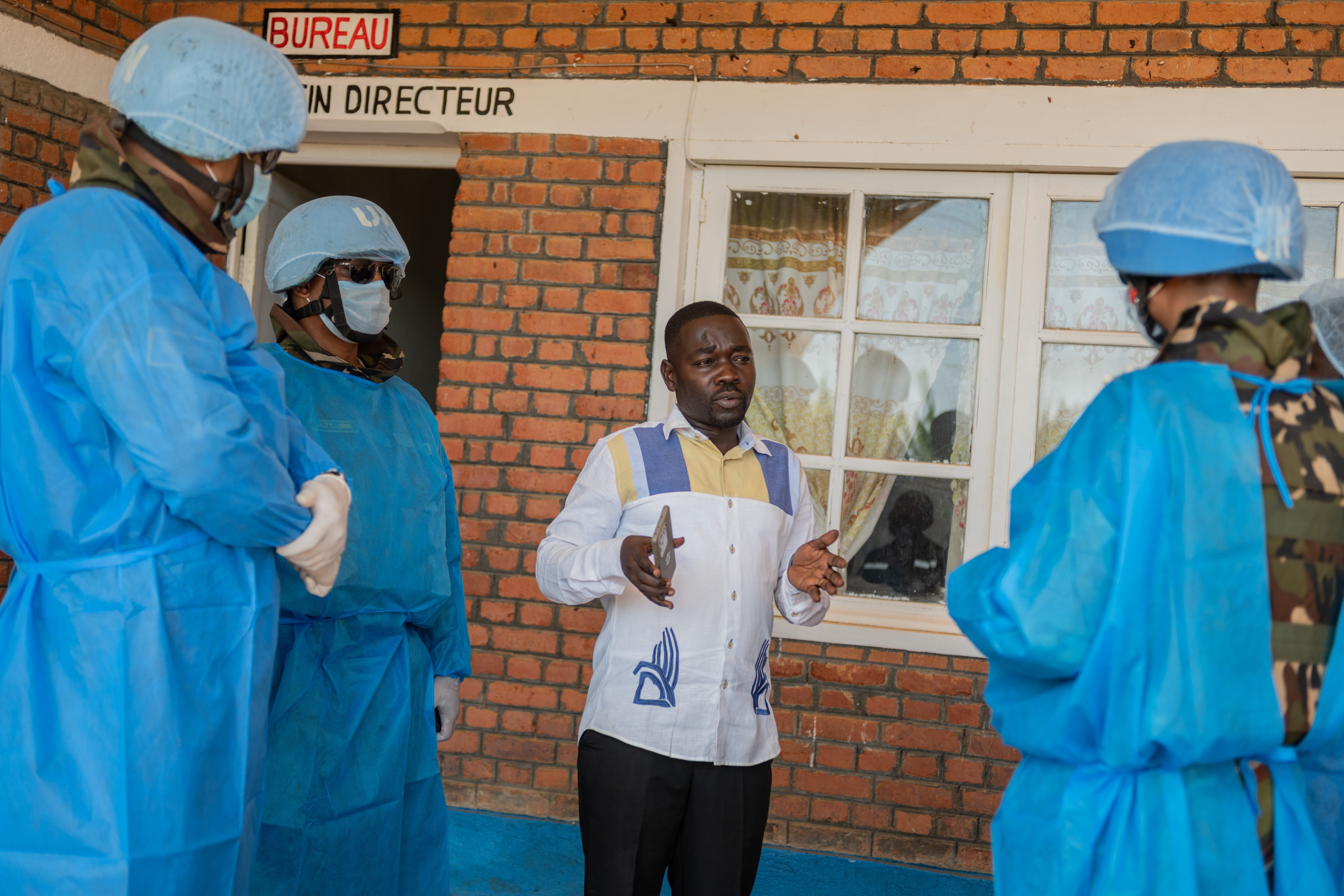
KINSHASA/UNITED NATIONS – The number of confirmed Ebola cases in the Democratic Republic of the Congo (DRC) has risen to 598, including 115 deaths, the country's public health authorities said on Tuesday.
According to the latest report, 48 new confirmed cases were reported on Monday, including 14 deaths. Three more Ebola patients were declared recovered, bringing the total number of recovered patients to 22.
The report said confirmed cases had been rising from one week to the next, showing "continued community transmission" of the disease. Health authorities warned of a possible rapid geographic expansion of the outbreak if public health measures are not carried out quickly.
A total of 297 patients remained in isolation or hospitalization on Monday, including 113 confirmed patients and 184 suspected cases, the report said.
ALSO READ: WHO says Ebola outbreak expands fast in DRC, spreads to Uganda
The report also said security conditions continue to affect the response. Armed groups have remained active in parts of Ituri province, the epicenter of the outbreak, limiting access to several affected or high-risk health zones, it said.
The current outbreak, caused by the Bundibugyo Ebola virus, was officially declared by the DRC health ministry on May 15.
The Africa Centers for Disease Control and Prevention warned on Tuesday that ongoing response efforts are "facing significant operational constraints," noting that health facilities in several affected areas are in poor condition and often lack potable water, incinerators, personal protective equipment, and decontamination supplies.
Violence threatens containment efforts
Escalating deadly violence and mass displacements in the eastern DRC are complicating efforts to contain an Ebola outbreak, UN humanitarians warned on Tuesday.
The UN Office for the Coordination of Humanitarian Affairs (OCHA) said the violence is putting civilians at further risk and complicating efforts to contain the disease.
OCHA said that in North Kivu province, local authorities reported a series of attacks by armed groups between May 30 and June 6, killing at least 40 civilians in the town of Beni. The attacks continue to hamper humanitarian access, including the Ebola response.
The office said that in South Kivu province, recent clashes uprooted nearly 15,000 people who sought refuge in Miti-Murhesa health zone. All confirmed Ebola cases in the province are located in the health zone, raising concern over disease transmission and people's access to assistance.
