

A newly launched satellite camera, dubbed the “eye in space”, is set to beam back its first measurements of carbon dioxide and methane from China’s Tiangong Space Station this month, giving global climate efforts a powerful new tool to help meet carbon-peaking and carbon-neutrality targets.
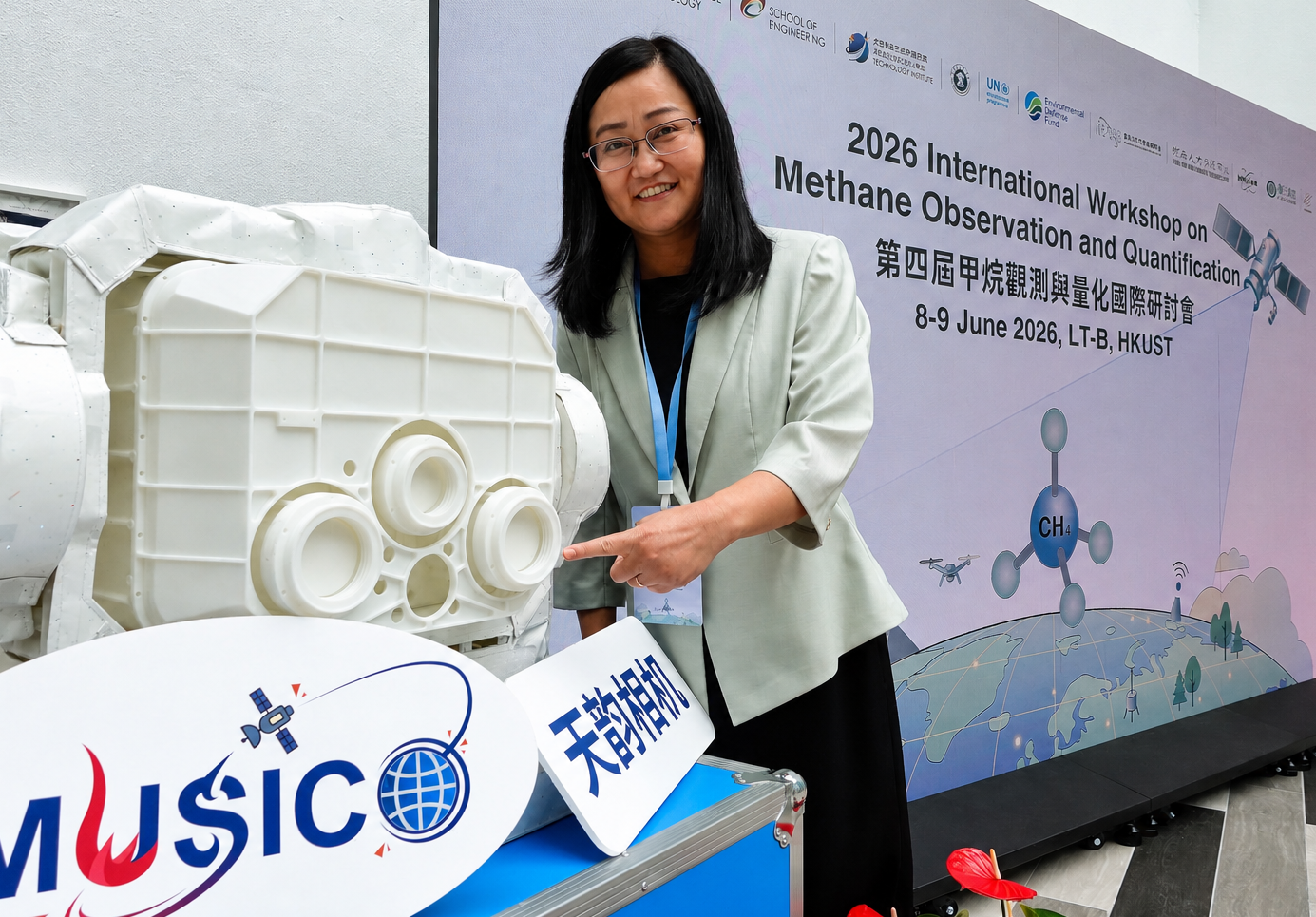
Developed by the Hong Kong University of Science and Technology (HKUST) and recently delivered to Tiangong, the washing-machine-sized Multi Spectral Imaging Carbon Observatory (MUSICO) is part of a broader push to put high-precision data at the center of climate policymaking, according to Su Hui, chair professor in the Department of Civil and Environmental Engineering at HKUST.
Equipped with two dedicated lenses for detecting carbon dioxide and methane, MUSICO is expected to deliver its first methane dataset by the end of June, with a landmark analysis report slated for release in September, Su told China Daily.
ALSO READ: Scientists hail HK's role in space research
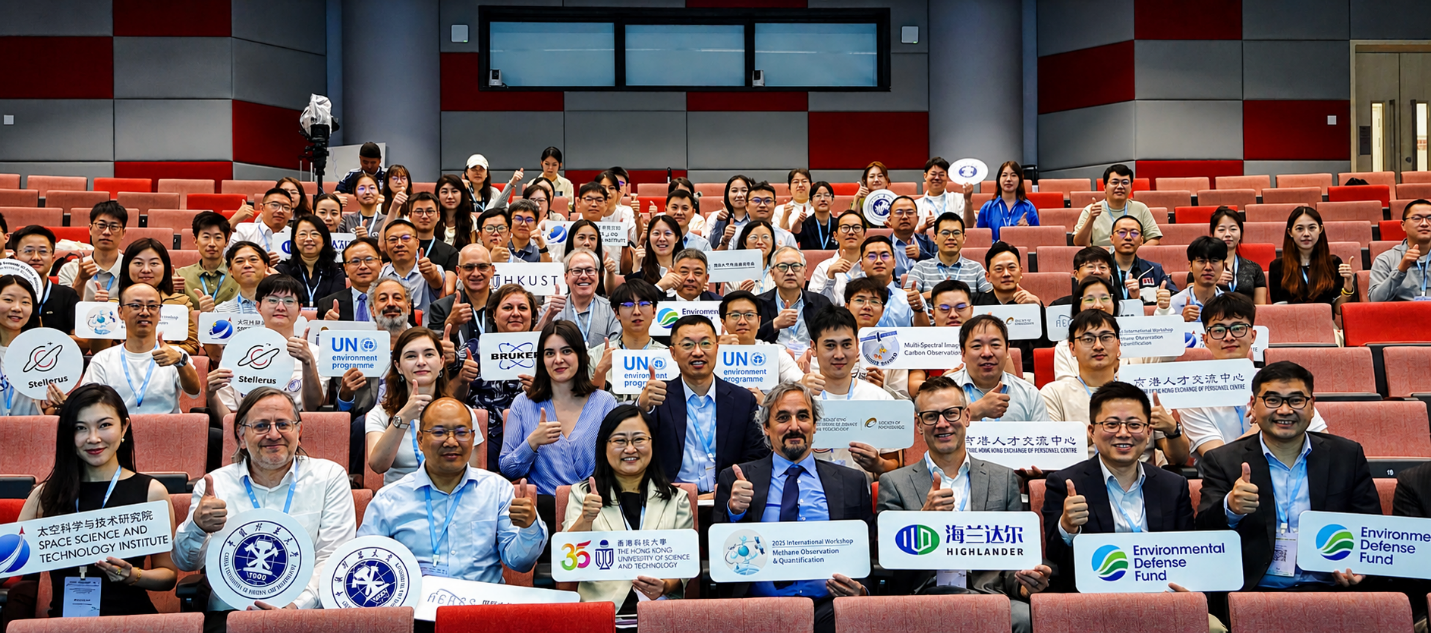
Su, the co-initiator of the project, said at Hong Kong’s first international conference on methane observation and quantification that MUSICO will “set the tune” for a new generation of greenhouse-gas monitoring from orbit.
MUSICO tracks greenhouse gases by measuring how they absorb sunlight reflected from the Earth’s surface. Its payload uses passive infrared spectrometers at different wavelengths, allowing scientists to retrieve precise methane and carbon dioxide concentrations over industrial clusters, power plants, coal mines and landfills.
China beefs up methane strategy
Robert Field, speaking on behalf of the International Methane Emissions Observatory (IMEO) at the UN Environment Programme (UNEP), told the conference that China “hosts the largest number of coal mine methane mitigation projects in the world”, putting it in a strong position to turn better data into faster emission cuts.
Zhang Limin, head and chair professor of HKUST’s Department of Civil and Environmental Engineering, said China now has “a methane strategy that is deep, substantive and consistently implemented”, backed by sector specific targets, improved emissions factors and pilot projects in key regions.
Instruments like MUSICO can help close the gap between national level goals and on the ground performance, turning what happens in space into concrete climate gains on Earth, Zhang, co-initiator of the project, told China Daily.
Integrating high resolution data from new instruments such as MUSICO will allow the UN system to move from sporadic detections to systematic surveillance across multiple countries, particularly in regions that lack advanced monitoring capabilities of their own, Su said.
“We are seeing, for the first time, a global picture of methane grounded in observation rather than assumptions,” said Steven Wofsy, Abbott Lawrence Rotch Professor of Atmospheric and Environmental Science at Harvard University.
Why methane matters
Methane, which accounts for roughly one third of current global warming, has a global warming potential more than 80 times that of carbon dioxide over a 20 year timeframe. Unlike carbon dioxide, which can persist in the atmosphere for hundreds of years, methane is relatively short lived, typically remaining in the atmosphere for about a decade before breaking down.
READ MORE: Shenzhou XXIII takes off with first HK astronaut
“Theoretically speaking, we are now dealing with the carbon dioxide accumulated since the Industrial Revolution, which means it would take another century for substantial results to be tangible to the general public,” said Qin Kai of the China University of Mining and Technology. “Methane, however, is another story, with quicker results and profit potential.”
That chemistry makes methane control a practical lever for rapid action: cuts made now can translate into a measurable slowing of temperature rise within years. Qin noted that using methane — a flammable natural gas — for household heating can also make climate projects economically sustainable. In China, capture and use projects are often viable when gas is piped to nearby households or small industries. “When you can turn a waste gas into a heating fuel for communities around coal mines, you align climate goals with very concrete local benefits,” he said.
“We need to act quickly and effectively. Methane reduction is our best shot at slowing the rate of global warming,” Field said.
A new era of methane transparency
Field, a University of Wyoming scholar closely involved in UNEP’s methane monitoring initiatives, said this emerging infrastructure amounts to “a new era of methane transparency”, in which emissions that were once invisible can be tracked in near real time and linked to specific assets. Better data is essential, he added, to deliver methane reductions at the speed and scale needed to meet the Global Methane Pledge, under which more than 150 nations have agreed to cut emissions by 30 percent from 2020 levels by 2030.
“Many countries still underestimate their methane output, particularly from oil and gas systems and coal mines, and independent satellite observations are increasingly exposing gaps between reported inventories and reality,” Field said. “You cannot manage what you cannot measure. The first step is knowing where the big leaks actually are.”
China, which has pledged to peak carbon emissions before 2030 and achieve carbon neutrality by 2060, sees methane control as an increasingly important part of that trajectory.
