

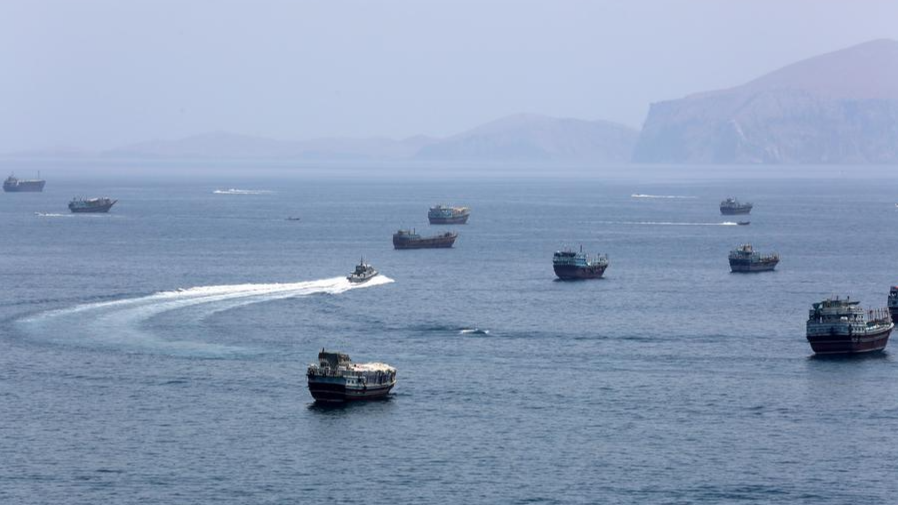
An estimated 70 to 80 of Hong Kong Shipowners Association member vessels are currently stranded near the Strait of Hormuz due to the conflicts in the Middle East, with approximately 1,400 to 1,600 crew members on board.
Speaking at a press briefing on Tuesday, HKSOA Chairman Richard Hext said that before the latest brief ceasefire, around 100 such vessels belonging to members of the HKSOA, carrying approximately 2,000 seafarers, were directly affected by the situation.
“Now, during the ceasefire window, we estimate that about 20 to 30 of those vessels were able to leave the area safely,” Hext said, with roughly 70 to 80 association member ships with around 1,400 to 1,600 seafarers on board remaining in or near the conflict zone.
“The safety of our seafarers is paramount,” Hext said, adding that the association is closely monitoring the situation and liaising with relevant authorities.
Kenneth Lam, founder and CEO of ship-owning and leasing company SeaKapital Ltd, stressed that the immediate priority is to ensure crew safety and adequate food supplies on the trapped ships.
ALSO READ: HK leverages maritime strengths to bolster global shipping's green shift
The disclosure came as the HKSOA also submitted a comprehensive set of recommendations for Hong Kong’s first-ever five-year plan and the 2026 Policy Address, laying out a strategic vision and specific policies to cement the city’s status as a premier international maritime hub.
Among the key recommendations, the association calls for leveraging Hong Kong’s financial strengths through cross-sectoral policies to boost shipping and trade, promoting the “Hong Kong” maritime brand by capitalizing on shifts in the global economic landscape and the national “dual circulation” strategy — an economic model that centers on domestic and international circulations — and strengthening international cooperation to uphold core values such as free trade and unimpeded navigation.
The HKSOA also urged the Hong Kong government to seek the removal of trade barriers imposed by other jurisdictions, accelerate the local transition to shore power to cut emissions from docked vessels, and collaborate with major ports to develop green shipping corridors. Other proposals include establishing an international green fuel trading platform and removing the three-year holding period for tax concessions to create a more business-friendly environment.
READ MORE: CE: HK's role as reliable, dynamic maritime hub vital amid challenges
The association reiterated its commitment to protecting the reputation of the Hong Kong brand and advancing industry-education-research integration, including expanding the city’s premier talent admission program, the Top Talent Pass Scheme, to cover leading maritime universities worldwide.
Contact the writer at stacyshi@chinadailyhk.com
