

Luckin CEO says global expansion on menu, domestic market core engine
China's coffee market is heating up, with consolidation and premiumization reshaping the competitive landscape. Top Chinese coffee giant by scale, Luckin Coffee Inc, reported a historic surge in revenue and store expansion for fiscal year 2025.
The company posted total net revenue of 49.29 billion yuan ($7.16 billion), up 43 percent year-on-year, while annual operating profit rose 43.5 percent to 5.65 billion yuan.
The growth was fueled by both self-operated and franchised stores, with revenues climbing 41.6 percent to 36.24 billion yuan and 49.7 percent to 11.59 billion yuan, respectively. Operating profit at self-operated stores reached 6.44 billion yuan, representing a 17.8 percent margin — a slight dip from 19 percent in 2024, but still high amid intense industry competition.
READ MORE: Coffee culture percolating in popularity in Chinese market
A key turnaround was seen in same-store sales, which grew 7.5 percent for self-operated outlets, reversing a 16.7 percent decline in 2024.
The coffee chain expanded its footprint aggressively, adding 8,708 stores to end the year with 31,048 locations worldwide, including 20,234 self-operated and 10,814 franchised outlets.
However, fourth-quarter results highlighted rising cost pressures. Fourth quarter revenue grew 32.9 percent to 12.78 billion yuan, but net profit fell to 518 million yuan from 851 million yuan a year earlier.
Operating margins contracted due to sharply higher delivery fees on third-party platforms, along with increased pre-tax allocations for offline store operations. Delivery expenses alone nearly doubled to 1.63 billion yuan, while materials and store costs rose over 30 percent year-on-year. Marketing and sales expenses climbed 31.9 percent to 756 million yuan. Operating margins at self-operated stores dropped to 15 percent.
Guo Jinyi, Luckin's co-founder and CEO, said during the earnings call that the quarterly performance reflected seasonal factors, shifting food delivery subsidies and product mix dynamics, all in line with company expectations.
"Given the high base from 2025's large-scale subsidies, we may see near-term volatility in same-store performance and profitability in 2026, which aligns with market dynamics," Guo added. He said the company is confident in the long-term growth of same-store performance and profitability.
On international expansion, Luckin added 42 net new overseas stores during the quarter, bringing the total to 160, including 81 self-operated outlets in Singapore, nine in the United States and 70 franchised stores in Malaysia.
Guo said that overseas expansion will be pursued steadily, leveraging lessons from Singapore to improve partner operations and local market insights.
Guo said that the Chinese market remains the core growth engine, while the company aims to "build a world-class coffee brand" through measured overseas expansion, including the US, where Luckin plans to compete with established players by focusing on price and operational refinement. Monthly active customers rose 31.1 percent to 94.2 million in 2025, driven by store density and loyalty programs.
"China's coffee market continues to present structural growth opportunities," Guo said. "Gaining market share remains our top strategic priority, and in 2026 we will maintain disciplined yet agile development, and focus on stores, cups and pricing to drive healthy business performance."
Meanwhile, Centurium Capital, a major shareholder of Luckin Coffee, is reportedly striking a deal to acquire Nestle's global Blue Bottle Coffee chain for under $400 million, according to 36Kr.
Under the agreement, Nestle will retain Blue Bottle's fast-moving consumer goods business, including its packaged coffee products.
Blue Bottle Coffee, acquired by Nestle in 2017, generated roughly $250 million in revenue for the 12 months ending June 30, 2025, with $150 million from the US and $100 million from the Asia-Pacific region. The specialty coffee brand is forecast to reach profitability in 2026.
As of year-end 2025, Blue Bottle operated 140 stores worldwide, including 31 in Asia. Its entry into China came relatively late: the first store opened in Shanghai in 2022, and by the end of 2025, the brand had 15 outlets in the market, spread across Shanghai, Shenzhen, Guangdong province and Hangzhou, Zhejiang province.
Centurium Capital's acquisition aligns with Luckin Coffee's broader premiumization strategy, signaling the investment firm's continued interest in high-end coffee brands. The firm has previously explored opportunities involving Starbucks and Costa Coffee.
Nathanael Lim, Asia-Pacific insight manager on beverages, Euromonitor International, said:"Centurium's deal with Blue Bottle would reinforce its dominance in coffee by shielding Luckin from competitive threats, while advancing its long-standing ambition to enter the premium segment."
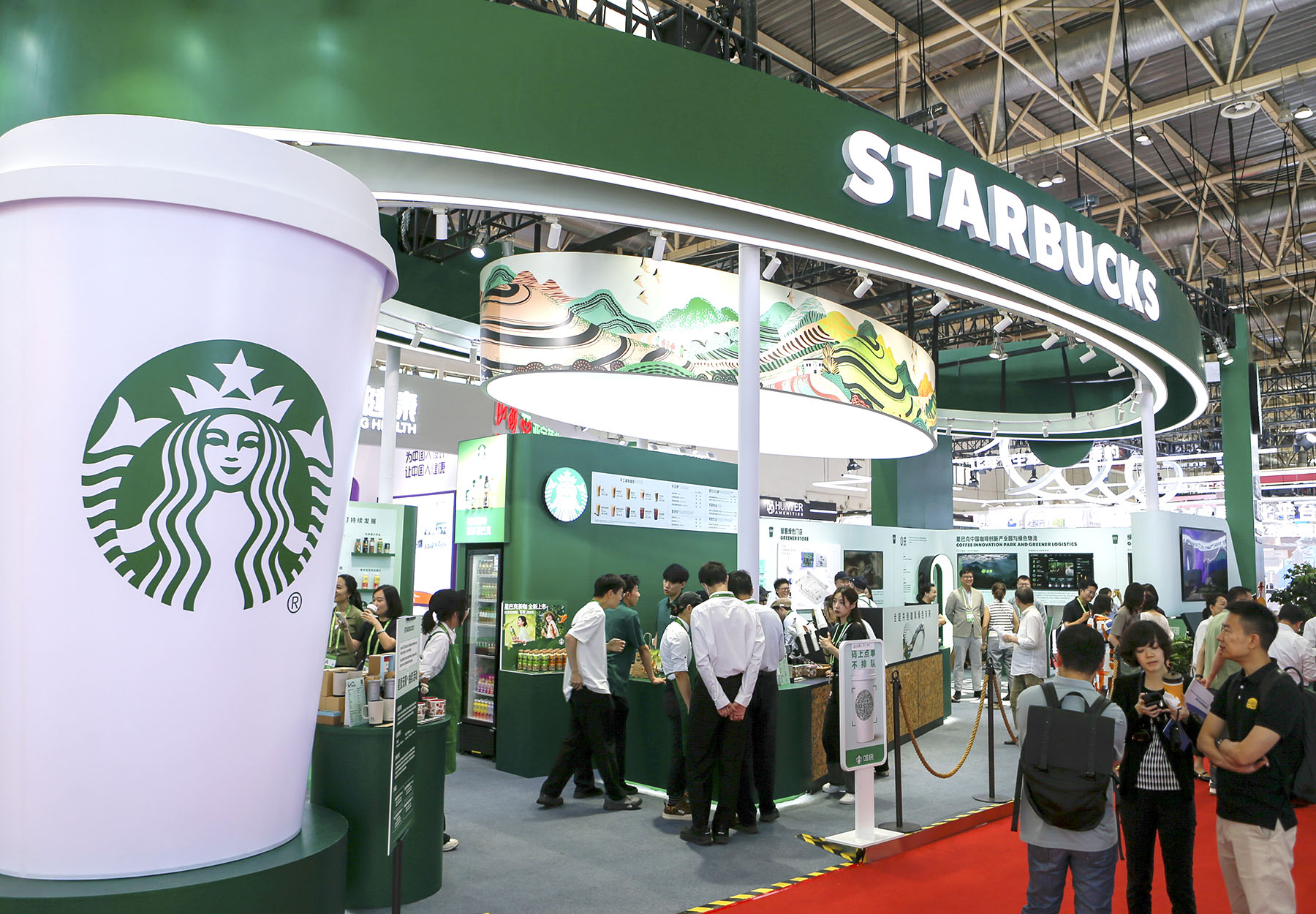
Lim said that the deal would accelerate Luckin's international footprint in the US via Blue Bottle, while giving Blue Bottle scale and channel access in China and Southeast Asia, intensifying competition with Starbucks.
"More broadly, this deal signals accelerating consolidation in China and globally, favoring well-capitalized players as weaker competitors exit," Lim added.
According to Euromonitor International, Luckin Coffee's brand shares under chained specialist coffee and tea shops saw a significant increase in China, from 24 percent to 33 percent from 2023-2025.
Its expansion in Singapore and Malaysia has also seen success, with brand shares in Singapore jumping from 2 percent to 10 percent from 2023-2025 and reaching 1 percent in Malaysia in 2025.
ALSO READ: Starbucks China brewing more growth opportunities in lower-tier cities
There will be huge potential for chained specialist coffee and tea shops in Asia-Pacific region with the compound annual growth rate in China, Singapore and Malaysia forecast to reach 12 percent, 9 percent and 13 percent, respectively, from 2026 to 2030, while the global market will only rise by an estimated 6 percent.
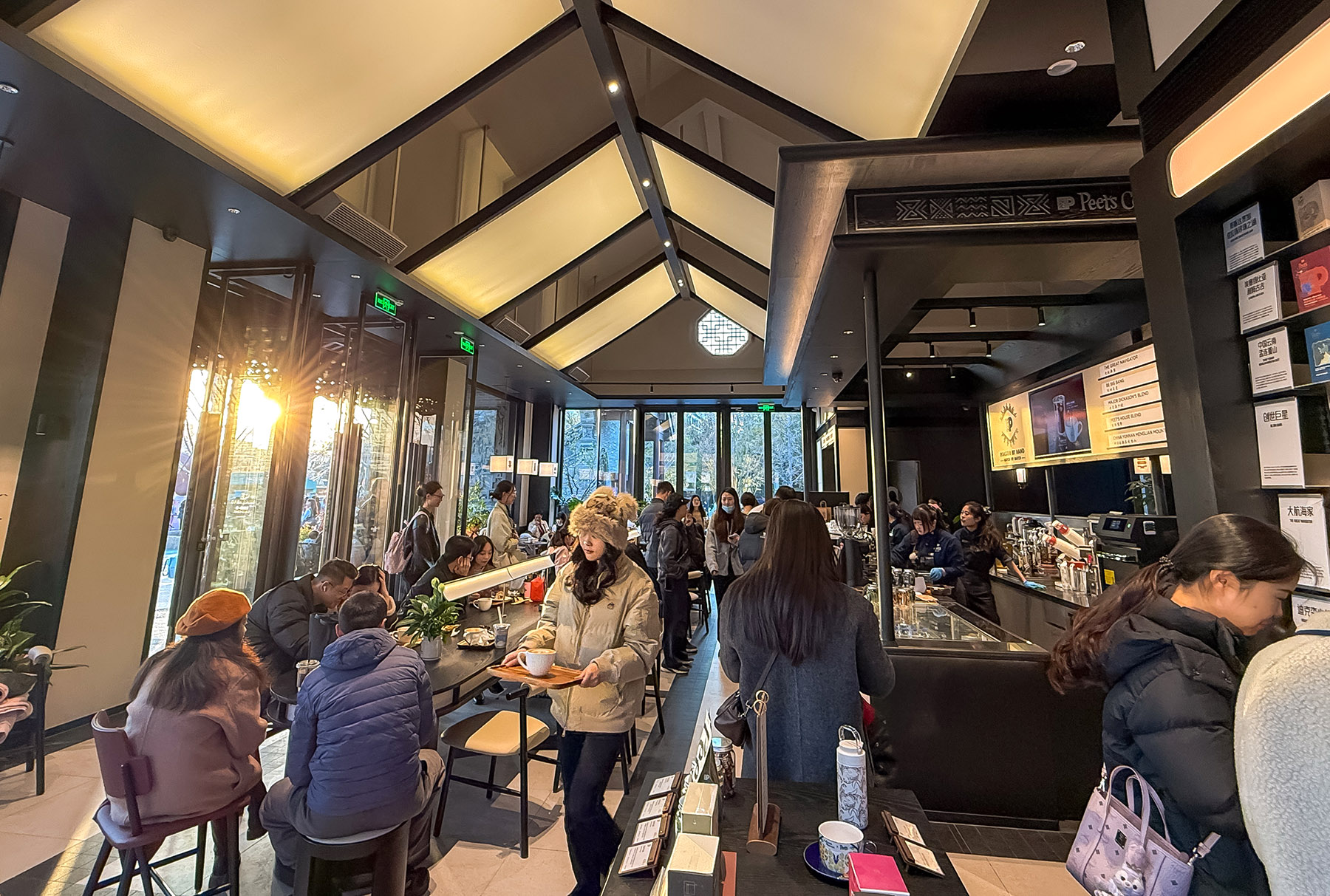
In a parallel development, JDE Peet's, the parent of high-end coffee chains Peet's Coffee, reported a 15.3 percent increase in organic sales for the full-year 2025. Peet's Chinese stores drove double-digit growth, even as same-store sales and average transaction values in the US declined slightly.
Peet's told the National Business Daily that it aims to expand its Chinese footprint to as many as 400 stores in 2026, up from nearly 300 at the end of 2025. The company highlighted long-term optimism for the Chinese coffee market despite rising competition.
Contact the writers at wangzhuoqiong@chinadaily.com.cn
