

In Chengdu, dialect, local stories and tradition infuse art form with Chinese identity
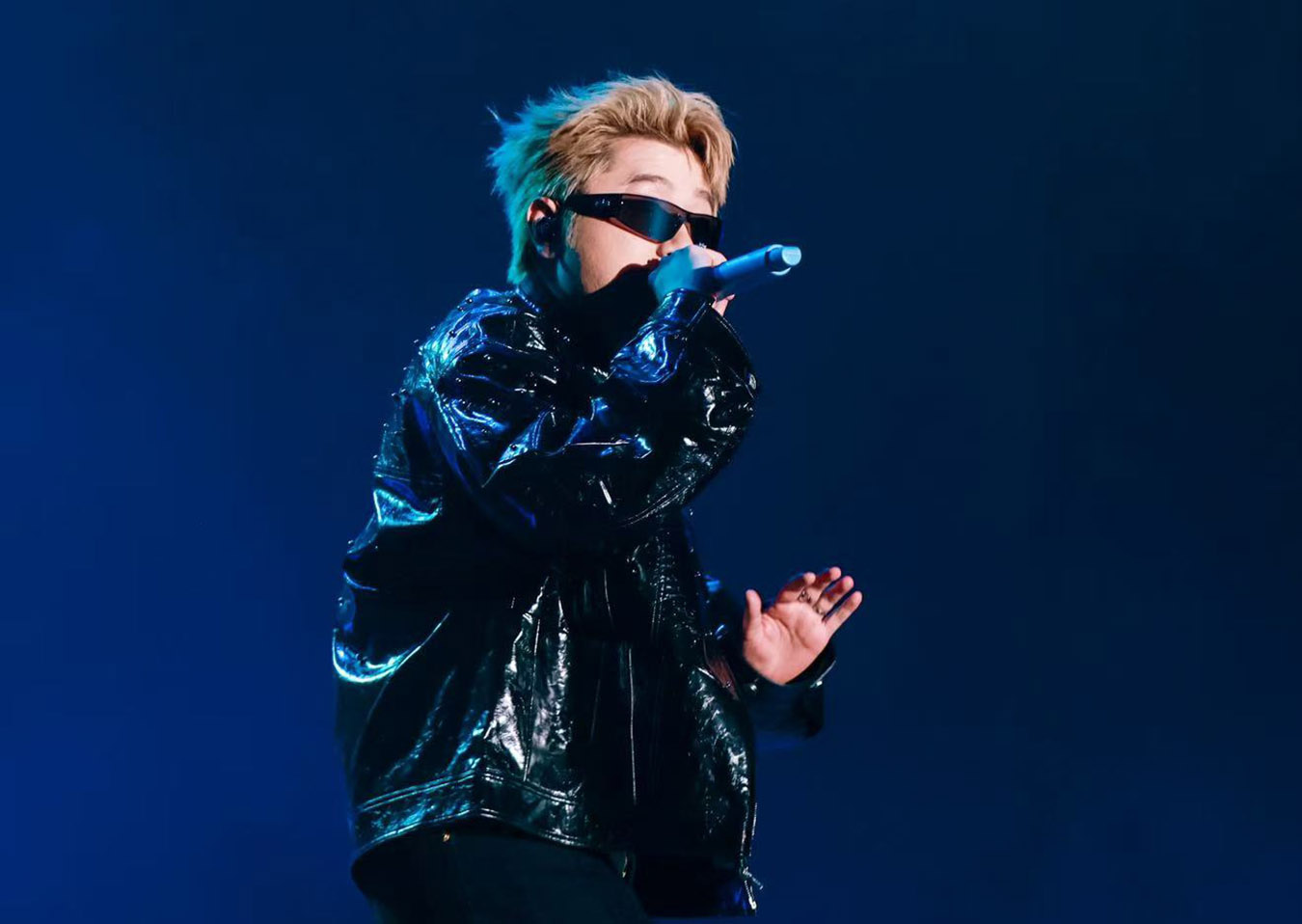
Artists from Chengdu — a "hip-hop stronghold" — are excavating local color and stories, and wrapping them in traditional culture to give the imported art form a distinctly Chinese flavor.
The high standing of Sichuan province's capital city in the hip-hop community was not earned overnight. It has evolved from open-mic events in basement bars, gatherings in converted warehouses, and the commitment of young rappers who choose to rhyme in the natural rhythms of Sichuan dialect instead of Mandarin.
Their verses tell of mahjong tables and young people's dreams, and they have steadily built a following through fan loyalty and their conviction that local stories deserve a global audience.
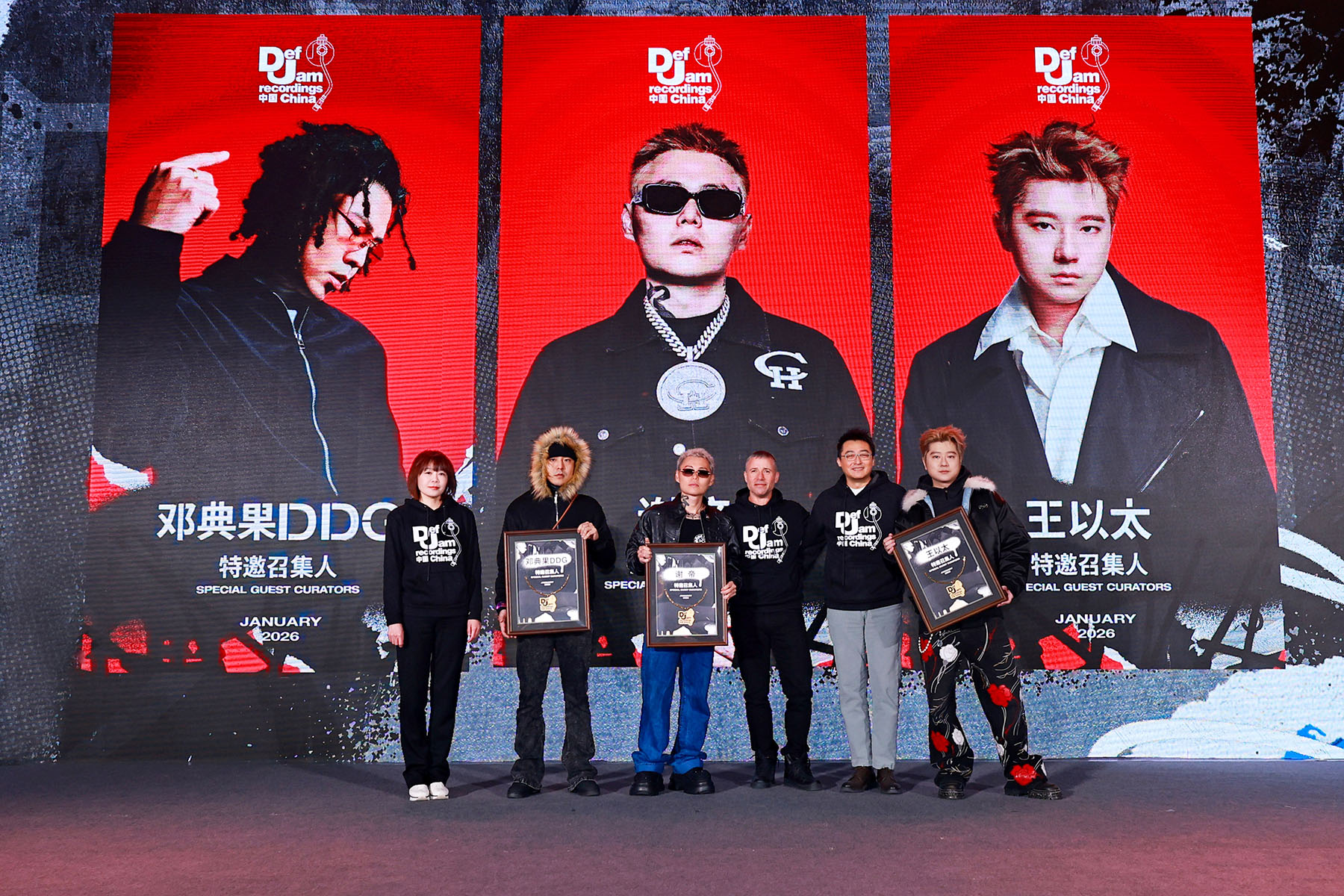
In January 2026, the renowned United States label Def Jam Recordings officially announced its arrival in China — and chose Chengdu as its base. A month earlier, the 14th Fusion HipHop Awards ceremony was held at Chengdu's Eastern Suburb Memory, a former industrial complex reborn as a cultural landmark.
READ MORE: United by a passion for electro music
Wang Yitai, one of the city's most distinctive hip-hop voices, was invited to perform at the awards.
"To be honest, I felt proud," said Wang. "Chengdu, as a major hiphop city in China, can now be seen by the world. As someone from Sichuan, that means a lot. And Def Jam is a top-tier label with deep roots. To collaborate with such a powerful label is truly an honor."
In recognition of the city's hiphop community, Def Jam Recordings China also announced three acclaimed Chinese rappers Wang, Xie Di, and Deng Dianguo (DDG) as special guest curators. The trio will help identify, mentor, and spotlight emerging voices from across China, "inviting new talent to participate in and contribute to the Def Jam Recordings China ecosystem", the label said in a press release.
Wang said in the early days Chengdu rap was considered niche, even provincial.
"The foundation of Chengdu rap," he recalled, "was laid by the older generation who told street stories in Sichuan dialect, expressing local attitudes toward life. Slowly, they accumulated diehard fans and built a real atmosphere."
Chengdu's relatively low cost of living has allowed musicians to stay, experiment, and grow without having to worry about commercial pressure and paying the rent. There is a "healthy kind of grind", where artists can put down roots and let their skills speak. "If you make a name for yourself in Chengdu," Wang said,"it's often easier to step onto the national stage."
Dialect influences
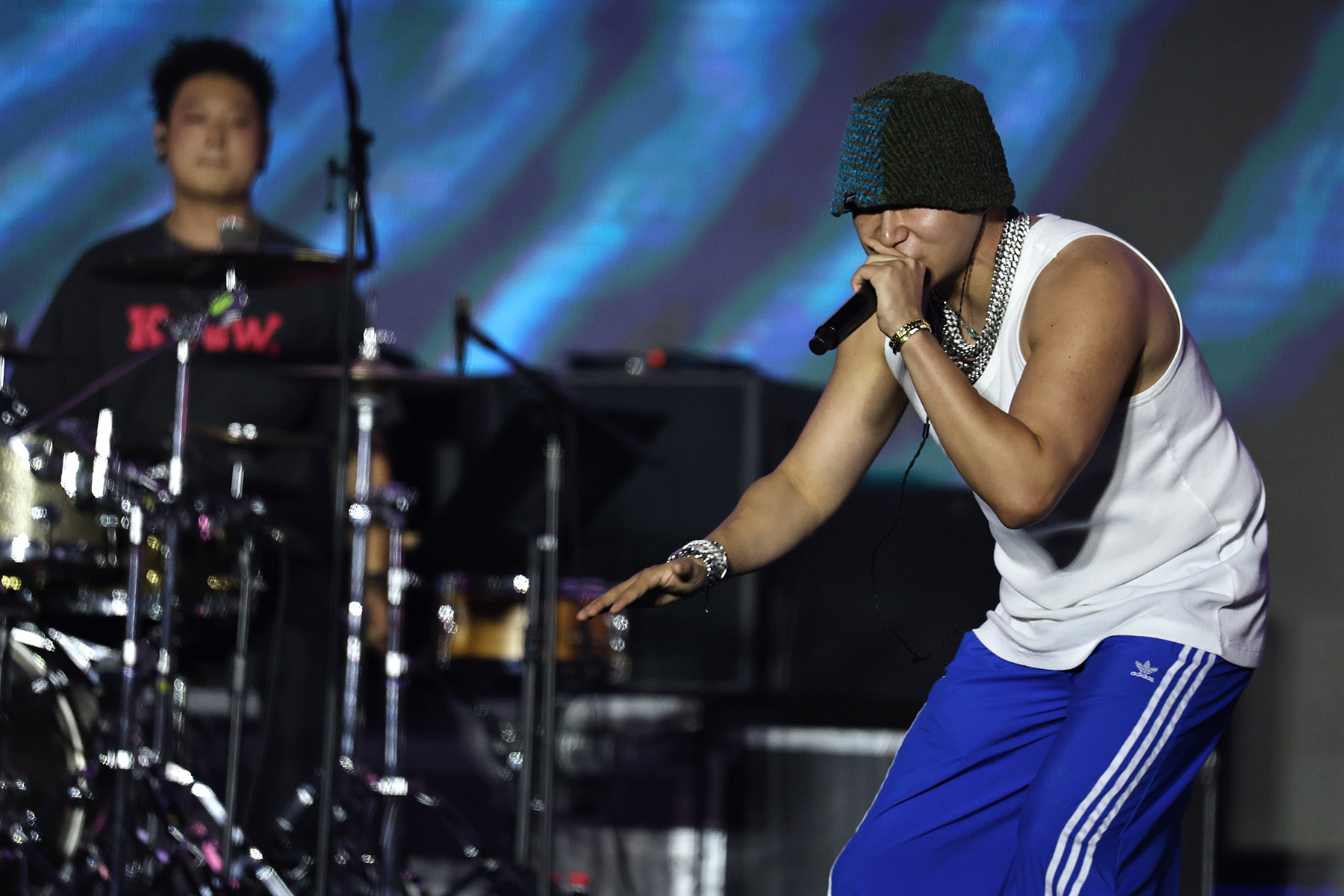
For most of the Chengdu rappers, the local dialect is not a novelty, but the basis of how their music is created and understood.
"Sichuan dialect is not a gimmick," Wang said. "It's a tool for expressing authenticity."
When he traveled to the United States to work on his album, he deliberately preserved dialect sections in his music. "I want the world to hear the real sound of Chengdu rap," he said.
In rap, flow is architecture. Mandarin offers clarity and breadth while the Sichuan dialect adds flexibility, a sense of humor, and a sharp, lively edge. Its tones dip and swing, its slang carries layers of irony and warmth.
Wang weaves it seamlessly with R&B and jazz influences, crafting tracks where smoky hooks glide over crisp verses.
"Rap culture is local," he said. "Chengdu's inclusiveness allows me to blend the grounded feeling of dialect with R&B and jazz. Dialect isn't a bonus — it's part of who I am."
Li Haiqin, also known as ComLee, is a veteran hip-hop promoter, whose company, Hip-Hop Fusion, has been holding the Fusion Hip-Hop Awards annually in Shenzhen, Guangdong province, since 2012.
Sichuan dialect has long been central to the city's rap identity, and ComLee sees it not as gimmick but as "infrastructure" of the music. "Dialect carries emotional density," he said. "It contains humor, intimacy, and historical memory that standard Mandarin sometimes cannot."
Chengdu's rappers are known for their humor and realism; there is irony without cynicism, swagger without coldness. The city's atmosphere — laid-back, yet sharp — flows naturally into the performers' music and lyrics.
On Jan 20, ComLee was invited to the ceremony to mark the official arrival in China of Def Jam Recordings, which was founded in 1984 by Rick Rubin and Russell Simmons and has established its dominance with acts, like Jay-Z, Rihanna, Jeezy, and Kanye West.
"It reflects both cultural confidence and industrial maturity," ComLee said of the launch in Chengdu.

Drawing on traditions
Alongside the launch, Def Jam Recordings China also announced its focus on "guofeng hip-hop".
The term guofeng is widely used in China's creative industries to describe contemporary music that draws from the Chinese language, cultural references, and storytelling traditions, while engaging with modern production approaches and global music trends.
"Instead of trying to fit into rules set by others," Wang said, "we should build our own unique voice."
Internationalization, in his view, does not mean homogenizing local voices. It means accentuating them — so that when global audiences press play, they encounter not an imitation of Atlanta or Los Angeles, but the humidity of Chengdu, the laughter of its alleys, the philosophical chatter in its teahouses.
In recent years, dialect rap, guofeng aesthetics and a "Chinese narrative" have increasingly entered the mainstream of the country's hiphop scene.
ComLee believes this is not a passing trend but an expression of deeper generational change.
"Gen Z has strong cultural confidence and national identity," he said. "They are genuinely interested in traditional culture. We are seeing more ethnic minority rappers emerge, blending international rap styles with Chinese cultural elements — from instrumental sampling to vocal delivery."
The integration of traditional instruments — such as suona, erhu, guzheng and dizi — has become increasingly common.
"If these instruments are simply layered onto a track, that becomes superficial," ComLee said.
"But if artists deeply study traditional culture — travel to regions where ethnic groups live, learn from intangible heritage inheritors, cultural scholars, and folk musicians — then the internal essence of that culture can be integrated into the music."
ComLee and his team are currently planning a variety program centered on ethnic groups' rap — using popular music to tell Chinese stories and highlight China's diverse landscapes and cultures.
Asked about the difference between today's young rappers and earlier pioneers in China, ComLee attributes it to ambition and cultural awareness.
"The early generation fought for space," he said. "Today's generation is fighting for expression."
They are more strategically minded, more visually fluent, and more comfortable blending genres, he said. But perhaps most importantly, they possess what ComLee describes as "cultural ambition" — a desire not just to succeed commercially, but to articulate identity.
Cultural relevance
Wang said while rap music is an imported product, "rap culture is not". It may have been defined and commodified in the US, but its cultural meaning in China must be excavated from Chinese soil.
"We have to start from our own hearts, from our own land, to explore what hip-hop really is," he said.
"It's not something you can just learn by copying. You have to participate in it, live it."
Wang believes originality means writing from life experience: the textures of local neighborhoods, and the ups and downs of young people. Doing the leg work leads to understanding, and understanding leads to new ideas.
"There's never such a thing as doing too much," he said.
Wang does not force dialect into his lyrics, but the tempo of the streets and people's everyday outlooks seep in naturally.
"They're the most authentic local characteristics," he said. "Good work can naturally break regional boundaries."
A sense of responsibility is important to Wang who sees himself primarily as a communicator.
To dismantle stereotypes and broaden acceptance of Chinese rap, he often fuses melody with rhyme, inviting listeners who might hesitate at this style of music to "step inside". "Through my lyrics, I hope more people can feel the charm of this style and culture," he said.
His vision of fusion stretches back in time.
Traditional Chinese opera, he said he had observed, alternates between sung passages and spoken narration — a structure uncannily similar to the interplay of verse and hook in hip-hop.
Rhythmic recitation meets lyrical melody; storytelling intertwines with emotion. In contemporary rap, these ancient aesthetics find a modern resonance.
Wang believes that integrating elements of traditional culture is not a form of nostalgia but an evolution. It is a way to let the world hear the distinctive sounds of guofeng rap — to tell Chinese stories with contemporary cadence, he said.
Unique, authentic
As a longtime resident and observer of the local music scene, Belgian Jef Vreys, owner and founder of New Noise, said Chengdu's story goes far beyond just rap.
Arriving in Chengdu in 2007, he recalled a city where hip-hop was almost invisible. "Even in the clubs, no hip-hop was being played. Sometimes there would be some local jams at a venue called Hemp House where rappers like Kafe Hu, who was bartending there, would join in.
"I never really got involved at first, but I watched it grow organically," he recalled.
By the early 2010s, underground weekly hip-hop battles in Jiuyanqiao, a lively nightspot with bars and live music, had brought the scene to life with exciting, raw energy.
Vreys recalled some of the earliest "proper" hip-hop performances: shows by CDC and live sets from Xie Di, sometimes even backed by rock bands.
"Chengdu has always been at the forefront of Chinese hip-hop. Many local rappers and crews have gained national attention, but the scene still maintains an underground vibe. I admire that many artists still rap in the Sichuan dialect — it's unique and authentic," he said.
Chengdu's relaxed, open-minded culture has shaped how music flourishes in the city, Vreys said. With a growing number of bars and live venues, musicians can sustain a livelihood while exploring creative expression.
"The city isn't sprawling, which makes it easier for artists to live off their art. Over the past decade, more than 30 professional live venues have opened, meaning bands no longer need to move to Beijing to be heard," he said.
ALSO READ: Chinese rapper's Lingnan-rooted hip-hop a big draw in US
The city's musical diversity is striking. Its electronic music scene is widely regarded as one of the strongest in China.
Yet challenges remain, particularly for small bands seeking venues and touring opportunities. Essential spaces, like Jah Bar and Nu Space, give these artists a platform to grow and reach audiences.
Vreys also emphasized the importance of international inspiration. His label New Noise has brought in many groundbreaking bands to China.
"Bringing bands like Yussef Dayes (a jazz musician from the UK) or Toe (a Japanese instrumental rock group) over to Chengdu inspires local musicians and promotes the scene," he said.
For him, the most rewarding part of being part of Chengdu's indie culture is helping local bands like Fayzz gain recognition beyond the city.
"Everyone knows and supports each other here. If I can help push local talent forward, it strengthens the scene as a whole," he said.
Contact the writers at chennan@chinadaily.com.cn
