

It is possible to get an eyeful of objects commissioned, used and cherished by Qing Dynasty emperors in Hong Kong, and perhaps even own a piece of them. Gennady Oreshkin reports.
Qing Dynasty (1644-1911) decorative art seems to be the flavor of the fall exhibition season in Hong Kong. Exhibitions, auctions, and permanent displays in museums are attracting collectors, academics, design professionals and art enthusiasts interested in the visual culture of China’s last imperial dynasty. Artifacts that were once the exclusive preserve of emperors — crafted with care and exceptional skill in palace workshops — now sit at the intersection of cultural heritage and global commerce.
Opulent and intricate
Furnishing the Forbidden: Throne, Study and Bedchamber, now on at Liang Yi Museum, features 90 Qing Dynasty imperial treasures, offering considerable insight into life in the Forbidden City during the Qianlong Emperor’s reign, from 1735-96.
Curator Janine Hua says, “We gathered the objects that most thoughtfully represented the art style of that period, defined by intricate carvings and decorativeness as opposed to the more minimalistic style from the Ming Dynasty (1368-1644), which was influenced by Confucian philosophy.”
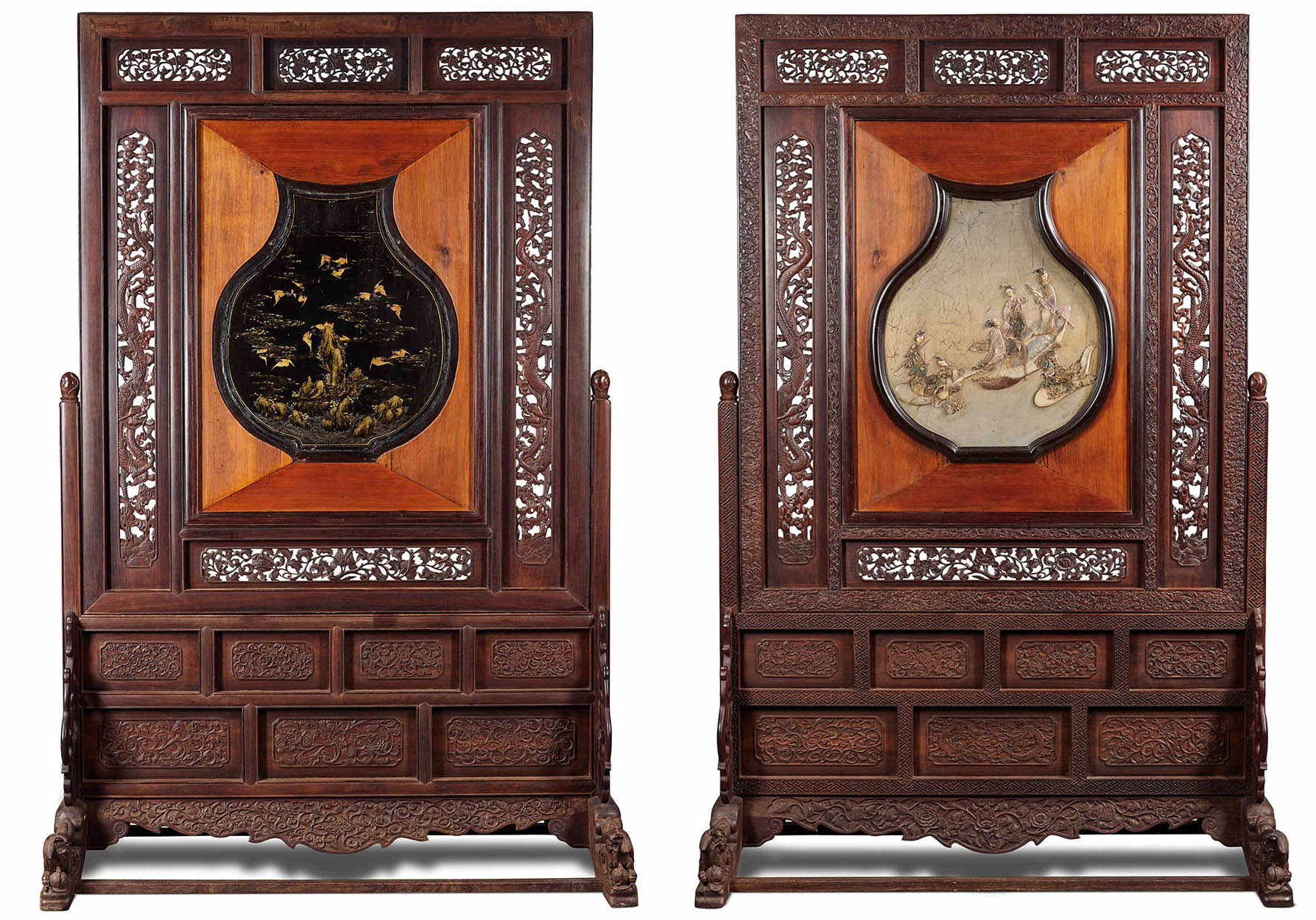
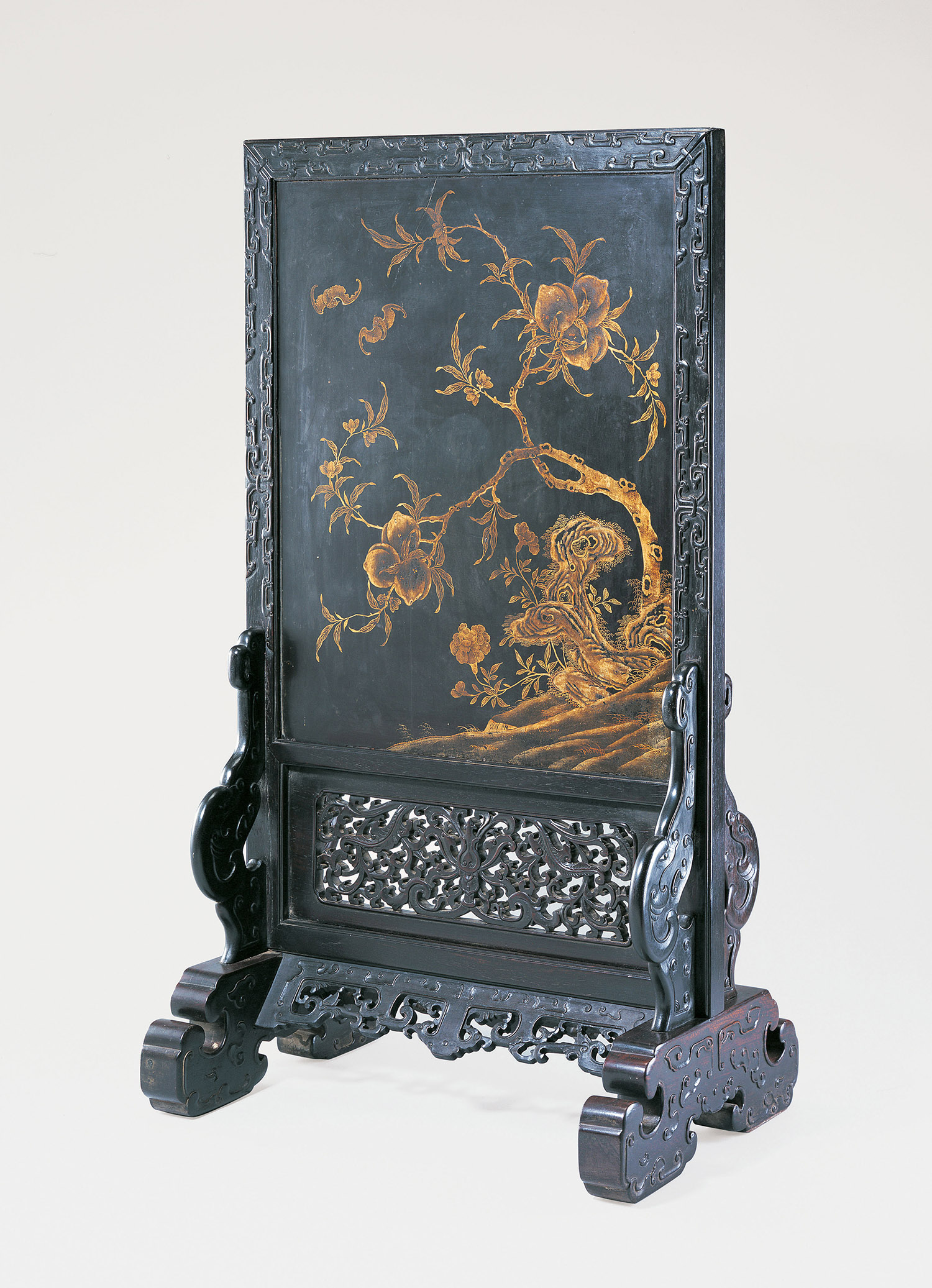
A 2-meter-high screen made out of zitan wood, known for its unmatched density and rich dark purple-red hue, is a fine example of the intense artisanal workmanship that Hua is referring to. The piece comes with a large medallion at its center. The front panel, carved in marble, and inlaid with jade stones, shows a young woman being wished a long life during a boat trip. The black lacquer panel on the reverse depicts bats flying over the fairyland of Penglai, traditionally believed to be an auspicious sign.
“The piece was the result of collaborations between several imperial workshops,” Hua says. “The artisans managed to create an extremely detailed design despite the high density of the wood.”
Screens like this were used to divide large rooms — like the Yangxin Dian, i.e., Hall of Mental Cultivation, in the Forbidden City — into smaller compartments, a trend that began during the Yongzheng Emperor’s reign from 1722-35.
Another noteworthy piece from the exhibition is an 18th-century clothing chest crafted from huanghuali, i.e., native Chinese rosewood. Chips of mother-of-pearl, lapis lazuli, and other semiprecious stones have been used to create the image of birds fluttering over a branch with magnolia blossoms on the lid.
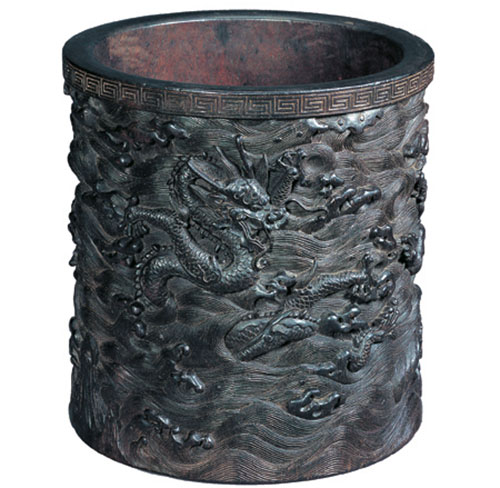
Images of the five-clawed dragon — “an emblem reserved solely for the emperor” — appear on a pair of chests made from near-black zitan wood, on the doors of a rosewood cabinet as well as on the surface of a cylindrical container. The dragon motifs on these objects emblematize the pervasive presence and power of the monarch.
Artisanal excellence
The Hong Kong Palace Museum is currently hosting Design for the Forbidden City: Imperial Workshops of the Qing Court, an exhibition of decorative objects and techniques that were a part of everyday life of Qing royalty. The focus is on the history and organizational structure of the imperial workshops and the high-value, exquisite craftsmanship produced by the thousands of anonymous artisans employed there.
Museum Director Louis Ng Chi-wa says that the exhibition “reinterprets the excellence in traditional heritage through a contemporary lens and incorporates multimedia elements to enhance interaction, guiding visitors to experience the timeless appeal of exceptional craftsmanship”.
The story is told in three chapters: the introductory “About the Imperial Workshops”, covering a period coinciding with the reign of the Kangxi Emperor from 1661-1722; “Production and Innovation”, which explores the techniques in vogue during the reigns of the Yongzheng and Qianlong emperors; and “Creative Design and Display”, which has to do with branding, packaging and design concepts developed in the later years of the Qing Dynasty.
Highlights from the show include an enamel octagonal teapot. Each panel on its surface has a different image — landscape, flowers, or birds. European in its form but featuring Chinese-style painting, the piece was commissioned by the Qianlong Emperor himself, as a mark under its base shows.
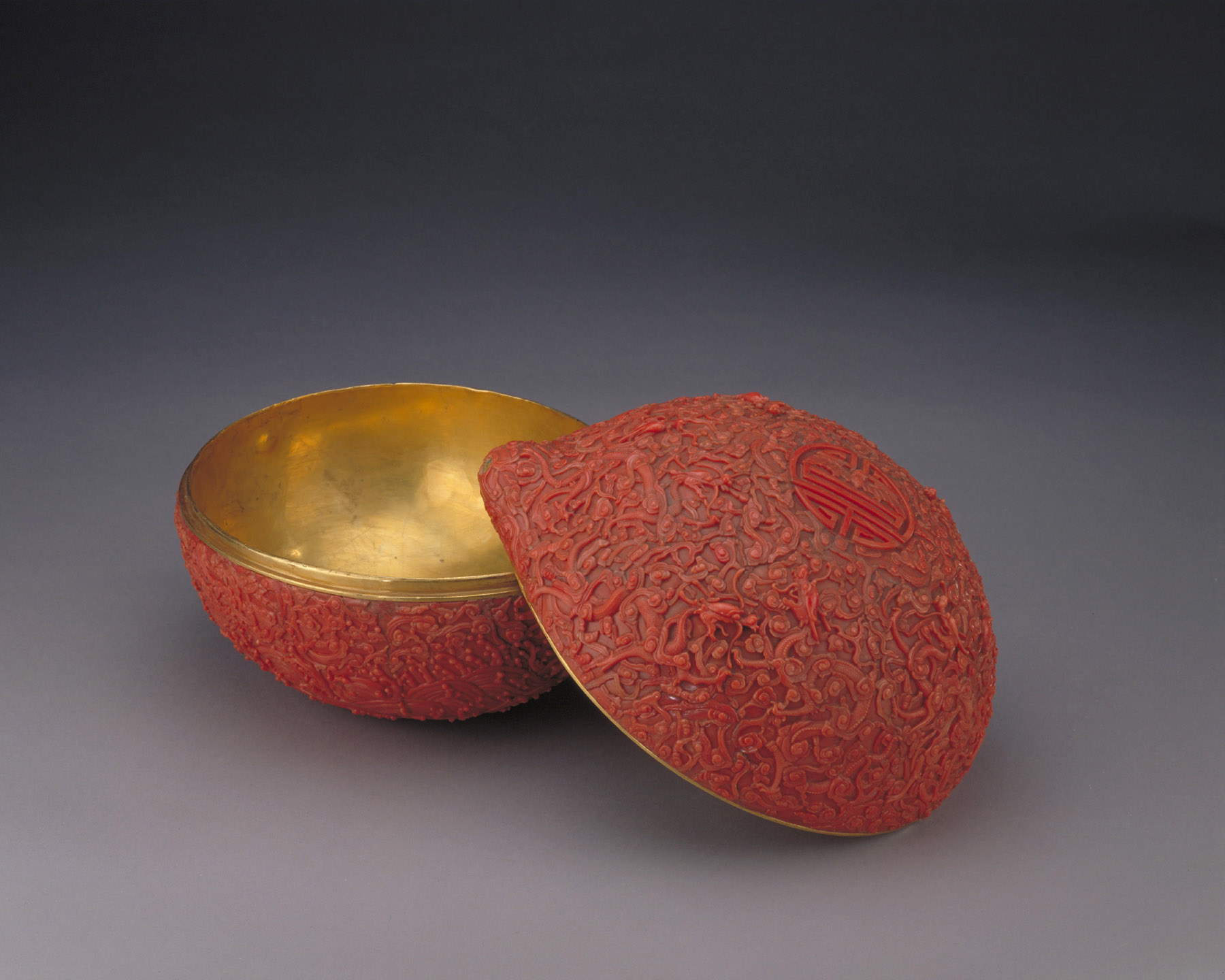
Another example of the breadth of skills of Qing-era artisans is a peach-shaped gold box with a layer of intricately carved coral on the outside. The piece was created to mark the birthday of the Yongzheng Emperor. Its carved surface depicts dragons, clouds, waves and a Chinese character suggesting longevity.
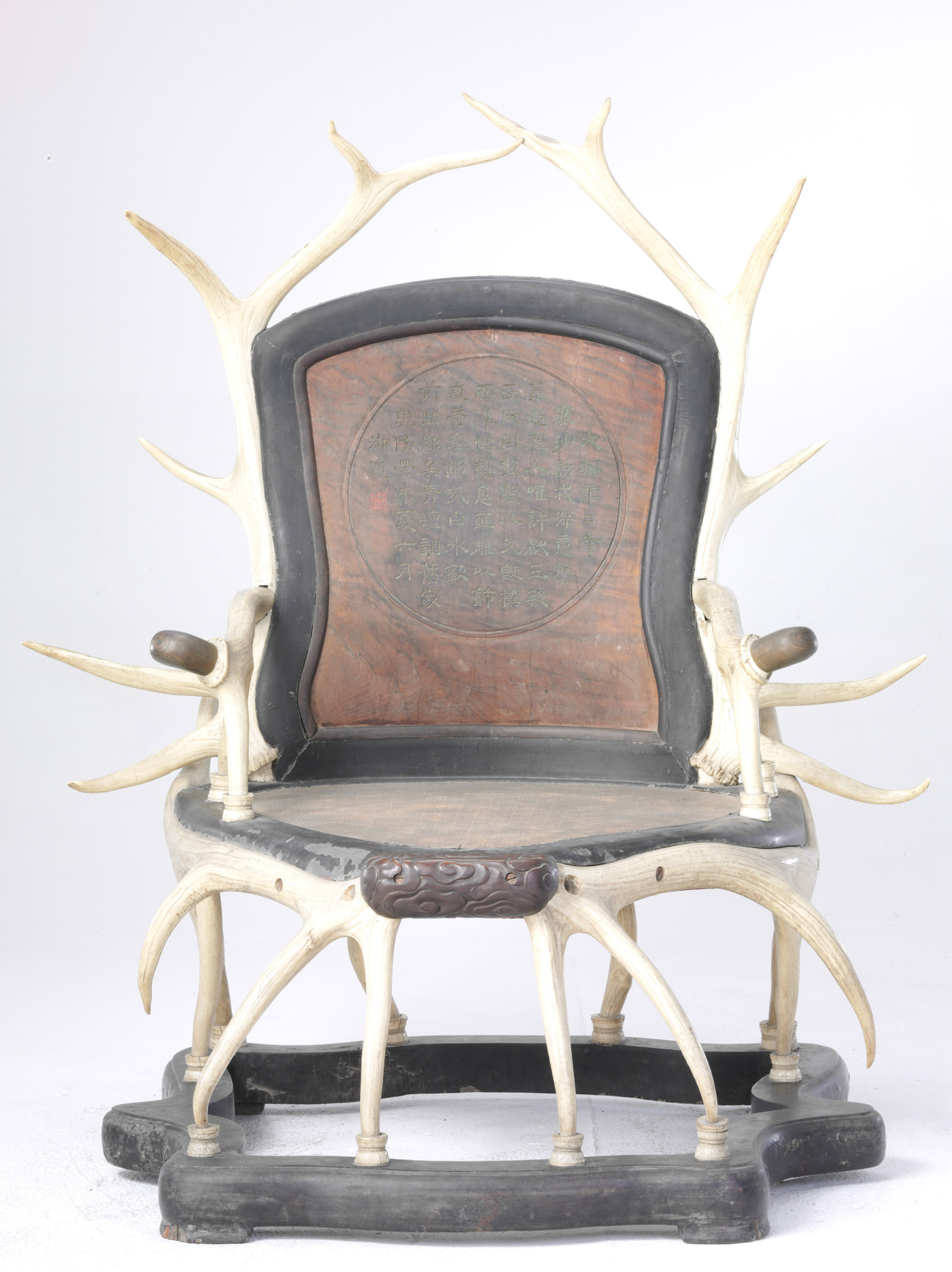
A chair made using antlers of deer hunted down by the Kangxi Emperor is another exhibition highlight. According to the poem carved on its backrest, the chair was once displayed in the Pavilion of Winding Streams and Lotus Fragrance of the Rehe Imperial Palace, known today as the Chengde Mountain Resort.
Up for grabs
Auction houses in Hong Kong are offering Qing Dynasty masterpieces as part of their fall season. On Oct 28, Bonhams will present its Iconic Speelman collection — 40 lots of Chinese works of art from the collection of prolific dealer Jules Speelman.
“Works in his collection are highly sought after by museums, institutions and private collectors worldwide,” says Asaph Hyman, global head of Chinese Ceramics and Works of Art at Bonhams. “Many of the pieces featured, such as the pure gold figure called Loyal General, were produced at the peak of the Qing Dynasty’s prosperity and power, which allowed for extensive funds and resources to be invested in the arts, resulting in some of the most exceptional works of art ever made in imperial China.”
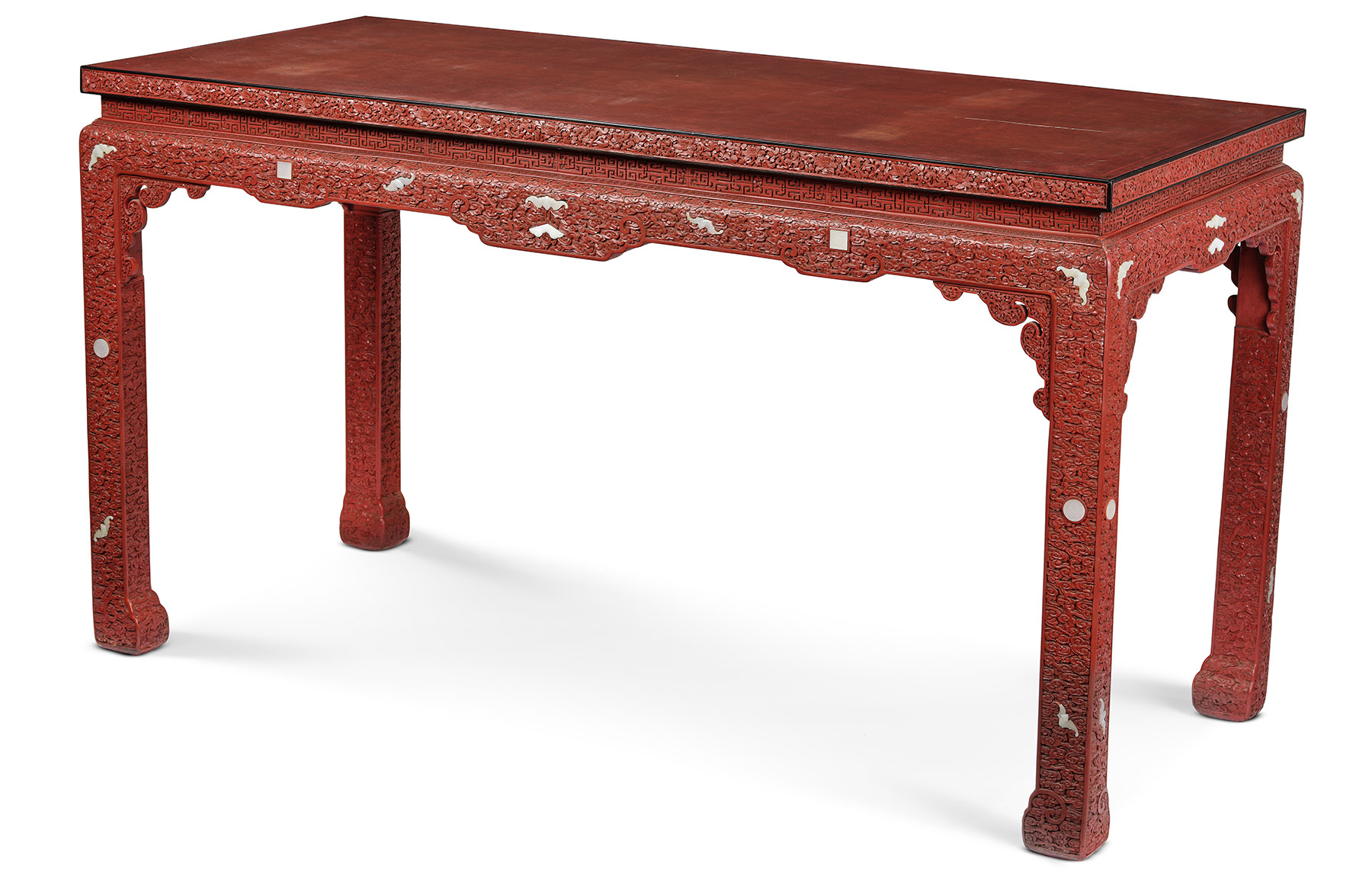
A rare imperial carved cinnabar lacquer table with jade inlay is among the lots to be auctioned. Previously a part of the collection in New York’s Metropolitan Museum of Art, “it is a rare work, embodying the Qing court’s taste for opulence and technical virtuosity,” says Hyman. “Such works were not made solely for the pleasure of the emperor, but also to demonstrate the power and prosperity of the Qing Dynasty.”
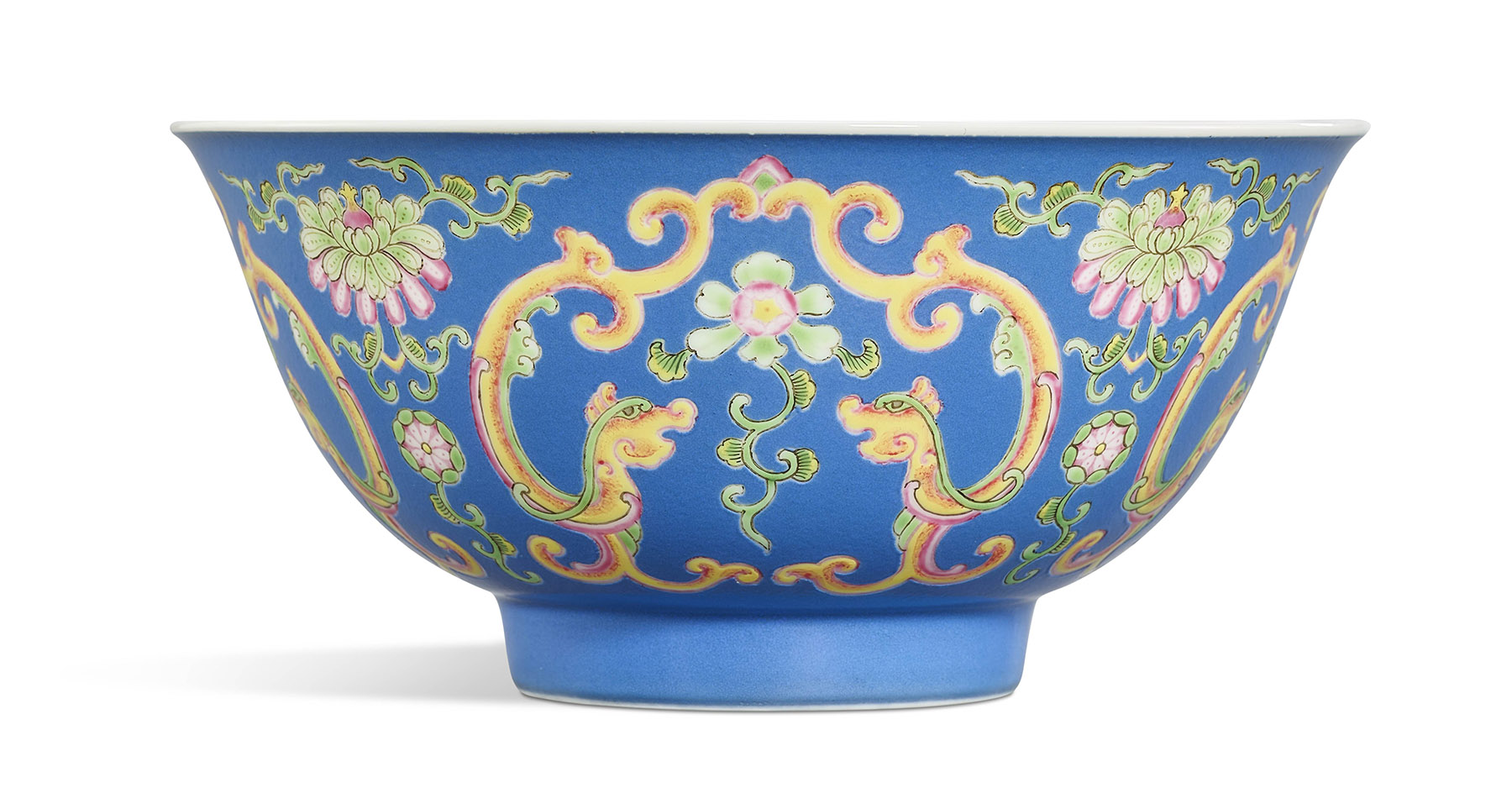
On Oct 30, Sotheby’s is holding its sale of Chinese works of art, some of which had a previous life in the court of the Qianlong Emperor. One of the highlights is a blue “dragon” bowl, made using the falangcai technique, which involves a Western-style preparation of the enamel pigment, which gives the object a pastel-shade-like finish.
“Falangcai on porcelain was invented during the reign of the Kangxi Emperor, who patronized the joint effort by European Jesuits and imperial artisans. With the Yongzheng Emperor’s distrust of the Jesuits, the motifs on the falangcai wares showed a shift from Western and stylized designs to Chinese-style landscapes,” says Sam Shum, a senior specialist at the Chinese Works of Art Department at Sotheby’s Hong Kong.
The Qianlong Emperor’s tastes, however, might have been more aligned with those of his grandfather’s. As Shum points out, “the spatial arrangement of the dragons echoes the floral bowls produced during the reign of the Kangxi Emperor, illustrating the Qianlong Emperor’s fondness for the glorious legacy of China’s cultural heritage.”
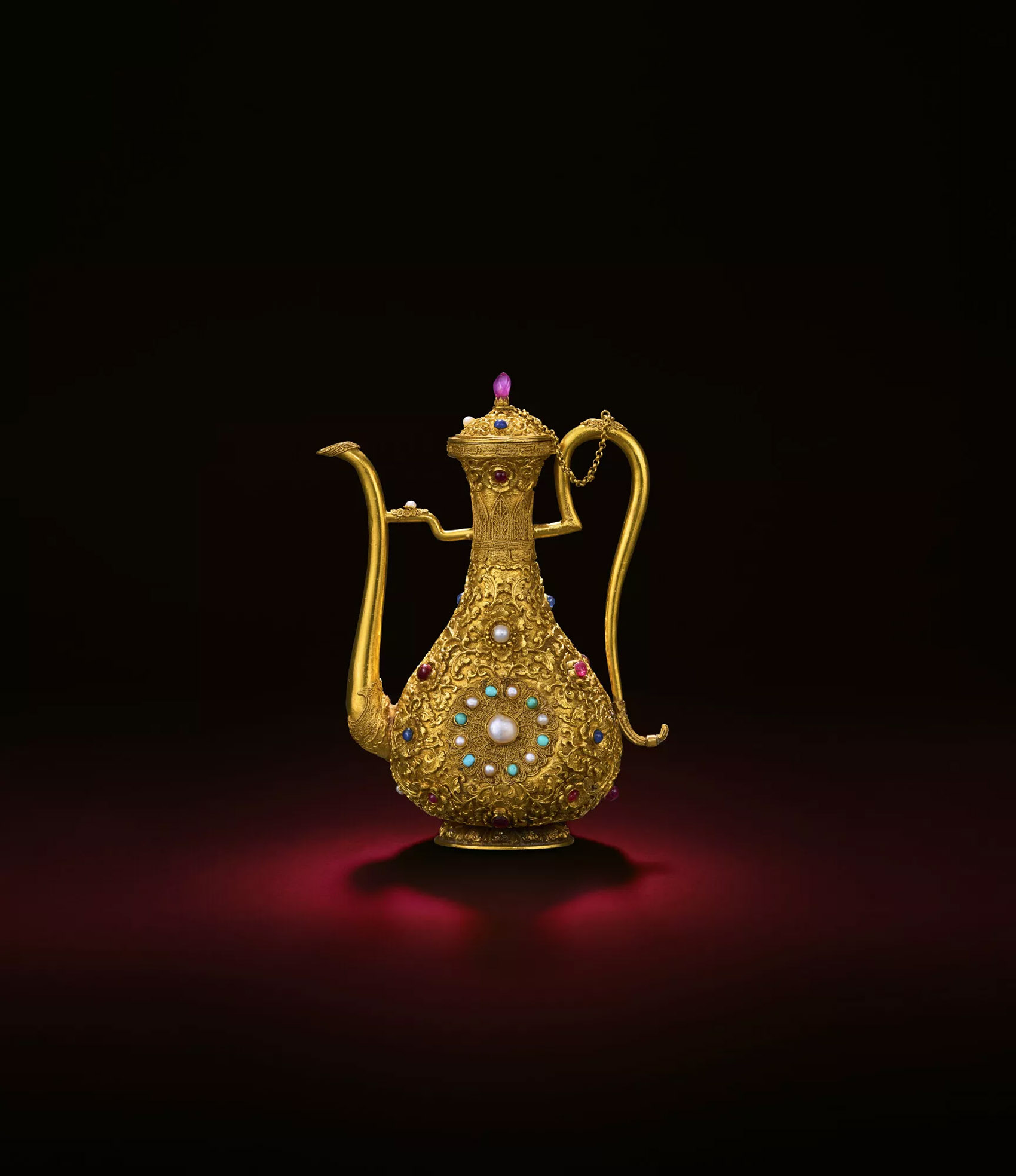
On Oct 29, Christie’s is all set to host a single-lot auction titled For the Son of Heaven: The Imperial Qianlong Gold Ewer. The piece in question is a gold vessel from the Qianlong Emperor’s personal collection.
“Exceptional Qing imperial works are rare enough, but it is extraordinarily uncommon to encounter an object that so vividly embodies the personal world of the Qianlong Emperor,” says Marco Almeida, senior vice-president at Christie’s. Made out of solid gold, the piece is embellished with pearls, rubies, and turquoise. It bears the imperial mark and resonates with the four “golden cups of eternal stability”, commissioned by the Qianlong Emperor in 1739 for the Chinese New Year ceremonies.
Maneuvering iridescence
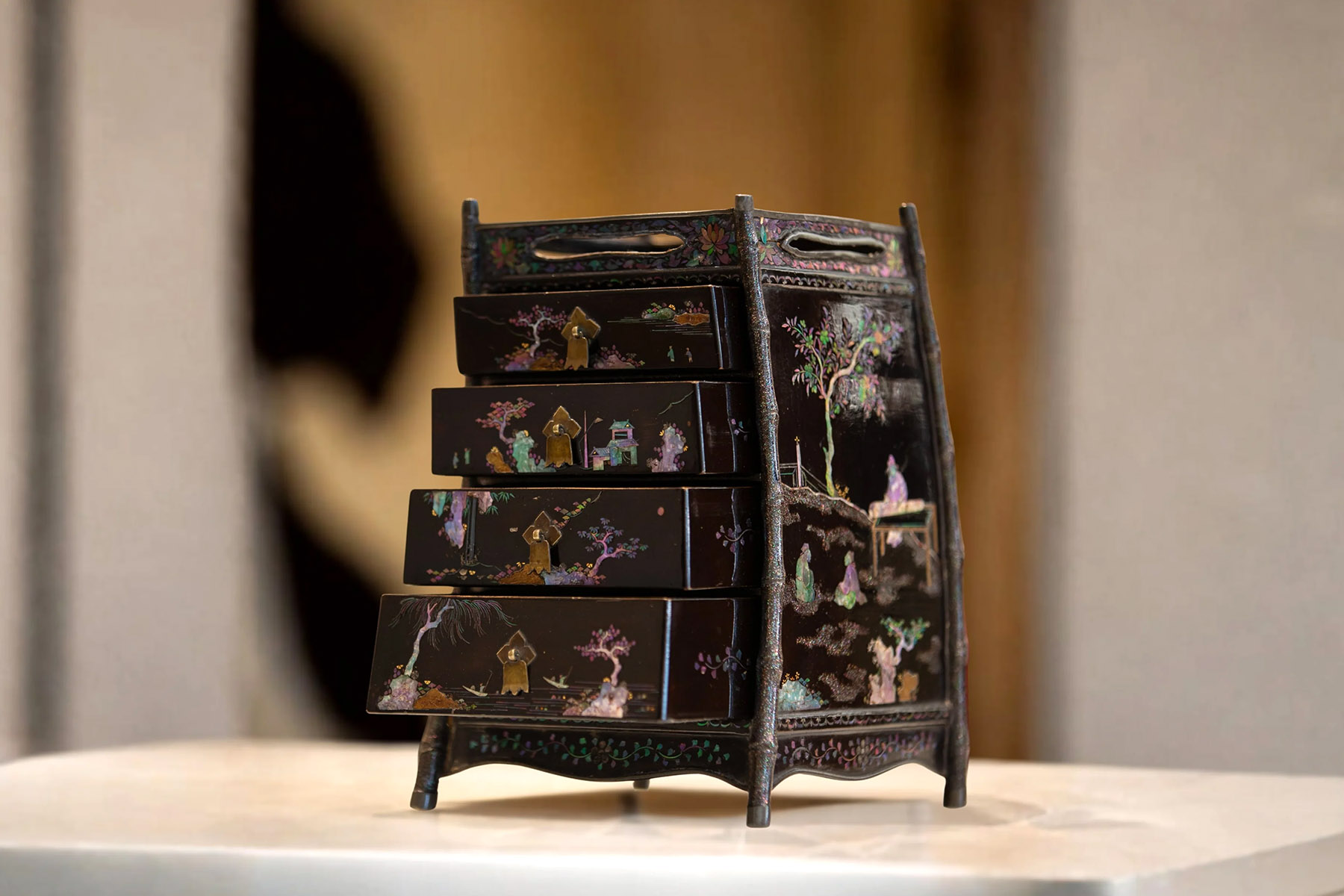
At Gentry Club in Central, K11 Craft and Guild Foundation (KCG) hosts a permanent display of its collection of Qing Dynasty artifacts. The idea is to preserve and showcase objects made using heritage artisanal techniques. One such technique is luodian, i.e., mother-of-pearl inlay. It requires sourcing the finest abalone shells that can reflect striking iridescent hues when exposed to light, and arranging them to create complex imagery. The Four Arts of Chinese Scholar Cabinet, crafted during the reign of the Kangxi Emperor, is a fine example.
“The inlay work is done using thin luodian slices with different degrees of brightness, in order to show the contrast on the surfaces of the four drawers. Together they depict a scene from a Tang Dynasty (618-907) poem Mooring by the Maple Bridge at Night by Zhang Ji,” says Krizia Li, head of culture at KCG. “The three side panels depict scenes representing the four arts of the Chinese Scholar — i.e., playing a musical instrument, playing Chinese chess, practicing calligraphy, and painting.”
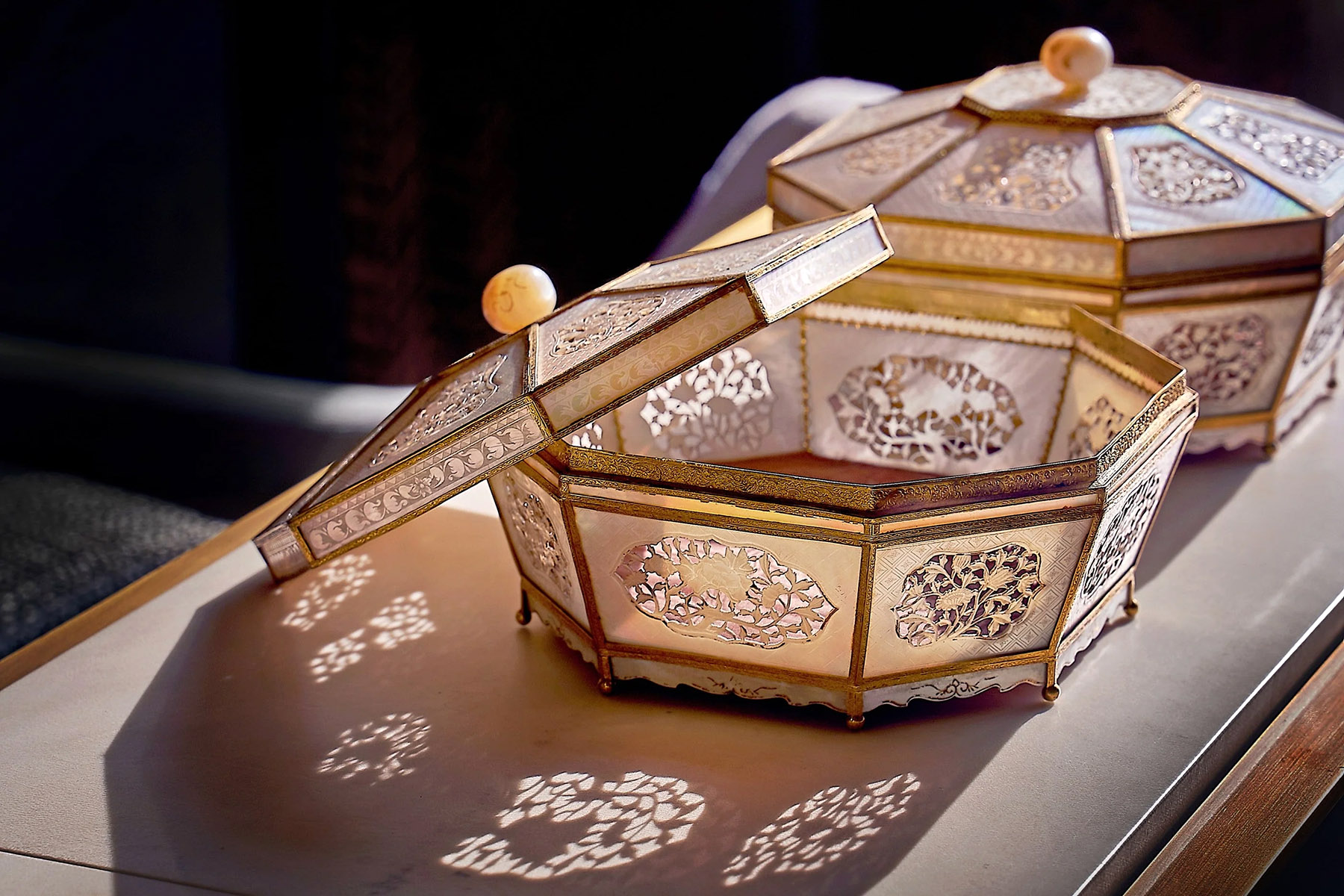
The KCG permanent collection also includes a pair of luodian octagonal boxes. Created during the Qianlong Emperor’s reign, the mother-of-pearl facets of these boxes have been intricately carved to allow light to pass through. Li says that while the carved pattern is common to ivory carving in Guangdong province, seashell versions of the same are indeed rare.
Commissioned, used and cherished by the Qing emperors, these artifacts serve as a valuable link between China’s imperial past and present cultural ambitions. The fact that today these objects continue to inspire interest in both viewers and collectors goes on to show that the investments successive Qing emperors had made toward developing craftsmanship and artistic innovation have yielded lasting value.
If you go
Furnishing the Forbidden: Throne, Study and Bedchamber
Date: Ongoing, end date not specified
Venue: Liang Yi Museum, 181-199 Hollywood Road, Sheung Wan
www.liangyimuseum.com
Design for the Forbidden City: Imperial Workshops of the Qing Court
Date: Through Sept 18, 2028
Venue: Hong Kong Palace Museum, 8 Museum Drive, West Kowloon Cultural District, Yau Ma Tei
www.hkpm.org.hk
The writer is a freelance contributor to China Daily.
