

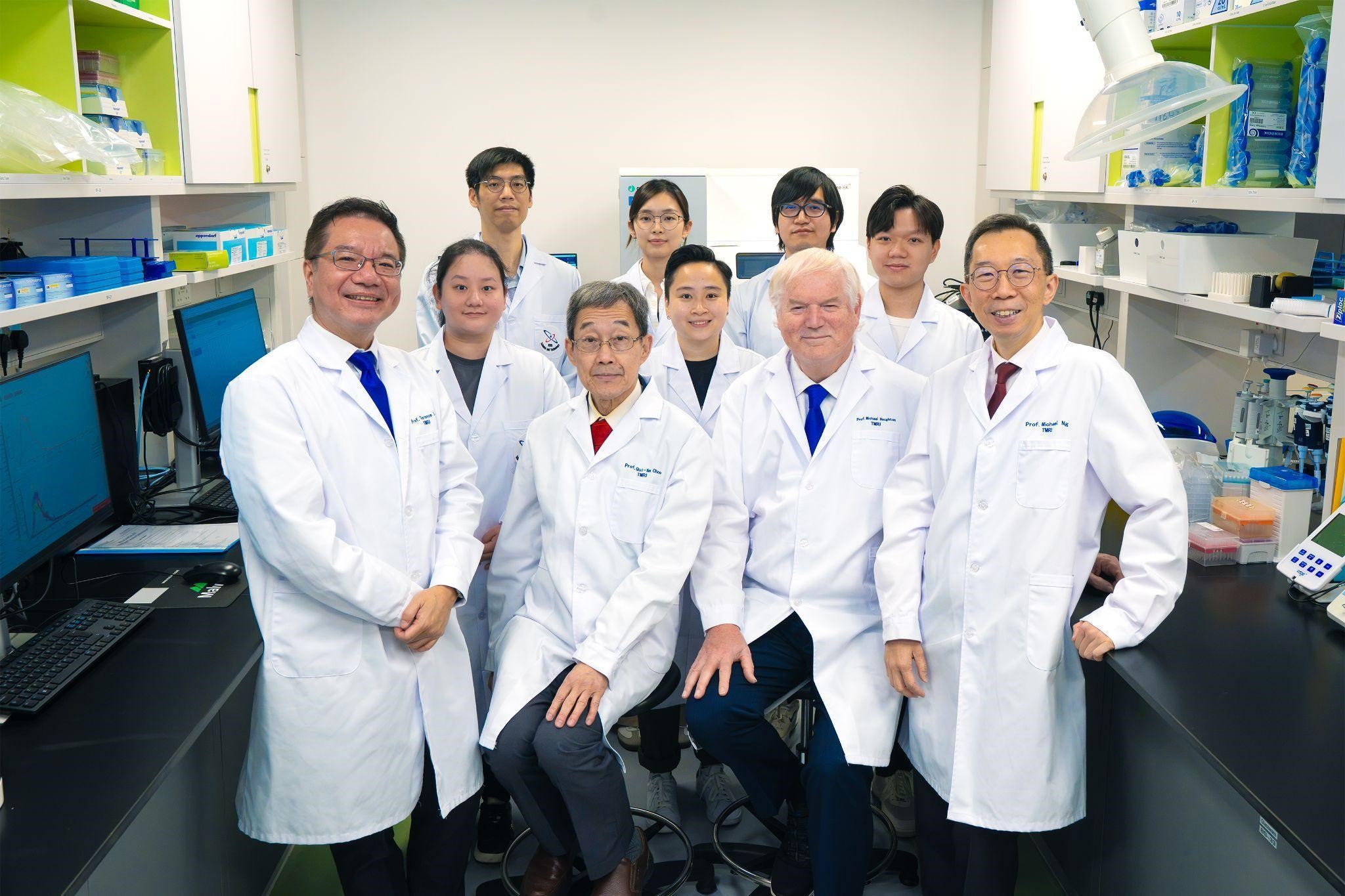
British scientist and Nobel laureate Michael Houghton has joined Hong Kong Baptist University (HKBU) to pursue a vaccine for hepatitis C, a viral infection that affects the liver, aiming to prove it effective by 2030 as part of a bold vision to eliminate the disease as a threat.
Once it has proven its effectiveness in humans, Houghton’s team at HKBU will partner with Chinese pharmaceutical companies to distribute the vaccine nationwide, hoping to keep it affordable for most people, the scientist said at a news conference on Tuesday.
Hepatitis C was responsible for the deaths of about 239,000 people in 2024 globally, according to the World Health Organization. WHO also estimates that 47 million people have a chronic hepatitis C virus infection, with about 900,000 new infections occurring every year. So far, there is no effective vaccine against hepatitis C.
In 1989, Houghton was part of the team of scientists — including Singapore-born Choo Qui Lim, now a chair professor in HKBU’s Department of Biology — that discovered the hepatitis C virus, for which he was awarded the 2020 Nobel Prize in Physiology or Medicine.
ALSO READ: HKBU plans healthcare research hub to fuel third medical school bid
“Even though we have good diagnostics and good antivirals, the antivirals are very expensive. It’s impossible for any country to spend so much money to test for infected people and then treat them with the antivirals,” Houghton said.
“So we need a vaccine and the WHO also strongly emphasizes the need for a hepatitis C vaccine.”
Houghton added that the hepatitis C virus is one of the most variable viruses known to humans, and that the Chinese strains differ from the North American and European strains, which is why vaccines need to be tailored to the strains prevalent in each region.
“Initially we’re focusing on a vaccine against the Chinese hepatitis C strains. Once we’re successful, we can start thinking about combining it with a North American and a European vaccine to eliminate the threat of hepatitis C.”
The team aims to identify an optimum mixture of the vaccine that can protect the Chinese population by the second half of 2027, and initiate manufacturing either with a Shanghai or a Shenzhen company.
The first phase of the clinical trial is expected to start in 2028 to confirm safety and figure out what the optimum dose is, and the second stage in 2029 to verify the efficacy.
Houghton had previously conducted hepatitis C vaccine research at the University of Alberta in Canada.
He was first connected with HKBU through their joint bid to establish Hong Kong’s third medical school. Although the bid was unsuccessful, he found that the two sides shared a common vision and goals — biomedical research and its translation into applications, which led him to decide to come to Hong Kong.
READ MORE: Nobel awards adapt to challenging times
As a co-founder of the Frontier Translational Medical Research Institute and a chair professor of HKBU’s Department of Biology, Houghton said that research in the United States and Europe is facing different constraints, making the Chinese mainland and the Hong Kong SAR good choices for his project.
Terence Lau Lok-ting, interim chief innovation officer of HKBU, said the university places a strong emphasis on research translation. He added that Houghton can combine pharmaceutical industry experience with academic experience to turn research into products, giving him unique translational expertise.
Lau said he hopes Houghton will drive the university’s development in translational research and contribute to the economy and benefit mankind.
Contact the writer stacyshi@chinadailyhk.com
