

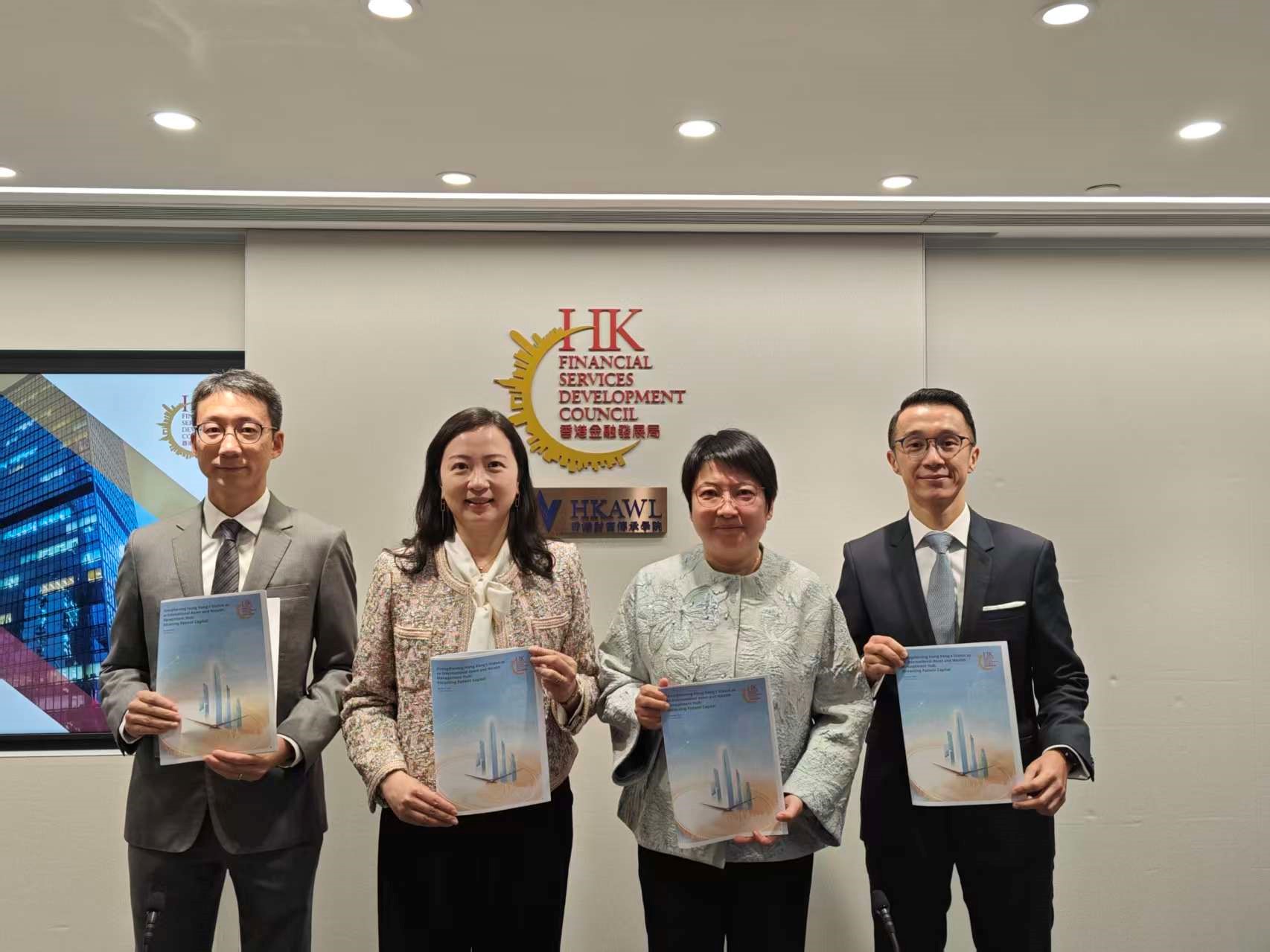
Hong Kong is well-positioned to play a pivotal role in connecting global patient capital with regional economic opportunities, consolidating its status as a global hub for long-term investment, the Financial Services Development Council (FSDC) said on Wednesday in its latest report.
The FSDC suggested that more cross-border investment channels should be expanded, particularly in the pension and insurance sectors.
According to the report, as of the end of last year, the Chinese mainland's insurance assets reached 41.3 trillion yuan ($6.2 trillion), of which only 5.4 percent was allocated offshore —well below the 15 percent regulatory limit set by the National Financial Regulatory Administration.
ALSO READ: Nation backs Hong Kong as global financial hub
Industry insiders are confident that the proportion of overseas asset allocation will continue to rise. “We have noticed that mainland pension and insurance flows to Hong Kong, or via Hong Kong to other places, have been gaining traction,” said Rocky Tung Yat-ngok, executive director of the FSDC.
He said that two to three years ago, the ratio of assets allocated offshore by mainland insurers was below 2 percent — substantially lower than the current level. For future development, he said, “We are going to see further momentum.”
This major pool of assets from the mainland will become Hong Kong’s comparative advantage, said Tung. He added that Hong Kong’s common law system, integrated multicurrency ecosystem, and its position as an offshore renminbi hub are all unique strengths of the city.
“There is a lot of demand from global issuers considering where they can borrow money at a lower cost. They are choosing Hong Kong as the place because of these characteristics, and Hong Kong does allow them to hedge currency and duration risks,” he said.
READ MORE: Multinational firms step up AI data center investment in HK
Ding Chen, vice-chairman of the FSDC, said that mutual access between the mainland and Hong Kong markets is a process of continuous optimization and expansion.
As mainland insurers have been permitted to invest in Hong Kong-listed exchange-traded funds via the Stock Connect since August, she said that mainland pensions should be included into the program.
According to the report released by the FSDC, the Chinese mainland’s pension assets reached 15.66 trillion yuan in 2024 and are projected to reach 22 trillion yuan to 28 trillion yuan by 2030.
“We are confident that in the future, more patient capital will invest in the Hong Kong market through products such as ETFs,” said Ding.
“Patient capital provides the stable funding needed to navigate market cycles, finance innovation, and long-term sustainable economic growth,” said Benjamin Hung Pi-cheng, chairman of the FSDC.
By expanding its product suite, deepening cross-boundary market access, and enhancing a competitive operating environment, Hong Kong can strengthen its position as a global hub for long-term capital, he said.
Contact the writer at akirawang@chinadailyhk.com
