

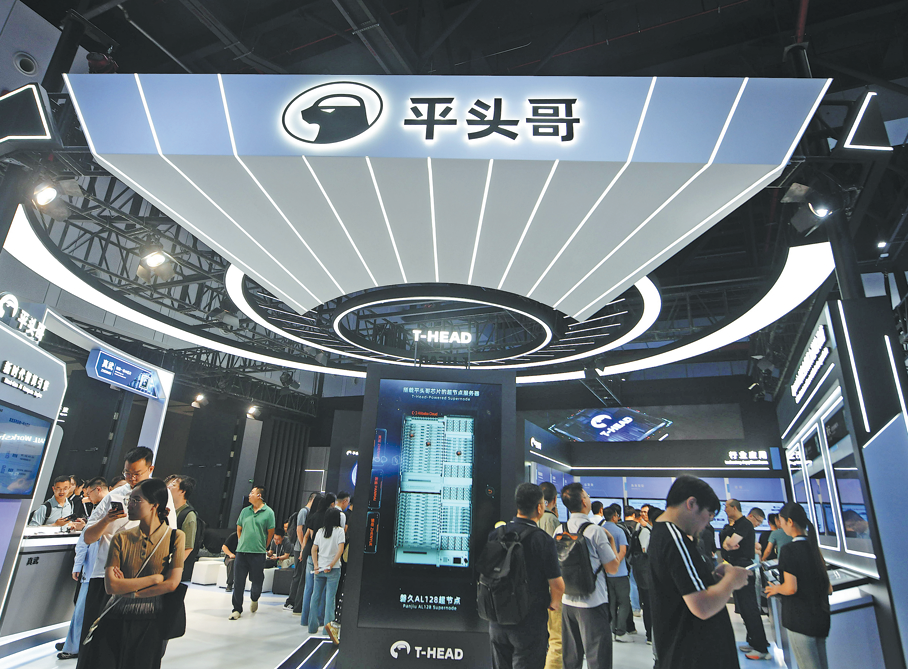
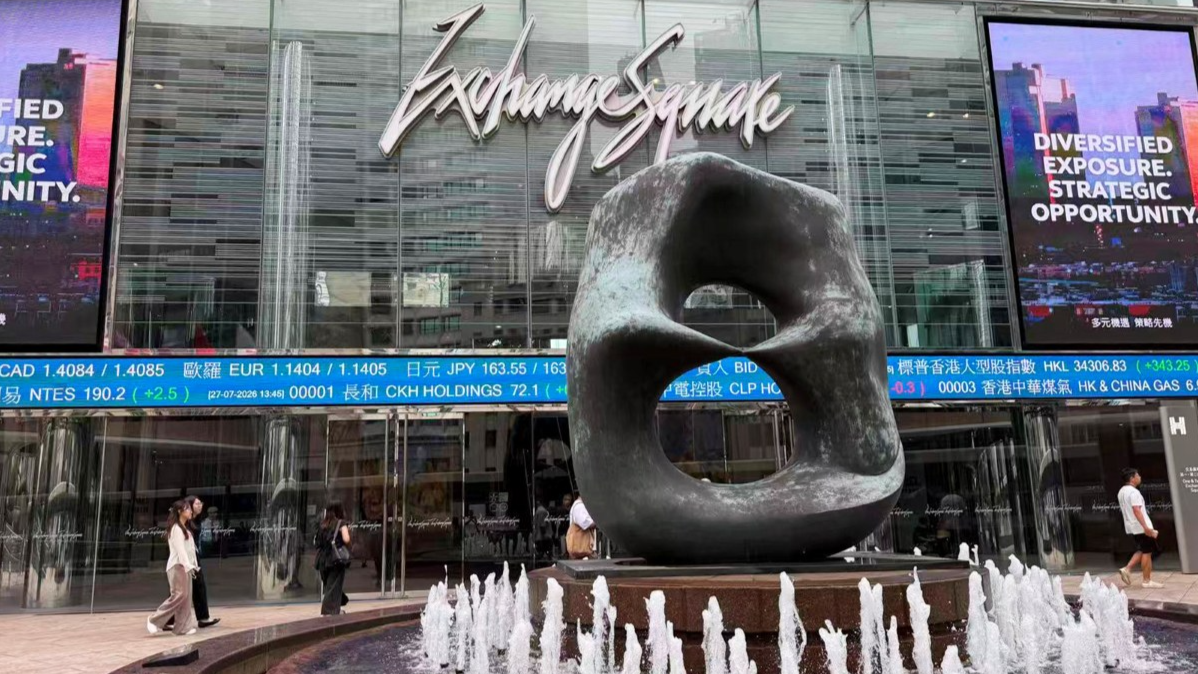
Alibaba Group confirmed on Tuesday that its wholly owned subsidiary, T-Head, had confidentially filed an application on Sept 11 to list on the Hong Kong stock exchange, after the bourse cleared the proposed spin-off.
The move could provide a crucial valuation benchmark for China's homegrown artificial intelligence chip industry, potentially drawing more long-term capital into processors, networking chips and other infrastructure underpinning the country's AI ambitions, industry experts said.
The offering's size, structure and Alibaba's eventual ownership stake have yet to be finalized. T-Head is expected to remain an Alibaba subsidiary after the listing, which is still subject to regulatory approval.
JPMorgan estimated earlier this year T-Head's potential valuation at between $25 billion and $62 billion. The wide range underscores both investor enthusiasm for AI-related assets and the uncertainty surrounding their long-term earnings potential.
Zhang Yi, CEO of iiMedia Research, said separating chipmaking businesses from their parent companies could unlock value that traditional technology conglomerate valuations fail to capture.
RELATED ARTICLES
- Alibaba seeks HK$80 billion placement
- Alibaba’s largest HK share placement a 'double-edged sword'
- China's AI chip sector charges ahead
- Mainland tech stocks in HK jump as AI boom lifts index to 4-year high
"Independent listings could also help address financing priorities, employee equity incentives and the need to expand sales beyond parent companies," Zhang said.
Morgan Stanley analysts, including Gary Yu, said in a research report on Wednesday that T-Head's spin-off could serve as a catalyst for unlocking Alibaba's valuation potential.
The analysts said Alibaba's proprietary chips could strengthen supply-chain resilience and support improvements in profit margins and returns on invested capital, highlighting the group's integrated capabilities spanning chips, cloud computing, AI models and applications.
The move comes as Chinese AI chipmakers increasingly turn to public markets to finance costly research and expansion, amid growing domestic demand for computing power and restrictions by the United States on exports of advanced semiconductors to China.
Baidu's AI chip unit has also filed confidentially for a Hong Kong listing, while domestic chipmakers Moore Threads and Biren Technology have already made their stock market debuts.
T-Head's significance extends beyond the AI processors attracting much of the market's attention. It would allow investors to look beyond the race for faster processors and assess the commercial prospects of the wider infrastructure needed to build and run powerful AI systems.
Established in 2018, the company has developed a portfolio spanning AI accelerators, server processors, networking and interconnection chips, and storage controllers — components that collectively determine how efficiently large AI computing systems operate.
In September, T-Head unveiled its Zhenwu V900 AI processor, which the company said delivers three times the performance of its predecessor. It also showcased computing systems incorporating its proprietary interconnection chips and other networking and storage components.
Alibaba CEO Wu Yongming said in March that T-Head's annualized revenue had reached the 10 billion yuan ($1.5 billion) level.
As of April, shipments of its Zhenwu AI processors had exceeded 560,000 units. Alibaba said in September that the chips were serving more than 650 customers across industries including automobiles, finance, energy and manufacturing.
But Zhang from iiMedia also cautioned that the spin-off is not the finish line, but a stress test of independence from the parent company.
Investors would increasingly examine whether chipmakers developed within large technology groups could reduce their dependence on their parents, build diversified customer bases and establish sustainable profitability, he said.
Contact the writer at chengyu@chinadaily.com.cn
