

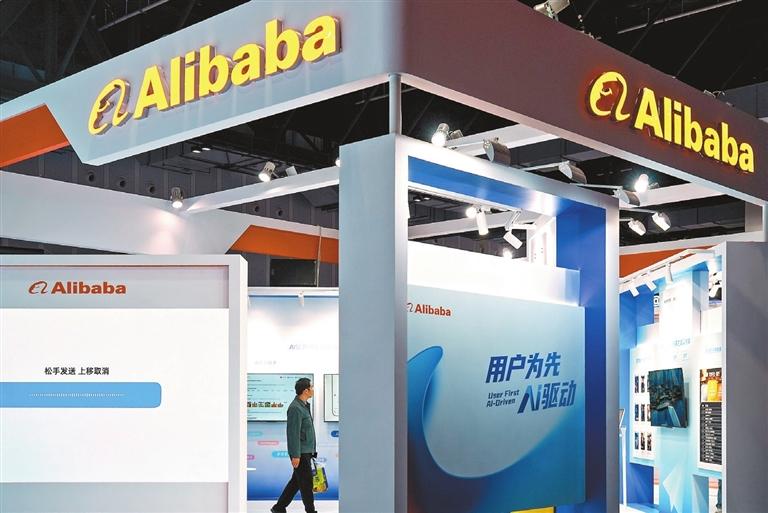
Alibaba Group Holding’s largest share placement in the Hong Kong equity market to date will cement the company’s leadership in artificial intelligence, but its credit position could be weakened, according to financial analysts.
The Chinese mainland e-commerce behemoth announced on Monday its first share placing since it went public in the special administrative region in 2019, proposing to offer 710 million new shares to non-United States individuals outside the US. The figure represents about 3.57 percent of the shares-in-issue as enlarged by the placing share allotment and issuance.
Alibaba proposed a placing price of HK$112.7 ($14.4) per share, representing an 8.4-percent discount to the company’s closing share price on the Hong Kong stock exchange on Aug 21.
The company’s share price plunged 8.5 percent to HK$112.5 per share on Monday—nearly on par with the placing price.
ALSO READ: Alibaba launches $10 billion HK share placement to fund AI spending
The placement is expected to raise total proceeds of HK$80 billion -- the highest to be recorded in the SAR’s equity market as well as the world’s third-largest in terms of the total proceeds raised. According to Alibaba, the net proceeds from the placement will be invested fully to expand AI infrastructures.
Hong Kong Exchanges and Clearing, which runs the city’s bourse, said listed companies have conducted follow-on issuance activities, raising HK$296 billion in the first half of this year. This represented an annual surge of 21 percent and the strongest first-half performance since 2021.
“Our analysis of the last closing price in the US and the proceeds amount of HK$80 billion shows that EPS (earnings per share) dilution is about 3.5 percent-dependent on placement discounts,” US-based investment banking firm Jefferies said in a research report.
READ MORE: Alibaba unveils latest AI model with enhanced coding, reasoning capabilities
As strong growth in AI cloud and computing services propels revenue acceleration in the coming quarters, Jefferies said it expects Alibaba’s margins to improve, and the capital expenditure payback period could be shortened due to improve monetization, product mix and use of in-house chips.
“Equity financing provides permanent capital, financing flexibility and better execution,” Bank of America said in its research report. “With rising US Treasury bond yields and limited demand in the dim sum bond market, the current debt market may not be conducive to large-scale new bond issuances,” it said.
Chelsey Tam, senior equity analyst at Morningstar, said the US investment research firm has cut Alibaba’s fair value estimate by 11 percent to HK$209 per share to reflect lower returns on AI investments, given the high cost of AI infrastructure.
READ MORE: Alibaba-backed Zelos is said to plan HK IPO to raise about $600m
Higher capital expenditure and AI costs have prompted Morningstar to cut Alibaba’s free cash flow forecast to a negative 45 billion yuan ($6.7 billion), Tam said. Free cash flow is a better indicator of measuring a company’s financial flexibility by measuring the portion of cash flow that can be extracted and distributed to creditors and shareholders after paying for normal business operations and capital expenditure.
“Heavy AI spending and ongoing losses in instant retail could significantly narrow Alibaba's net cash position and weaken its credit strength. We expect the company to be more prudent on shareholder returns and non-core investments over the next one to two years,” S&P Global Ratings said in June.
According to the US-based credit rating agency, Alibaba’s revenues have reached 1.02 trillion yuan this year, with an adjusted EDITDA (earnings before interest, taxes, depreciation and amortization) of 119 billion yuan and an adjusted EBITDA margin of about 11.6 percent.
EBITDA is a financial metric used to evaluate a company’s operating performance and profitability by excluding the effects of financing decisions, tax environments and non-cash accounting items, such as depreciation and amortization.
