

The Hong Kong Special Administrative Region, with its research and development capability, is well-placed to deepen collaboration on commercial space development with Hainan province, a full-fledged testing and launchpad for rocket science, industry leaders said.
They made the remarks during a three-day visit by a Hong Kong media delegation to Hainan, which concluded on Tuesday.
The commercial space industry, they said, is not a supplement to traditional space endeavors but a primary path to the sector’s scalable, market-driven and sustainable growth, as well as a key to building the nation into a space powerhouse.
The city of Wenchang in Hainan is an ideal base for launching space vessels thanks to its low latitude, which saves rocket fuel, and its coastal access, which aids the transportation of large-diameter rockets.
READ MORE: Hainan tour stresses Hong Kong’s growing role in space
In 2016, the State-run Wenchang Spacecraft Launch Site began operation in the coastal city. It had accomplished 50 launch missions as of late July.
The arrival of the aerospace sector has drawn in a broad range of upstream and downstream industries, including satellite assembly and testing, rocket integration and testing, and satellite data application services.
At the heart of the commercial space industry are two players: Hainan Chang Guang Satellite Information Technology Co Ltd, operator of the world’s largest submeter commercial remote-sensing constellation; and Hainan Commercial Space Launch Site, the nation’s first commercial space launch site, opened in 2022.
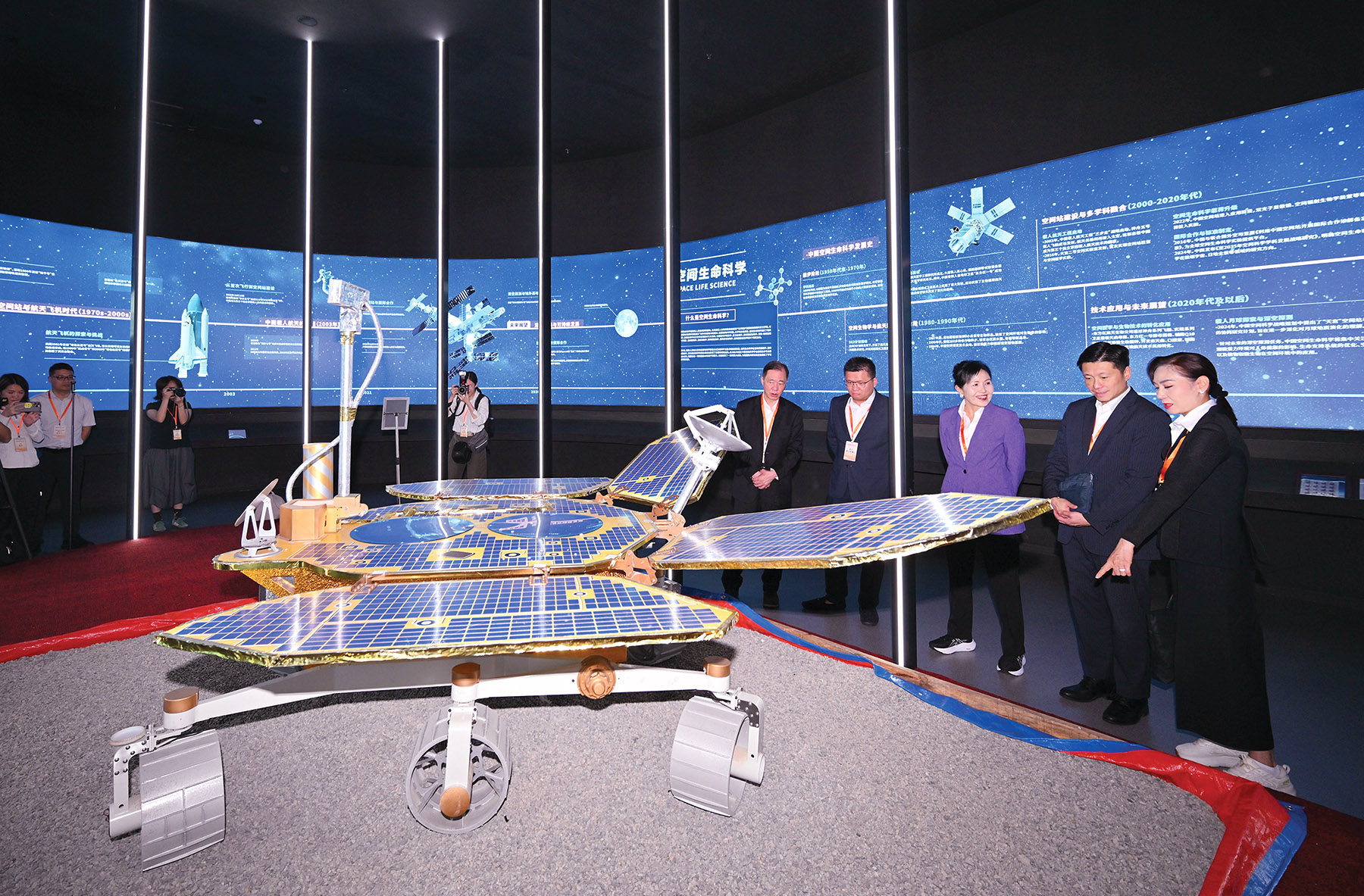
A representative from Chang Guang told the delegation that the “HKUST-FYBB#1” satellite, co-developed by the company and the Hong Kong University of Science and Technology, has been operating stably in orbit for nearly three years.
Capable of 0.5-meter high-resolution imaging, it has collected a substantial volume of high‑quality imagery covering the Guangdong-Hong Kong-Macao Greater Bay Area, providing critical postdisaster data for typhoon and flood response.
The company’s spokesperson said it maintains an open attitude toward collaboration with Hong Kong universities and research institutions, and expressed hope of deeper integration between the commercial space sector and the SAR’s technology innovation ecosystem, pointing to the HKUST satellite as a successful model of industry-academia-research cooperation.
Separately, the commercial space launch site, which conducted its inaugural mission in November 2024, had completed 21 successful launches as of Aug 16. Its Phase I site, with two launchpads, has entered high-density, routine operations, while Phase II construction, which will add two more launch pads, is scheduled for completion by the end of September, with full system tests set for December.
“At that time, the annual launch capacity across all four pads will reach 60-70 missions,” said Xu Xikai, deputy director of the development department at Hainan International Commercial Aerospace Launch Co Ltd.
The development of the space industry also transformed the local economy. Wenchang, once reliant primarily on tourism, is now diversifying into industrial sectors, Xu said.
“At the same time, space tourism has taken off — visitors flock to the area to watch launches, generating significant consumer spending and giving a strong boost to the local economy,” he added.
On Hong Kong cooperation, Xu proposed a clear division of roles: Hong Kong institutions could conduct research and development, while the Hainan site would provide testing and launch support. The company also suggested joint talent exchange programs, the codevelopment of space technologies, and collaborative space-themed study tours and tourism initiatives targeting overseas markets.
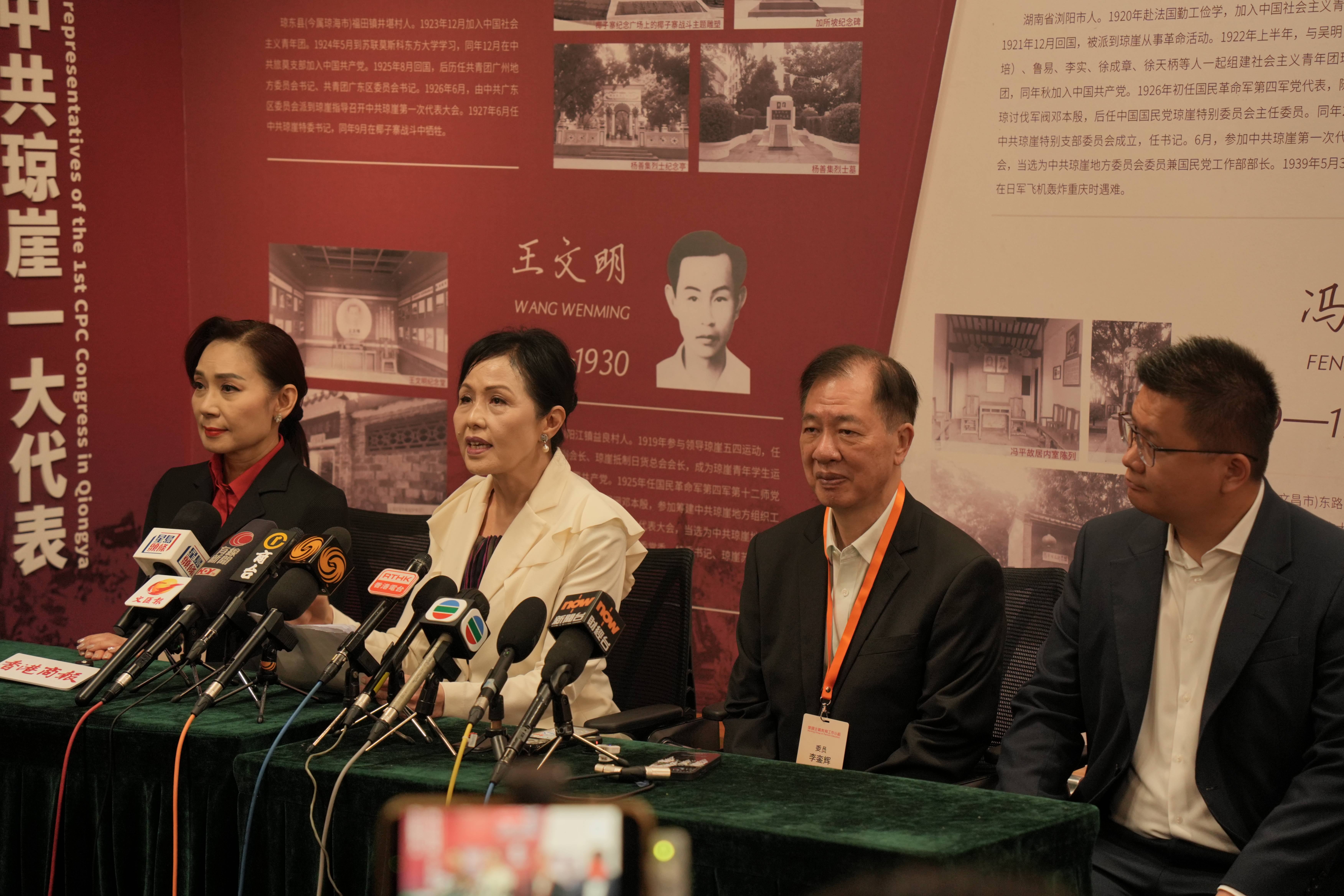
As part of the patriotic education initiative, the delegation also visited the site of the first Qiongya congress of the Communist Party of China on Tuesday morning.
Concluding the three-day tour, Eliza Chan Ching-har, convenor of the tour’s organizer, the SAR’s Working Group on Patriotic Education, said the visit coincides with the 105th anniversary of the founding of the CPC.
“The aerospace professionals today are pursuing technological self-reliance, which carries forward the same spirit of perseverance in the new era,” Chan said, adding that the nation’s technological advancements are the result of generations of dedicated effort and patriotic commitment.
Contact the writer at stacyshi@chinadailyhk.com
