

Beijing's traditional shops, quirky craftsmen, time-honored products attract mix of generations
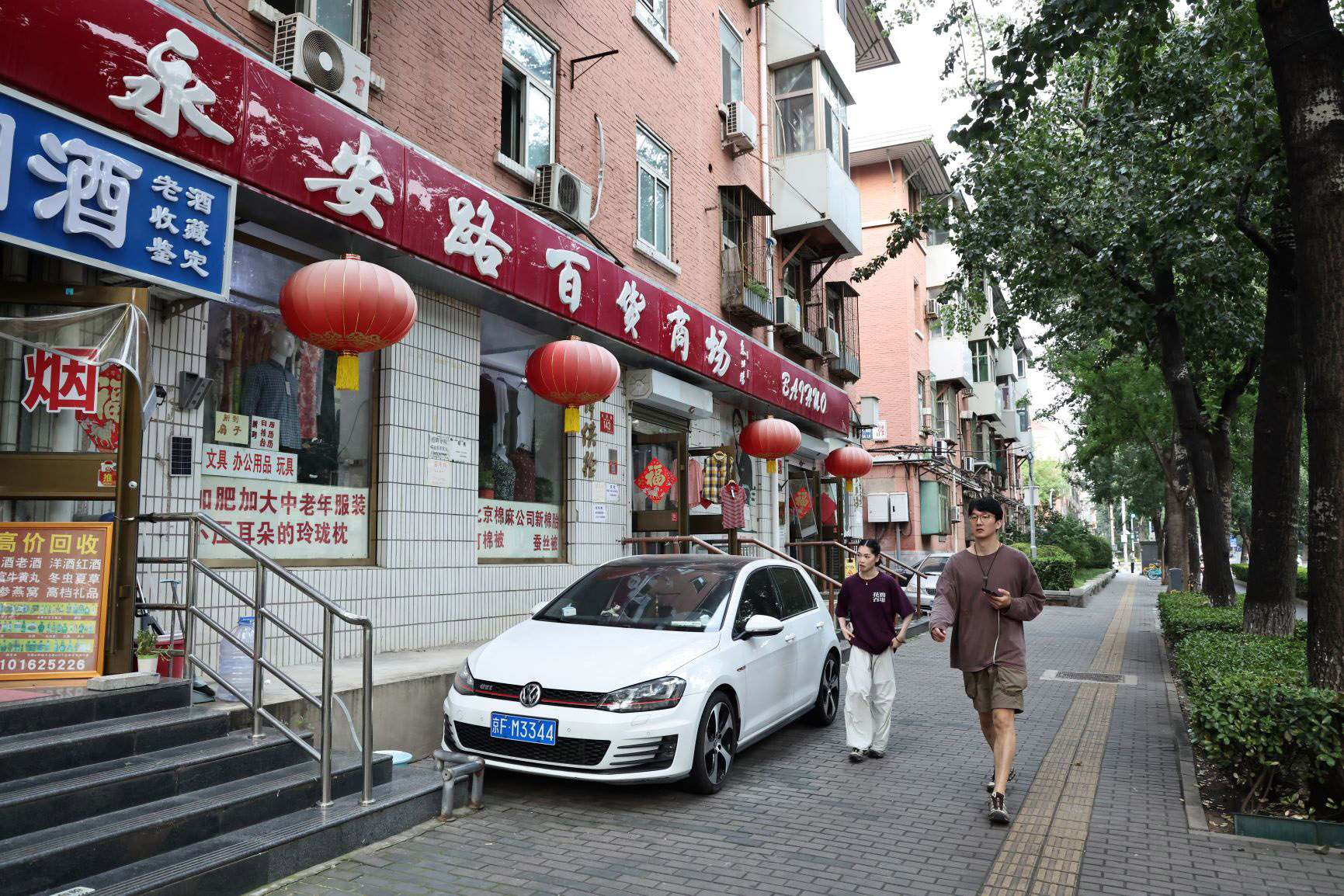
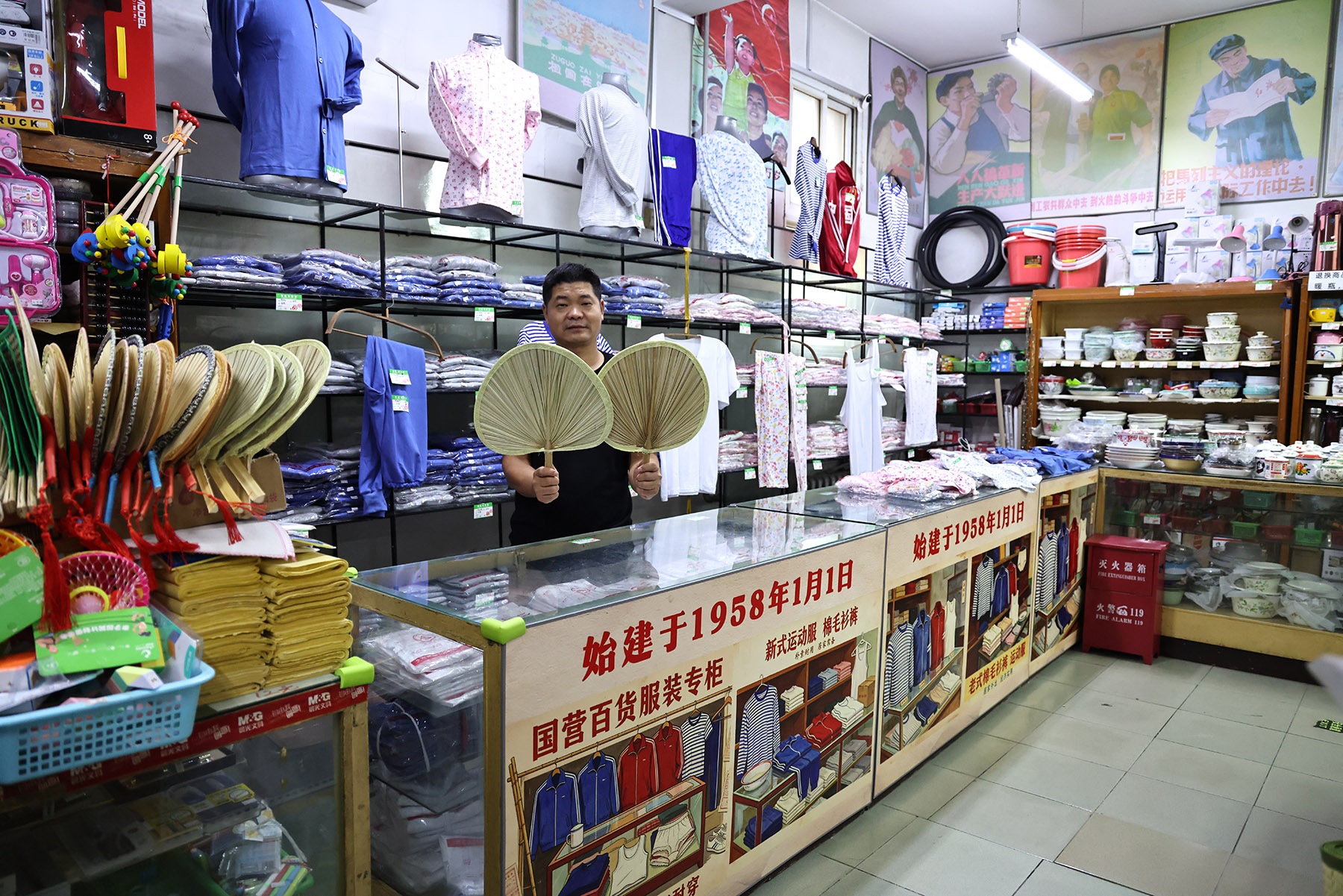
When Qiao Yanxiong was a boy in the 1950s and '60s, the neighborhood around Yong'an Road in Beijing was quiet and leafy. Neighbors all knew one another, and familiar local businesses catered to the daily needs of the community.
The streets were lined with small shops and outlets — a laundry, a grain store, a bank and a bookstore.
However, one emporium, the Yong'an Road Department Store, was the heartbeat of daily life.
Qiao, 71, who now runs the department store, grew up nearby. As a boy, he shopped there with his parents for virtually everything.
READ MORE: 'Chinese vintage' from a time gone by finds favor once again
Nearly seven decades after the store opened on Jan 1,1958, he has one final goal. "I plan to work until 2028, finish the 70th anniversary celebration and then retire," he said proudly.
Qiao remembers the department store as a place where shoppers could find almost everything they needed, from underwear and socks to pots and pans, bicycles and household appliances.
The neighborhood and its surroundings have changed dramatically since those years. Many longtime residents have moved away, while supermarkets and online shopping have transformed the way people buy goods.
The store's floor space has also shrunk. Its two main sales areas now occupy about 200 square meters, and its inventory no longer includes fabrics, bicycles and household appliances.
But its identity remains deliberately old-fashioned, Qiao said. "Old store, old merchants, old products, old brands, old ways of selling and old ways of settling payments," he said. "The key word is 'old.'"
In the past, one of its busiest sections was the fabric counter, a small space where bolts of cloth were stacked beneath clothing and quilt covers. A sewing machine sat behind the counter, and sales staff doubled as seamsters, sewing items for customers when business was slow.
In the late 1970s and early 1980s, customers queued all day to buy fabric, particularly toward the end of the year when fabric coupons were about to expire. Even plain white cloth often sold out.
The counter remained busy until the 1990s when ready-made clothes became cheaper with a wider variety.
Aged inventory
When Qiao took over the store in 2003, traditional neighborhood department stores were disappearing across Beijing. Supermarkets were expanding, department store sales were poor, and employees were earning only a few hundred yuan a month.
Qiao decided he had to find a way to survive. He gave individual section teams more control over what they stocked and how they displayed and sold it. Most importantly, he stopped trying to compete directly with supermarkets.
"If the supermarkets don't sell it, we will," he said.
The store increasingly stocked unusual goods: old-style thermal underwear, buttons, elastic bands, paper clips, bicycle-pump needles and traditional Chinese cosmetics.
Among its most popular products today are sailor shirts, or haihunshan — the blue-and-white hooped tops once associated with Chinese sailors — and old-fashioned face creams, a basic skin-care product familiar to older generations.
The products have become part of the store's appeal to younger visitors, who know them from childhood memories, photographs or social media.
Around 2007, a television program featured the shop and its reputation spread beyond the neighborhood. In recent years, celebrities have visited and posted about it on social media, helping boost the homely store's popularity.
Young people began arriving with phones in hand, photographing and filming the old-fashioned counters and browsing goods that their parents or grandparents might have used. The store's customers are now a mix of generations.
"Customers are not just coming here to buy things," said Qiao, who has no official social media accounts to promote the store. "They come to chat and browse just like the old days."
Qiao said in an era of online shopping, some customers still want to hold a product in their hands before buying it.
Li Yumei, an elderly Yong'an Road resident who recently dropped in to buy socks, said she has shopped at the store since she was a child.
"If I hadn't chatted with the staff, I wouldn't have even realized this store is turning 70," said Li, 79. "It was already here when I was a child. It was even a little bigger back then."
The store's future, however, is not guaranteed.
Qiao's children are not interested in taking over. When he retires, he expects to pass the business on to younger employees. After two decades of keeping the store open, he said that his goal has largely been achieved.
Hand-torn cloth
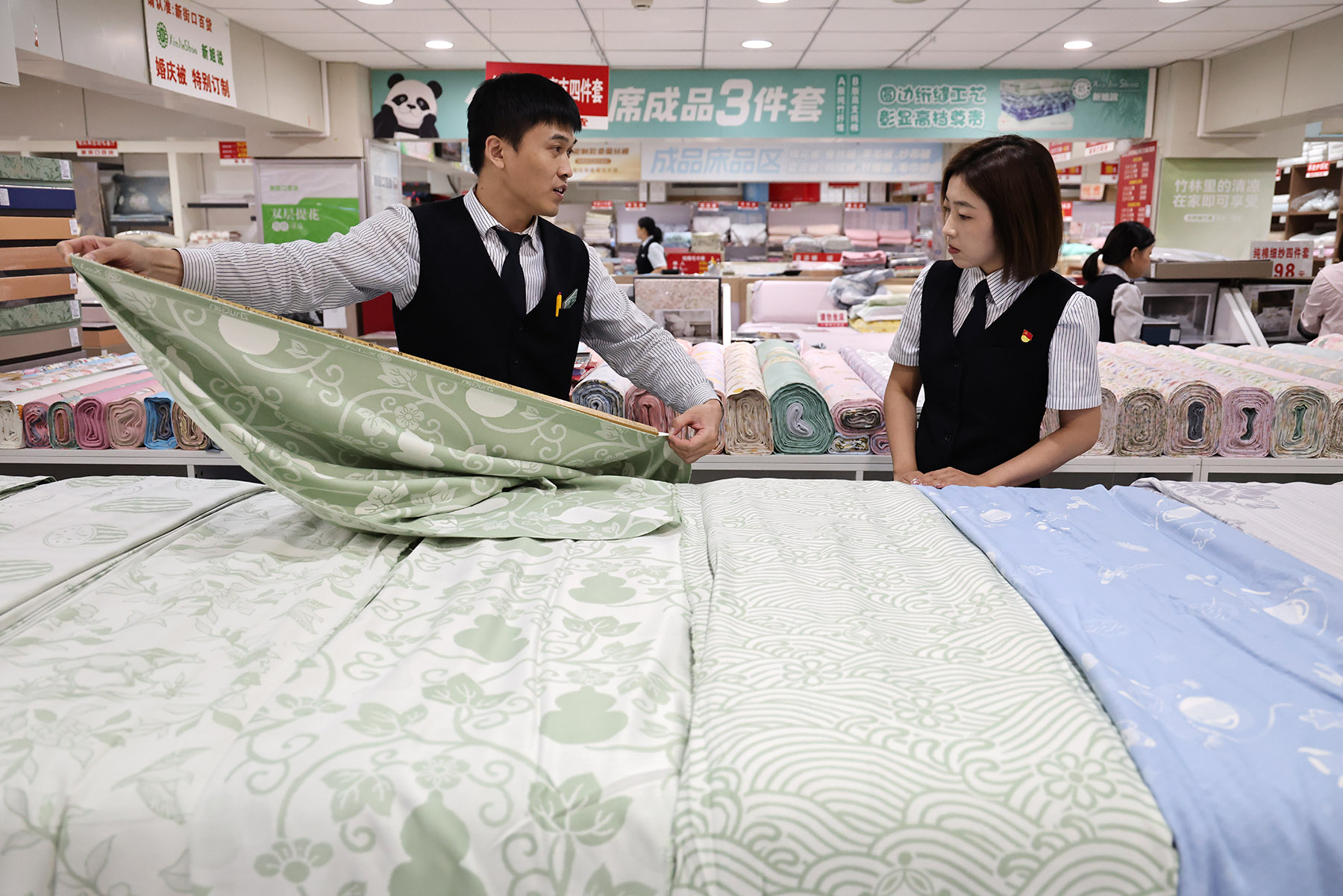
In another part of Beijing, Xinjiekou Department Store has also survived with the help of a handy craftsman. The 67-year-old former State-owned department store provides services rarely seen today.
Among its staff members is Zhang Rongchao, 39, who cuts fabric by hand. After measuring a piece of cloth he can tear it cleanly in one motion, or split it from end to end with a single stroke.
The family connection to the trade runs deep. His great-grandfather worked at a famous dye workshop in Jinan, Shandong province, that became the inspiration for the television drama Da Ran Fang.
Zhang learned the trade from his uncle, who took him to fabric markets and taught him how to inspect cloth, judge its quality and tear it by hand.
He joined Xinjiekou Department Store in 2012 and still works behind the fabric counter.
Zhang can measure a piece of fabric, make a small opening and tear it cleanly with his hands. After seeing short videos of the process online, some customers come just to watch him display his skills.
However, Zhang believes his expertise goes beyond spectacle. "Selling fabric is very down-to-earth," he said. "Customers like to stand here and watch you tear it. The sound is very familiar — it takes people back to when they were children."
In the past, customers bought fabric by length and had it made into sheets, quilts and clothes. Today, ready-made products have replaced that customization.
Zhang believes the old method still has a place. "You can't just sell manufactured fabric," he said. "We need to preserve some of the old ways of doing business so that when customers come here, they feel like they have come home."
One of Zhang's apprentices is Cai Wenjing, in her early 30s, who joined the store after graduation. She began learning the craft about six months ago.
At first, she had little interest in traditional fabric-tearing, but memories of watching her mother work with cloth changed her mind.
"He teaches us without holding anything back," she said. "We're also afraid that these skills will slowly disappear. Some things simply cannot be completely replaced by machines. They have warmth."
Stitched together
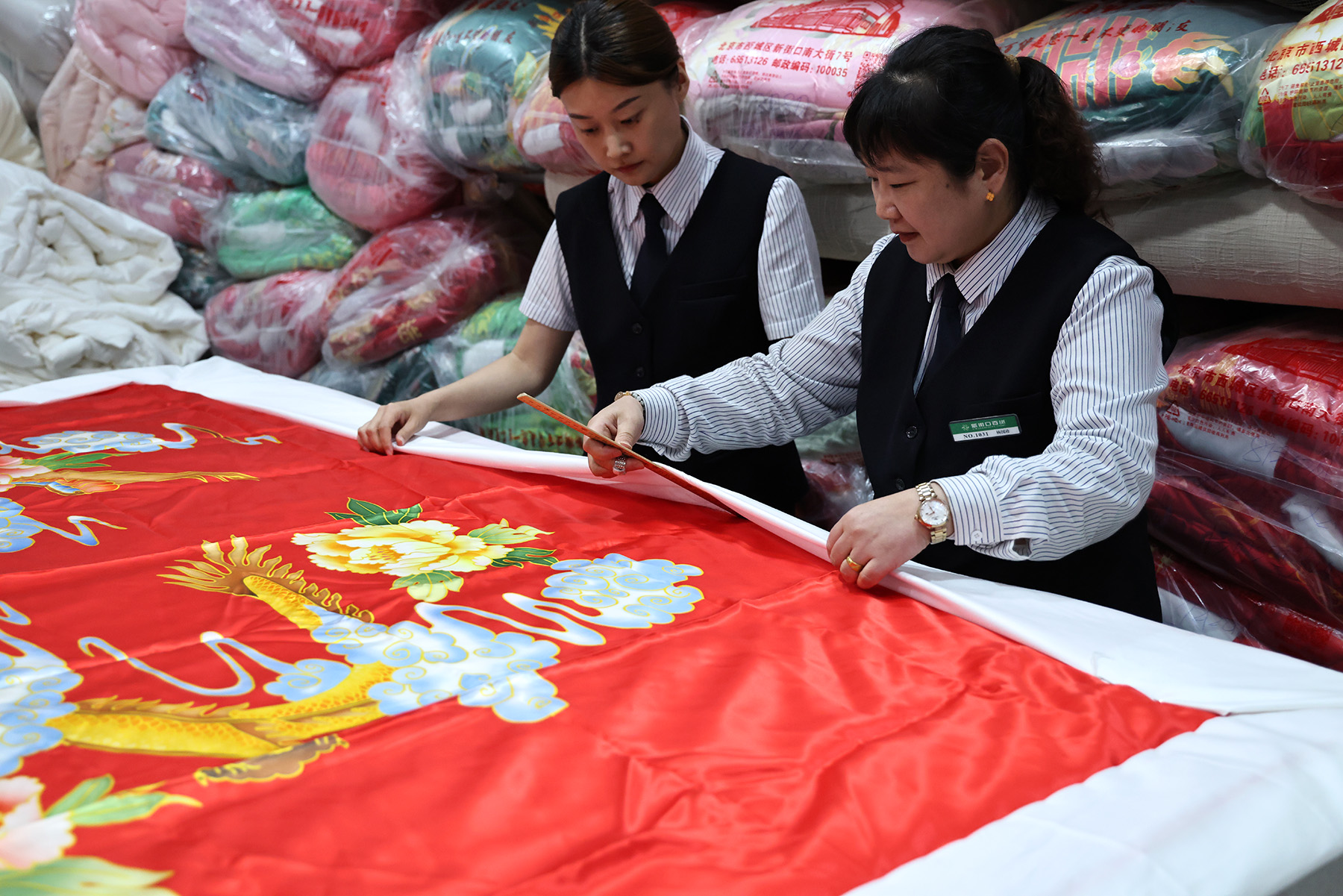
Yang Guozhen has spent nearly two decades making traditional hand-sewn cotton quilts for weddings.
The 50-year-old from Yancheng, Jiangsu province, has been making wedding quilts at Xinjiekou Department Store since she joined the staff in 2013.
Traditionally, the thread is supposed to run the length of the quilt without being cut or joined, symbolizing an unbroken bond between the couple. The quilt is stitched nine times, representing lasting happiness. White fabric and floral patterns symbolize growing old together.
"There are sayings for every stitch," Yang said. "The first means devotion to one another; the second, a family blessed with children; the third, good fortune; the fourth, peace throughout the year … and the ninth means lasting forever."
The custom has survived despite the rise of manufactured bedding and online shopping. Parents still come to the store to buy quilts for their children's weddings, while more young couples are now choosing their own fabrics and designs.
September and October are especially busy as the two months are traditionally a peak period for weddings. Beijing's cool, crisp autumn weather makes it a popular time for marriage celebrations. Couples often place their orders a month in advance, choosing auspicious dates for the quilts to be made.
For Yang, the work is tiring but rewarding.
"People may think it is hard work, but we find happiness in it," she said. "Many parents come here, and together we pass good fortune on to the newlyweds."
One of Yang's apprentices, Cai Ying, remembers watching her grandmother make quilts. "The process isn't that complicated," said Cai. "But there are so many customs and meanings you have to remember. You feel that you are giving a blessing to a newly married couple."
Yang has taught several apprentices and hopes the tradition will survive because quilts remain part of family life.
On Sept 4, Xinjiekou Department Store held a traditional apprenticeship ceremony, inviting retired employees to observe a new generation of workers.
New apprentices spend at least six months working with a mentor. They get to know each other before deciding whether to enter a work relationship. The store sees it as a two-way decision.
"As the saying goes, a master and an apprentice are like father and son," said Ma He, who joined the store around 2009 as a down-jacket salesman and worked his way up through floor management and marketing.
"The master doesn't just teach technical skills. He also guides the apprentice's behavior, attitude and professional ethics."
Ma said his mentor taught him job dedication, the basics of inventory, sales and accounting and how to serve customers.
Touching experience
The store's layout has changed over the years.
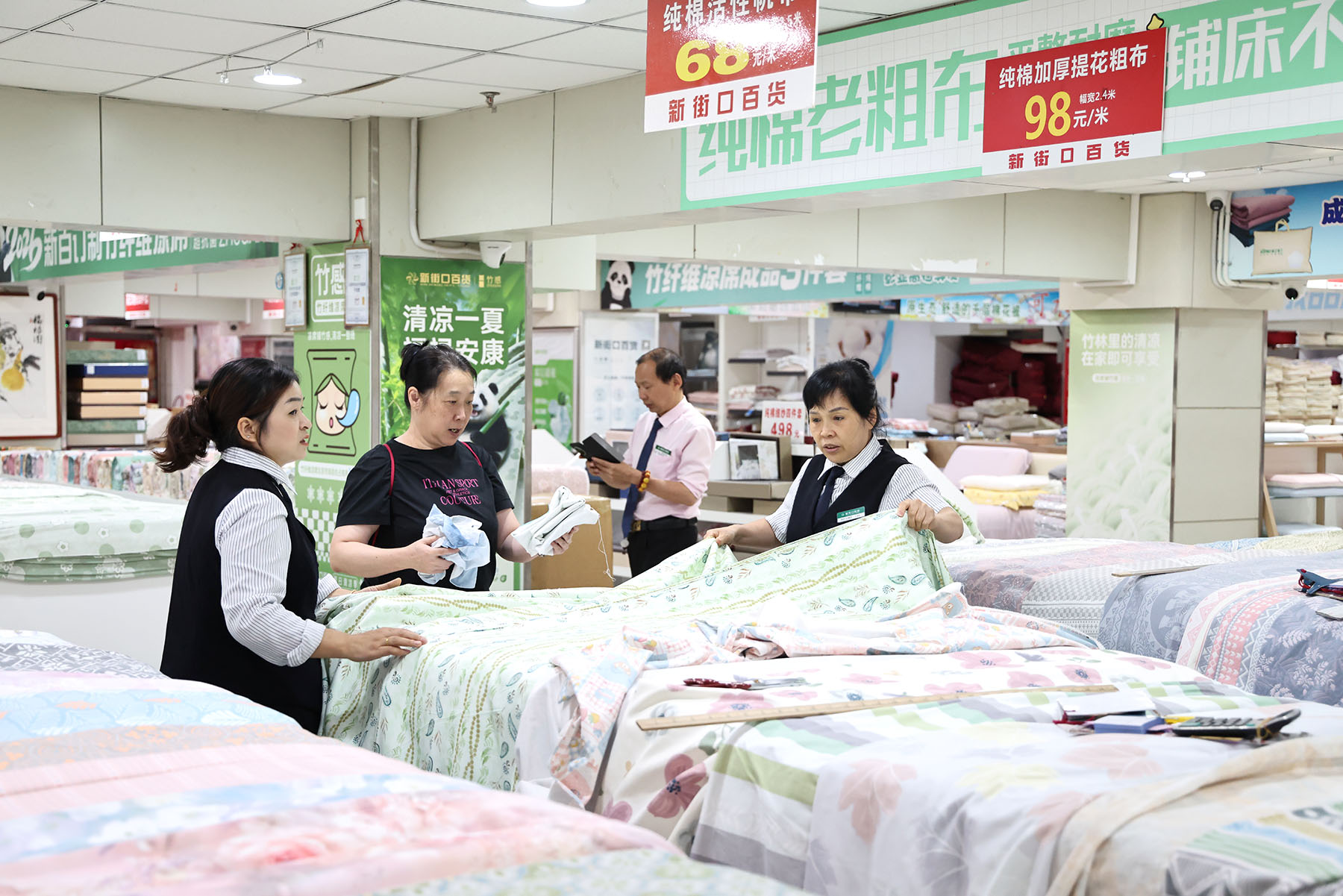
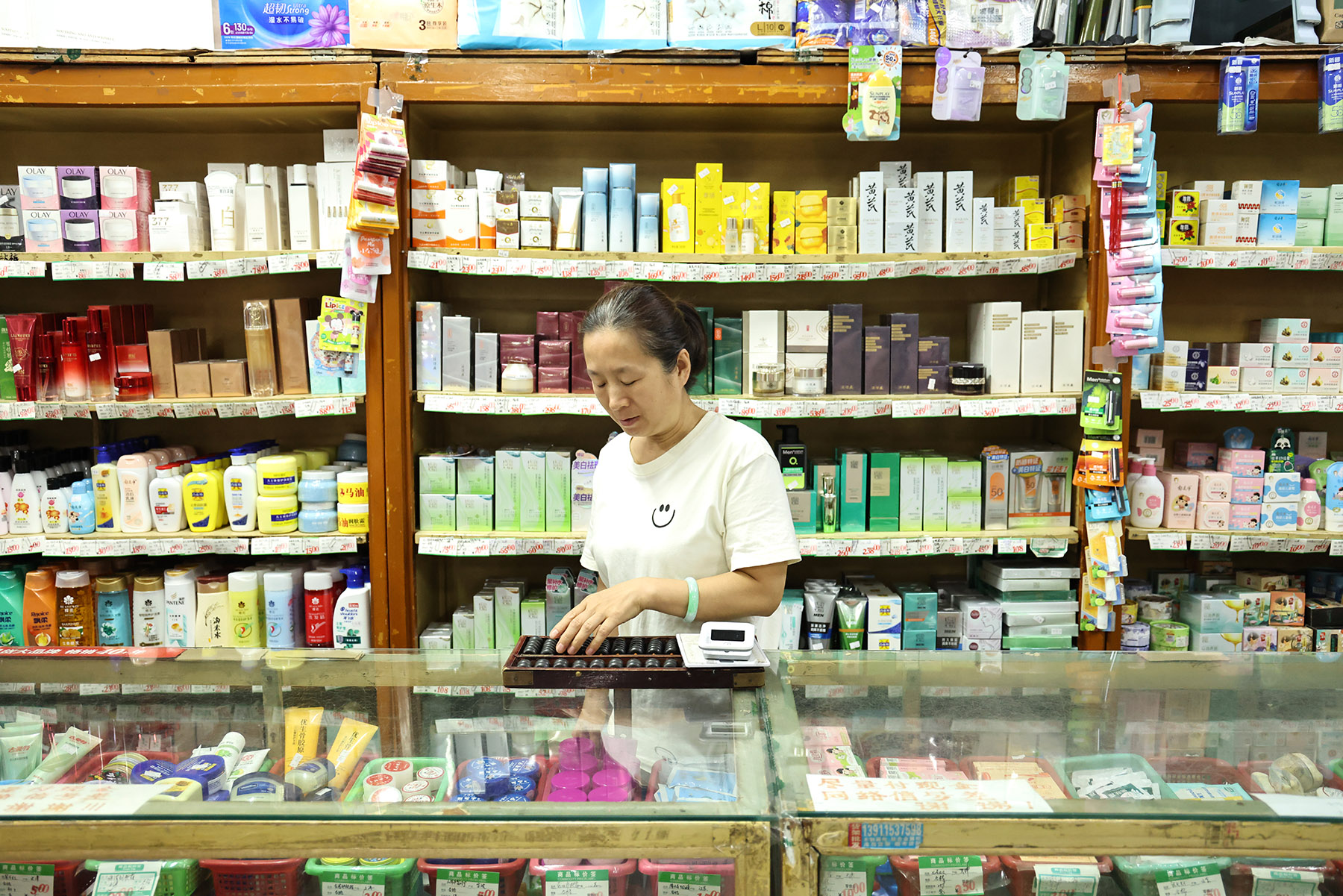
The third floor is now devoted entirely to down jackets. The basement sells bedding, handmade quilts and thousands of fabrics, while the first floor carries classic Chinese cosmetics brands, such as Yumeijing and Friendship.
The merchandise may seem anachronistic compared with the items in Beijing's glossy new shopping malls. But that is precisely the point, Ma noted.
The main customers are middle-aged and older shoppers who prefer to see, touch and try on products before buying them.
"Online shopping can exaggerate things," Ma said. "If you come here, you can see the product for yourself."
People under 35 also frequent the store. Some come out of curiosity, drawn to the basement's old-fashioned fabrics and handmade quilts. Others come to buy gifts for their parents or grandparents, or to choose inexpensive clothes for their children.
The store has begun using social media, but its livestreams do not sell products directly. Instead, employees demonstrate clothes, explain products and tell viewers where to find them in the store.
The strategy has produced good results.
When the store began livestreaming a traditional shoe brand, Jinhua Cloth Shoes, inexpensive footwear that cost less than 100 yuan, the brand's daily sales varied only from 100 yuan to a few hundred yuan. After a livestream, sales on one Saturday reached 2,600 yuan ($388) — about 26 times the usual level.
The store deliberately avoids the polished, heavily beautified look common in livestreaming. Its hosts are ordinary employees, sometimes with fuller figures, who wear the clothes themselves.
Ma is optimistic about the future of the old department store. By July and August 2025, sales had recovered to roughly the same level as the corresponding period in 2019.
He sees this as proof old stores can adapt without abandoning what makes them distinctive. "Through embracing new media in different ways, an old department store can find a new life," he said.
The store is now considering further changes, including bringing popular restaurants to its entrance and planning new online businesses.
But Ma is careful about changing too much.
"In a city where shopping has increasingly become an experience built around novelty, restaurants and entertainment, we are offering something different: a place where an old piece of Beijing's retail culture is still being practiced, one customer at a time," he said.
Contact the writers at chennan@chinadaily.com.cn
