

Agri-produce brokers develop versatile role as livestreamers, market connectors
In a sunlit orchard in Xi'an, Shaanxi province, Li Qian peeled a kiwifruit, took a bite and let the juice run down his hand.
"Our kiwifruit is 90 percent sweet and 10 percent sour, with thin skin and thick flesh," he said to online viewers.
"Every one is as good as the one in my hand. If you like kiwifruit shipped directly from the place of origin, place an order and try it!"
More than 300,000 orders, with over 10,000 repeat buyers, were placed on the platform he posted the video on.
"People like watching me eat," Li said with a laugh. "Many had no need to buy kiwifruit but after watching the video, they placed an order. You could say I created consumer demand."
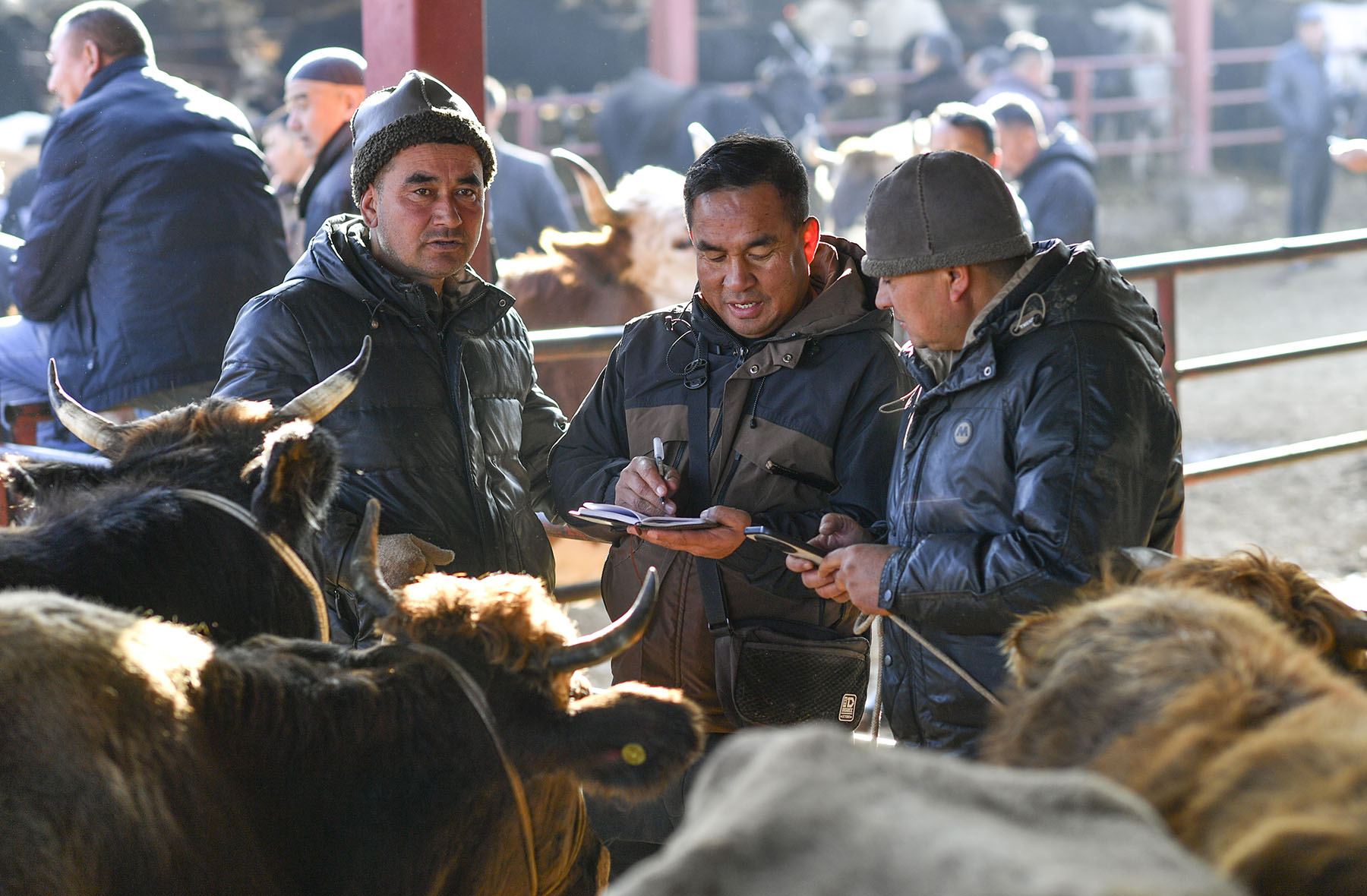
Li represents a new generation of agricultural product brokers, whom the Ministry of Agriculture and Rural Affairs calls "an important link connecting small farmers with the big market".
Beyond simply promoting goods, many brokers are involved in ensuring product quality, making connections between growers and markets, and improving farm incomes.
Four years ago, a glut of unsold kiwifruit in Li's hometown Zhouzhi, Xi'an, lured the international trade graduate into the field. Now, he is one of the leading product brokers. And as China is advancing all-around rural vitalization, their role is becoming more formalized.
A State Council plan for accelerating agricultural and rural modernization during the 15th Five-Year Plan (2026-30) period proposes training 30,000 prominent agricultural product brokers.
An important link
After graduating from university in 2016 and returning to his hometown, Li became involved in agricultural product promotion.
In 2022, after Zhouzhi kiwifruit entered the market, prices rose and then the market cooled. After consulting with the growers, Li began grading the fruit.
The soft fruit was sold through a community group and nearby markets for 6 yuan ($0.9) per kilogram below cost. To sell the remaining "good" fruit, he tried livestreaming.
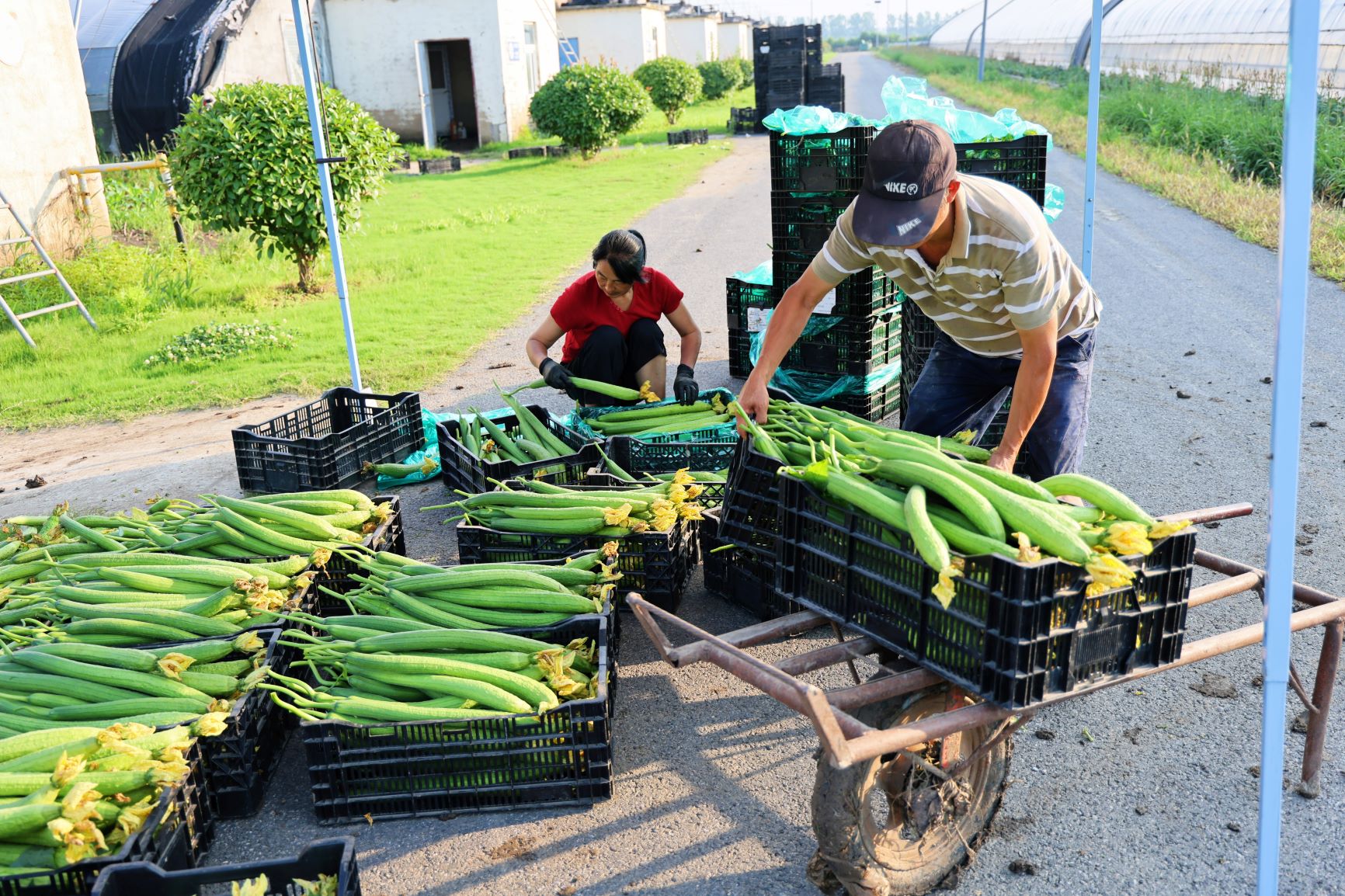
Villagers joined in the filming and livestreams were held in the fields. Fruit was picked and shipped on the spot and the authentic scenes attracted the first wave of buyers. In one hour, more than 200 orders flooded in.
Li noticed that more than half of the buyers were from the Xinjiang Uygur autonomous region, so he contacted logistics companies to negotiate freight rates. The produce was shipped overnight across more than 2,000 km to Urumqi to a temperature-controlled warehouse, with Li accompanying some early shipments.
In two months, 191,000 kiwifruit orders were placed.
Li is now general manager of Xi'an Guoru Jianghu Agricultural Technology Co and founder of the Xi'an Qizhiyuan Fruit Cooperative.
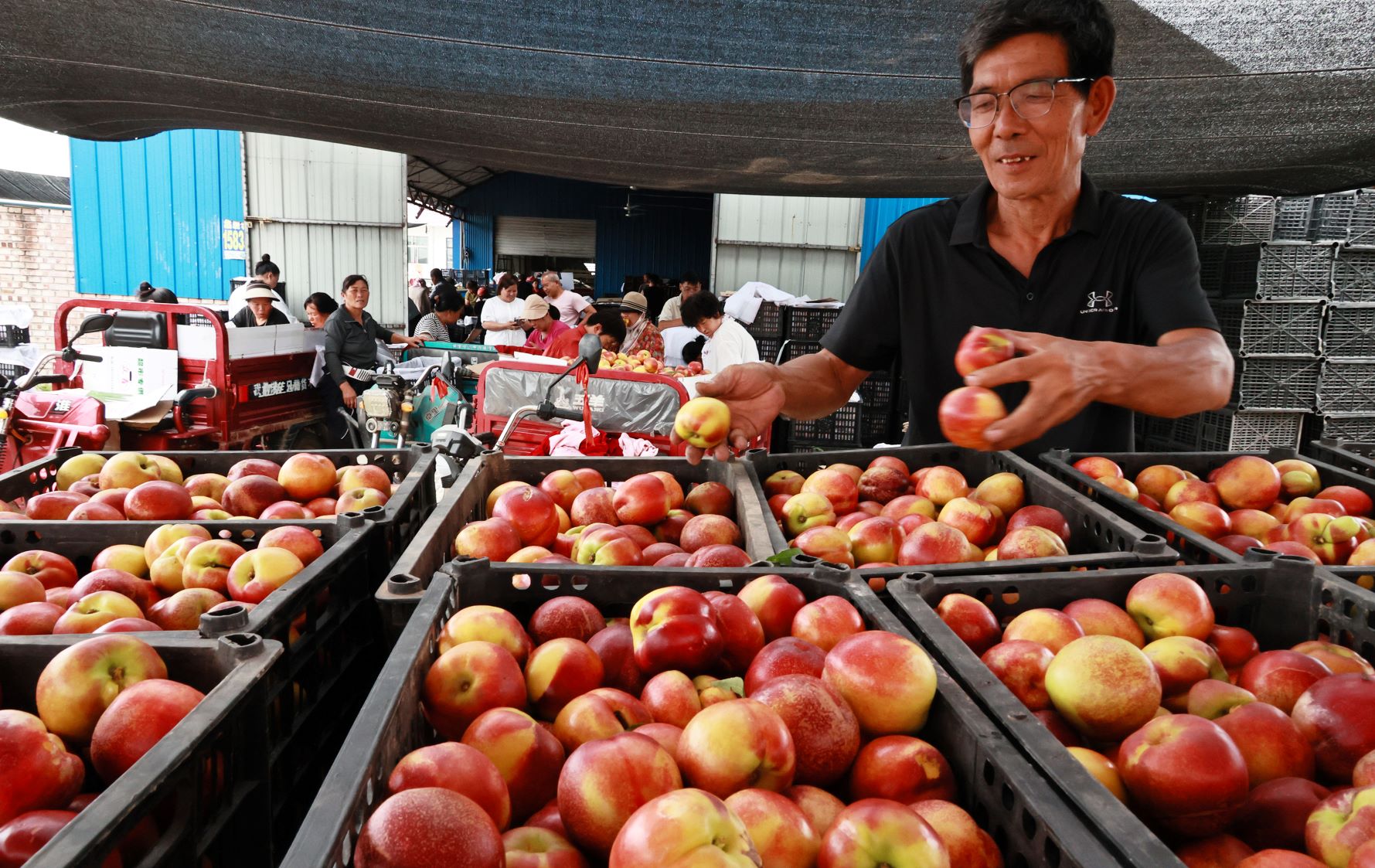
In the cooperative's storage and sorting center, an automatic sorting system grades by quality and sets standards. Produce is sold by its grading, helping ensure high-quality fruit commands a higher price.
The cooperative has also involved local residents in the entire production and sales chain: planting, livestream sales, sorting and packaging, logistics and customer service.
"Working with us, farmers earn more and are more motivated. Because of our high standards, online customers become repeat buyers and contractors are happy to maintain cooperation with us," Li said.
In 2025, Li initiated an ecological kiwifruit demonstration orchard using enzyme-based soil treatments. The project involved 161 households and covered about 69 hectares. The fruit quality improved, input costs fell and prices rose.
That year, his Guoru Jianghu brand achieved sales of more than 20 million yuan, benefiting more than 130 households.
For his efforts, Li came first in the agricultural product broker event at the seventh National Agricultural Industry Vocational Skills Competition in Guangzhou, Guangdong province, in July.
It was the first time the agricultural product broker competition was included in the national skills event.
Multiskilled workers
Li believes that agricultural product brokers must not only be able to organize a group of people, set product standards and manage production and sales chains, but also master new skills such as e-commerce livestreaming and emergency sales promotions.
"Most importantly, you need passion and a commitment to quality first," he said.
Li and his team later began selling locally grown apples and potatoes online, replicating the success of the kiwifruit.
An Economic Daily commentary noted that it is wrong to regard agricultural product brokers simply as "middlemen".
They are also industry organizers who have information and understand agriculture, have sales channels and are good at business. They also require integrity and a sense of responsibility, the commentary said.
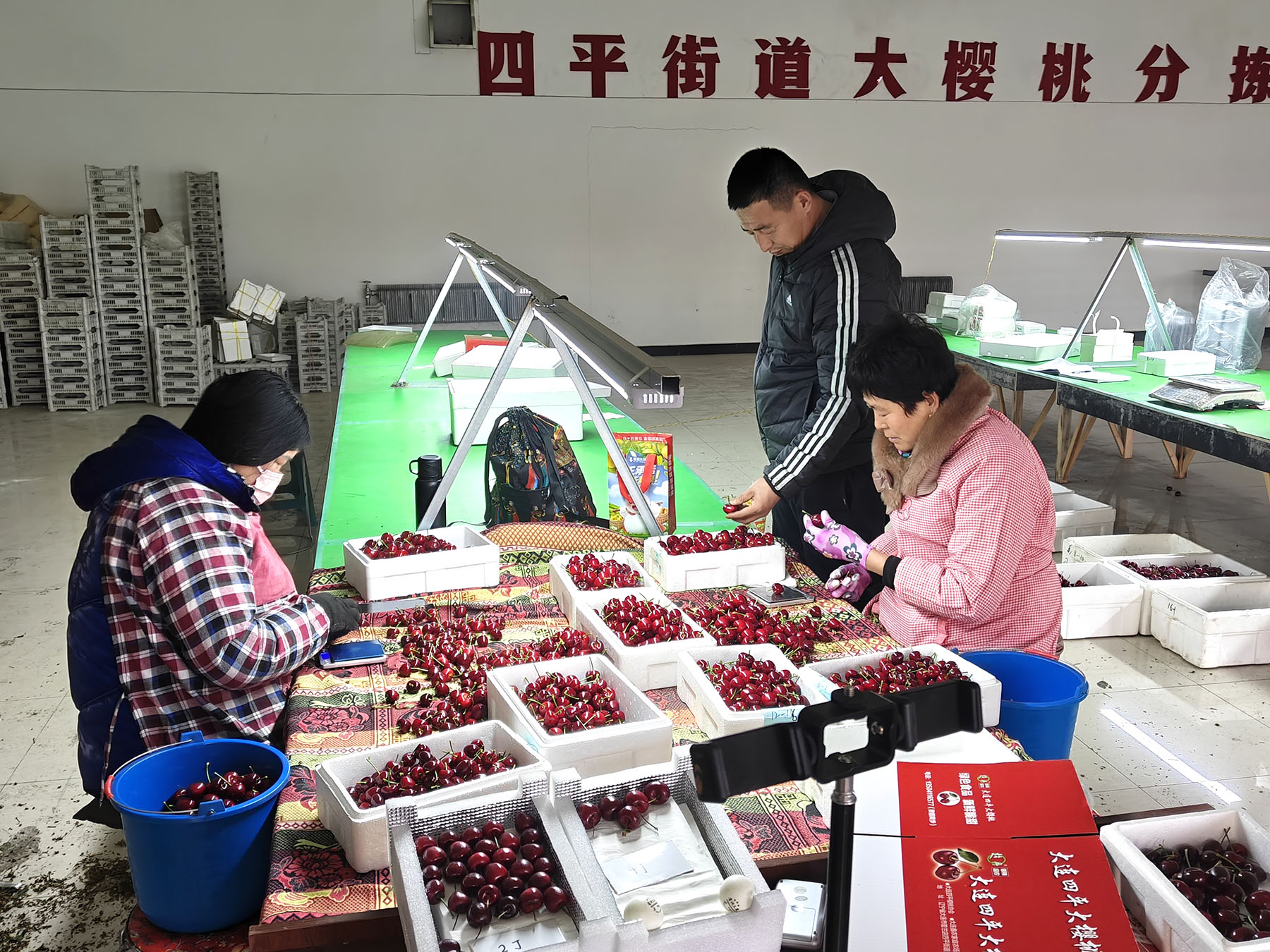
After university Liu Yilin, 35, returned to his hometown in Siping, Dalian, Liaoning province, to run the family farm and work as a broker specializing in cherries.
By connecting through online and offline platforms, he and his team have sold cherries across China and exported them to India, Malaysia and other countries.
Liu said the job now goes way beyond finding buyers.
"Today, being an agricultural product broker means understanding quality control, brand building, and even integrating market research, consumer insight and planting planning," he said.
After the cherry season, he visits partner growers' greenhouses to advise on soil quality, and how to deal with pests and plant diseases. "We have to help growers and buyers solve real problems," he said.
In Huaihua, Hunan province, Shu Xinghua chairs the Xingmeng Bingtang (rock sugar) orange farmers' cooperative in Zhijiang Dong autonomous county. The prize-winning broker said a broker's value lies in "maximizing value across the whole chain through professional services and resource integration".
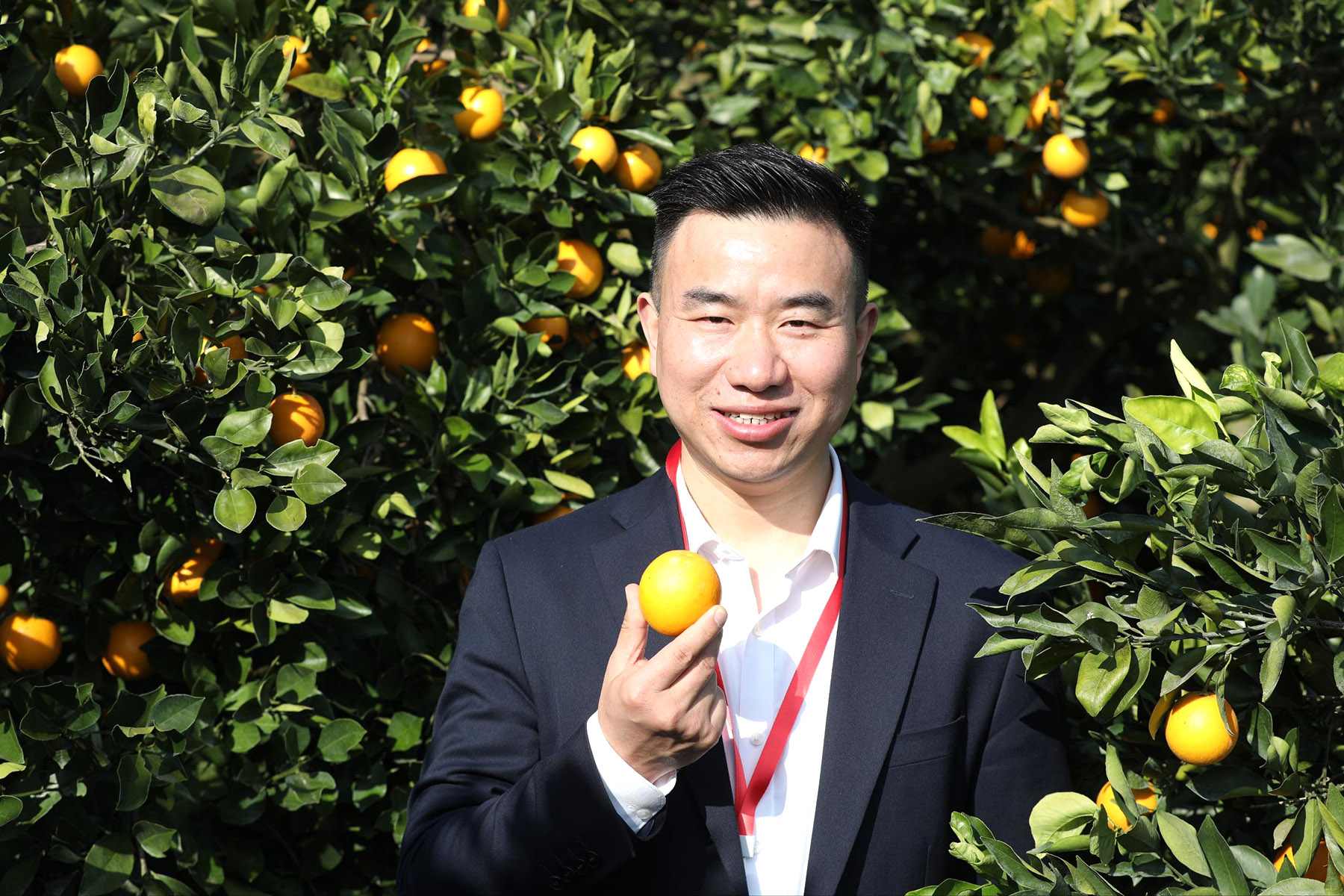
Over more than a decade in the Bingtang orange industry, he has built a model that combines e-commerce, a cooperative and farmers. It links 22 major production villages, and provides unified management, guaranteed prices and centralized marketing. The model has generated cumulative sales of more than 50 million kilograms, helping increase incomes of 1,837 households, he said.
Shu is now pushing for greater recognition of agricultural product broker as a profession through the development of tiered certification, a credit system, better links between senior brokers and major channels, and enticing more young people, including university graduates, into the workforce.
Brokers also face operational risks.
Many advance cash to growers, carry inventory when prices fall and wait for buyers' payments. The understanding of cold-chain capacity and digital skills also needs to be improved, he said.
As training expands to achieve the goal of 30,000 core brokers, the next test will be certification, grading, access to credit, and establishing stable links to major buyers and platforms.
Mo Ming, deputy dean of the business school at Hunan Agricultural University, said the school is tailoring courses to meet the skills required for agriculture broker jobs.
The marketing major offers courses such as digital marketing of agricultural products and short-video creation, and IP handling of agricultural products. Practical training in the classroom replicates scenarios that match brokers' actual jobs such as marketing skills and challenges.
Mo said the ripple effect of training 30,000 core agricultural product brokers will be substantial and they will require five key capabilities: resource integration, quality control management, market trading, organization and coordination, and risk control.
Farmers' cooperatives, agricultural companies and rural economic organizations can all help cultivate brokers. However, cooperatives are the most effective way to achieve the goal, he said.
Mo said the cooperatives have institutional designs for linking farmers that cover operational aspects, and the sharing of benefits and risks.
In Hunan, industries such as daylily in Qidong county, Bingtang orange in Zhijiang county and kiwifruit in Fenghuang county already rely on leading farmers' cooperatives to organize "prototype" agricultural brokers.
But these prototypes are mostly loose business alliances, generally lacking unified certification and credit management, he added. Some brokers have not yet been embedded in cooperative governance, and incentive and constraint mechanisms for linking farmers are not yet sound.
Mo suggested combining talent training with local industrial development. A county or an industry can be used as the "basic unit" to organize local agricultural broker teams. This would enable quality agricultural products to be sold as a "one county, one specialty".
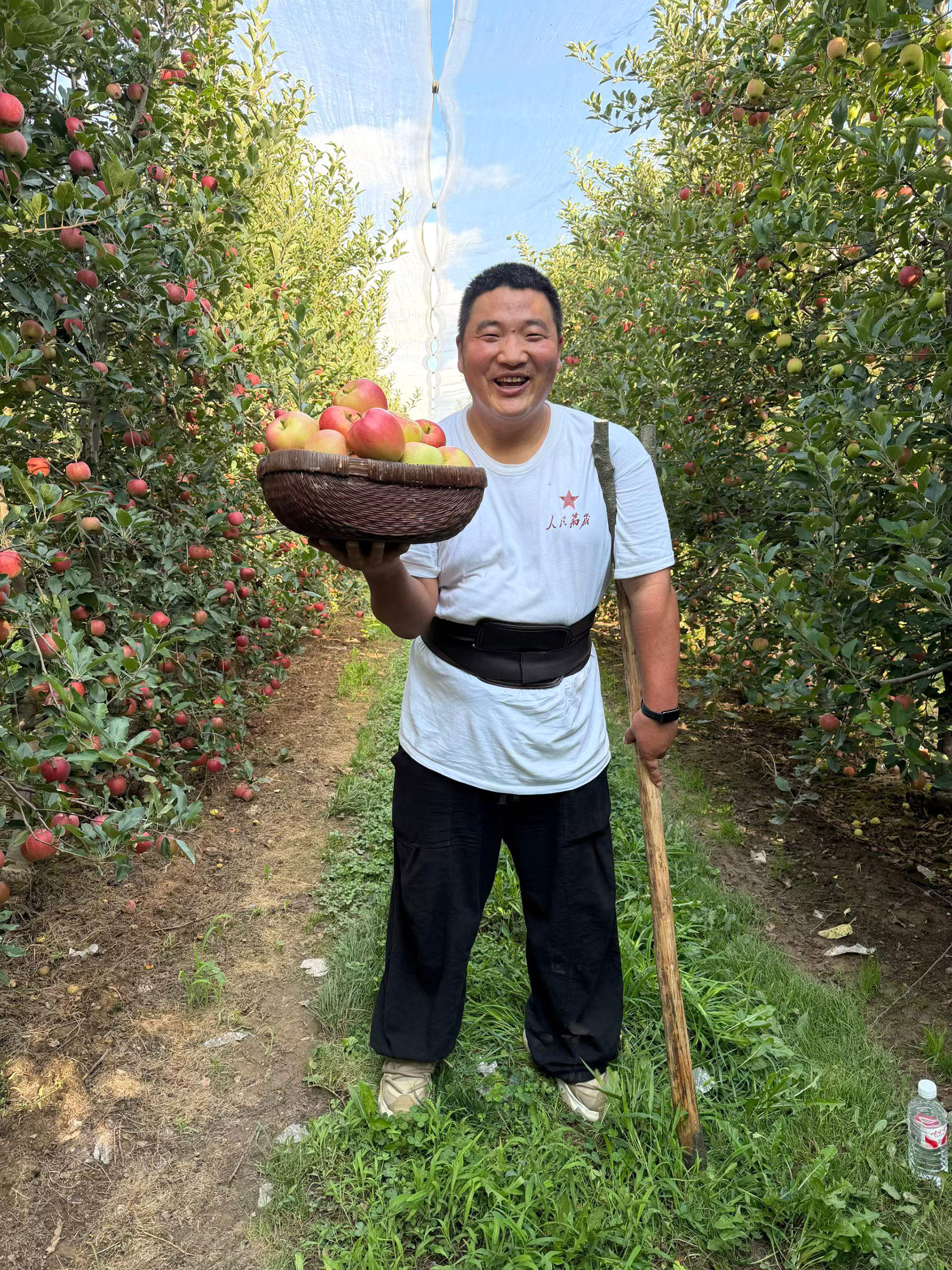
"Agricultural brokers are naturally local. They know the land and the people. But only by moving toward organization can local advantages be transformed into stable market capability," Mo said.
Support from all sides
More than 1 million agricultural product brokers are already active in China, according to a People's Daily report. In recent years, they have become increasingly professional, specialized and organized.
In 2025, the Ministry of Agriculture and Rural Affairs and other bodies revised the national occupational standard for agricultural product brokers, further clarifying occupational indicators, service content and industry norms. The revisions helped provide a basis for the professional development of agricultural brokers.
Sources from the ministry said the next step will be further efforts to promote the professional, specialized and standardized development of agricultural product brokers who understand agriculture, the market, keep their word, and have links to farmers.
Duan Jiguang, an official with the Hunan Department of Agriculture and Rural Affairs, said the province has 180 people registered in the ministry's agricultural product broker database.
In June, Hunan issued measures to promote rural vitalization, proposing to train 700 market-savvy, business-capable brokers each year. Within three years, the aim is to build a wealth-building and support chain covering major agricultural counties and districts.
Duan said 14 cities and prefectures in Hunan are planning to organize agricultural product broker training classes, with 50 people per class. The number of registered brokers is expected to reach about 800 after this year's training is completed, he said.
Li Qian said that winning the national competition would have been impossible without Xi'an's training system, and pre-competition preparation under expert guidance.
In recent years, Xi'an has combined theoretical, on-site and online training with training in project road shows and follow-up services.
To help agricultural brokers continuously improve their capabilities, many places have introduced targeted training and incentives.
Zhejiang province recognizes winners of the national competition as "golden blue-collar workers" who are given incentives and supportive measures.
Gansu province gives outstanding competition contestants targeted traffic support on short-video platforms, coaching on brand building, and precise production-sales matching.
Shu Xinghua said that after winning third prize in the national agricultural product broker competition, he will have more opportunities to take part in training.
He is also confident his cooperative will earn bonus points when it applies for recognition as a demonstration cooperative.
"More importantly, my professional skills have been recognized and my personal credibility strengthened, earning me the trust of more partners and farmers," he said.
He said the competition also gave him a strong grounding in policies and documents concerning agricultural product brokers, helping sharpen his understanding of the job and theoretical knowledge.
Learning from outstanding contestants from across the country inspired him. "We are working locally to develop more detailed industry standards for Bingtang oranges," said Shu.
Qin Feng in Xi'an contributed to this story.
Contact the writers at hechun@chinadaily.com.cn
