

Makeover of Pingtan market attracts cross-Strait business operators, restaurants offering hometown flavors
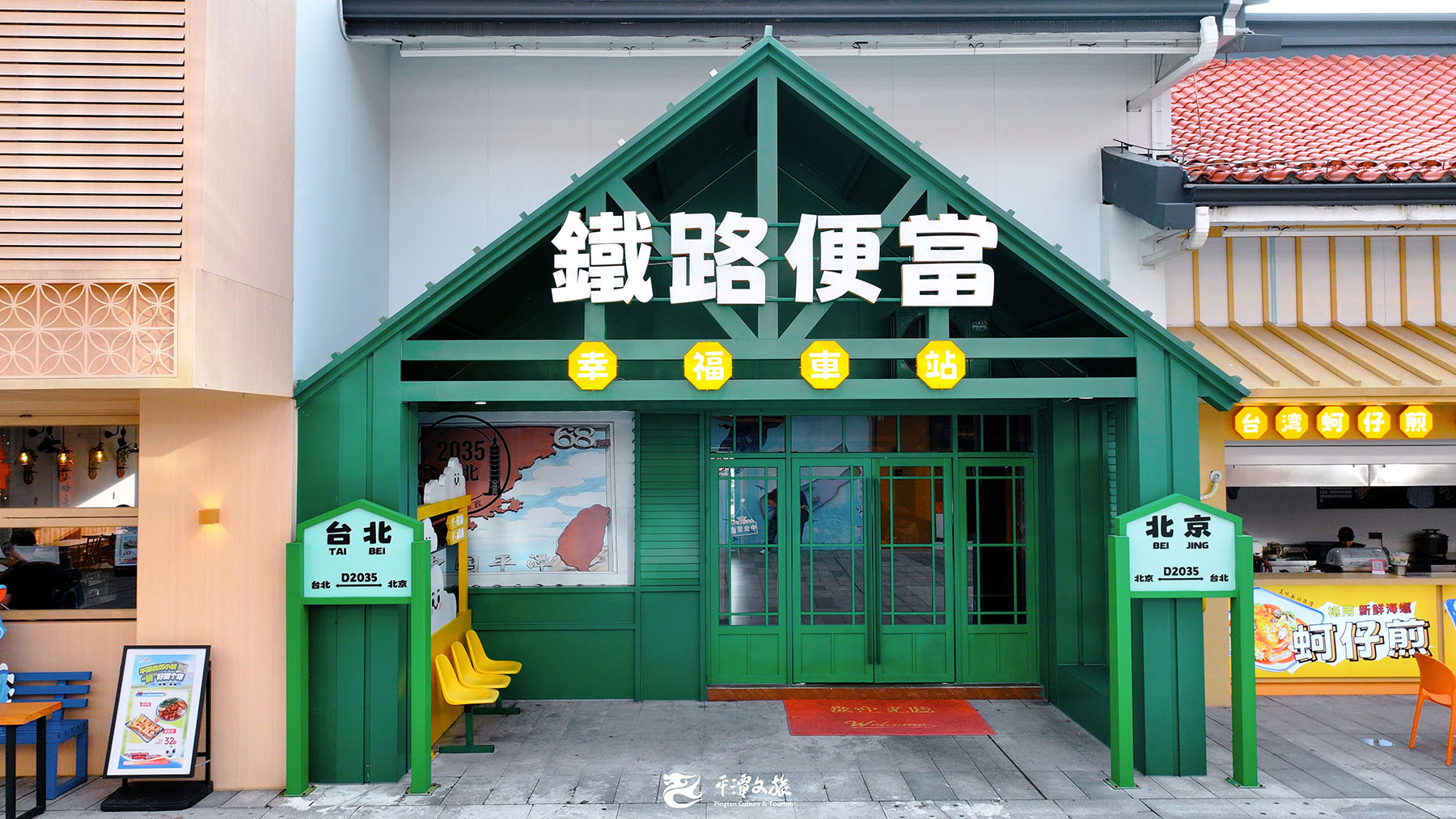
A railway sign outside a restaurant in Pingtan, an island county in East China's Fujian province, points toward Taipei. For restaurant owner Wang Fayu, it is not just a decoration.
Originally from Taiwan, he built the menu around dishes he grew up eating including beef noodles, railway bento and various snacks.
Wang came to Pingtan in 2016. He established two import and export companies, hoping to take commercial advantage of Pingtan's proximity to Taiwan and its role as a platform for cross-Strait trade.
The businesses did not work out. During the pandemic, Wang lost about 5 million yuan ($740,000). He left Pingtan and went to Haikou, capital of Hainan province, where he started over again in catering. He eventually opened four restaurants on the island.
READ MORE: Experience tourism spurs China's holiday surge
When Taiwan Town, a commercial complex in Pingtan, reopened in February after a major makeover, Wang decided to return. He closed the businesses in Haikou and came back, opening three restaurants in the complex and bringing his experienced chef Liu Senmu with him. Wang's wife and children later joined him there.
"I fell here, and I want to get back up here," Wang said of his initial failed business venture.
Tourism face-lift
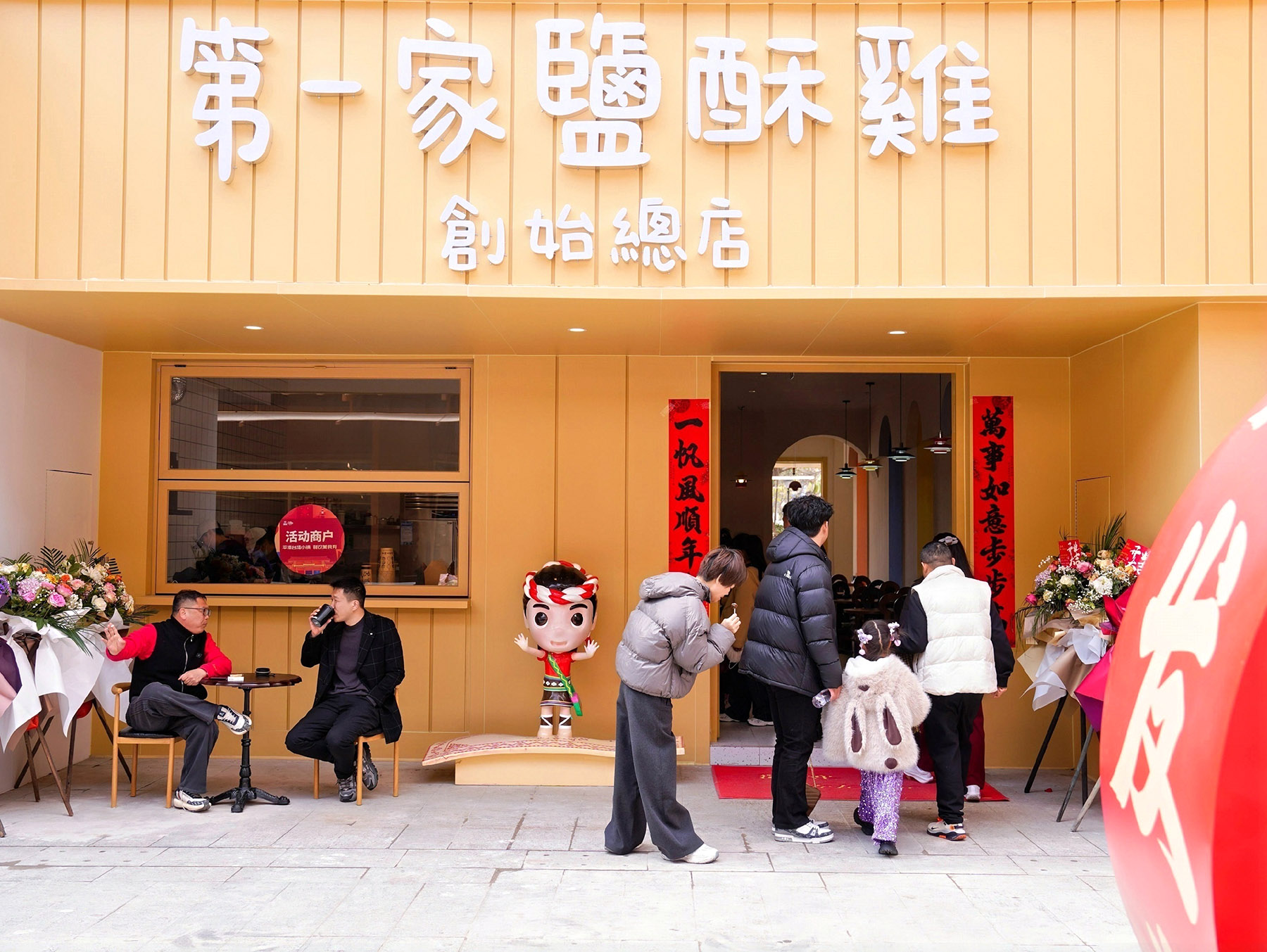
Taiwan Town began as a small commodity trading market. It opened in 2014 as a duty-free marketplace for Taiwan goods, giving merchants from Taiwan a place to sell small commodities while offering mainland consumers a convenient place to buy them.
For years, that business model shaped the life of the market.
Visitors came for snacks, tea, household goods and other Taiwan products, while merchants from Taiwan opened stores and built businesses around the demand. Once the shopping was done, however, the town offered few reasons for visitors to stay.
When the Pingtan Comprehensive Pilot Zone Culture and Tourism Development Group took over the operation of Taiwan Town in April 2025, many stores were idle. Only a small percentage of the registered Taiwan businesses were actually operating, said Lin Yan, the group's general manager.
Rather than simply filling empty shops with more merchandise, the group studied ways to make the town part of a broader tourism experience. Teams visited projects in Beijing, Chongqing and Tianjin before work began on the streets and buildings in Pingtan, with a focus on combining commercial activity with tourism, culture and leisure.
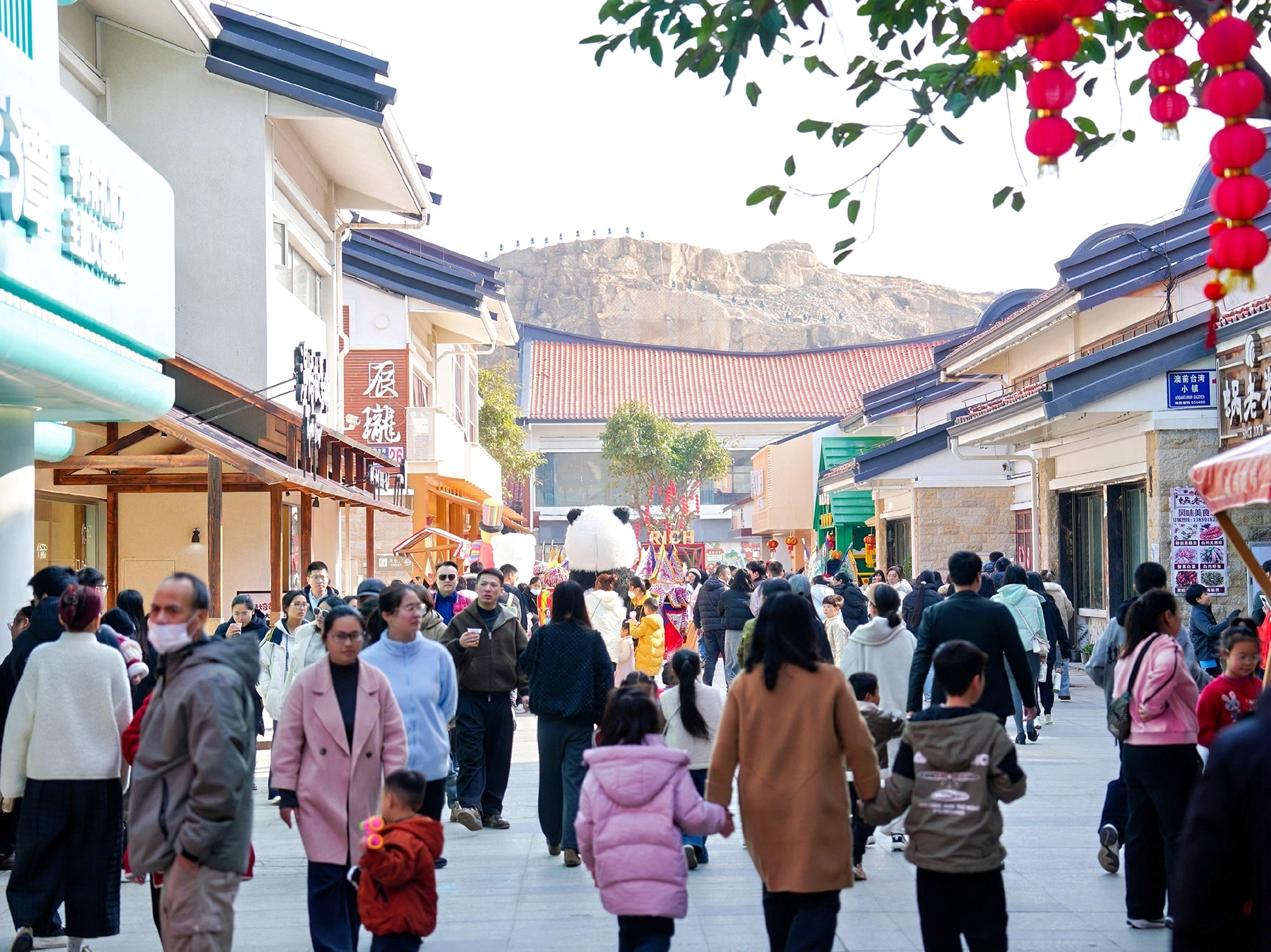
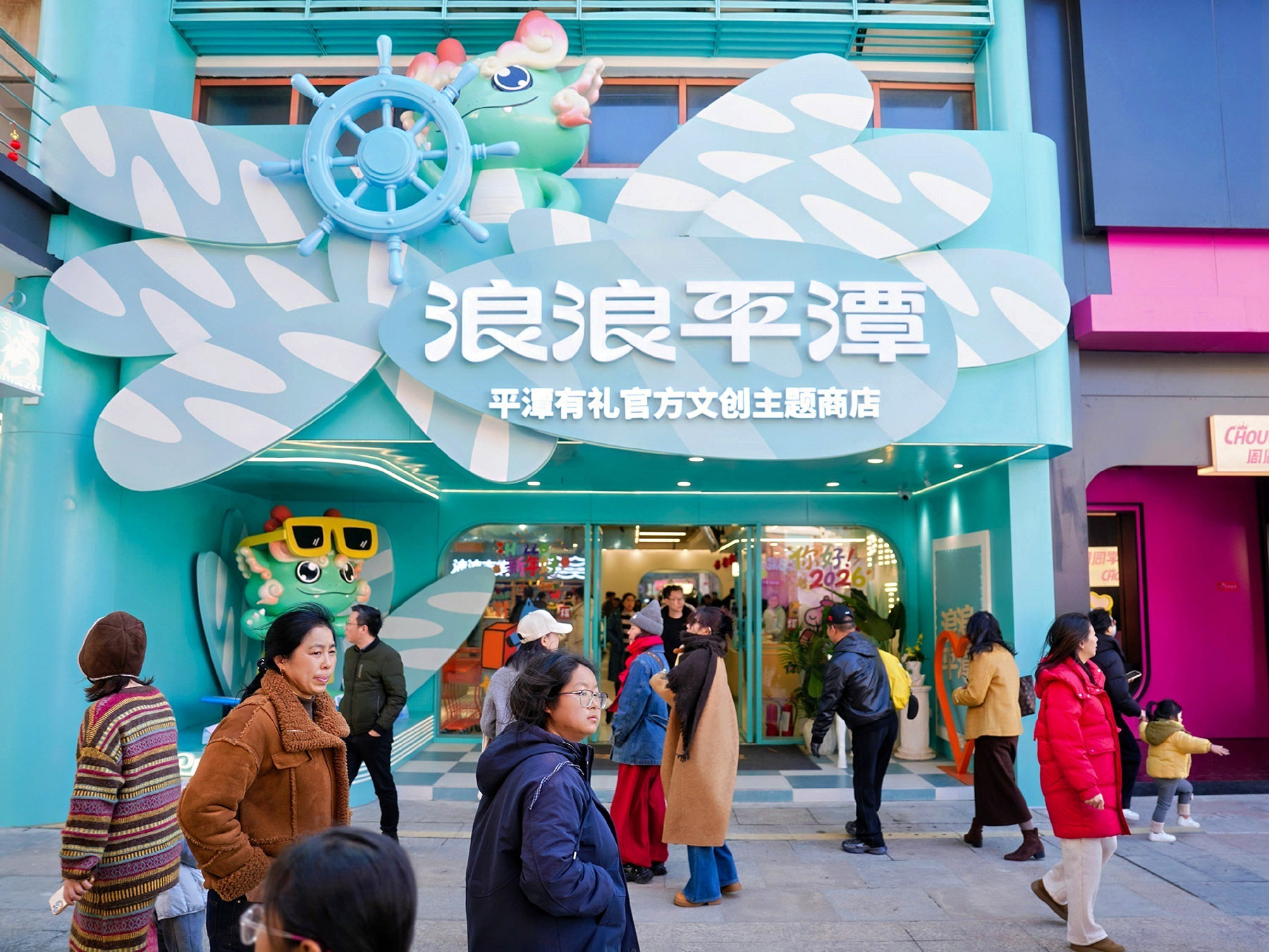
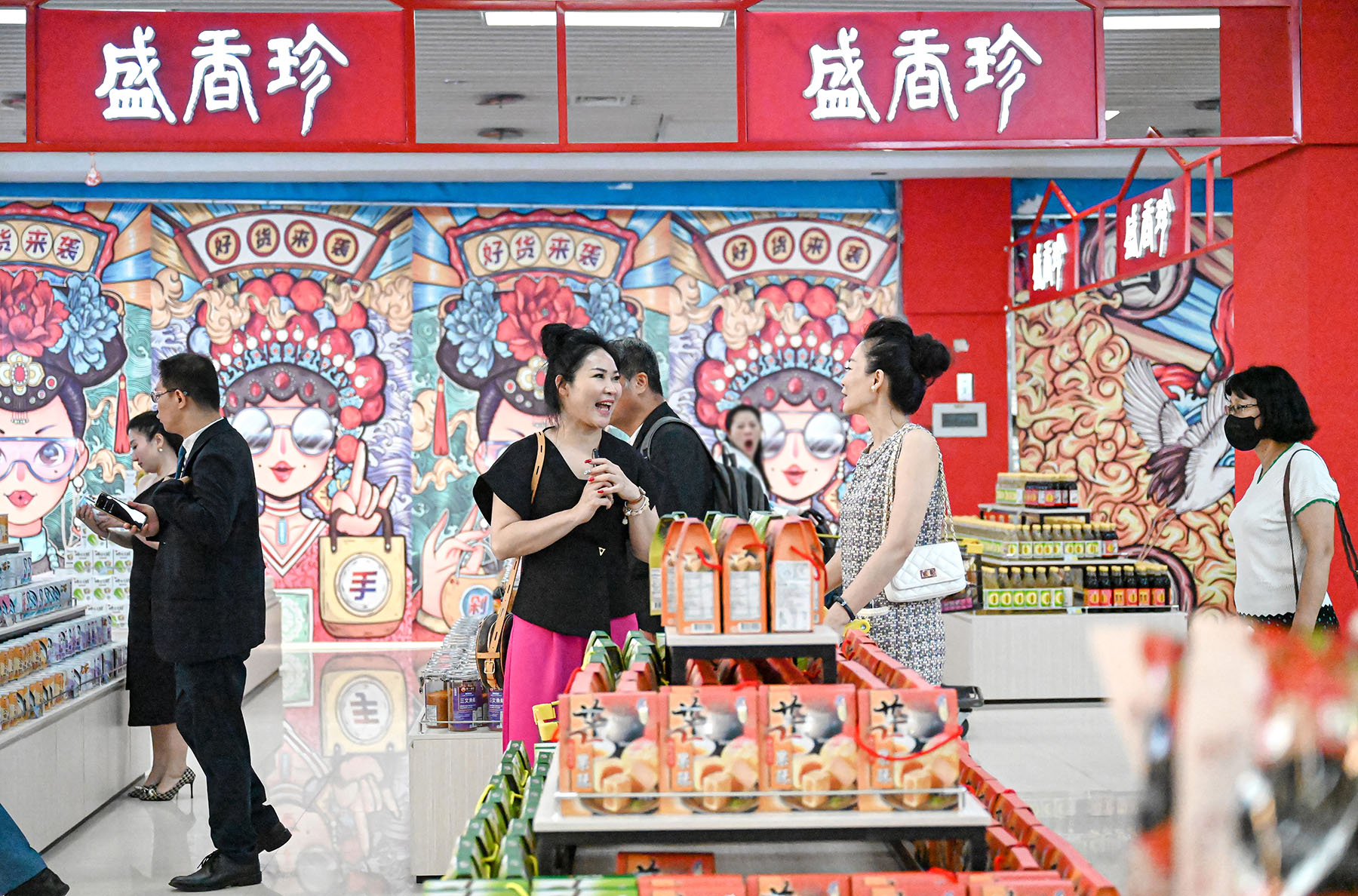
Streets were refurbished and idle buildings put back into use. Night lighting created a different evening atmosphere, while plazas, landscaped water features, restaurants and leisure spaces gave visitors more places to linger.
Liu Sunhui, deputy manager of the business development department at the Pingtan Tourism Operation Management Co, said the Taiwan Town operator has taken over some of the businesses. "We don't just bring in merchants. We also operate some stores ourselves," he said.
One example is an outlet selling officially licensed products of Taiwan pop star Jay Chou, including trendy figures, blind boxes, souvenirs and fridge magnets as well as Pingtan-themed products. The complex operator has also opened a plant museum and themed cafes and restaurants.
Preparation is underway for Gui Shan Hai (Return to the Mountains and Sea), an immersive production to be staged in a 3,000-square-meter space that combines live performance, dance, martial arts, acrobatics and projection. The production draws on the history of the banbing system in the Qing Dynasty (1644-1911), under which troops from Fujian and other mainland garrisons took turns serving in Taiwan as part of the island's defense and security.
The operator has also been encouraging established Taiwan Town merchants to help recruit new businesses from Taiwan through introductions and by explaining incentives the complex offers, such as preferential rents.
After Taiwan Town began to attract more visitors, the outlook of businesses changed, Lin, the general manager, said. "People need to see things moving before they can have confidence," he said.
Cluster of merchants
Yang Zongxian has been in Pingtan for about 15 years, long enough to have experienced the quieter years of Taiwan Town as well as its latest transformation.
He leased about 7,000 square meters of commercial space soon after the renovation plan kicked off last year, and filled it with food, tea and specialty products from Taiwan. He also opened a restaurant featuring Taiwan-style food and invited other businesspeople from the island to join him at the complex.
Among them was a young entrepreneur who opened a dessert shop and developed products inspired by Pingtan's famous blue tears, the blue-green glow created by bioluminescent plankton along the island's coast.
Yang sees bringing merchants together as a way of building a market that can sustain itself. "Only by forming a cluster can we really strengthen the market," he said.
During the May Day holiday, Yang's beef noodle restaurant sold up to 1,000 bowls a day, with daily takings exceeding 30,000 yuan ($4,490).
About 558,000 visits to Taiwan Town were recorded from Feb 10 to Aug 18, up 191 percent year-on-year, while sales reached 59.33 million yuan, up 60 percent, according to Lin. The number of Taiwan-invested businesses rose from 26 before the transformation to 78.
Before the makeover, visitors typically spent less than an hour in Taiwan Town. That has now stretched to about three hours, Lin said. The complex's operator is aiming to keep visitors there for five or six hours, or even overnight.
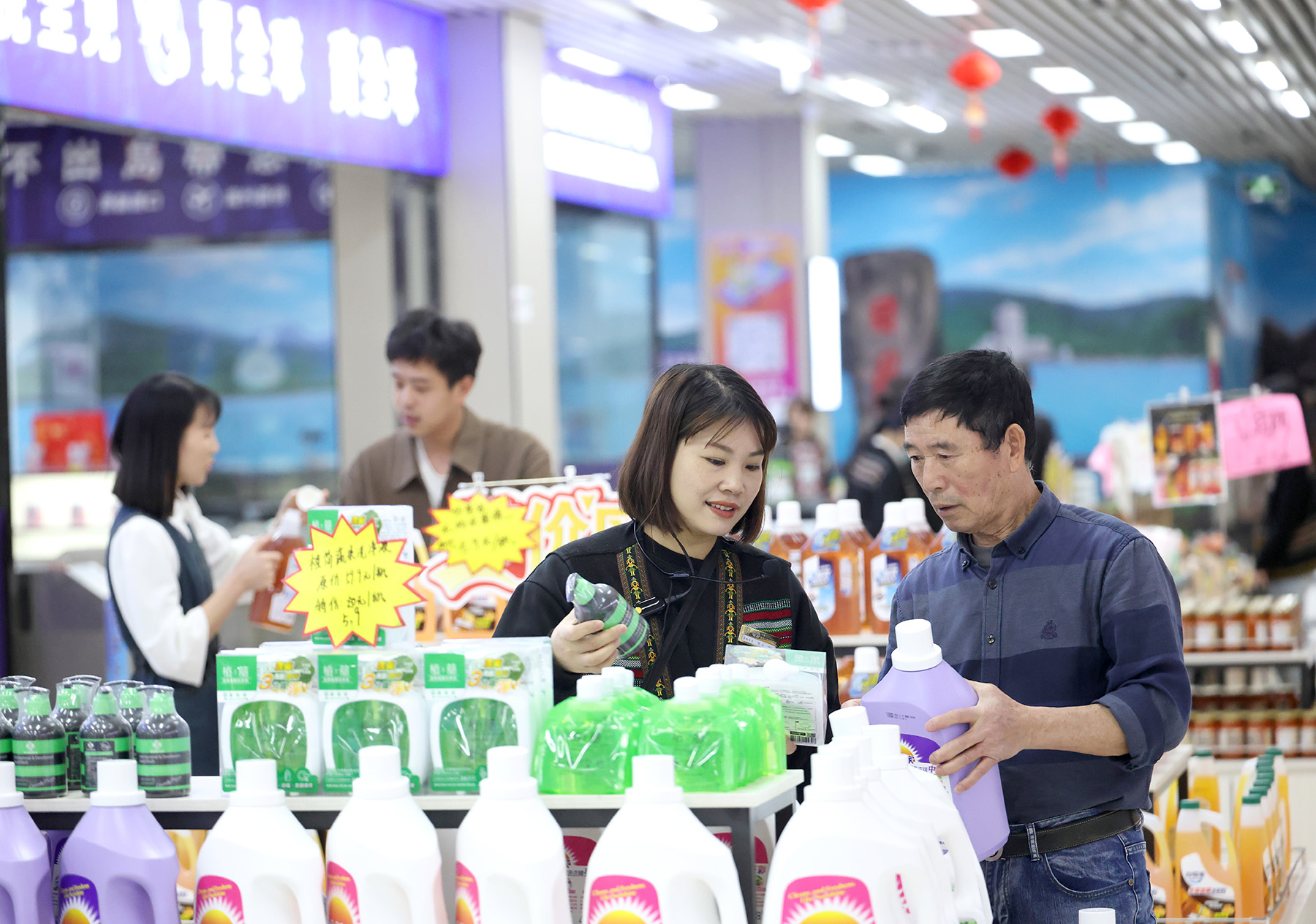
Chen Yuhan manages the Taiwan No 1 Duty-Free Mall. Her connection to Taiwan Town goes back to a decision made by her mother when the market was getting started.
Chen's family came to Pingtan in 2014, when her mother decided to invest in the new market.
"People around her raised doubts about the decision, but she nevertheless believed the island's proximity to Taiwan gave it long-term potential and she went ahead with the investment," Chen said.
With her mother managing other businesses, Chen eventually came to Pingtan to help look after the store in 2025.
The arrangement was practical, and Chen didn't plan to remain in Pingtan for long. But the longer she stayed, the more the town became part of her life.
She remembers Spring Festival in particular. It was the busiest season for Taiwan Town, and Chen felt she could not leave and let anyone else look after the business.
Locals invited her to celebrate the holiday with them and also gave her valuable knowledge about regulations and policies related to doing business on the mainland.
"I appreciated that thoughtfulness, and it made me feel comfortable living here," Chen said.
Her temporary position became a long-term commitment, and her family business now carries more than 1,300 products from several dozen suppliers from Taiwan.
The shelves still contain the products that first brought customers to Taiwan Town, including the sorghum-based liquor Kinmen Kaoliang and Taiwan snacks.
Chen has also been looking for new products, returning to Taiwan to meet suppliers and encouraging suitable businesses to complete the procedures needed to enter the mainland market.
She is planning to set up an area to feature tea from Taiwan's Sun Moon Lake, which will allow producers to explain Taiwan tea culture. A tea master can also demonstrate how the beverage is prepared.
The complex's improvements have given Chen the confidence to take more business risks. After Taiwan Town reopened, foot traffic at her store has doubled, creating an opportunity for her to bring a Shanghai hand-cream brand to Pingtan.
The cosmetics company normally chooses established pedestrian streets and mature scenic areas. However, through Chen's efforts, it has customized its products and packaging for the local market with images connected to Pingtan and Taiwan Town.
"If there had only been one duty-free store, I wouldn't have dared to bring in hand cream," Chen said. "After seeing the street open, we became confident and decided to invest."
In the early days, Chen's mother had worried that new businesses might divert customers from their own store.
Chen now believes that more businesses are needed to make the town work, even if some customers are shared. "Relying on just one duty-free store couldn't sustain Taiwan Town," she said.
Coming back
The return to Pingtan has given restaurant owner Wang and his employees new vitality.
His three restaurants employ about a dozen people, with seven or eight of them from Taiwan, including chef Liu Senmu. Together the eateries generate about 150,000 to 200,000 yuan in monthly revenue, Wang said.
Although he is aged 71, Liu, from Kaohsiung in southern Taiwan, still works at one of the restaurants and keeps orders hustling through the kitchen.
Many of the specialties are from his hometown. He folds eggs and oysters into an oyster omelet, then makes tian bu la, fried fish cakes, as customers wait for their food. Liu is happy to see people coming to Pingtan to try flavors he has made for much of his working life.
For him, the restaurant is another stop in a long journey.
He has been on the mainland since 2015, taking Taiwan snacks to different cities and food fairs in search of places where they might find a market.
In 2016, he was selling Taiwan snacks at a tourism and culture expo in Lhasa in the Xizang autonomous region. By then, he had already visited about 15 mainland cities for business and food fairs.
ALSO READ: Pingtan to pioneer cross-Strait 'common market' in 15th Five-Year Plan period
Two years later, he settled in Haikou, capital of Hainan. The climate and food habits there reminded him of Taiwan, and he saw a market for his dishes.
He usually returns to Taiwan once every three months and stays for about a week. The rest of his time he mainly spends working on the mainland.
"I think there are more opportunities here," Liu said. "There are many places where you can try different things."
He moved to Pingtan earlier this year, when Wang invited him to work at the restaurant. Now, young kitchen workers stand beside him, learning how he prepares food and handles a busy service schedule.
Liu has no intention of keeping those skills to himself.
"I can teach them; there is no secret to keep," he said. "If you have a skill, pass it on instead of keeping it to yourself. Young people need a chance to start their own businesses."
Contact the writers at yangfeiyue@chinadaily.com.cn
