

Student journalists from Chinese mainland, Hong Kong, Macao, Taiwan and Southeast Asia urged to document a changing era
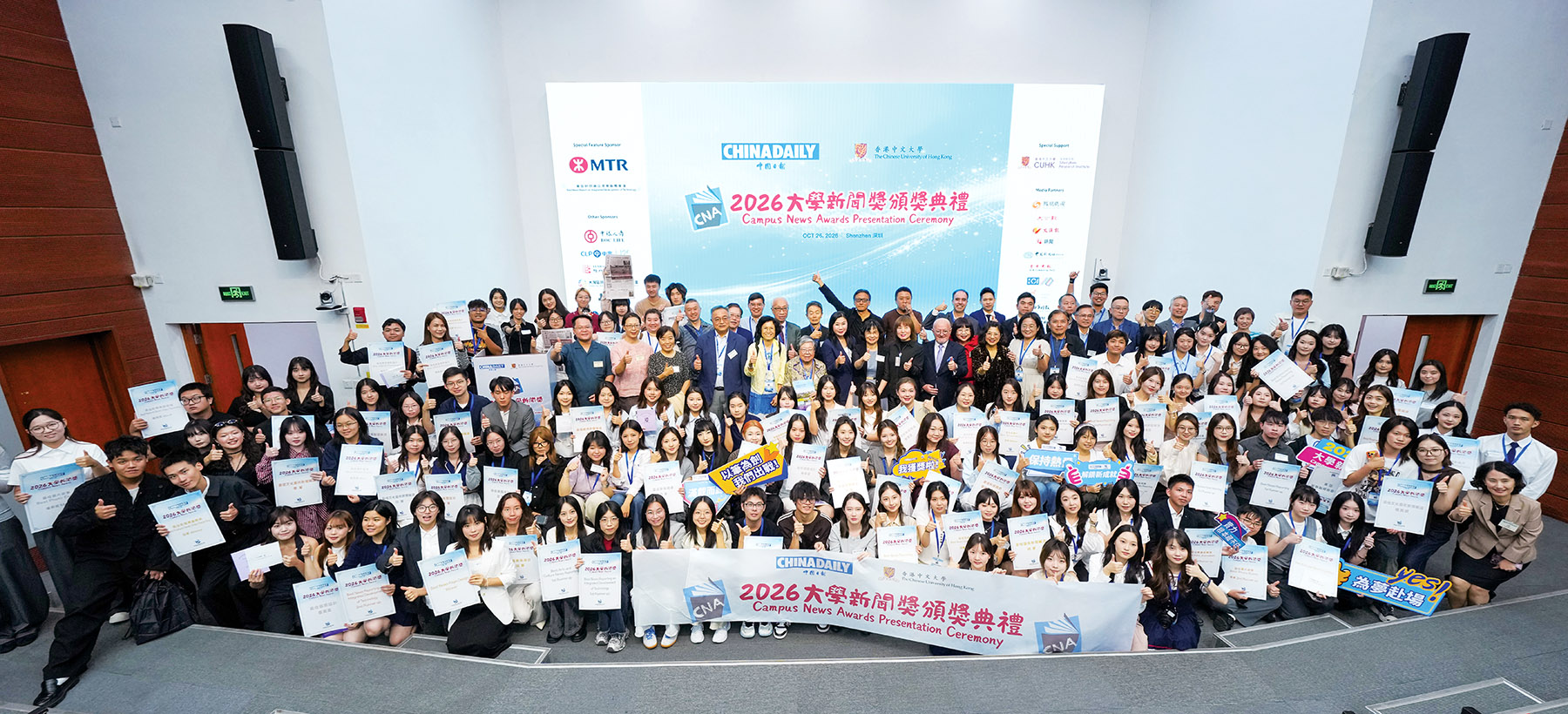
Young journalists from the Chinese mainland, Hong Kong, Macao, Taiwan and, for the first time, Southeast Asia were recognized for their inspiring work at the annual Campus News Awards, with officials and experts encouraging them to document the changes of the times and continue to innovate.
The Campus News Awards 2026, organized by China Daily Hong Kong, held its awards ceremony in Shenzhen, the host city of the upcoming 33rd Asia-Pacific Economic Cooperation (APEC) Economic Leaders’ Meeting, on Oct 26. Over 300 guests, including government officials, student and teacher representatives, experts, and university professors from across the region, attended the ceremony at the Chinese University of Hong Kong’s Shenzhen Research Institute, a special supporter for the competition.
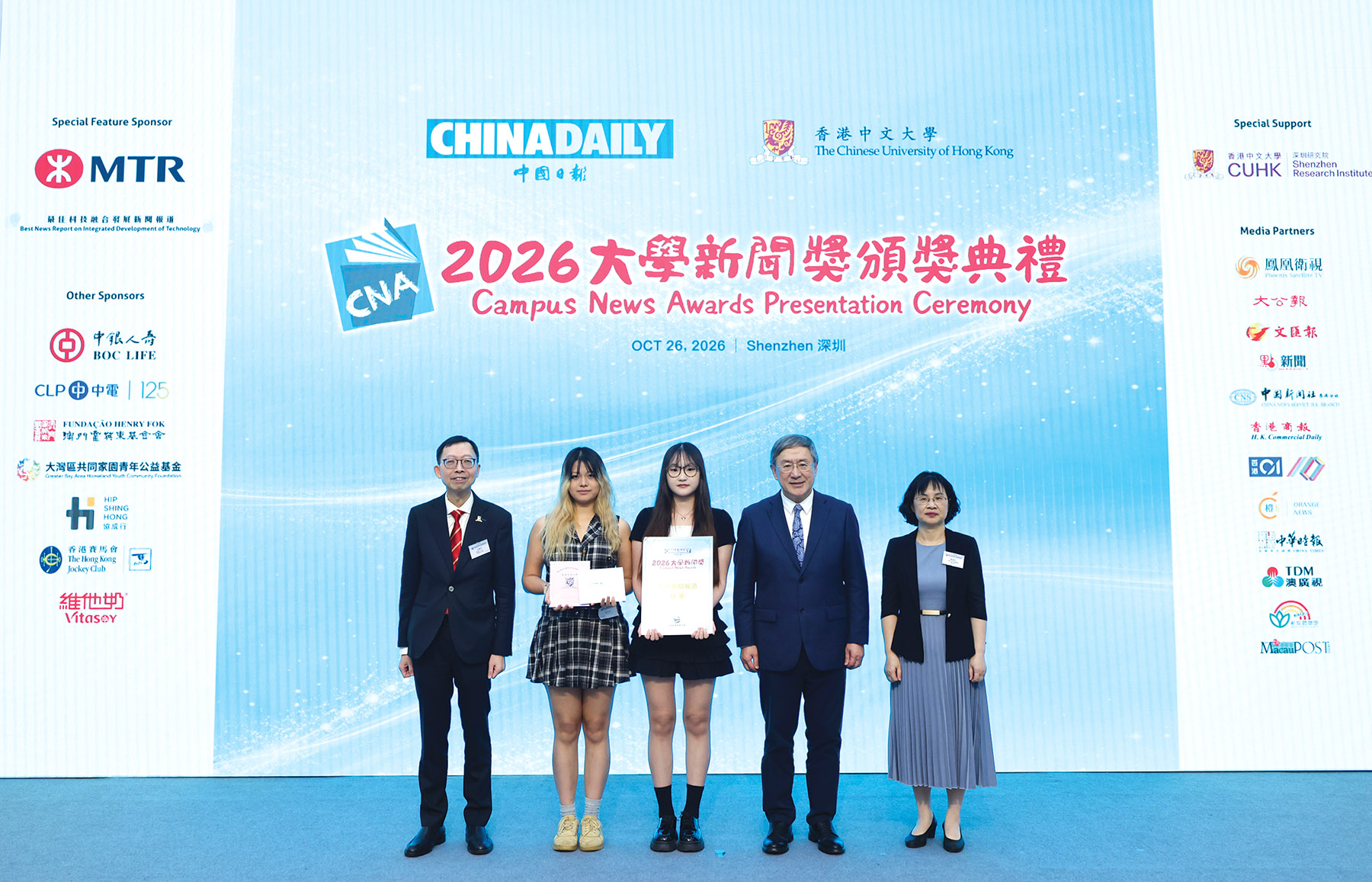
Addressing the event, Hong Kong SAR Deputy Chief Secretary for Administration Cheuk Wing-hing encouraged the students to hone their journalistic skills, acquire both hard knowledge and soft skills, and become good storytellers about China.
ALSO READ: News awards boosts cross-regional journalism education
“We are now in the golden era, with the opening year of the nation’s 15th Five-Year Plan (2026-30) and further elevation of high-level opening-up. The news media, in particular, must give full play to its international communication power and competitiveness, to contribute to expanding the international circle of friends,” Cheuk said.
“I have always firmly believed that whether journalism is presented through text, images, or other media, its value lies in recording the changes of the times, chronicling social conditions and public sentiment, and building an information bridge for people-to-people exchanges across the international community and for mutual learning among civilizations,” he added. Cheuk encouraged students to continue serving as a bridge between Chinese and Western cultures and to make good use of innovative technologies in their reporting.
Bridging cultures
China Daily Deputy Editor-in-Chief Liu Weiling said the awards recognize outstanding young students and, more importantly, build a bridge for deepening young people’s exchanges and promoting the integration of technology and culture in an open, innovative, and cooperative Asia-Pacific region.
Liu said over 3,000 students from more than 100 universities took part in this year’s competition, with the number of submissions exceeding 1,000 for the first time.
This year marked the awards’ 15th edition, and universities from Southeast Asia were invited to participate for the first time, Liu said, adding that students’ topics were more closely aligned with the times.
“In the face of profound changes brought by new technologies such as artificial intelligence, we have seen young journalism students’ keen insight, critical spirit of daring to question, and genuine humanistic care for the world,” Liu said.
Albert Chow Hing-pong, vice-president (administration) of the Chinese University of Hong Kong, said the submitted works demonstrated students’ keen social insight and innovative spirit, reflecting their passion for and optimism about the journalism profession.
“Global development has undergone profound changes, and technology is reshaping the media ecosystem. I hope students will continue to serve as a bridge between Chinese and Western cultures, tell the world a true and comprehensive China story, make good use of innovative technologies in reporting, while upholding ethics and justice, encouraging and learning from participants from different regions, and jointly contributing to social progress,” Chow said.
Linda Choy Siu-min, MTR Corp’s corporate affairs and branding director, said the AI era allows anyone to be a journalist, with independent voices capable of rivaling established institutions at a moment’s notice. Consequently, credible, high-quality journalism is more vital than ever, she said.
Emphasizing that credibility is paramount, Choy, who served as a judge for the awards, said factual integrity and sound judgment are indispensable. Developing and maintaining a sharp journalistic intuition cannot be outsourced to algorithms and large language models alone, she added.
READ MORE: China’s space exploration journey impresses young journalists
Choy said she believes that traditional journalism will always retain its core strengths, shedding light on closely relevant topics tied to the times, with depth and warmth.
This year’s competition featured 21 prizes — 20 categories for Chinese- and English-language news entries in writing, photography, and multimedia, plus a special award for the most active participation. New categories included the Best News Reporting on Integrated Development of Technology and the Best ASEAN Photography awards, in the belief that students will not only bear witness to developments in the AI era but will also be able to use their lenses and pens to engage in the technological transformation.
Sharing joy
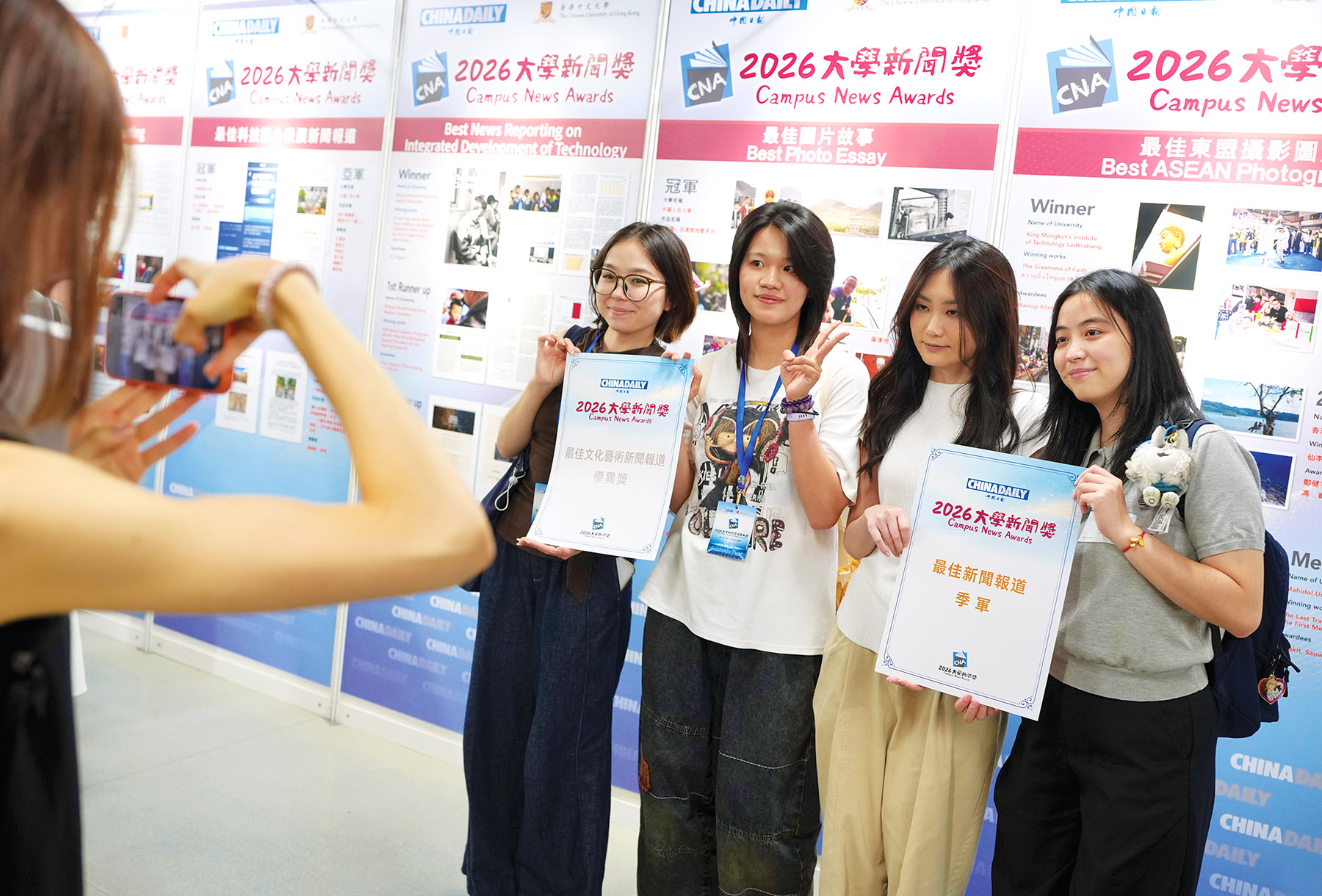
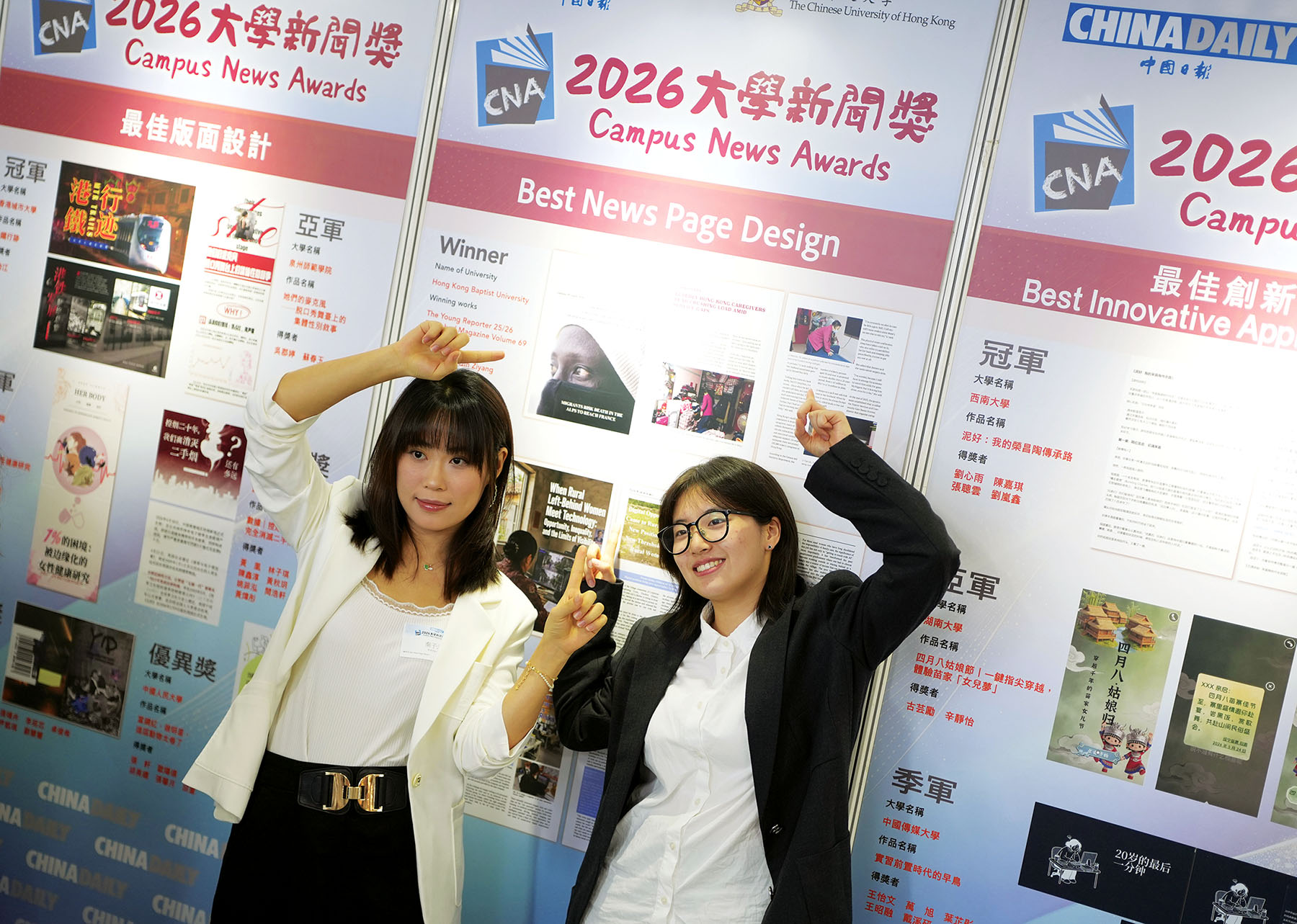
Yang Shuyi and Qin Ziyang from Hong Kong Baptist University, who won the first prize in the Best News Page Design (English category), said they were glad to gather with peers from different places and cheer them on.
Liang Xinyue, first runner-up in the Best News Photography category and a student at the Southwest University of Political Science and Law in Chongqing, said she has met many talented students through this platform and was happy to visit Shenzhen to experience its tech prowess for the first time thanks to the event.
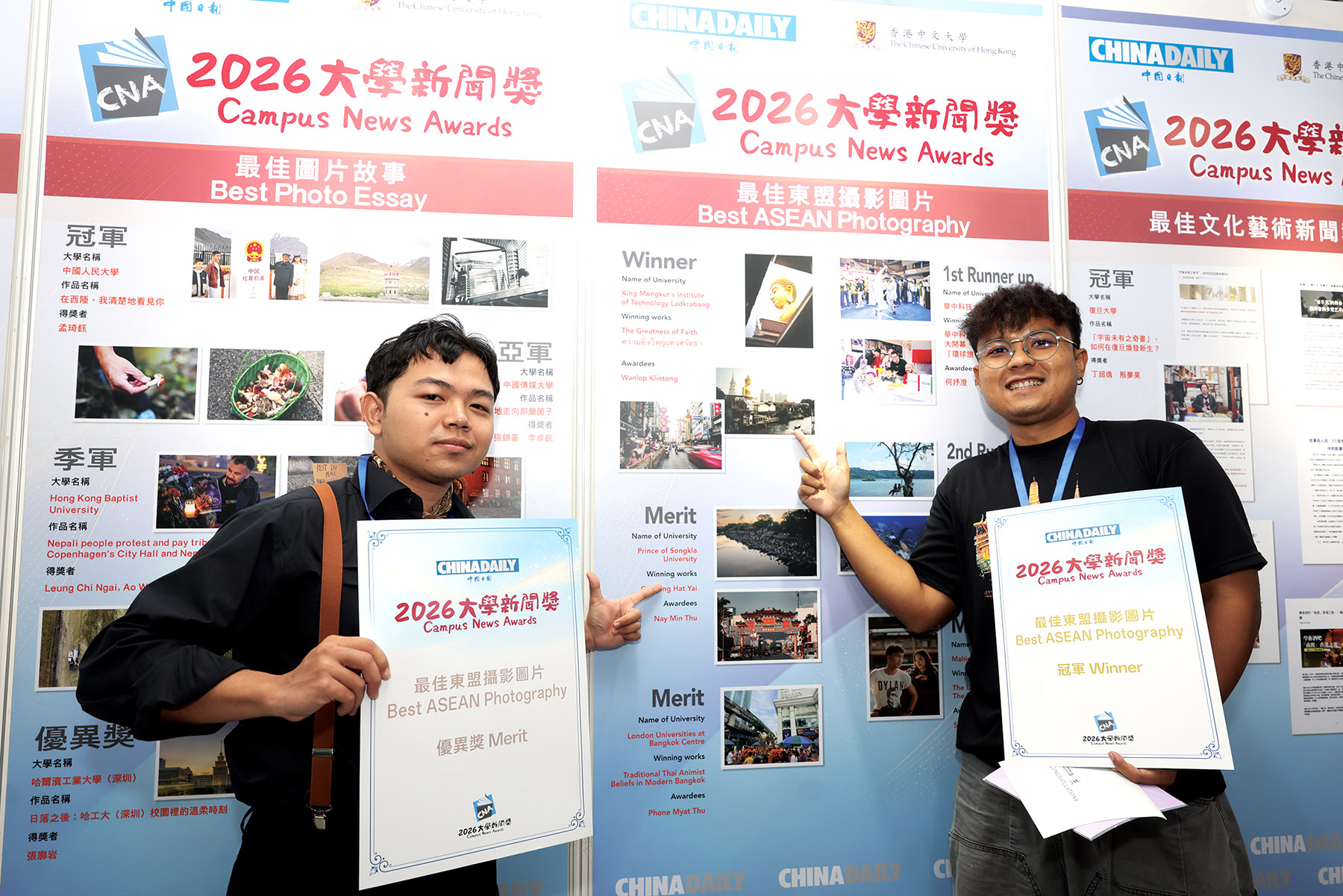
For participant Nay Min Thu, a Myanmar student at Prince of Songkla University in Thailand, winning a merit award in the Best ASEAN Photography category came as a big surprise. “It’s my first time to come to China, and I think Shenzhen is a very innovative, very tech-advanced city,” he said.
He said taking photos in Hat Yai, a city in southern Thailand, helped him better understand the place, and through the awards, hopefully more people will learn about it.
READ MORE: Soaring high
Kao Wei-chen and Wu Pei-rong from Shih Hsin University in Taiwan won a merit award in the Best Short Video Reporting category for their video about the craftsmanship of rattan deity palanquins — a craft facing extinction. “The interviewees were deeply moved to see their work shortlisted for an award, because a craft that few people locally care about is valued elsewhere,” they said.
Competitors came from 101 universities across the region: 74 from the Chinese mainland, eight from Hong Kong, four from Macao, nine from Taiwan, and six from member countries of the Association of Southeast Asian Nations.

Organized by China Daily Hong Kong since 2012, the Campus News Awards is a prominent exchange platform for journalism students, and aims to encourage college students to actively participate in campus news reporting and hone their skills as future journalists.
Held concurrently at the same venue from Oct 26-30, the 2026 Changing Asia photo exhibition, jointly curated by China Daily and the Asia News Network, served as a key cultural exchange activity for APEC “China Year” and a warm-up event for the APEC meeting. This year’s exhibition, featuring bonding moments, echoed APEC’s theme of “Building an Asia-Pacific Community to Prosper Together”.
After fierce competition, 97 works by 54 photographers from 17 countries and regions were selected for the exhibition from among 2,200 submissions by 330 photographers.
Julia Zhu contributed to this story.
Contact the writer at atlasshao@chinadailyhk.com
