

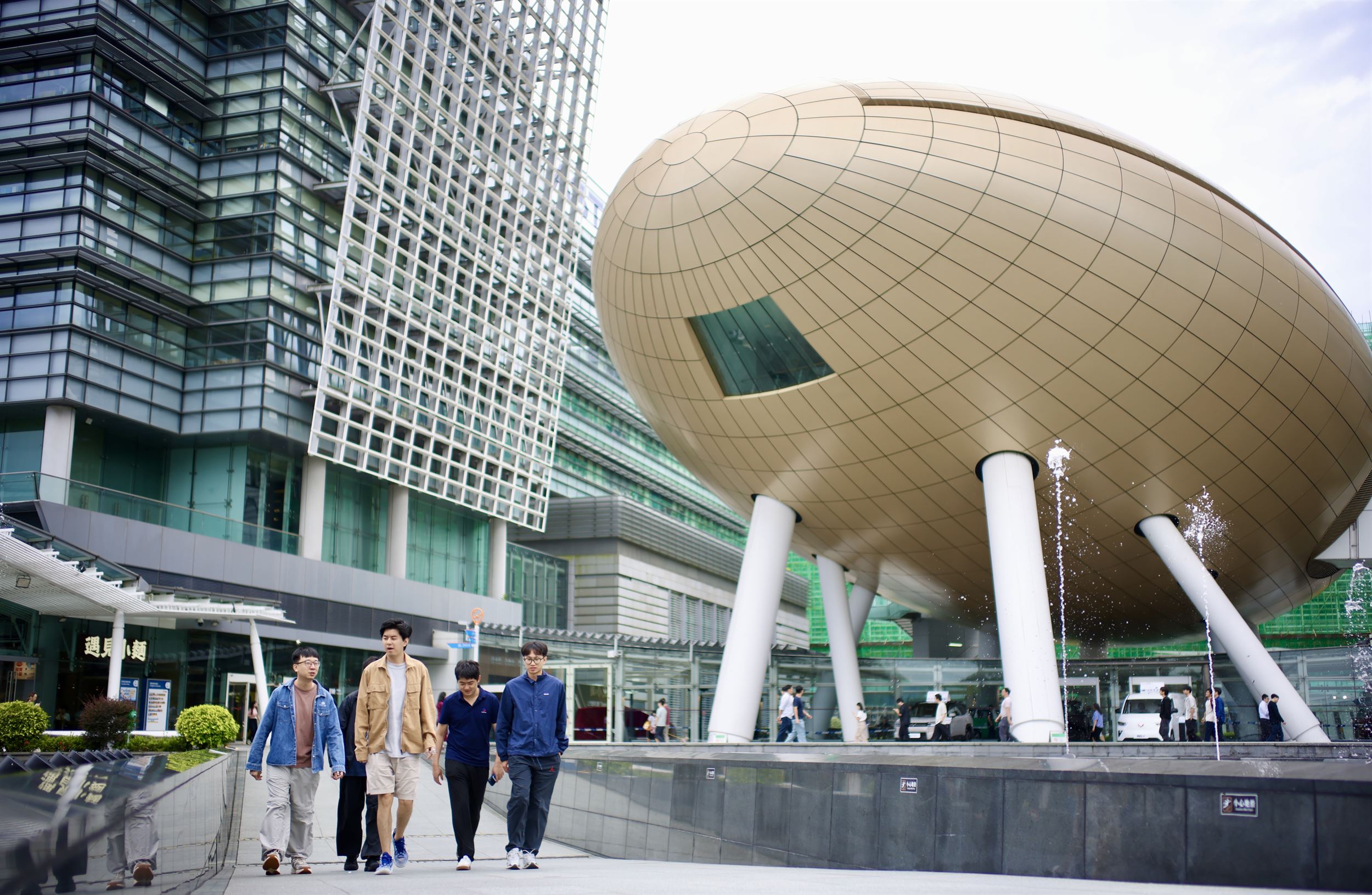
Hong Kong's compact, data-rich healthcare system and its growing links with the United States and the rest of the world can help shape how medicine is practiced worldwide, the city's top representative on the US West Coast and top medical professionals said.
D.C. Cheung, director of the Hong Kong Economic and Trade Office in San Francisco, spoke to audiences at Healthcare Conference 2026, organized by Chinese Hospital, the University of California San Francisco and the Federation of Chinese American and Chinese Canadian Medical Societies.
Cheung said Hong Kong has among the world's highest life expectancies and has set three healthcare targets in its first Five-Year Plan: higher public health spending per person, more doctors per person and a lower risk of premature death from four major non-communicable diseases.
Cheung said the 2026 Policy Address by Hong Kong Chief Executive John Lee Ka-chiu backs these goals with three strategic directions: deepening healthcare system reform, with an emphasis on prevention and primary care; building Hong Kong into a healthcare innovation hub, including faster approval of medicines and devices and a stronger clinical trial ecosystem; and acting as a "super-connector" between the Chinese mainland and the world, including in the Greater Bay Area.
ALSO READ: HKUST chief Nancy Ip wins UNESCO award for life sciences research
Hong Kong's two established medical schools, at the University of Hong Kong and the Chinese University of Hong Kong, opened admissions to candidates worldwide, including the US, earlier this year. Graduates can stay and practice through talent admission schemes.
The conference also fell days before Hong Kong marks the 160th anniversary of the birth of Dr Sun Yat-sen, who trained at the Hong Kong College of Medicine for Chinese, the forerunner of HKU. Cheung also cited a classic maxim shared with him by former Hospital Authority head C.H. Leong: ordinary doctors treat the symptom, good doctors treat the patient, great doctors cure society.
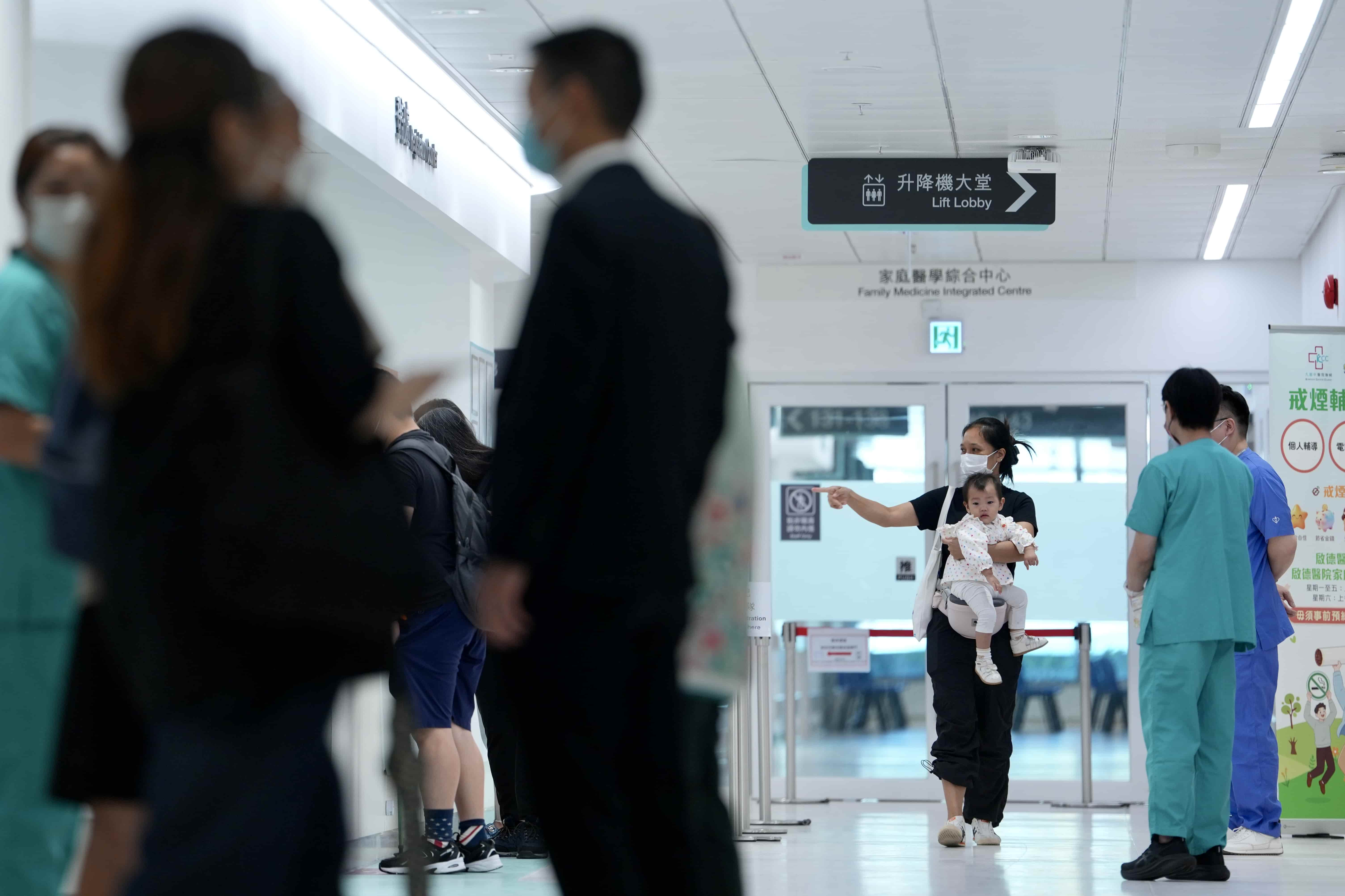
King Chuen Li, who will lead the city's third medical school at the Hong Kong University of Science and Technology (HKUST), said Hong Kong's structure gives it advantages that larger, more fragmented systems lack. With more than seven million people sharing one electronic health record system, he said, researchers can run population-based studies on a large, fairly homogeneous group followed over many years. In the US, by contrast, many different record systems make such research difficult.
The Hospital Authority, which Li said cares for roughly 90 percent of patients, also lets the system set standards and spot departures from them quickly.
"If you have 10 different healthcare systems in a small place, it's very hard to detect deviations," he said.
READ MORE: HKUST: City’s third medical school making good progress
Velda Ling Yu Chow, clinical associate professor at HKU, echoed the point on quality, saying Hong Kong doctors are trained in evidence-based medicine from an early stage and work within mature multidisciplinary teams and rigorous clinical governance. Hong Kong's close ties to both East and West, she said, let it act as a bridge, giving patients access to high standards of care and new technology.
Chow described a clinical trial at HKU assessing the safety and efficacy of a dedicated microsurgical robotic system not previously used in Asia. The trial involved 45 patients. Beyond procedures already performed in Europe and the US, such as joining tiny blood vessels, lymphatic vessels and nerves in free-flap reconstruction, her team developed two pioneering applications of the system: in head and neck surgery, and in liver transplantation.
The robot is made by a European company that is working with a US-based arm, and its training program was designed in the US. Data is being collected with units in Europe, the US and Australia. The next stage will incorporate artificial intelligence to shorten the learning curve and ultimately improve patient outcomes, an effort that depends on pooling large amounts of surgeon data. The cooperation, she said, is ongoing.
READ MORE: Merck taps HK as biotech innovation shifts east toward China
Both physicians said collaboration with American colleagues runs through their careers, from observing mentors operate in the US as young surgeons to joint research. Li said academic medicine is inherently collaborative and that he has seen few barriers to genuine academic exchange between Hong Kong and the US. The goals of attending conferences, he said, are to learn, to show what one is doing and to network.
Li argued that innovation and technology will fundamentally change health, potentially raising quality and access while lowering cost. He named three disparities the world must confront: wealth, technology and distance, since people in remote areas find care far harder to reach. Citing World Health Organization figures, he said 57 percent of the world's population still lacks access to essential healthcare. Hong Kong's role, he said, is to be a catalyst that applies technologies developed anywhere in the world to bring care to as many people as possible at the lowest cost.
The new HKUST medical school, he said, aims to produce graduates who are competent, compassionate, collaborative and technologically adept. Its curriculum integrates subjects rather than teaching them separately, moves factual learning online so students can work at their own pace, tests them weekly on competencies and reserves face-to-face time for applying knowledge to clinical cases.
Professionalism, public health, human interaction and AI run through all four years, with an emphasis on learning how to keep learning.
For practicing doctors, Chow said, AI is a broad term whose clinical uses must be understood, and physicians should keep up to date through Hong Kong's continuing medical education system before adopting it in practice.
Cheung said the Hong Kong office stands ready to promote ties with the US West.
"The more we share, the more we have," he told delegates.
