

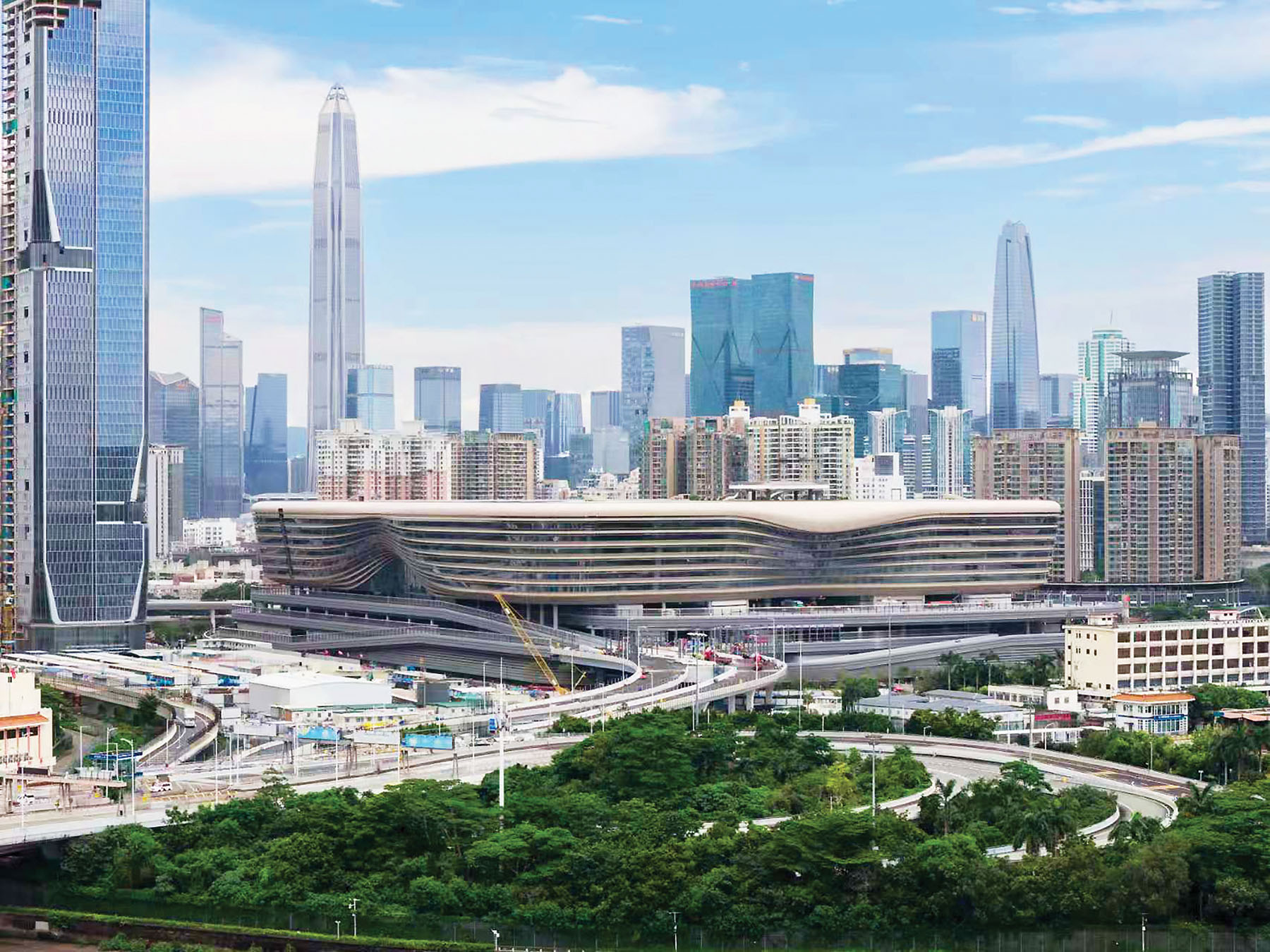
In its first five-year plan designed to better dovetail with national strategies, the Hong Kong Special Administrative Region has identified the integration of innovation and industrial chains as a priority for its next phase of collaboration within the Guangdong-Hong Kong-Macao Greater Bay Area, with the goal of jointly developing a globally competitive industrial ecosystem.
The plan proposes closer cooperation with mainland Greater Bay Area cities in emerging industries, advanced technologies and infrastructural connectivity to boost cross-boundary industrial synergy, better capitalizing on opportunities arising from regional development.
Hydrogen energy and satellite technology — two fields that place high demands on technology and business models — as well as advanced construction technology, which faces strong demand driven by the development of the Northern Metropolis, have become new priorities for cooperation in emerging industries.
ALSO READ: HK's 5-year plan lists 105 indicators to build ‘open, prosperous’ city
To lay a solid foundation for emerging technologies such as artificial intelligence, the city will strengthen the interconnection of computing infrastructure and develop large-scale intelligent computing clusters in collaboration with other Greater Bay Area cities, supporting the cluster to become a regional hub for computing-power services going overseas.
Similarly, Hong Kong also vows to step up the planning and cooperation for 6G networks within the Greater Bay Area and the upgrading of new communications infrastructure, in support of the digital transformation of various industries.
In a move to facilitate the movement of people and goods — both crucial manufacturing resources — the government strives to extend the operating hours of land border crossings with Shenzhen, enabling passengers and cargo from the Greater Bay Area to connect more conveniently with global markets via Hong Kong.
To accelerate innovation, Hong Kong will also seek to attract leading innovation and technology talent from around the world, along with their businesses, investments and research achievements. The city will also promote the effective commercialization and application of intellectual property generated from research, giving fresh impetus to the development of the Greater Bay Area’s innovation ecosystem.
ALSO READ: Northern Metropolis at heart of five-year plan, Policy Address thrust
Released on the same day, the 2026 Policy Address added specific measures to advance cooperation with Guangdong. Hong Kong will work to establish a sustainable aviation fuel production base in Dongguan, combining their technological and industrial strengths to build a green industry chain with global influence.
The city will also collaborate with Guangdong to advance new industrialization, and team up with Shenzhen to establish industrial innovation platforms and mechanisms to boost industry chain synergy for emerging and future industries.
Gordon Kee Wai-man, a research associate of the Hong Kong Institute of Asia-Pacific Studies at the Chinese University of Hong Kong, said that developing innovation and technology is not only a national strategy but also a key priority for Hong Kong at present.
“Strengthening cooperation with mainland cities in the Greater Bay Area — particularly Shenzhen — will help generate greater synergies, make more effective use of resources, and accelerate the commercialization of research outcomes, while avoiding disorderly or even malicious competition,” he added.
READ MORE: GBA is more than the ‘Silicon Valley of China’
“While significant progress has been made in cross-boundary infrastructure and mechanism connectivity, numerous bottlenecks remain. Hong Kong’s first five-year plan can be seen as a commitment to removing these obstacles and deepening regional integration.”
Regarding many high-tech industries outlined in the plan — such as hydrogen energy and 6G — Hong Kong can fully leverage its strengths to establish industry standards aligned with international norms and effectively integrate with the mainland’s robust industrial foundation, Kee added.
Fan Kwok-yuen, an assistant professor in the Department of Economics and Finance at the Hang Seng University of Hong Kong, said that these new initiatives demonstrate the ideal Shenzhen-Hong Kong cooperation model, which aims to leverage each side’s complementary strengths in high-end research and development, advanced manufacturing, and modern services.
He added that cooperation in emerging industries can help Hong Kong integrate more closely into the Greater Bay Area’s innovation and manufacturing networks. However, deep industrial synergy cannot be achieved through project lists alone — enhancing connectivity and strengthening mutual recognition of standards are tasks that must be pursued consistently over the next five years.
Chen Yanshan contributed to the story.
Contract the writer at: bingcun@chinadailyhk.com
