

China cautiously embraces tech-driven treatment, global cooperation urged
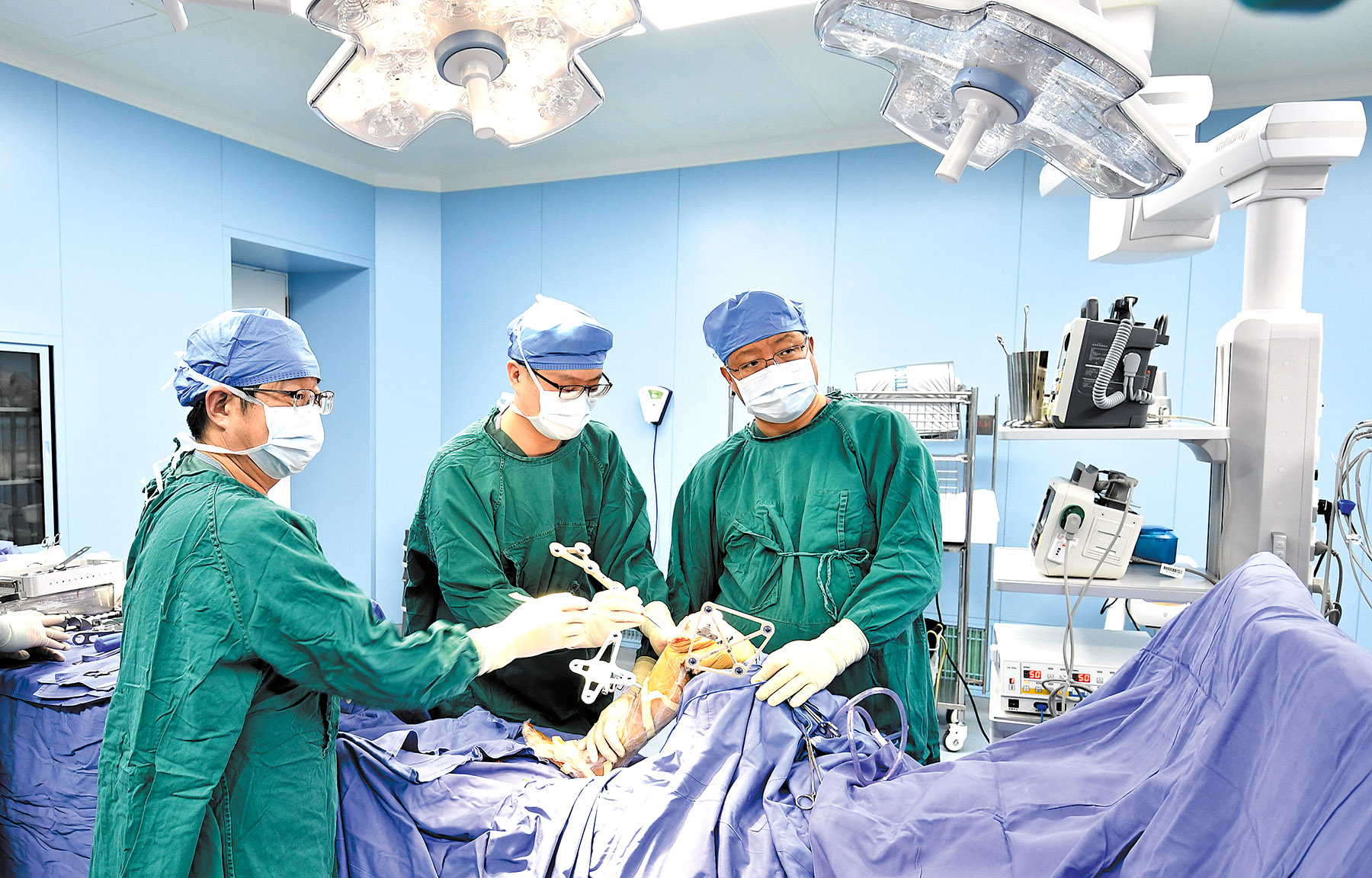
In January, tech billionaire Elon Musk made a prediction that ricocheted across the global technology and medical communities. Speaking on the "Moonshots" podcast, hosted by the physician and engineer Peter Diamandis, Musk said that Tesla's humanoid robot, Optimus, would surpass the world's best human surgeons within three years.
The characteristically bold claim triggered a familiar mix of excitement, skepticism, and unease. If robots could outperform elite surgeons, what would that mean for doctors, patients, and the ethics of care? And how soon would such a future arrive?
While the prediction of the Tesla CEO may sound futuristic, in hospitals across China, robots and artificial intelligence have already become part of everyday medical practice.
READ MORE: AI has finger on pulse of healthcare advances
The reality unfolding inside operating rooms and clinics is far more cautious and more complex than Silicon Valley's most confident forecasts suggest.
Expanding frontier
In recent years, artificial intelligence and robotics have undergone explosive growth, accelerating their adoption in healthcare. Surgical robots were listed by Engineering, the journal of the Chinese Academy of Engineering, as one of the world's top 10 engineering achievements of 2024.
China has emerged as a major testing ground. By early 2025, laparoscopic surgical robots had been used in nearly 12,000 procedures nationwide, including more than 800 remote surgeries conducted via 5G-enabled robotic systems, according to a Xinhua News Agency report.
These systems allow surgeons in major cities like Beijing and Shanghai to operate on patients hundreds or even thousands of kilometers away.
At the same time, breakthroughs in large language models, like ChatGPT, have fueled the rise of what Chinese researchers call "large medical models".
According to the AI Application in Healthcare Industry White Paper 2025 published by Alibaba Cloud, by the end of 2024, China had registered 101 AI models and algorithms approved for medical services and products.
Their applications range from clinical decision support and online health consultations to drug discovery and hospital management.
Investors have taken note. Hu Guodong, deputy head of the China Center for Information Industry Development, said that while the global market for AI medical services is currently valued at about $30 billion, it is projected to reach $500 billion by 2033.
"These technologies are expected to break bottlenecks in areas like space medicine and remote care," Hu said, citing AI-powered medical services as a new engine of growth.
Yet even as the market soars, concerns are mounting about what may be lost as machines move closer to the center of medical decision-making.
In hospitals across major Chinese cities, surgical robots are no longer novelties. Many complex procedures, particularly in urology, gynecology, and gastrointestinal surgery, now involve robotic systems.
"Robot-assisted surgery offers higher precision and causes less trauma," said Zhang Kai, director of urology at United Family Healthcare in Beijing.
He said that surgical robots provide surgeons with high-definition, magnified three-dimensional views of the operative field, while robotic instruments can rotate 360 degrees — far beyond the natural range of the human wrist.
The result, Zhang said, is extreme precision. Incisions are small, typically just half a centimeter to 1 centimeter, minimizing damage to surrounding tissue and significantly reducing blood loss.
The technology traces its roots to the United States. The first surgical robot was developed in 1999 by Intuitive Surgical, the California-based company best known for its da Vinci system.
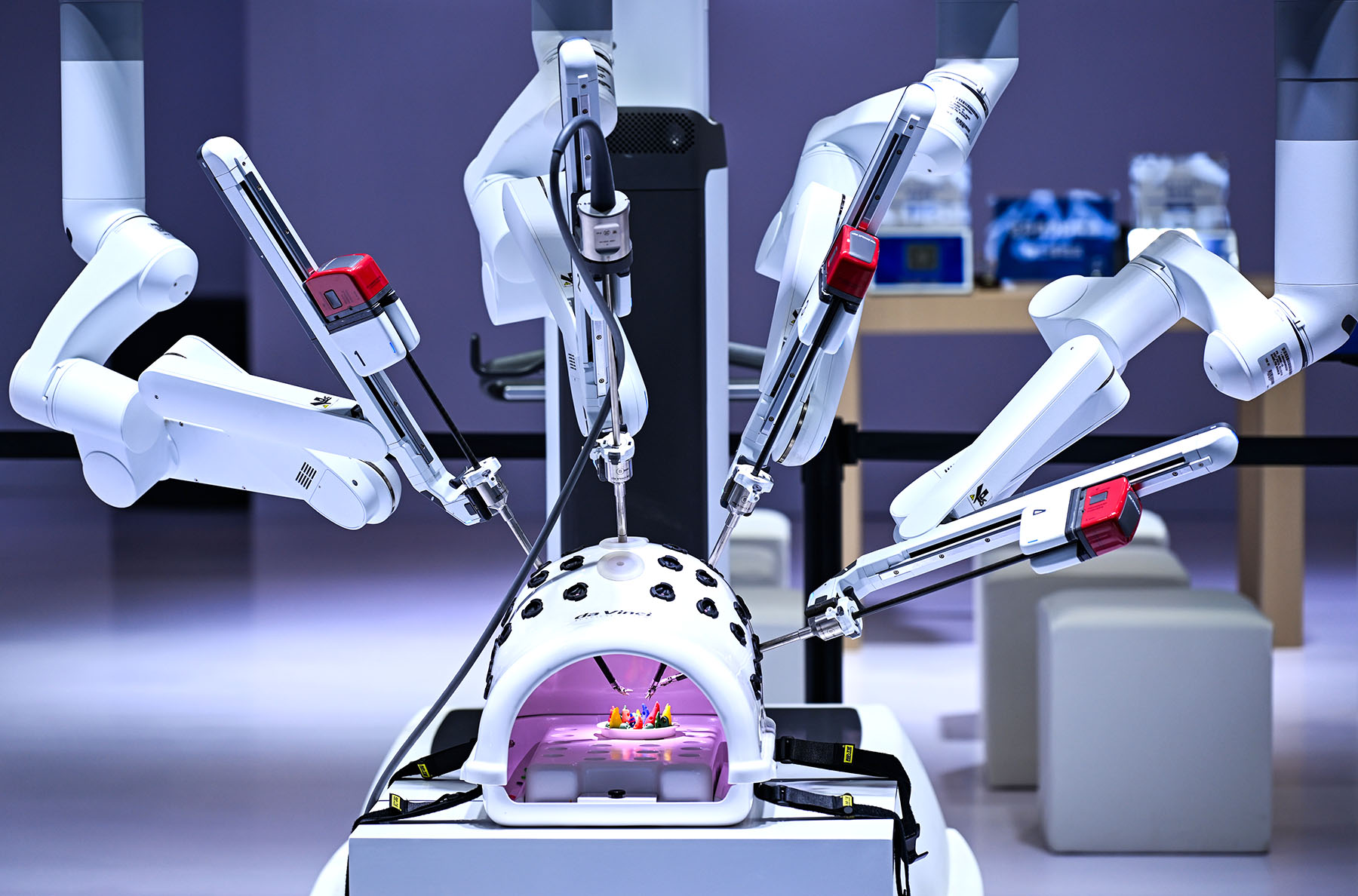
Now in its fifth generation, the system has been installed in more than 10,000 hospitals across 71 countries, according to industry figures, and has been used to treat more than 18 million patients worldwide. It entered the Chinese market in 2006, with more than 500 installations now across the country.
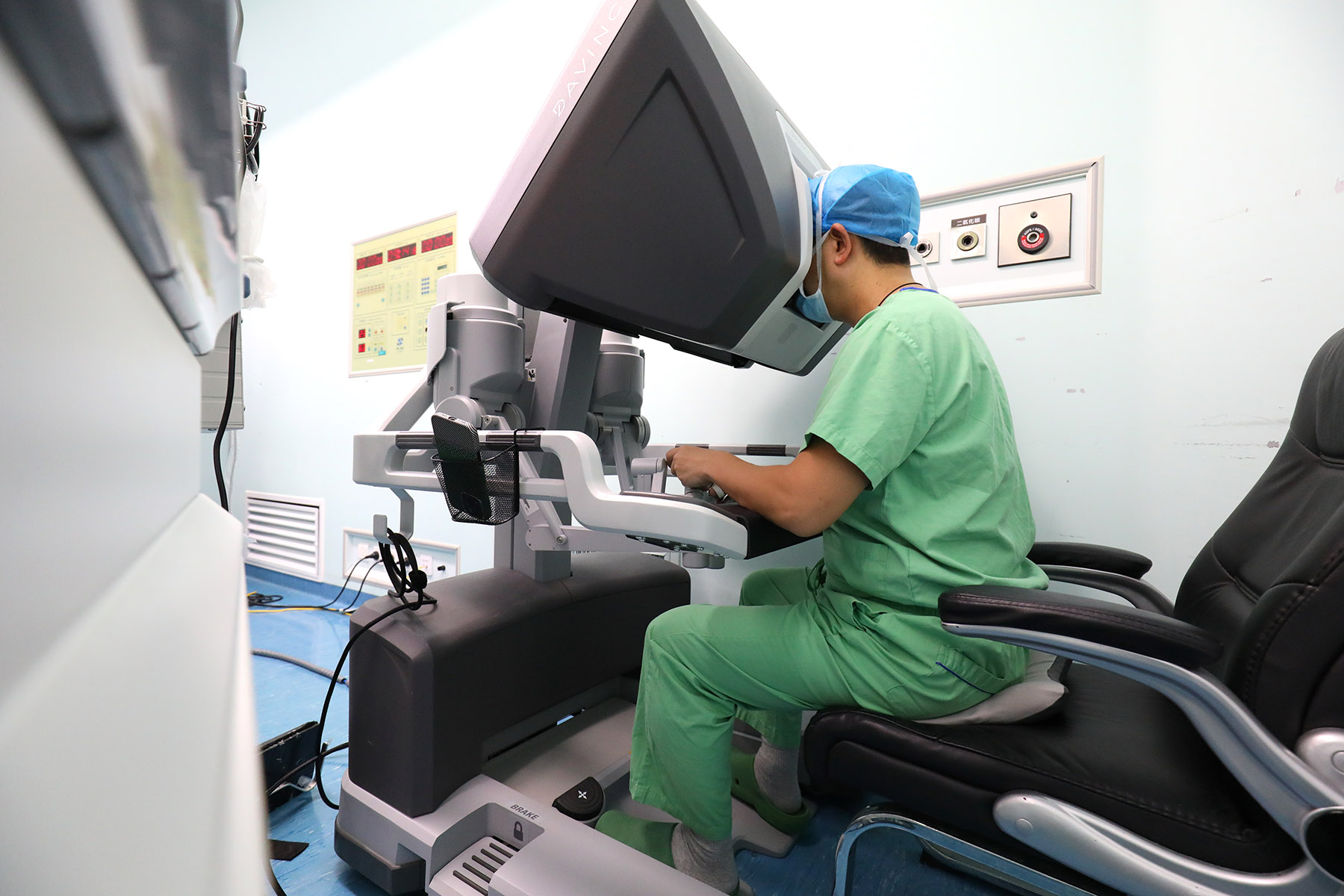
Despite frequent discussions about "robot surgeons" today's systems are not autonomous. They are sophisticated platforms entirely controlled by human surgeons.
"The robot does not operate on its own," said an industry insider familiar with the technology.
"The surgeon is still the decision-maker and commander," he said, adding that the robot is an extension of the surgeon's hands.
At a console, the doctor's hand movements are translated into ultra-stable mechanical actions, filtering out natural tremors and enabling delicate cutting and suturing that would be difficult to perform unaided.
Increasingly, AI is being layered onto these systems, not to replace surgeons, but to assist them. AI-based preoperative planning tools can generate high-precision reconstructions of a patient's anatomy in as little as 15 minutes, identifying lesions, critical structures, and risk zones before surgery begins.
"With more complete preoperative information and more stable execution during surgery, procedures become more controllable and predictable," one industry insider said."That's especially important for complex operations."
For patients, the benefits are tangible. Compared with traditional open surgery or conventional laparoscopy, robot-assisted procedures are associated with significantly less postoperative pain, shorter hospital stays and faster overall recovery.
"It could be as brief as one to three days," said a patient surnamed Wang, who underwent prostate surgery done with robotic assistance. "Being able to return to normal life sooner is very important to us."
His doctor said that the robot's nerve-sparing capabilities helped preserve urinary control and sexual function, outcomes that can dramatically affect quality of life.
Long-term data suggest that robotic surgery performs particularly well on functional outcomes, such as continence, while maintaining high overall safety standards.
At hospitals like Beijing United Family Hospital, da Vinci systems are now used across multiple departments, from thoracic and pediatric surgery to hepatobiliary and pancreatic procedures.
Yet even proponents of the technology emphasize a crucial caveat.
"At this stage, these surgeries still cannot happen without doctors overseeing everything," Wang's doctor said.
Policy push
China's rapid adoption of medical AI has been driven not only by technological advances but also by strong policy support. In recent months, Beijing and national authorities have rolled out a series of initiatives aimed at accelerating innovation.
The Beijing municipal government recently issued an action plan to support AI applications in healthcare. The Ministry of Industry and Information Technology followed with a special action plan promoting "AI plus manufacturing", explicitly calling for faster development of surgical robots, intelligent diagnostic systems, and advanced medical equipment.
"New policy dividends will continue to emerge this year," said Hu, the CCID deputy head.
"People online agreed that China's two hottest topics right now are commercial spaceflight and AI terminals, including medical devices," he said."The enthusiasm, however, has prompted pushback from parts of the medical community."
One of the most persistent concerns involves responsibility. In many hospitals, AI tools are already influencing diagnoses and treatment plans.
"When a system gives a clear recommendation, it's hard not to be influenced by it," said a physician at a major Beijing hospital, who was involved in the trial run and asked not to be named. "But if you override it and something goes wrong, the psychological pressure is enormous."
Patients, too, are uncertain. "We don't really understand what the machine says," said a relative of Wang who had prostate surgery. "In the end, we still rely on doctors. But if doctors are just following machines, what happens then?"
These questions become even more urgent as AI systems grow more complex and less transparent.
Peiling Yap, chief scientist at HealthAI, a Geneva-based nonprofit, said that global oversight frameworks remain fragmented — especially for AI tools developed internally by hospitals, which often fall outside existing medical device regulations.
"Responsible AI governance is not the task of a single department," Yap said. "It's a systemic challenge involving hospitals, developers, regulators, and patients."
Without coordinated progress in regulation, data governance, and infrastructure, she warned, AI in healthcare could fail to improve quality, and might even deepen existing inequalities between urban and rural regions or wealthy and underresourced hospitals.
Doctors train for new era
Chinese policymakers are acutely aware that technology alone cannot transform medicine.
Zhang Xu, director of digital health at the Beijing Medical and Health Science and Technology Development Center, said the government is focusing on AI's role in medical education and training, not just clinical care.
"Doctors' training is critically important," Zhang said. "That's why we support the construction of surgical robot training centers and the development of AI-assisted tools tailored to domestically produced equipment."
Unlike in the US, where commercial insurance plays a central role, China's health system is anchored by national insurance programs.
Zhang said policymakers are exploring ways AI could support both public insurance and emerging commercial plans, helping innovative products reach patients without driving up costs.
AI is also being deployed beyond hospitals, particularly in public health.
ALSO READ: China's medical tech wins over Middle East
"We want to use AI to build intelligent disease prevention and control systems," Zhang said.
"The goal is early detection — so we can sense the arrival of dangerous pathogens before they spread," he said.
Musk's prediction of robot surgeons surpassing humans may yet prove prescient. But in China's hospitals today, the reality is far more incremental.
Robots excel at stability, endurance, and precision. AI systems can process vast amounts of data at speeds no human can match. But judgment, including ethical, contextual and deeply human, remains harder to encode.
For now, doctors are still indispensable, not only as operators of machines but as interpreters of uncertainty.
"The danger is not that AI will replace doctors overnight. It's that we may slowly forget what doctors are supposed to be able to do on their own," said Zhang Wenhong, a leading infectious disease expert and professor at Fudan University.
Qi Zichen contributed to this story.
Contact the writers at weiwangyu@chinadaily.com.cn
