

Father and son harness tradition and technology to safeguard forest's future
Editor's note: As protection of the planet's flora, fauna and resources becomes increasingly important, China Daily is publishing a series of stories to illustrate the country's commitment to safeguarding the natural world.
On a recent winter morning, Chen Botao launched his drone over a forest farm in Xichuan county of Nanyang, Henan province. On his drone controller's display screen, a live feed showed hundreds of trees stretching toward a reservoir's edge. It took the drone 30 minutes to complete a patrol task around the forest.
His father, Chen Renfan, a veteran forest ranger, remembered when checking the same forest meant leaving before dawn, making their way through the woods, climbing the steep slopes, and not returning until the light failed. A patrol that now takes his son half an hour once took him an entire day.
For over four decades, the older Chen was part of a team that did the unthinkable: they turned a dust bowl into a forest, one bucket of soil at a time.
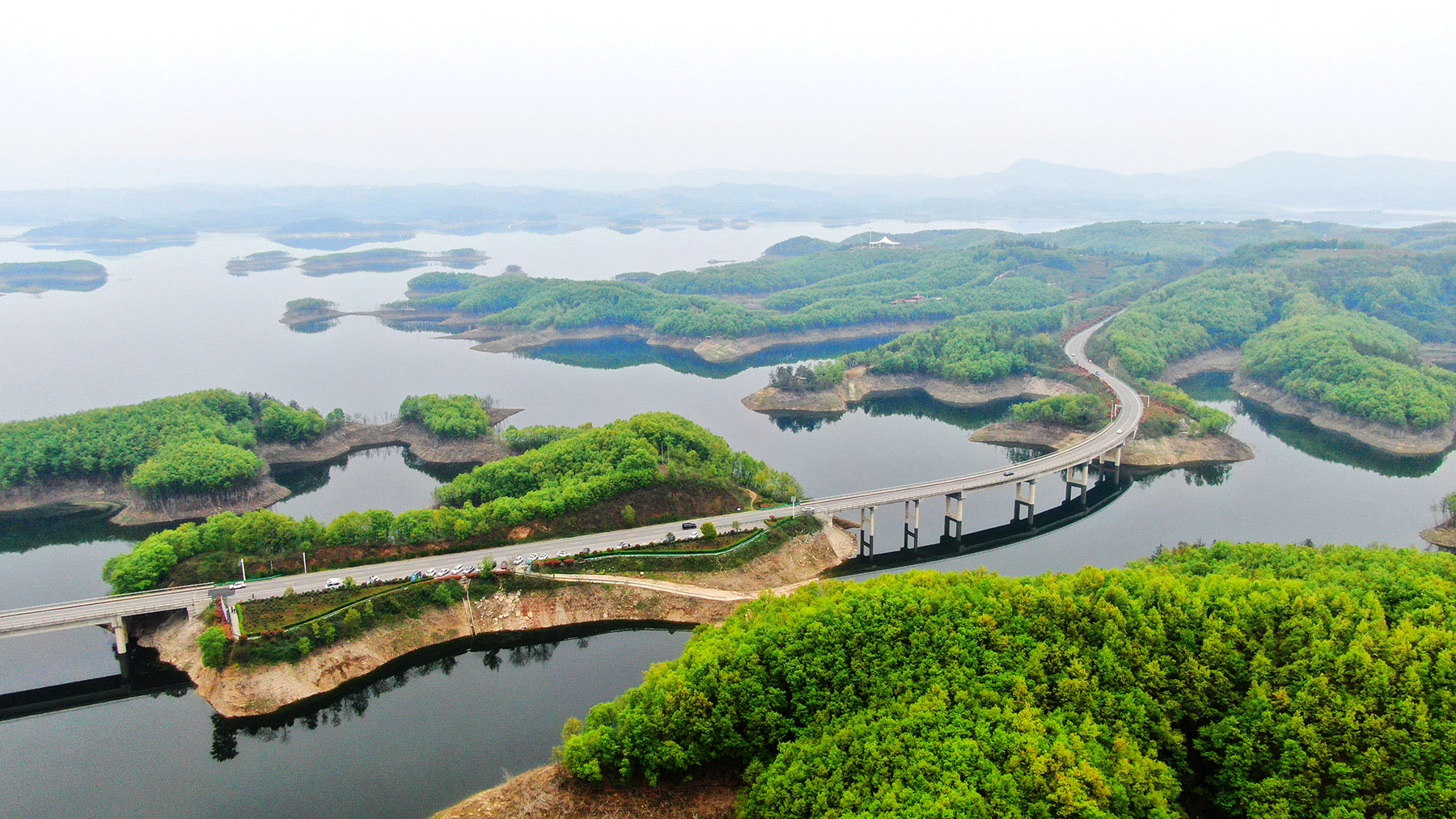
Today, the Taizi Mountain Forest Farm stands as a barrier to the Danjiangkou Reservoir, which stretches across Henan and Hubei provinces and is a source of China's South-to-North Water Diversion Project, providing water to northern regions more than 1,000 kilometers away, including Beijing and Tianjin.
READ MORE: Under the blossoms, a village blooms
Before the water begins its journey to North China, it passes through the farm. What happens on this 22-square-kilometer patch of forest land affects the drinking water of millions.
More than 40 years ago, this was a wasteland.
When Chen Renfan arrived at the forest farm in 1984 at age 22, the mountains were bald. Less than 30 percent of the land had vegetation. The area suffered from severe rocky desertification, meaning nothing would grow there, Chen recalled.
"The mountains had no water, no electricity, no roads," Chen said.

The first group of forest rangers, all in their 20s, built shelters from tree branches and grass mats. They brought food from home, and later learned to farm small plots just to eat.
Of the more than 100 young people who initially came, only about half stayed.
The ones who remained faced the problem of how to plant trees on a rocky mountain.
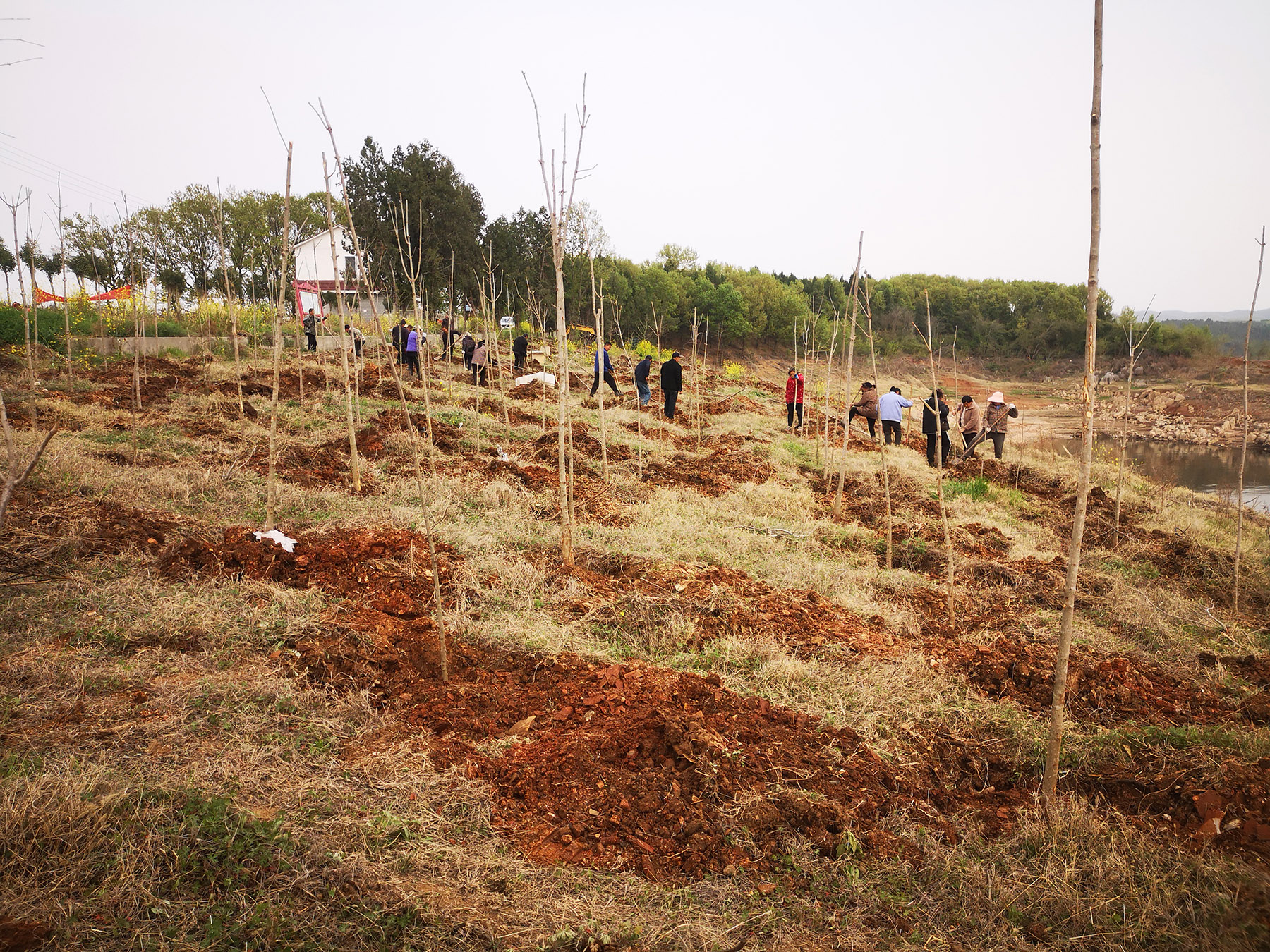
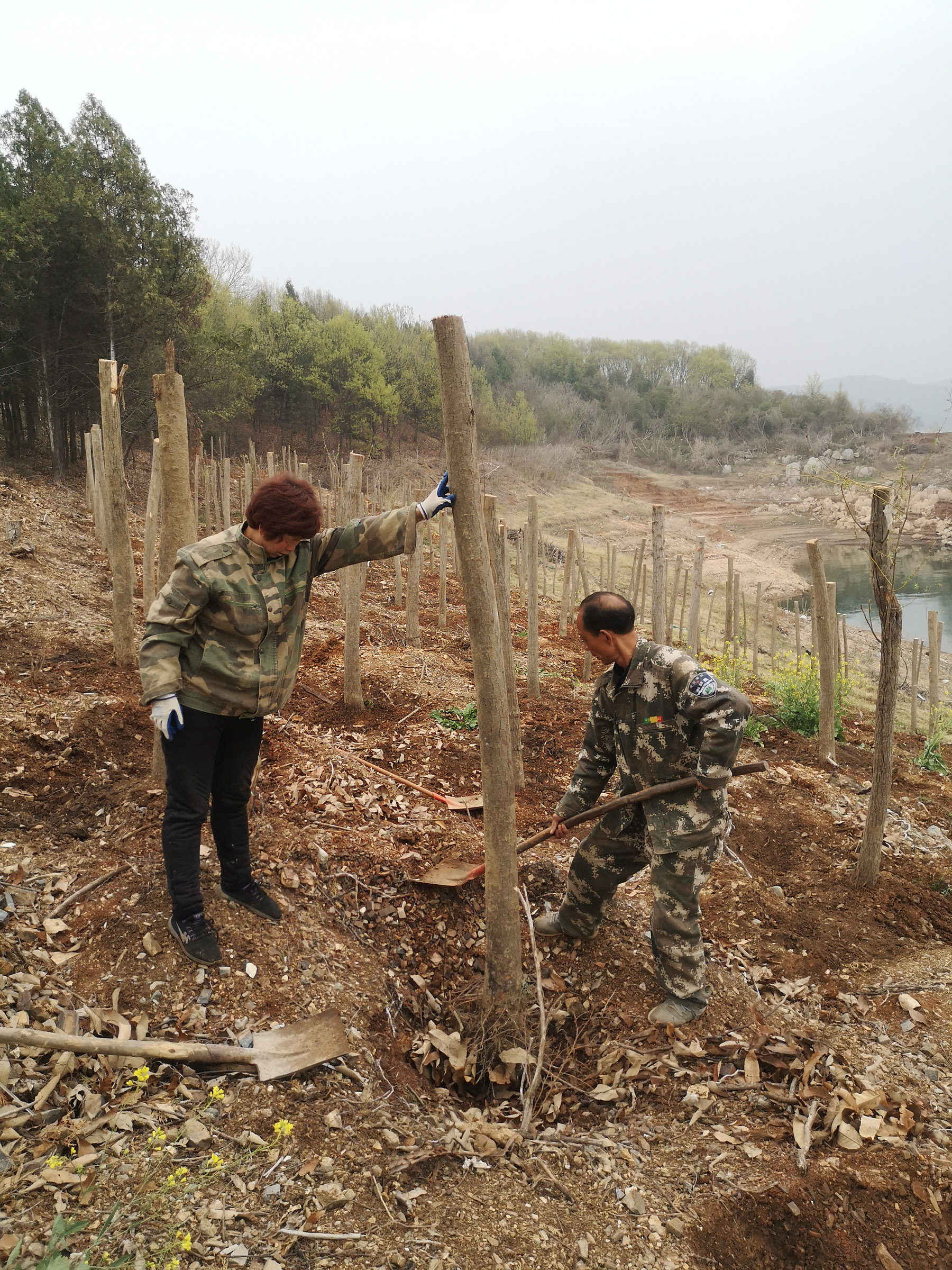
Chen Renfan and his colleagues hammered holes into stone and carried soil up the mountain in buckets to fill them. They carried water from below to irrigate the seedlings. To keep young trees from being washed away during rain, they used rocks to build small barriers around each root.
It was the kind of labor that wears out not just shoes but people as well. Over the years, Chen Renfan went through more than 300 pairs of canvas shoes and wore out 34 pieces of clothing. He walked over 50,000 kilometers on patrols.
The terrain is rugged, and the farm's six work areas are far apart. Detours between mountains can span dozens of kilometers. To make it efficient, the team uses boats along the reservoir's shore to reach the mountains.
Chen Renfan said: "The mountains lacked established paths and were filled with rocks. After the rain, the ground became slippery and muddy, making it easy to trip and fall. Injuries and broken bones were quite common."
Sometimes, when sudden heavy winds or fog trapped them on the water, they would spend the night on their small boat, cooking fish they'd caught from the reservoir.
"We found ways to seek joy amid the hardship," Chen said.
By the numbers, the transformation is stark. The farm's forest coverage has jumped from under 30 to 92 percent. The volume of living trees has grown from less than about 25,000 cubic meters to over 100,000, according to Chen.
Li Guangyi, 59, was one of those who stayed.
"Back then, we were planting trees all year round," he recalled.
"Now, we mainly plant just once in March. The rest of the time, we just fill in gaps. Mass planting isn't necessary anymore," he said.
For years, Chen Renfan had a worry. His generation was aging out. Young people weren't coming. Who would watch the forest after they retire? He thought of his son, Chen Botao.
"When I was a senior in college, my father mentioned he hoped I would work at the farm," the younger Chen, now 36, recalled.
"I was young then. I didn't think that far ahead. I just felt this place was too remote. I didn't want to come," he said.
After graduating in 2012, Chen Botao took a stable job at the local aquatic products bureau in Xianghua town, Xichuan, about a 40-minute drive from the farm. His father, meanwhile, kept up a quiet campaign. Whenever university students came to the forest farm for visits or research, Chen Renfan would talk up the place, explaining the importance, hoping to attract educated young people to join.
"He has deep feelings for this place. If no young people come, it might decline," Chen Botao said of his father.
The son began to see the farm differently, not just as his father's workplace, but as his life's work.
In 2024, when Chen Renfan retired, Chen Botao made the decision. He applied for a job transfer to work as a forest ranger at the forest farm.
The younger Chen now serves as the head of the Taizi Mountain Forest Farm. He brought something his father's generation never had: a drone.
"I can drive to a spot close by, and then use the drone to inspect the mountain," he said. Three drones are currently used for mountain patrols.
He has plans for additional technologies, such as fixed cameras at critical points that can instantly detect fire risks.
Chen Botao said that his father's persistence is a crucial source of support for his decision to stay at the forest farm.
"He doesn't know much about forest protection technology, but he strongly supports trying innovations. Having experienced the hardships of manual forest protection, he understands the importance of technology," he said.
ALSO READ: Volunteers key to advancing modernization
Liu Tianhao, a 38-year-old forest ranger, said he has benefited from the technology.
"Patrolling the mountains has gotten a lot easier now. The truck can go up to the mountainside or even to the top, where I can launch the drone to cover a large area. The drone offers a clear bird's-eye view, making it easy to spot any fire risks," he said.
"I remember when I first returned to work as a forest ranger, there was no internet or communication in the forest, and the mountains were both remote and monotonous. I've seen this place evolve from having no equipment at all, relying solely on foot patrols, to now benefiting from improved technology with vehicles and drones. That has greatly increased work efficiency. I believe that as long as we do the simplest tasks well, which is to protect this forest. That's enough."
The younger Chen said: "We're currently short on young talent. Only two, including me, who were born in the 1990s, are here. To ensure the forest farm thrives, we'll focus not only on excelling in forest protection and water conservation but also on expanding orchard and medicinal herb industries. We aim to boost economic benefits to make it more appealing for young people to join us."
Contact the writers at lihongyang@chinadaily.com.cn
