

Master of Shoushan stone carving brings artistry to reality
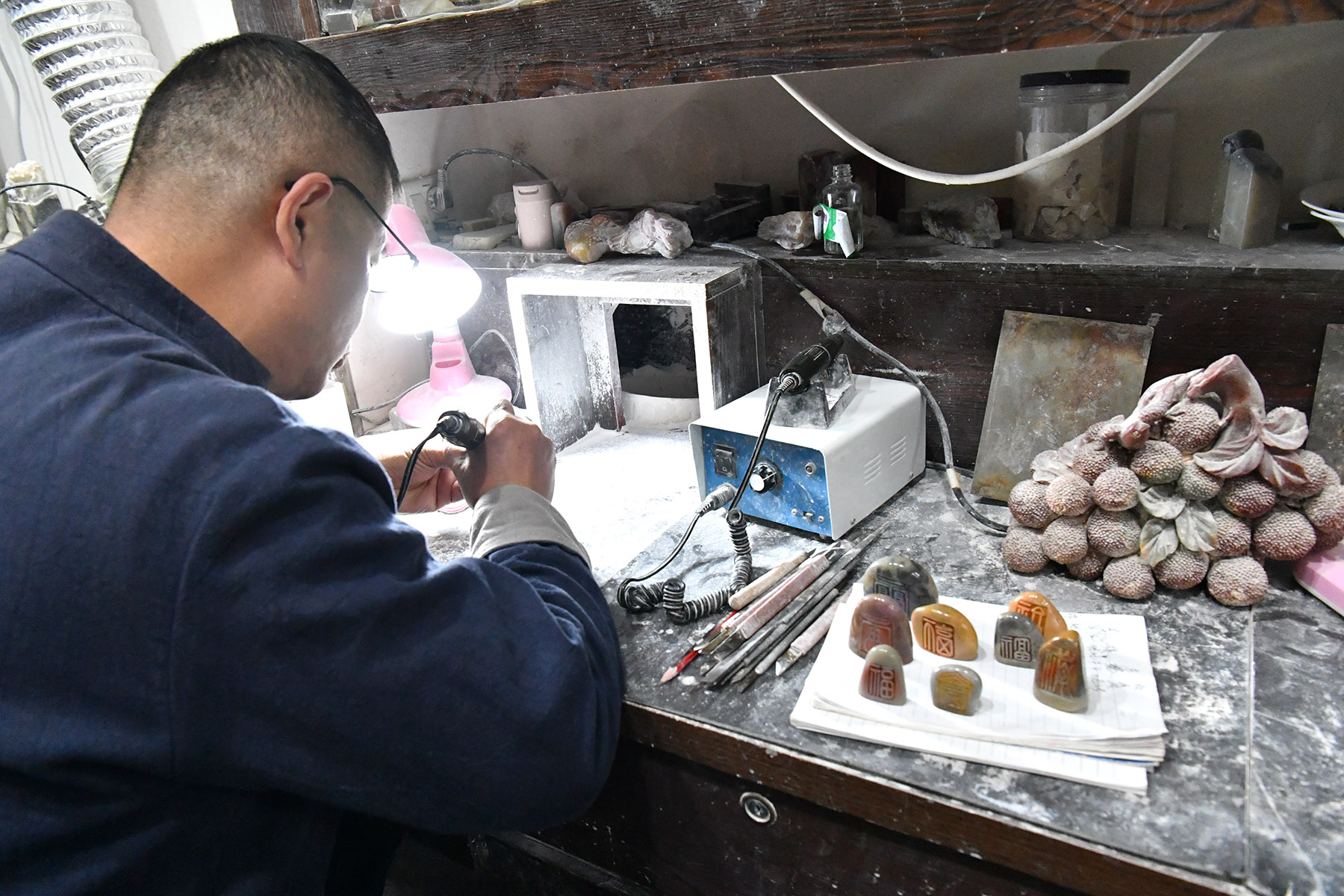
Sun Zhaoyong, a master of Shoushan stone carving, once pranked his son with a peculiar creation: a "stone burger". He placed the carved sculpture on the family dining table, waiting for a reaction. When his son reached out to take a bite, only to find the "food" heavy and cold, the joke was revealed.
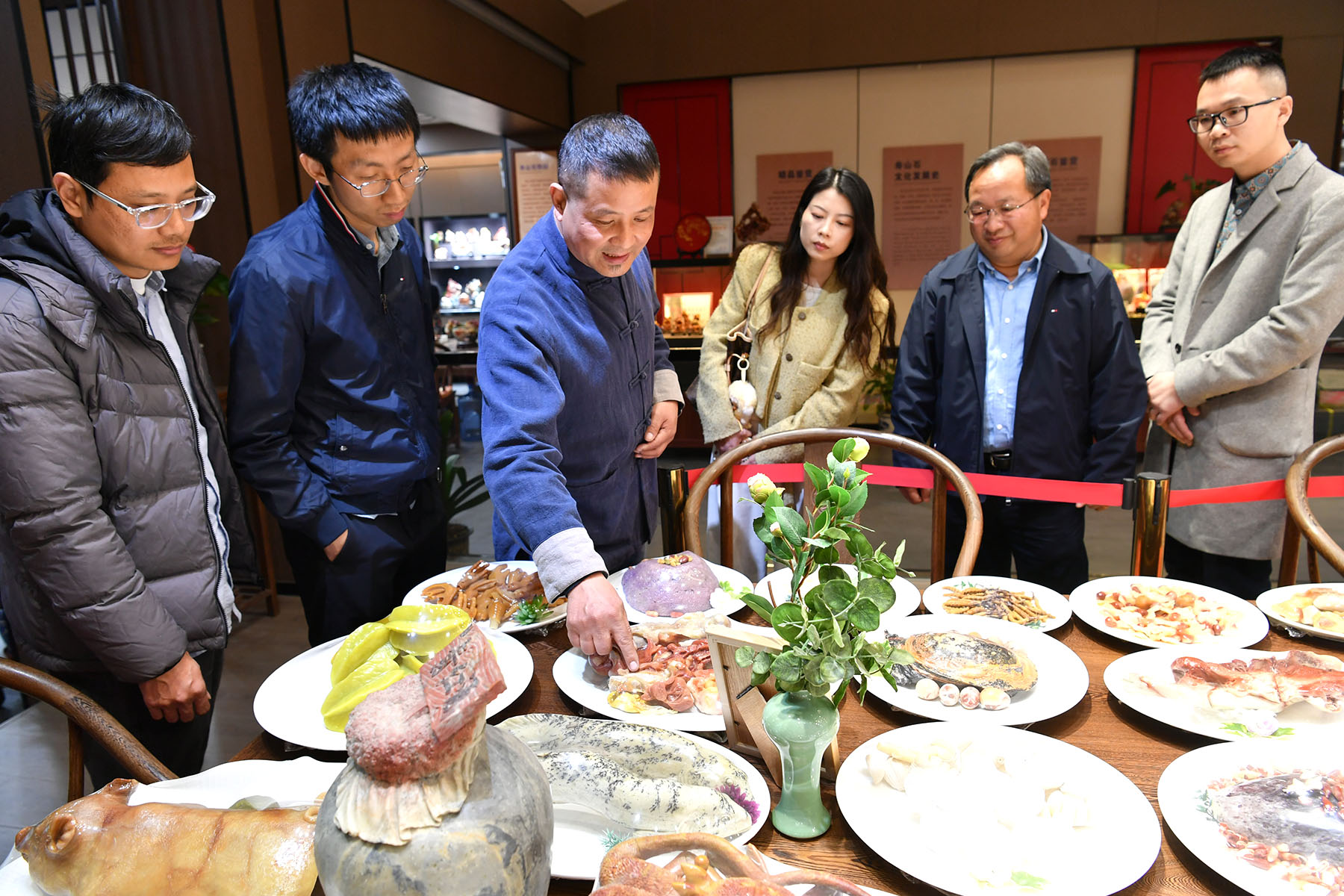
That lifelike burger is part of Sun's Manchu-Han Imperial Feast. Rather than a strict historical replica, the 20-year project borrows the name of the legendary banquet from the Qing Dynasty (1644-1911) to showcase the staggering scale and variety of his stone-carved creations.
Born in 1972 into a respected carving family, Sun spent his childhood playing in his grandfather's factory. Immersed in carving from a young age, he naturally developed a passion for the craft. As he grew older, he formally apprenticed under his grandfather.
READ MORE: CIIE hailed for showing ancient Chinese crafts
Over 36 years, Sun mastered both carving in the round and relief carving, eventually developing a unique expertise in still-life sculpture.
The medium for his art, Shoushan stone, is a precious material endemic to Fuzhou, capital of Fujian province. Mined in Shoushan township, it is prized for its ideal density and warm, wax-like luster. "It is translucent yet reserved, much like a traditional Chinese ink wash painting … ethereal and leaving infinite room for imagination," said Sun.
Renowned for its natural beauty, Shoushan stone appears in over 200 shades, including red, yellow, white and purple. The history of Shoushan stone carving dates back 1,500 years, when the stone became a favored material for the seals of ancient scholars and emperors, including Emperor Kangxi of the Qing Dynasty.
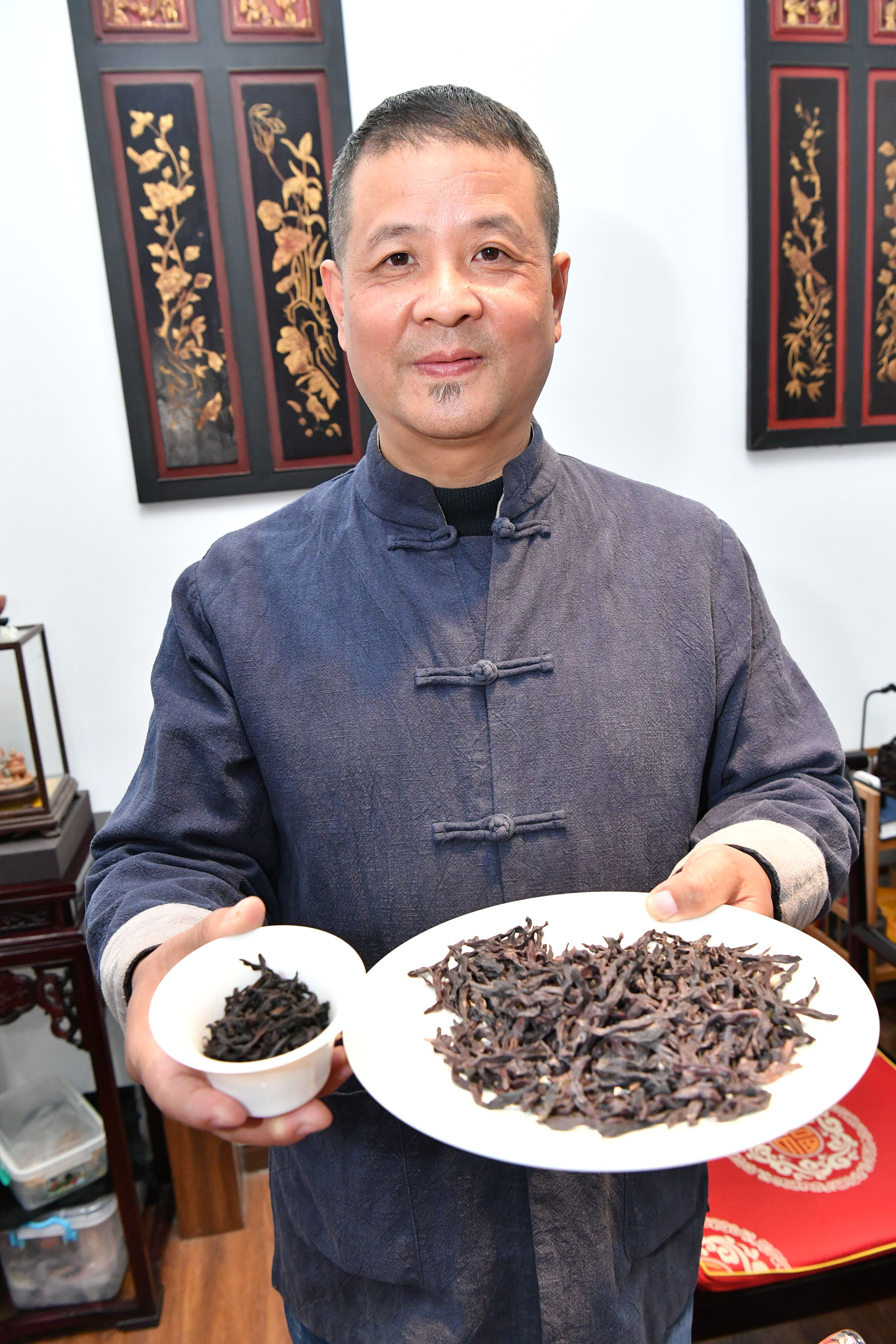
In 2006, Shoushan stone carving was listed as a national-level intangible cultural heritage, and Sun is recognized as a provincial-level representative inheritor of the ancient art.
Sun's journey into carving food began in the 1990s, inspired by his wife. Noticing her love for blood clams, he was struck by the visual contrast between their stark white shells and crimson meat. He realized the raw stones he had on hand were perfectly suited for carving clams.
The inspiration to create an entire banquet came in 1995, when Sun happened upon an online report about an exhibition featuring a feast carved from rare stones from the Xinjiang Uygur autonomous region. He decided to leverage the rich colors and workable texture of Shoushan stone to recreate the legendary Manchu-Han Imperial Feast.
Sun spent decades meticulously carving dishes. In 2013, he achieved a Guinness World Record for the "collection of stone-carved dishes with the highest number of unique items", with 143 distinct plates. Today, that number has climbed to over 160.
The path was not without obstacles. Traditional Shoushan carving typically features landscapes, figures, flowers and birds, favoring elegant, scholarly aesthetics. When Sun began carving roasted suckling pigs, chestnuts and fish balls, his family and peers were baffled, believing such subjects lacked the commercial value of traditional motifs.
But Sun held firm. "I wanted to create something that belongs to our era," he said. "We cannot remain stuck in the past; we must uphold tradition while pursuing innovation."
His philosophy required stoic patience. To perfect his "roasted suckling pig" carving, Sun purchased six real roasted pigs to carefully study the changes in color and texture of the crispy skin. He became a regular at wet markets, filling notebooks with observations on the shapes and textures of ingredients before returning home to refine his technique.
According to Sun, the biggest challenge is stone selection. The raw material must match the shape and color of the food, but more importantly, he uses ingenuity to give the "dish" life. Several times, upon finding a more suitable stone, he unhesitatingly scrapped a finished piece to carve it again from scratch.
Sun's banquet features general delicacies like white-cut chicken and distinct Fujian specialties like fish balls and the renowned seafood "Buddha Jumps Over the Wall" — a luxurious traditional soup famous for its rich variety of premium ingredients.
His work also serves as a vehicle for cultural exchange. In 2019, during an exhibition at a Mazu museum in Taiwan, he showcased a stone carving of bones — symbolizing that people across the Taiwan Strait are "connected by bone and tendon" with residents of the Chinese mainland and share the same roots.
Regarding his inclusion of Western foods like hamburgers, Sun employs a clever strategy for international audiences. "I use familiar objects to make foreigners stop in their tracks," he said. "Once their interest is piqued, they want to hear the Chinese stories behind the art."
Looking ahead, Sun has clear ideas about passing on the heritage. "Stone carving should return to daily life," he said. "If we create functional pieces that connect with modern living, like paperweights, there will be a market. And where there is a market, young people will come to learn."
Recently, Sun has expanded his scope beyond food to other local cultural symbols, such as Fuzhou's famous jasmine tea, aiming to integrate Shoushan stone carving into the contemporary lifestyle.
Someone once offered Sun 10 million yuan ($1.46 million) to buy the entire stone feast. He refused. To him, the carvings are more than just his creations; they represent the artist's courage to innovate and his reverence for traditional culture.
Ye Ying contributed to this story.
Contact the writers at zhangyi1@chinadaily.com.cn
