

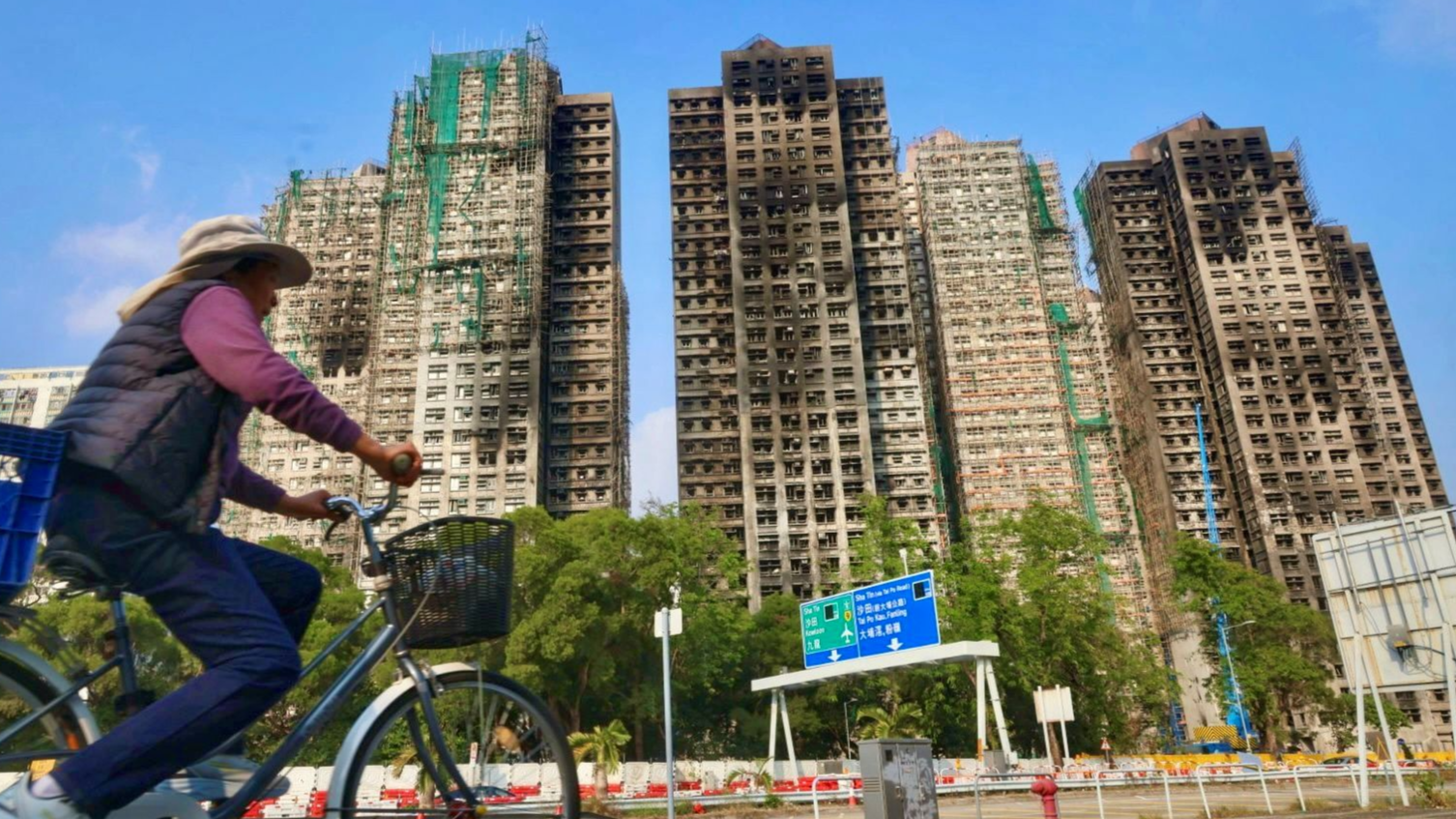
Hong Kong’s 2026-27 Budget allocates billions of Hong Kong dollars to upgrade fire-safety systems and support post-Tai Po fire relief and rehabilitation efforts.
In his Budget address on Wednesday, Financial Secretary Paul Chan Mo-po announced a HK$4 billion ($511.5 million) reserve to fund the government’s HK$6.8 billion buyback of the seven residential high-rises ravaged in November’s Wang Fuk Court fire. He also unveiled an allocation of HK$3 billion to reform a citywide building repair subsidy program to help property owners meet safety requirements.
 To combat bid-rigging as part of broader building fire-safety reforms, the government earmarked an additional HK$300 million to the Urban Renewal Authority’s “Smart Tender” platform in the second half of this year. The upgraded program will offer property owners professional advice and access to a more rigorous prequalified list of consultants and contractors. An additional HK$1 billion will be funneled into the government’s Lift Modernisation Subsidy Scheme.
The government is also set to roll out enhanced tax relief and allowances in the coming fiscal year to ease households’ cost-of-living pressures. These include a reduction of up to HK$3,000 in the salaries tax and profits tax, an increase in the basic allowance to HK$145,000, and a rise in the allowance for married couples to HK$290,000.
READ MORE: 2026-27 Budget: Sustaining HK's growth momentum
Child allowances will add HK$10,000 to reach HK$140,000, while dependent parent and grandparent allowances will increase by between HK$2,500 and HK$5,000, depending on the dependent’s age.
Chan said that the Budget prioritizes supporting households and local businesses while maintaining sound fiscal health.
Legislator Bill Tang Ka-piu praised the focus on reshaping the city’s building repair industry, which he regards as one of the city’s “foremost tasks” after the Tai Po fire that claimed 168 lives.
“The billions earmarked for building repair subsidy review and enhancement, as well as the Smart Tender platform upgrade, indeed, demonstrate the government’s strong resolve to push forward building repair reforms,” Tang told China Daily.
The welfare sweeteners benefit a broad range of groups — including basic salary earners, working families, married couples, and caregivers of children and the elderly. However, Tang urged the government to place greater emphasis on family support and child-rearing in future policies to promote a more family-friendly and child-friendly society.
Yau Yung, associate dean of Lingnan University’s School of Graduate Studies, said lift modernization subsidies are a win-win investment, enhancing daily safety and improving mobility for the elderly and the disabled.
ALSO READ: Tai Po fire: Budget allocates HK$4b for long-term resettlement
Another lawmaker, Lam Wai-kong, credited the government’s prudent financial management for the Budget’s return to fiscal balance, which recorded a HK$51.3 billion operating surplus for the 2025-26 fiscal year.
Lam said that although the fiscal surplus is modest, it allows for meaningful tax relief that will put money back into taxpayers’ pockets.
The Budget also outlined initiatives to accelerate the city’s green transition, including launching a five-year plan to upgrade recycling infrastructure, promote electric commercial vehicles, and develop sustainable agriculture and fisheries industries.
Chan Pok-chi, a lawmaker representing the agriculture and fisheries sector, said such measures are in line with national goals regarding green transformation.
Contact the writers at wanqing@chinadailyhk.com
