

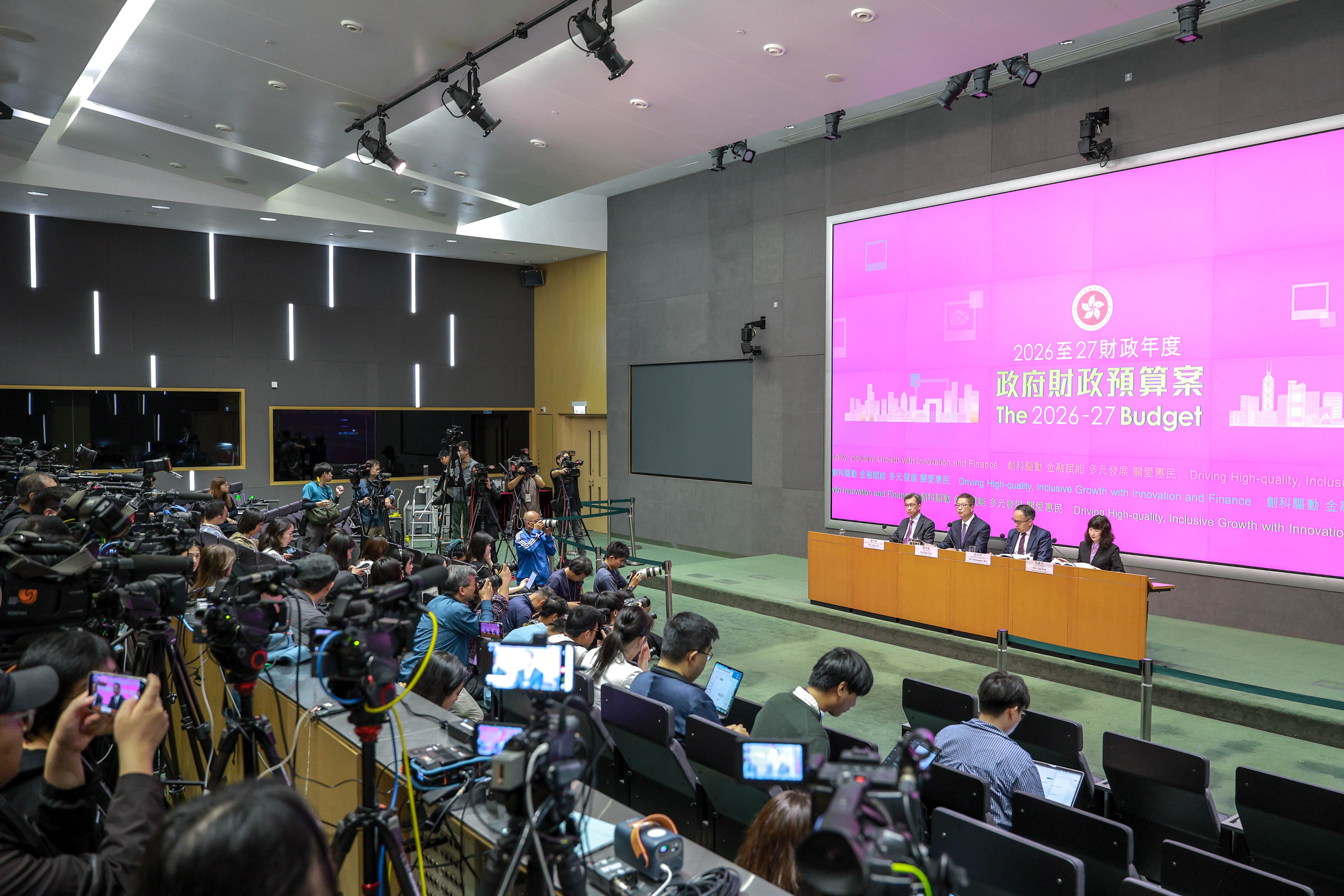
Technological innovation and commercialization are among the top priorities of the Hong Kong Special Administrative Region government’s 2026-27 Budget, as the city strives to pursue new drivers of economic growth and foster industrial transformation and innovation.
Financial Secretary Paul Chan Mo-po on Wednesday unveiled a raft of initiatives to further support Hong Kong’s innovation and technology (I&T) sector, with a particular focus on artificial intelligence.
“We are pressing ahead with the industrialization of AI and deepening its integration across various industries, while encouraging wider AI application, thereby achieving the target of adoption and utilization by all,” he said.

Chan said he will chair a new“AI+” committee to formulate strategies, ensuring AI can empower industrial transformation and development. The committee, which will comprise experts, academics, and industry representatives, will initially center on life and health technology and embodied AI.
He added that the Hong Kong Artificial Intelligence Research and Development Institute Co Ltd, proposed in the chief executive’s Policy Address last year, will start operations in the second half of this year, aiming to advance the transformation of research and development outcomes.
Meanwhile, the government will earmark HK$100 million ($12.8 million) to steer AI adoption across departments, accelerating its own digital intelligence transformation and enhancing efficiency.
An additional HK$50 million will be reserved to encourage the wider and responsible use of AI in society by funding public organizations, enterprises and tertiary institutions to host AI-themed courses, seminars and competitions.
ALSO READ: Heavyweights hail ‘forward-looking’ budget as ‘rising tide’
Francis Fong Po-kiu, honorary president of the Hong Kong Information Technology Federation, said the Budget plan has been set in the “right direction”.
“The government no longer regards AI merely as an area of innovation, but is actively utilizing it to drive industrial transformation. … This shift in thinking — from ‘technological innovation’ to‘industrial policy’ — is an important step,” Fong said.
The Hong Kong Institute of Human Resource Management welcomed the initiatives, saying the funding support for public events is a good start in promoting AI education. However, the organization added that the HK$50 million earmarked remains “far from adequate” to support the full transition across sectors in AI-driven operations, organizational transformation and workforce upskilling.

Separately, the HKSAR government plans to invest at least HK$30 billion to accelerate the development of several zones under the Northern Metropolis project.
The financial chief said the government will seek Legislative Council approval for a HK$10 billion injection into the Hong Kong Park in the Hetao Shenzhen-Hong Kong Science and Technology Innovation Cooperation Zone. Authorities will also engage the market to expedite the disposal of the remaining land parcels in the park’s first phase, step up support for startups, and set up a venture fund.
Kenny Shui Chi-wai, vice-president of think tank Our Hong Kong Foundation, welcomed the move but suggested the funds be directed toward building world-class research facilities — such as shared laboratories and supercomputing centers — and dedicated infrastructure for cross-border data flow.
For the San Tin Technopole, which will provide industrial space for prototyping, pilots and mass production, the government plans to establish a dedicated company within this year, and allocate HK$10 billion as initial capital to accelerate the development and leverage market resources.
In addition, a HK$10 billion Innovation and Technology Industry Oriented Fund is expected within this year, aiming to channel market capital into emerging domains, such as life and health technology, AI and robotics, and other future industries.
READ MORE: HK to set up first national manufacturing innovation center
The Budget also includes plans to further nurture emerging industries such as the low-altitude economy, aerospace, new materials, and quantum technology.
The Hong Kong-based Chinese General Chamber of Commerce said these measures will help enhance the city’s competitiveness and bolster industrial diversification. The chamber added that it hopes authorities will continue to improve the I&T ecosystem, strengthen the clustering of related industries, and, by attracting investors from the Chinese mainland and overseas, promote the commercialization of scientific research outcomes to create more new growth engines for Hong Kong’s economy.
