

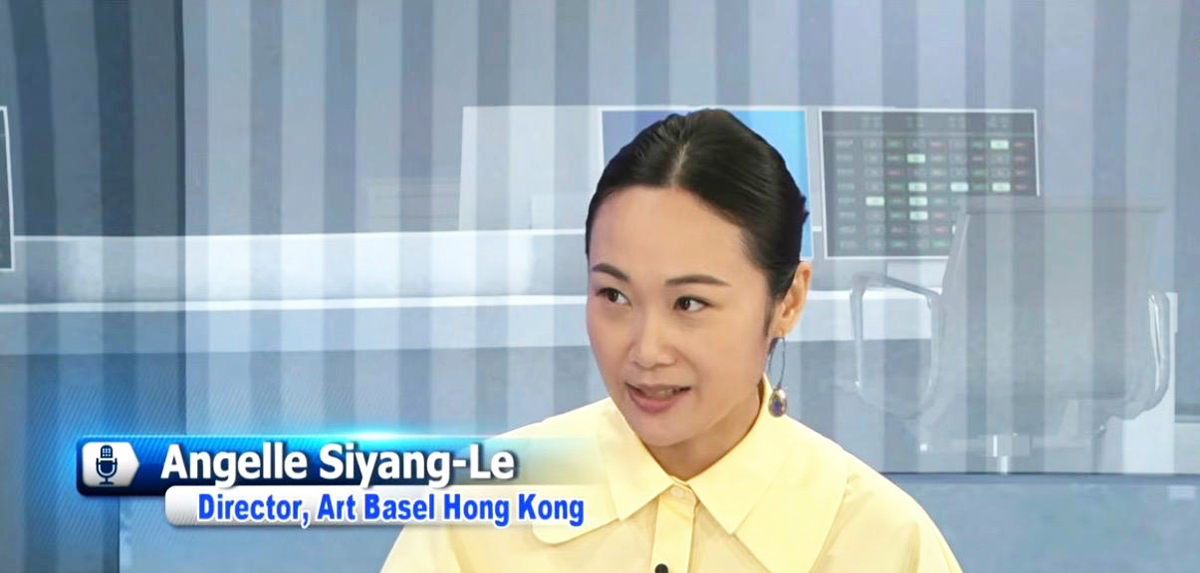
Angelle Siyang-Le, director of Art Basel Hong Kong, is on the show to talk about how Hong Kong can become the cultural hub of Asia.
Check out the full transcript of TVB’s Straight Talk host Eugene Chan Kin-keung’s interview with Angelle Siyang-Le:
Chan: Welcome to Straight Talk. I'm Eugene Chan. Joining us is Angelle Siyang-Le, director of Art Basel Hong Kong. She leads the direction of Art Basel's flagship show in Asia, shaping its growth and future development. Angelle has been with Art Basel since 2012, overseeing its expansion in Greater China, as well as show strategy and gallery relations. She played a key role in sustaining the art community during the pandemic, leading Art Basel's first in-person spotlight event in Hong Kong in 2020. With a background spanning curatorial work, private collections and artist-led initiatives across Asia, Europe and the Middle East, she brings a truly global perspective to Hong Kong's cultural landscape. Welcome to the show, Angelle, for the first time!
Le: Thank you, Eugene.
HK art scene: Context & evolution
Chan: Firstly, I must congratulate you on hosting another successful Art Basel last month. I believe we had the first one in 2012. And you brought over 240 galleries from 40 countries. As all the viewers know, Hong Kong has been a global financial center. That has been a much-accepted fact, but now with this event, it makes Hong Kong a new role as what we call a meeting point for the global art world. Can you share with the viewers how all this happened and how Hong Kong became such a serious player?
Le: Yes, well, I have to say that really thanks to the city, which has been working with us relentlessly since 2013, where we had our first Art Basel Hong Kong show. And back then, the commercial side of the art sector was leading much more because the auction houses had actually have been in Hong Kong for decades before Art Basel stepped in. And the leading gallery, Gagosian, has also just come to Hong Kong a couple of years before we came. And the time when we first stepped in, we saw the potential of Hong Kong being a leading hub in Asia. And we know that West Kowloon's M+, Palace Museum has always been in the plan. So, we had the belief that the public sector would catch up tremendously, which it did in the past years. For the past 10-plus years, the private sector as well as the public sector has grown together very well towards today's global hub position.
Chan: Well, Angelle, I believe, Art Basel is not only stationed in Hong Kong because we had a very piece of good news from Secretary of Rosanna Law that we have signed a five-year contract, another five-year contract. And I believe there are other major cities in the world that also have Art Basel. Maybe you can share with the viewers.
Le: Yes, actually Art Basel has five shows around the year, starting from February in Doha, Qatar, March in Hong Kong, Basel in June, our mothership in Switzerland, Paris in October, and we're rounding up the year in Miami Beach in December.
Chan: Right. For most people, art is very abstract. Not only that, they always feel that it's for the privileged and for the niche group in any community. Do you agree?
Le: That's always the perception of which are the group of people can buy art. However, I think over the years we have observed that anyone can be an art lover and anyone can be inspired by art. And actually, collectors can also come from different parts of the world, whether you are the ultra-high network or you are just saving up to buy a piece of something that’s hung in your own home. So, actually, art is a universal language, and then we do believe that art is for everyone.
Chan: Right. Just now, when we were in the makeup room, we were saying that Hong Kong is known to be a cultural desert to many people. And you told me that when you first came to Hong Kong, a taxi driver said, “Wow, you're in this trade. How are you going to survive?” So, how have you done in the last, what, over a decade? How have you seen Hong Kong change?
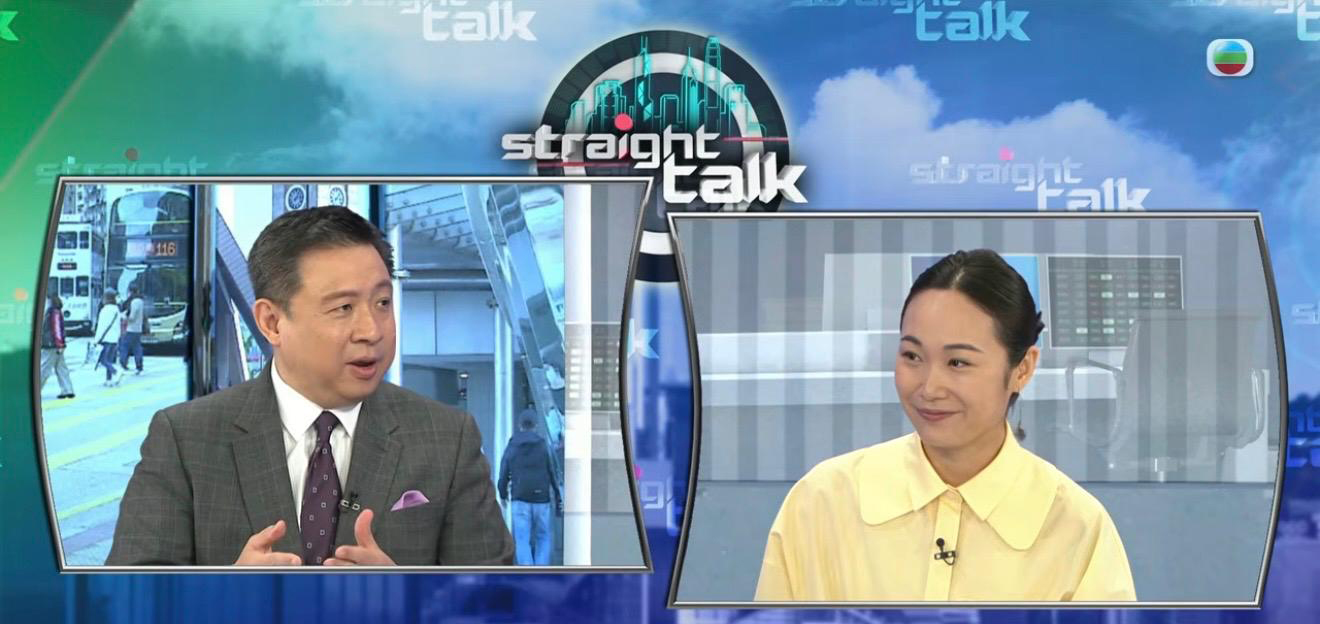
Le: Yes, that is the very reason why we believe that art is for everyone, because we really saw that the enthusiasm in Hong Kong towards modern and contemporary art is huge. Every art fair, we almost always sell out the weekend tickets before the weekend hits. And we always see long queues waiting for it to get into the halls, just from the general public. Everyone in Hong Kong has this open mind to accept new culture and contemporary art. It's not something that you will see every day in a city like Hong Kong. However, everyone in Hong Kong is willing to learn. So, we want to be more inclusive and more diverse in terms of our programming, our content, so everyone gets to enjoy a piece of contemporary art when Art Basel comes to the city.
Chan: Right, would you say that the audience or the sort of ones who joined, do you see more and more young people or even first-time sort of first-time person trying to see what it is all about? Do you see that?
Le: Yes, I have to say that Hong Kong, out of all our shows around the world, is the show that attracts the highest number of younger generation's art lovers. Every year we see that the increase of the younger generation's audience coming into our fairs, no matter whether it's from our collectors or simply just our students.
Chan: Would you say in Hong Kong, I mean we always say ourselves we are at crossroads between the East and the West culture. Do you see that sort of taste shaping the taste and curation of the work that people like?
Le: Absolutely. Hong Kong is a melting pot of culture. That is also one of the reasons why we chose to set foot in Asia in Hong Kong because we feel that with this open mindset people will be more willing to accept what contemporary art can bring to the city. And it's now a proof that art is not only for aesthetics, it's not only for pleasure, but art has such a great economic impact in the city as well. And that's also why art is attracting people from all different industries and sectors.
Chan: Since you mentioned it has sort of an economic value, I'm going to ask you how all these economic downturns in the whole world, plus all these geopolitical conflicts, how is that affecting the art world? Is it making it better or making it more challenging?
Le: I have to say that art always brings hope to people and I always call it the art market is the sentimental market. Meaning that people always find inspiration from art and people always want to own a piece of art. Having that in their own home or in their private collections means something to them. And that is also why it's that Hong Kong has such a solid collector base, because of this open mindset, because this willingness to connect themselves with art and culture. And that is also the reason why, after 10-plus years, Hong Kong is not only a financial hub, but also now a cultural hub of Asia.
Chan: So, I think in the national 15th Five-Year-Plan, this is our job. This is, I mean, the national plan for us to do this. How do you compare our city compared to so-called competitors like Seoul, Tokyo and Singapore? What are our strengths?
Le: I always think of competitions with this Eastern philosophy, meaning that we are not there to kill each other's business, but we are actually complementary to each other's business for the sake of raising awareness of art and culture in the regions. Obviously, Hong Kong being the leading city and Art Basel being the leading art fair, setting foot in Hong Kong would help develop such an international art business in Asia from Hong Kong. I always call it Art Basel is here to activate the entire region, from the city of Hong Kong, because of this global identity of Hong Kong that is supporting our business here. And I do believe that different cities in Asia also offer different uniqueness from their perspectives. Singapore is very different from Hong Kong, Korea is very different from Japan, and Southeast Asia also offers something completely different. And Hong Kong being in the center geographically obviously helps moving this forward.
Chan: Since we're on to the term cultural hub that you brought up, I want to go a bit deeper. What does it actually mean? Does it mean just a city that sort of hosts major art events, or how can we be a truly global cultural hub? I'm sure the viewers would like to learn from you.
Le: I think that's a great question. A lot of us think that a hub, meaning that that's where everybody comes, everybody connects, which is true. From where I stand as an art fair, as an art platform organizer, what we need is not only the trade, obviously the trade is the center of our business, but also is the awareness, the high level of awareness, simply in culture among the cities, among the general public, among the art audience, among the government, and among all the public sector as well as the private sectors. And Hong Kong has that. Hong Kong understands that soft power can offer to the cities and Hong Kong is willing to cherish culture. So, that is what makes a cultural hub truly meaningful.
Chan: Right, time for a short break now. Be right back with more Straight Talk.
Significance of Art Basel Hong Kong & Art Central
Chan: We are back on Straight Talk with Angelle Siyang-Le, director of Art Basel Hong Kong, and we have been talking about Hong Kong's art ecosystem and if Hong Kong has what it takes to become a true cultural hub. So, Angelle, thank you very much for explaining what it actually means by cultural hub. And being so right on the doorstep of the Guangdong-Hong Kong-Macao Greater Bay Area, we often hear the terms super-connector and super-value adder. Can we actually sort of assist our mainland counterparts to go international or vice versa? I mean, I'm thinking how Hong Kong will play this role as a sort of Asia hub.
Le: I do truly believe that Hong Kong has a great advantage sitting within the Greater Bay Area. Obviously, the hardware around us is super supportive of developing any businesses, including the art business. And Hong Kong being the leading position where the talents come from, that is also very important. Hong Kong attracts people like me who are not originally from here and people like my colleagues, my community, my fellow community, art lovers and art professionals coming to the city because Hong Kong has so much to offer, not only coming here to work, but coming here to live. And that is what makes Hong Kong the true hub for the Greater Bay Area.
Chan: Right, I read that in 2025, there were like 86,000 visitors to Art Basel and more than half are actually from overseas. I mean, I have the privilege to know that you were brought up in England, worked in Dubai and now in Hong Kong. How do you see sort of this sort of developing culture hub helping Hong Kong in bringing more value to the city, not just the art world? Do you see much sort of economic value? I have to ask you that question because Hong Kong is a financial center.
Le: I do always believe that the economy is something that brings people to a city, but culture is something that keeps the people there. And Hong Kong being the cultural hub, not only attracting business to come to do one-off businesses, but also attracting families to stay and grow their next generations in Hong Kong. So, I think that is the charm of Hong Kong. It's a city where everything is so compact and it has so much to offer it. And now we not only have the conditions to build businesses, but we also have the conditions to nurture the next generation.
Chan: Right, so can I assume my next question will be positive from you, that the arts can genuinely become a sustainable economic pillar for Hong Kong? What do you think?
Le: Absolutely. I think art is not only sustainable, art is also regenerative.
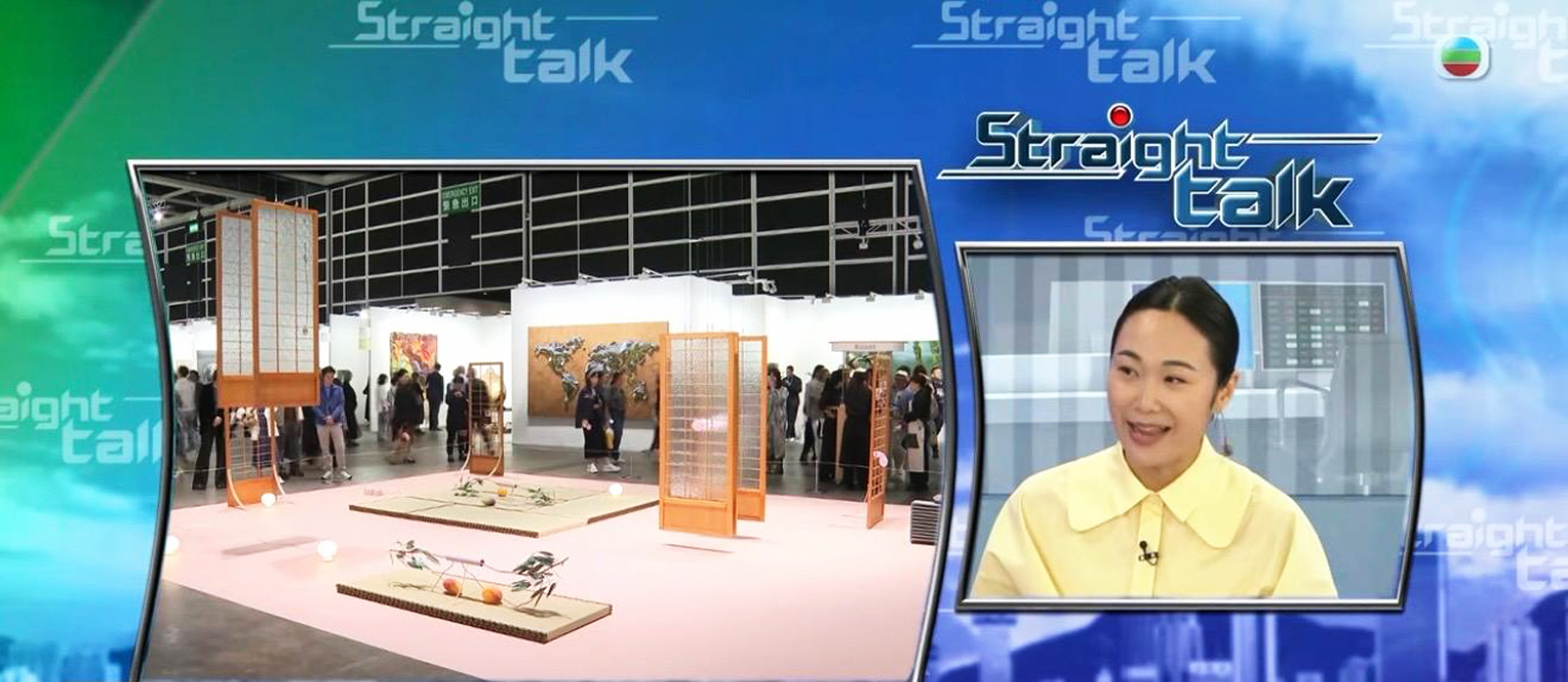
Challenges facing Hong Kong’s art ecosystem
Chan: Right. So far, we've talked about all the good things, all the successes. Let's talk about some challenges. I mean, you have organized this sort of major event in Hong Kong that helps Hong Kong increase our population. I mean, visitors are up like 13 percent, according to the government. Do you see any limitations in this city in hosting major art events? Like, do we have enough corporate sponsors? Do we have enough venue? Do we have enough visitors? What do you think?
Le: Obviously, putting together such a large-scale event comes with many, many, many challenges. So far, the biggest challenges for us is coming out of COVID. That's why we are so thankful to the Hong Kong government for being supportive of us since throughout COVID and coming out of COVID with mega events, as well as now the five-year deal that we just signed with the city. We are very much committed to the city, and then we are grateful that the city is also very committed to us. The challenge always comes with such a big event; you want to please everyone who comes onto an event. But it's almost impossible to make sure that everyone is happy. So, what we are trying to do is to make sure our programming is as diverse as possible. As you mentioned from the very beginning, we do have the obligations to sell, meaning that we do have to protect the trading position of Hong Kong. So, we do have to attract as many ultra-high networks to Hong Kong for that week as possible. But at the same time, we also have to service the grassroots, where the artist sector comes from, where the art students come from. So, that gives a lot of challenges to us to expand that spectrum in the course of a week. Venue could be something that we are constantly looking for, new venues, constantly looking for new venue sponsors. At the same time, that could be a benefit as well because now everybody wants to work with Art Basel. We actually start having more options and it's just the balance, how much we are doing. Because not more, the more the merrier, it's really finding that balance.
Chan: Right. Since you just mentioned about ticket sales, I'm just thinking, how will you compare to Hong Kong Art Basel compared to other Art Basels in the world in terms of ticket sales and audience engagement? Do you see Hong Kong having any special thing or how do you think we still have a lot of room to grow?
Le: Hong Kong has a lot of room to grow. For example, we only sell a certain amount of tickets on site at the Convention Center because we want to make sure that the amount of people coming to Hong Kong, the usability, the experience is always high quality. It's already very packed for a public day coming to an art fair and we have to cap it there. However, how we are going to expand the visitor rate, it's across the city. Since COVID, since coming out of COVID, we have already started bringing more and more artworks into the city. For example, our collaboration with M+ and our collaboration with Swire Properties. So, we're bringing large-scale major artworks into the cities, working with different institutions and organizations, and so that many more people can enjoy art during that week, even without coming to the Convention Center.

Chan: Would you say that we are attracting the right mix of local, global, and also regional sort of galleries so far? Where are the gaps?
Le: At the moment, with the city's help, we're actually attracting a lot more high-quality art professionals year-on-year. For example, the International Cultural Summit hosted by West Kowloon and the Museum Summit hosted by LCSD. They are attracting a lot more high-level museum institution leaders coming to the city at the same time as Art Basel. And our job is to attract more ultra-high net worth. With these two key categories of people coming in, we're attracting a lot more art lovers from all industries coming into Hong Kong. So, at the moment, the mix is pretty balanced, and then we're always working on fine-tuning it.
Chan: Apart from sort of the exhibitors, I have to go back to the viewers as well, because after all, we want more and more people to be enjoying the good work you have done. How can you, or would you have plans after like over a decade now, to make this experience even more attractive, even more sort of more inclusive? I had the privilege of visiting there. It does take a long time to walk through all the galleries and it can be quite tiring. Anything that you can do to sort of make life a bit sort of more efficient or help us to see the things that actually we like most?
Le: Yes, I always encourage our audience to look at the floor plans, study different sectors. Like before we came here, you were asking me what is “cabinet”, for example. And speaking of being inclusive, we also recently this year introduced a digital art sector, which is called Zero 10, because we believe that with technology, with digital art, we can actually expand, widening our scope of audience base even further.
Chan: Now we are at the last part of the show. We have to look at the way forward. Hong Kong has been doing well, especially after coming out of COVID, and now with the national 15th Five-Year-Plan sort of pushing us. But we must not forget, as you said, with other cities, you treat them as not competitors, but sort of partners. But I would say, how can Hong Kong stay ahead of all these? Have you got any plans?
Le: Yes, how do we stay ahead of this? I feel that it's always working together. Hong Kong has a very unique advantage, which is that the community loves collaborations. The private sector is always willing to collaborate with the public sector. In order to stay at the top and in order to always consistently move forward, we need each role in the so-called “art ecosystems” to move forward together. And that is what we aim to be, which is behind the intersection of the “air ecosystem”, leading everyone to move in the same direction, which is forward and upward together.
Chan: Right, and I also read the news released by the government that deepening the relationship with Art Basel by signing a five-year sort of contract. How do you interpret the word deepening? I mean, I'm sure you're not just hosting another event annually. What are the other plans that you work on with the government? And how will we, as the public, if you want to engage, how can we engage and support your work?
Le: Often people ask me, the art fair is only five days, and then what do you do in the rest of the 360 days around the year? Actually, putting together such a large-scale event, obviously, the production cycle is very long. But what is more important is what Art Basel does around the year is to continuously cultivate a so-called art community. And now, with the support from the government, we don't only want to bring together the art world, but we want to bring together the world of art, meaning that creatives, fields around the city, around the region, we want to continuously bring them together. And March is the focal point for Hong Kong for art and culture, but we want that influence to transcend throughout the year.
Chan: Right. I think we have to leave it there for now, and thank you, Angelle, for sharing your insights with us. Hong Kong has proven it can attract the world's leading galleries and collectors, but becoming a real culture hub also means ensuring that culture is not just showcased, but deeply embedded in a city's identity. Have a good evening and see you next week.
