

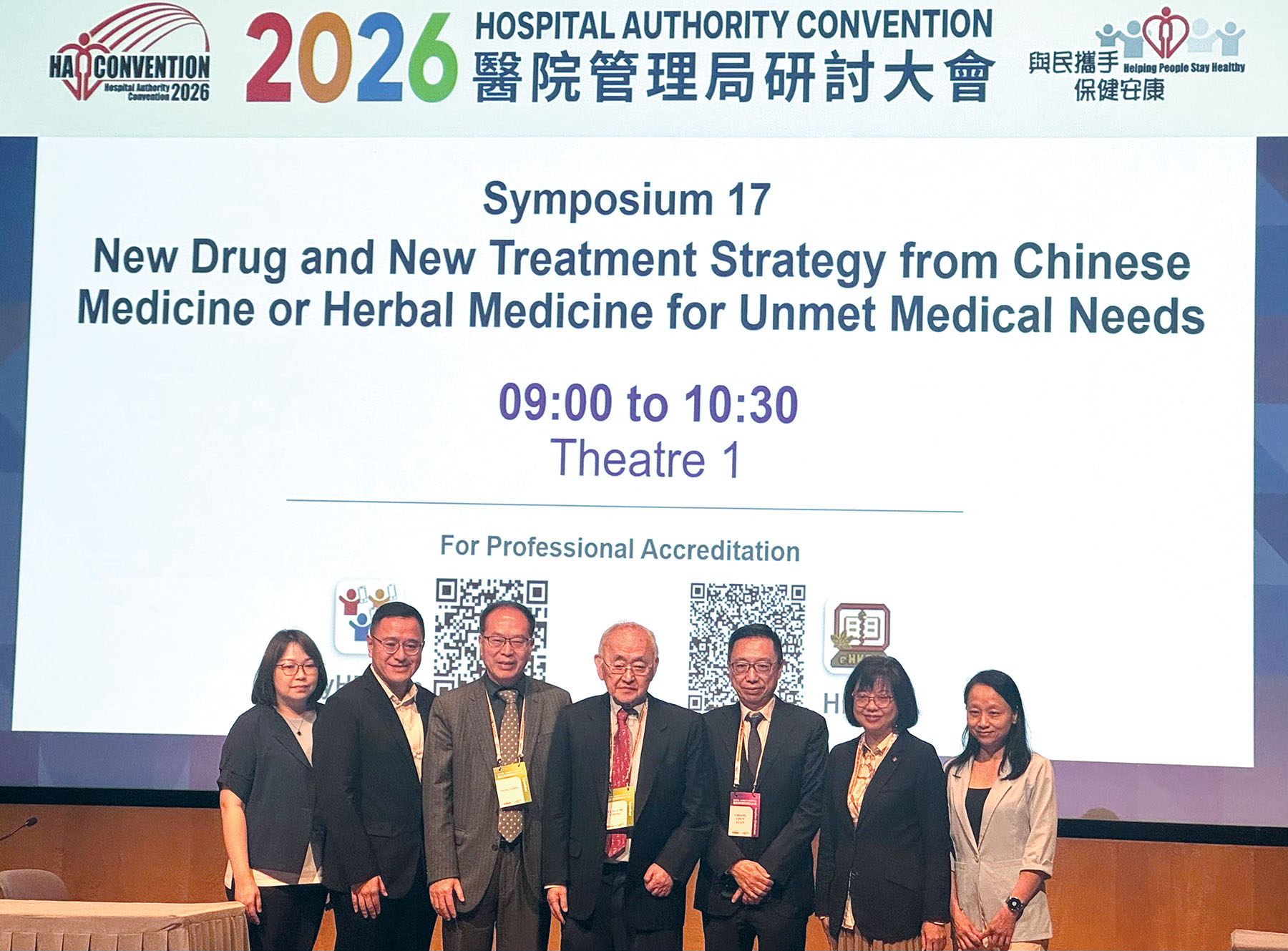
Traditional Chinese medicine (TCM) is a scientifically-backed ally in the fight against cancer, able to boost therapeutic outcomes, strengthen immune responses, and alleviate the grueling toxicities of chemotherapy, leading TCM scientists said on Wednesday.
They shared their remarks at a symposium during the Hong Kong Hospital Authority’s annual convention.
Themed “New Drug and New Treatment Strategy from Chinese Medicine or Herbal Medicine for Unmet Medical Needs”, the symposium gathered top TCM experts to discuss how the use of TCM can help improve cancer treatment outcomes and address unmet medical needs.
Cheng Yung-chi, Henry Bronson Professor of Pharmacology in Yale University, discussed a case study on YIV-906, a botanical cancer drug inspired by a 1,800-year-old traditional Chinese herbal formulation, and its role as an enhancer for cancer treatments.
ALSO READ: TCM on verge of expansion, AI main driver
Cheng cited lab statistics to prove that YIV-906 can increase the therapeutic index of cancer treatment, enhance innate and adaptive immunity in the tumor microenvironment and cytoprotection, and reduce inflammation in the gastrointestinal tract (GI).
The medicine is also known to improve survival outcomes in GI cancers. In the study, patients who took YIV-906 experienced a significant reduction in gastrointestinal side effects from chemotherapy and radiation, including severe diarrhea, fatigue, and nausea.
Feng Yibin, professor and co-director of the HKUMed Centre of Integrative Medicine, part of the School of Chinese Medicine at the University of Hong Kong, talked at the symposium about TCM’s role in modern healthcare, and said that TCM remains essential for addressing unmet medical needs, supporting drug discovery and formulating new treatment strategies.
Feng has enumerated the anticancer roles of TCM and Western medicine in a clinical setting. He said that TCM can reduce the adverse effect of Western medicine treatment, and both TCM and Western medicine need high-quality evidence to ensure their suitability for clinical use.
READ MORE: Lab chief: Macao holds key to modernize TCM
TCM offers multi-compound, multi-target strategies for treating complex diseases, including cancer, cardiovascular and kidney diseases, and metabolic disorders, he said.
Chiang Chun-yuan, adviser to the University of Hong Kong’s School of Chinese Medicine and vice-chairman of the Center for China and Globalization, moderated the symposium.
Prior to the symposium, he told China Daily in a written reply that Hong Kong — a city where East meets West — can share integrated Chinese and Western medical practices with the world, and thus become an international practice base and starting point for East-West medicine.
This approach could help foster cultural exchange and the sharing of health and wellness sciences between China and the international community, as well as help the city to grow into a value-added service provider for international trade, contributing to the health and well-being of people worldwide, Chiang said.
READ MORE: China's southern frontier region emerges as medical AI gateway to ASEAN
An audience member at the symposium surnamed Lau told China Daily he has worked at the Hospital Authority’s pharmacy department for over 10 years.
He said he frequently receives inquiries from tumor patients concerning TCM treatments, and that the symposium has deepened his understanding of TCM treatments. He noted that currently few hospitals under the Hospital Authority provide TCM services, and said he hopes the scale can be expanded in the future.
The three-day convention, conducted in both in person and online, attracted more than 9,000 local, mainland and overseas healthcare professionals and academics, together with approximately 200 distinguished speakers who discussed professional insights, clinical advancements and their experience on various healthcare topics.
This year’s convention focused on the Hospital Authority’s core values, namely people-centered care, professional services, and committed staff and teamwork.
Contact the writer at atlasshao@chinadailyhk.com
