

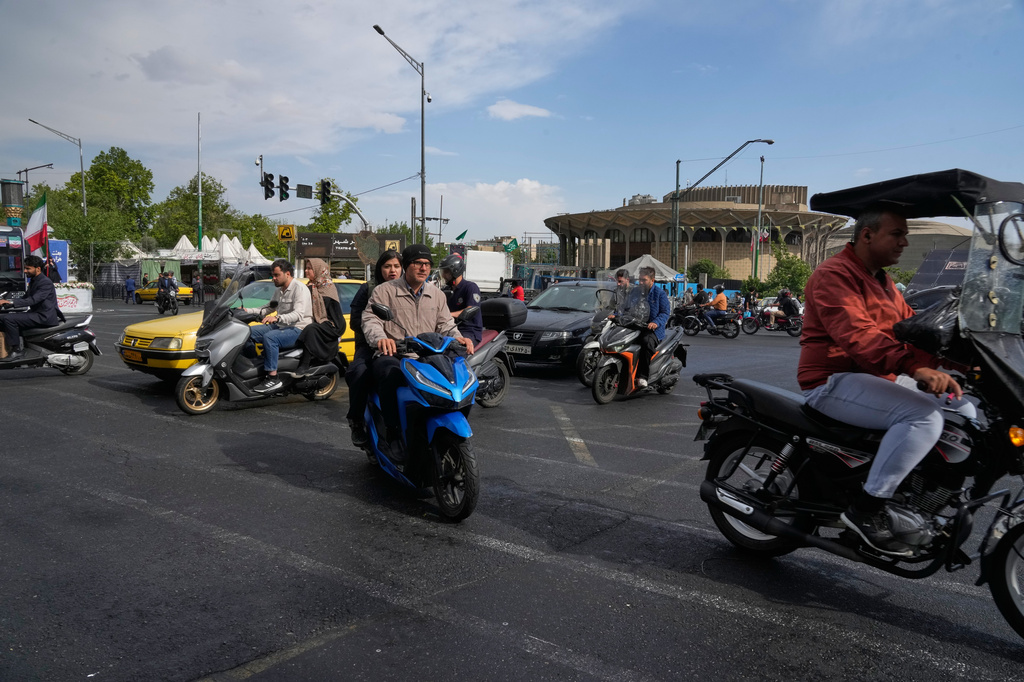
WASHINGTON/NEW YORK/TEHRAN/SEOUL – US President Donald Trump on Wednesday warned Oman not to interfere as fragile talks with Iran continue, claiming the United States will "watch over" the Strait of Hormuz.
Asked if he would accept a short-term deal that would allow Iran and Oman to control the strategic waterway, Trump told reporters during a cabinet meeting at the White House: "No, the strait's going to be open to everybody."
"It's international waters. Nobody's going to control it. We're going to watch over it. We'll watch over it, but nobody's going to control it," he said. "That's part of the negotiation that we have."
"Oman will behave just like everybody else or we'll have to blow 'em up," Trump warned.
Trump's remarks came after Iranian state TV reported that it had obtained an unofficial draft of an Iranian-US agreement that would restore commercial shipping through the Strait of Hormuz to pre-conflict levels within a month, with Iran and Oman jointly managing traffic.
Fresh strikes in Iran
Meanwhile, multiple US media outlets reported the US military carried out fresh overnight strikes in Iran, targeting a military site that Washington said posed a threat to US forces and commercial vessels in the region.
US forces also intercepted drones launched from Iran, according to CBS News, citing a US official.
ALSO READ: US, Iran trade strikes amid ceasefire talks
The official described the strikes as defensive, asserting the US-Iran ceasefire is still considered to be holding.
Draft MoU with US
Citing Iran's state-run IRIB TV, several media outlets reported Iran has a draft of an initial, unofficial framework for a memorandum of understanding with the US, which demands US military withdrawal and naval blockade lift.
In return, Iran has committed to restoring commercial shipping through the Strait of Hormuz to pre-war levels within one month and managing ship traffic through the strait with Oman, the reports said, adding military vessels are not included in the agreement.
According to the reports, the US has agreed to lift its naval blockade of Iranian ports, recognize Iran's management of maritime traffic through the Strait of Hormuz in cooperation with Oman, accept Tehran's designated transit routes for vessels, and withdraw US forces from areas surrounding Iran.
Any final US-Iran agreement reached within a 60-day negotiation period would be approved in the form of a binding United Nations Security Council resolution, the reports said.
White House: Iran draft deal report a 'fabrication'
On its Rapid Response account on X, the White House dismissed IRIB TV's report on a framework deal between the US and Iran as "a complete fabrication".
"Nobody should believe what Iranian state media is putting out," the White House said.
"As President (Donald) Trump has said, negotiations are proceeding nicely and he has made his redlines clear. President Trump will only make a good deal for the American people, which must ensure that Iran can never have a nuclear weapon," White House spokeswoman Olivia Wales also told Fox News.
Sanctions relief
In a brief phone interview with PBS News, Trump said Iran would not receive sanctions relief in exchange for giving up its stockpile of highly enriched uranium.
"No, no, not at all. Not sanctions relief, no," Trump said when asked if the current framework would mean Iran giving up its highly enriched uranium in exchange for sanctions relief.
"They're gonna give up their highly enriched uranium not for sanctions relief. No, no, not at all," the president added.
ALSO READ: Iran's supreme leader: Regional nations no longer serve as 'shields' for US bases
Speaking during a cabinet meeting at the White House on Wednesday, Trump said he will not rush into a deal with Iran because of midterm political concerns, warning that Washington remains prepared to resume military action if ongoing negotiations fail to produce an agreement favored by the US.
Iran had hoped political pressure tied to the upcoming midterm elections would weaken his negotiating position, Trump said.
"They thought they were going to outwait me," Trump said. "I don't care about the midterms."
US sanctions Persian Gulf Strait Authority
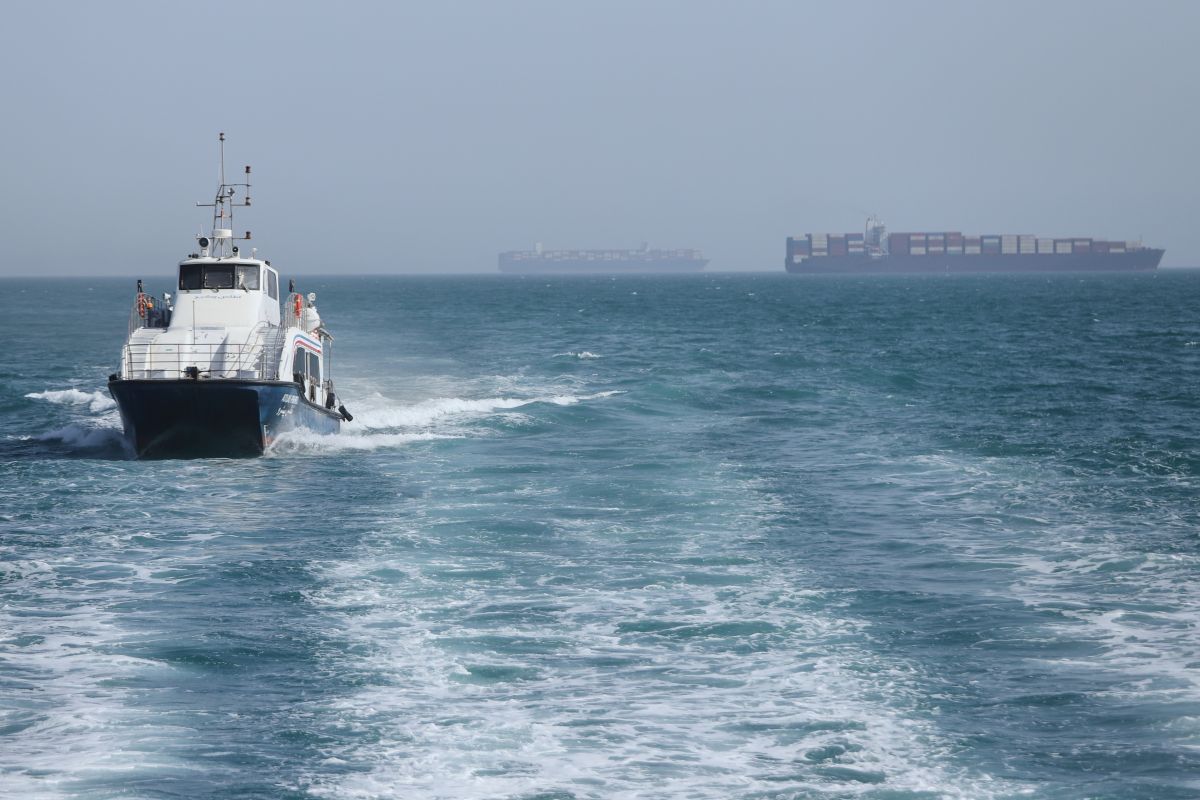
The Persian Gulf Strait Authority, an Iranian authority overseeing shipping control in the Strait of Hormuz, has been added to the Specially Designated Nationals List in a fresh sanction move under the U.S. Economic Fury campaign, the US Treasury Department said in a press release posted on its website on Wednesday.
The department's Office of Foreign Assets Control claimed the strait authority sought to impose illegitimate tolls on commercial traffic and force vessels to follow Iranian direction in return for safe passage.
It also warned that anyone cooperating with the authority may be exposed to sanctions risk.
"The Iranian military's latest attempt to extort global maritime trade is proof that Economic Fury has left the regime desperate for cash," said US Secretary of the Treasury Scott Bessent.
On May 18, Iran launched the Persian Gulf Strait Authority, a new body to manage the Strait of Hormuz. In a statement posted on X on May 20, the authority defined its supervisory jurisdiction over the strait, noting that vessels transiting the area through the Strait of Hormuz are required to coordinate with Iranian authorities and obtain authorization.
Twenty-three more vessels cross Hormuz
Separately, Iran's Islamic Revolution Guard Corps (IRGC) Navy said 23 ships transited the Strait of Hormuz within the past 24 hours after obtaining permission from its forces.
The vessels, including oil tankers, as well as container and commercial ships, crossed the waterway in coordination with and under the protection of IRGC forces, the navy said in a statement published on the IRGC's official news outlet Sepah News.
Projectiles hitting vessel in Hormuz 'likely Iran-developed missiles'
Also on Wednesday, South Korea said the projectiles that struck the South Korean-operated vessel HMM Namu earlier this month were likely to have been anti-ship missiles developed by Iran.
First Vice-Foreign Minister Park Yoon-joo told a press briefing that the conclusion was made after an additional investigation into debris from the vessel.
The HMM Namu was attacked twice on May 4 while anchored in waters near the United Arab Emirates inside the Strait of Hormuz, with all 24 crew members aboard confirmed unharmed.
The first warhead failed to explode, while the second detonated, according to the investigation by experts from the Agency for Defense Development and other defense-related institutes.
The shape of the warhead was similar to that of Iran's Noor or Qader anti-ship missiles, and high explosives in an unexploded state were also identified, Park said.
