

From mountain roads to ancient calendars, Cambodian teachers in Guizhou discover new ways to turn everyday surroundings into STEM lessons.
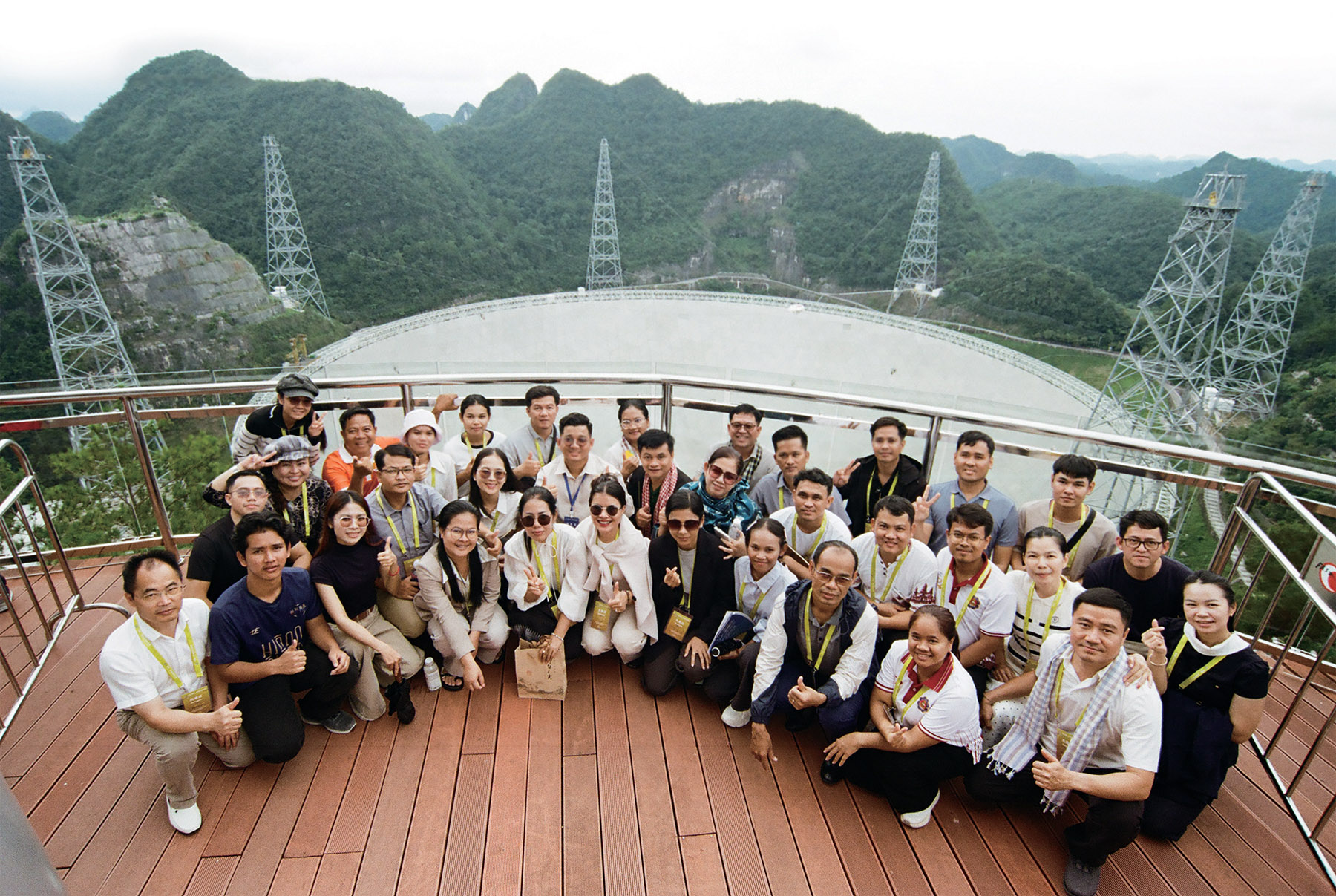
Earlier this month, a bus carrying Cambodian educators wound its way through the karst mountains of Qiannan Bouyei and Miao autonomous prefecture in Southwest China's Guizhou province, emerging from one tunnel before disappearing into the next.
Sitting by the window, Yin Soriya was fascinated by the ever-changing landscape.
"Most of my country is flat, but here it is all mountains," he said. "I also saw roads winding through the mountains. That's amazing."
By the end of his week in Guizhou, however, the scenery had become more than something to admire. Like many of those traveling with him, Yin had begun to see how technology, infrastructure and even local cultural traditions could become material for STEM lessons.
Yin, a teacher at Mekong Science, an online school, was among 43 Cambodian school principals and educators who took part in the 2026 China-ASEAN STEM Teacher Training Program from July 30 to Aug 6.
READ MORE: Reviving Xixia in the digital age
A key event of the 2026 China-ASEAN Education Cooperation Week, the program was hosted by Qiannan Normal University for Nationalities (QNUN). It combined lectures on artificial intelligence and STEM education with school visits, field activities and hands-on lesson design.
Before joining the program, Yin had mixed feelings about bringing AI into the classroom.
"I was worried that my students might use AI to cheat on their assignments," he said.
After several days of lectures and discussions, however, his perspective began to shift. He came to see AI less as a threat and more as a tool whose educational value depends largely on how teachers guide students to use it.
For mathematics teacher Kith Sokunthy, the challenge was broader: helping students understand why what they learn matters beyond school.
"Many of them feel they spend too much time learning theories and do not know how to apply them in real life," she said.
During a visit to Duyun No 2 Primary School, Kith saw younger students using smart boards for game-based assessments, while older students joined after-school mathematics and robotics clubs that helped connect academic knowledge with practical applications.
Teachers at the school also told the Cambodian visitors that they paid close attention to students who were struggling and worked with parents to provide additional support. Kith was particularly impressed by how the school had reduced the students' homework load while maintaining strong academic performance.
But some of the most important lessons came outside the classroom.
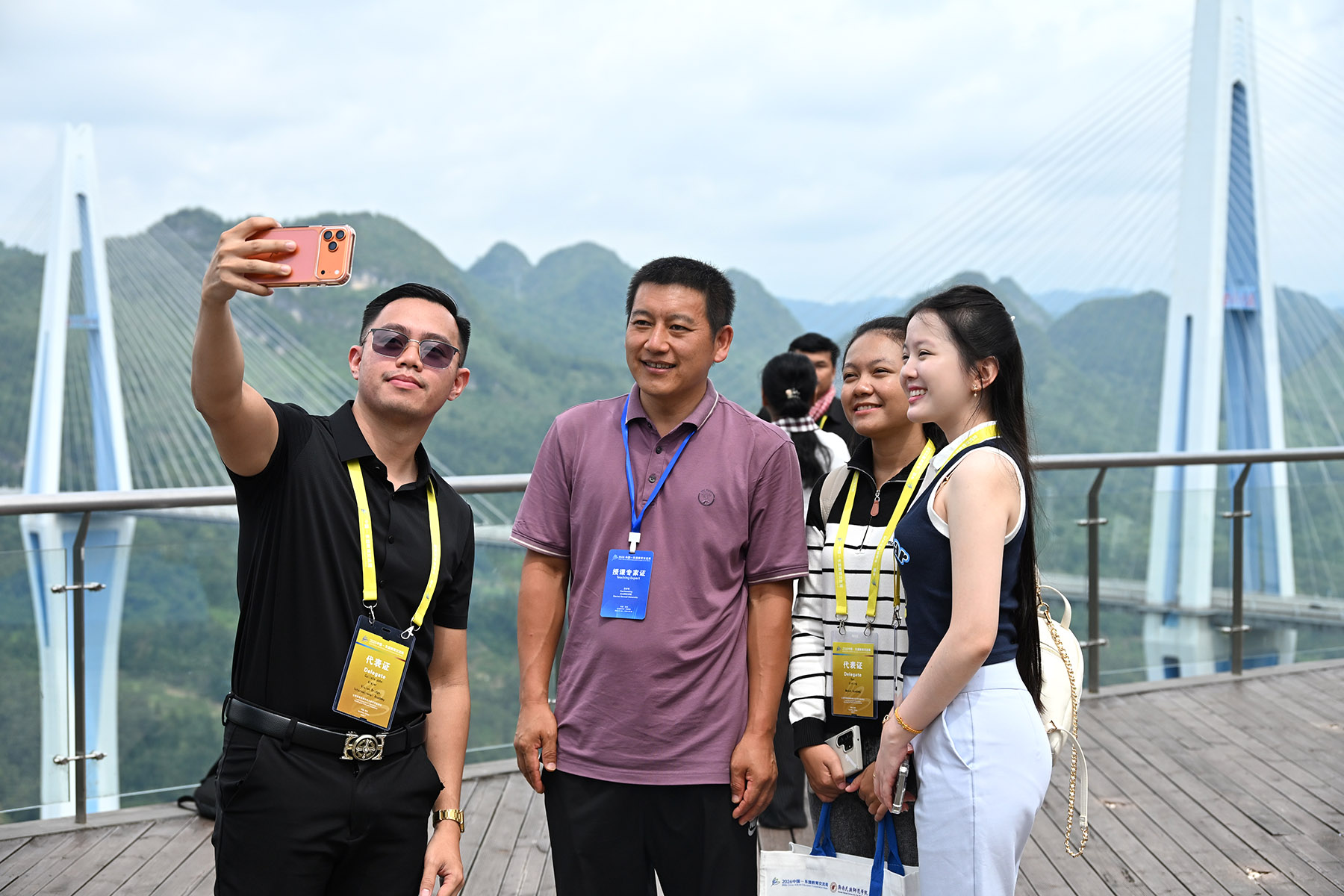
At the Pingtang Bridge in Pingtang county, which stands more than 300 meters above the valley below and features the world's tallest concrete bridge tower, Kith was introduced to the engineering behind the structure.
Guided by a Chinese professor, she learned how science, technology, engineering and mathematics had been brought together to overcome this complex transportation challenge.
The experience changed the way she viewed the world around her.
"Back in Cambodia, we had seen projects like this before, but we never looked at them from a STEM perspective," she said. "After coming here, I find STEM in almost everything I see."
That idea — finding science and mathematics in familiar surroundings — became one of the central themes of the training.
Zhang Xiaodong, the program's team leader and an associate professor at QNUN, gave participants cards to record their observations during field visits and encouraged them to think about how those observations could be developed into classroom projects.
"Every country has rich cultural resources. Through this localized approach, we hope teachers can draw on their own communities and bring those resources into their lessons," Zhang said.
Ideas become lessons
The approach took shape during the final stage of the program, when the 43 participants were divided into six groups to design AI-enhanced STEM lessons based on what they had seen and learned.
Kith's group drew inspiration from a traditional calendar they encountered during a visit to a museum dedicated to the Sui ethnic group in Sandu Sui autonomous county.
Their lesson plan would ask students to create paper calendars, using mathematics to calculate dates and identify patterns, engineering principles to improve the design, and AI tools to develop and refine creative ideas.
Other participants began turning to their own cultural heritage for inspiration.
Nop Chann, principal of Chann Yun International School, was part of a group that chose Angkor Wat as the basis for its lesson. The group explored the mathematical principles embedded in the temple's design and construction.
"Angkor Wat is more than 900 years old," he said. "Even without modern technology, its builders created a magnificent structure with remarkable mirror and rotational symmetry."
According to Zhang, the participants are expected to continue developing their lesson plans after returning to Cambodia. They will put their ideas into practice, refine the lessons and share their experiences with Chinese educators.
ALSO READ: Finding her voice in the media
"We have established a long-term cooperation mechanism," he said.
The exchange also sparked interest in further study. Yang Sizhuo, director of the department of English at QNUN, served as an interpreter during the program. She said some Cambodian teachers asked whether the university offered AI courses and hoped to return to Guizhou for longer-term, more systematic study.
"In the past, they may have thought that only major cities such as Beijing, Shanghai and Shenzhen had abundant educational resources," Yang said. "But this visit showed them that Guizhou also has strong teaching and research capabilities."
Yin, who has more than 400,000 followers on Facebook, shared his experiences in Guizhou online throughout the trip and received positive feedback from audiences overseas. The program also helped him build connections with Chinese university professors, and he hopes to invite Chinese students to visit Cambodia and work on joint projects in the future.
"STEM has no borders. Science is a universal language," Yin said. "Through it, we can work together and strengthen our cooperation."
Zhang Bishan contributed to this story.
Contact the writers at mengwenjie@i21st.cn\
