

As it prepares for an international release, a new animated film has enchanted viewers with its imaginative retelling of the Eight Immortals saga, Xu Fan reports.
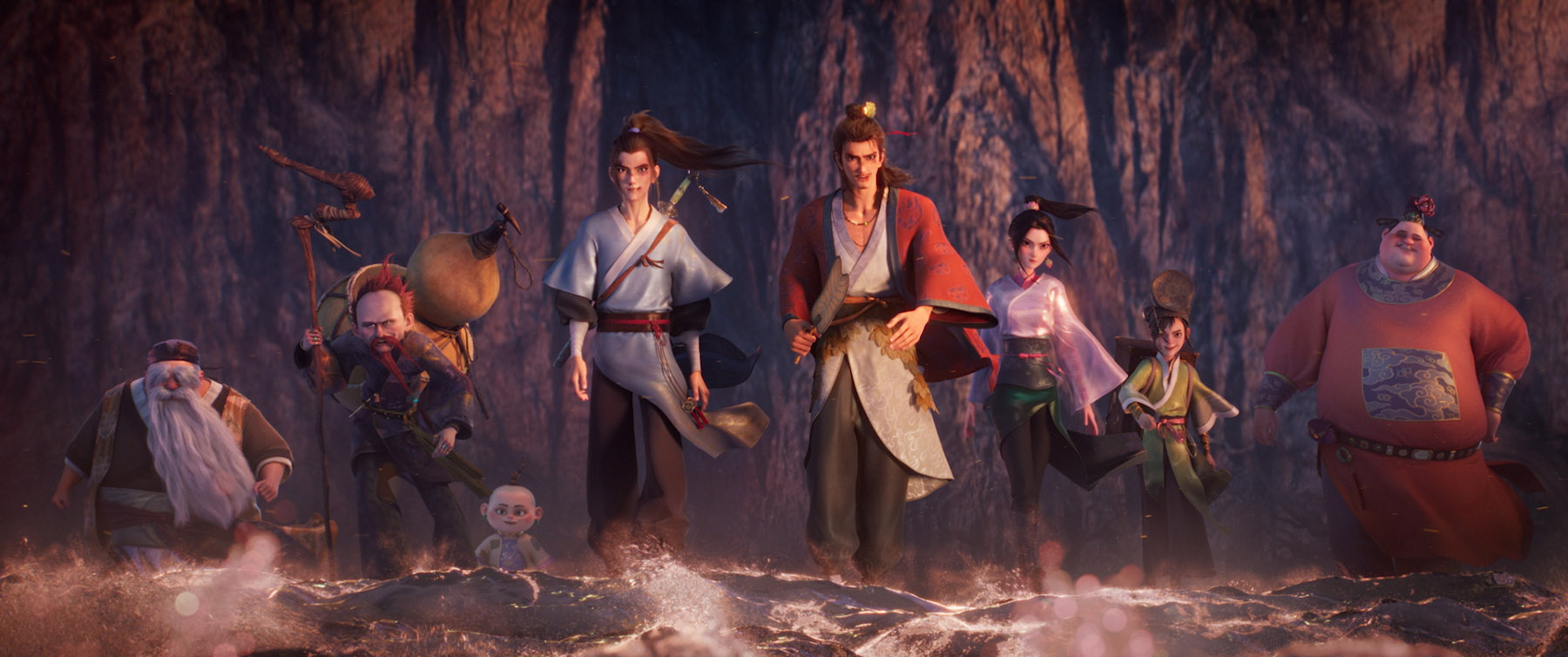
In China, there is a well-known idiom: "The Eight Immortals cross the sea, each displaying their own special powers."
The saying originates from Dong You Ji (Journey to the East), a fantasy novel by Ming Dynasty (1368-1644) writer Wu Yuantai. In the story, the Eight Immortals decide, after a gathering, to cross a turbulent sea without relying on a boat. Instead, each uses a unique magical object — ranging from a pair of swords to a palm-leaf fan — which transforms into a vessel, allowing them to demonstrate their individual supernatural abilities.
Today, the idiom is widely used to describe people drawing on their own strengths to accomplish a common goal. Yet, despite its popularity, many people would struggle to name all eight legendary immortals, let alone explain their origins or how they have attained immortality.
ALSO READ: Film director still finds inspiration in digital era
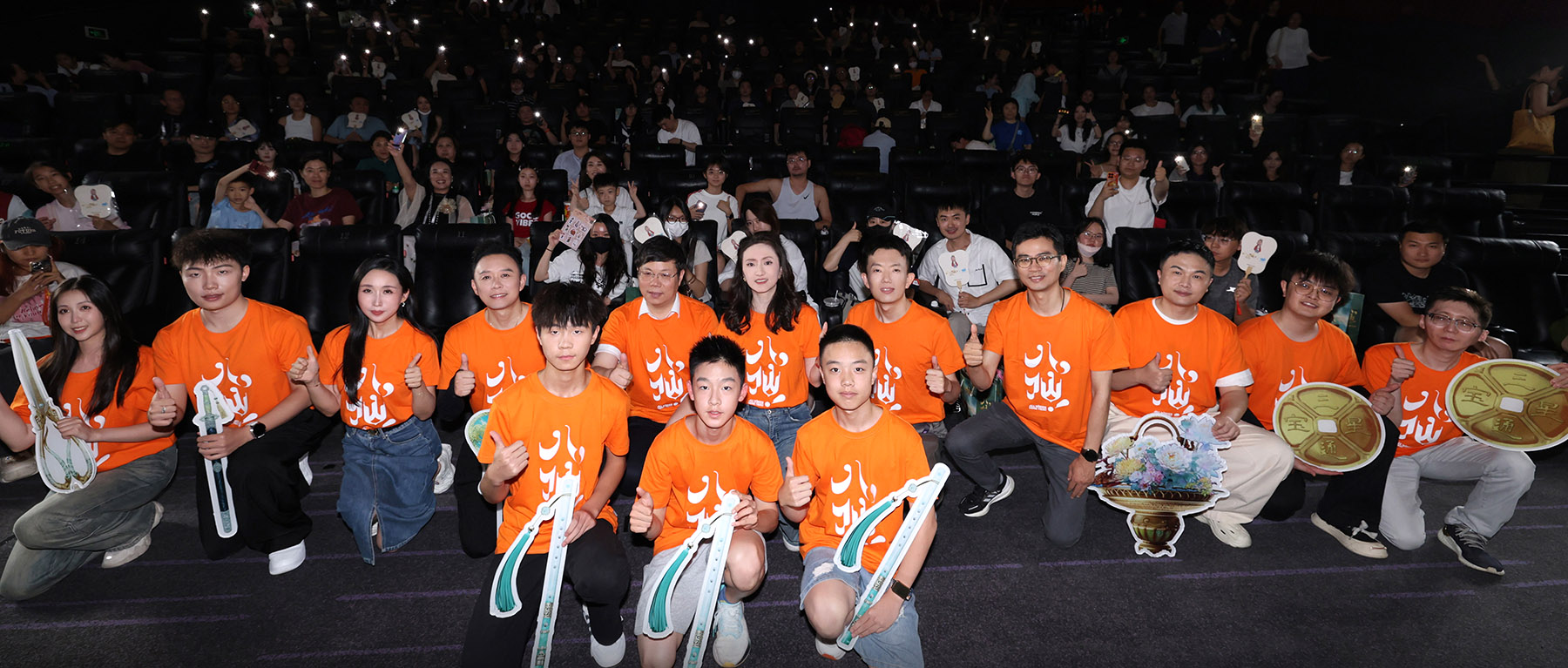
That gap in people's knowledge has inspired All Wishes Come True! (2026), the feature directorial debut of filmmaker Mu Zhengyang. The animated fantasy has emerged as one of the biggest dark horses of the summer movie season, becoming the highest-grossing animated film of the period. Since its release on July 18, it has earned more than 860 million yuan ($127 million) by Tuesday at the domestic box office.
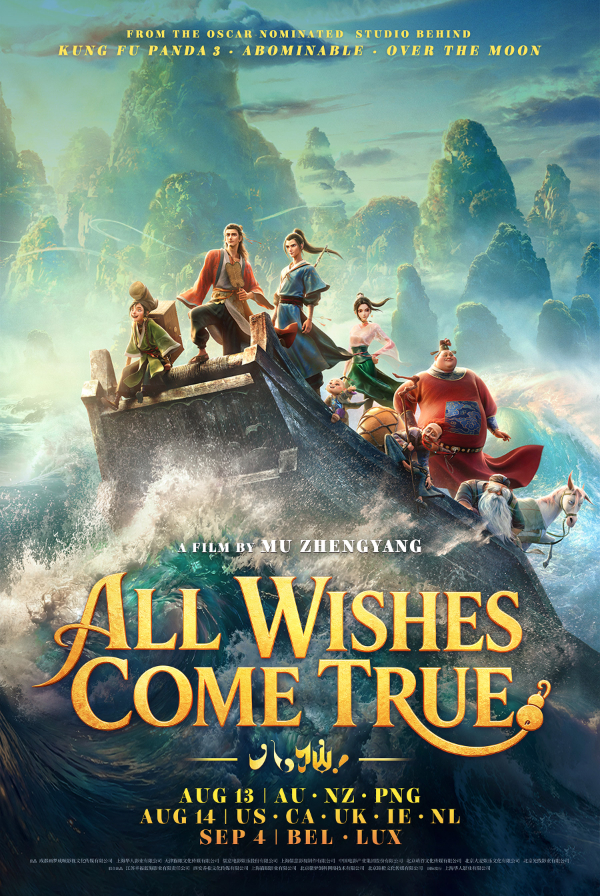
Bolstered by a strong word-of-mouth reputation — evidenced by its rating of 8.3 points out of 10 on the review platform Douban — the film is also set for an overseas rollout. It will open in Australia, New Zealand and Papua New Guinea on Aug 13, followed by releases in the United States, Canada, the United Kingdom, Ireland and the Netherlands on Aug 14. It will then arrive in Belgium and Luxembourg on Sept 4.
Infusing the ancient legend with a contemporary sensibility, the film unfolds as an underdog adventure wrapped in a fantasy heist.
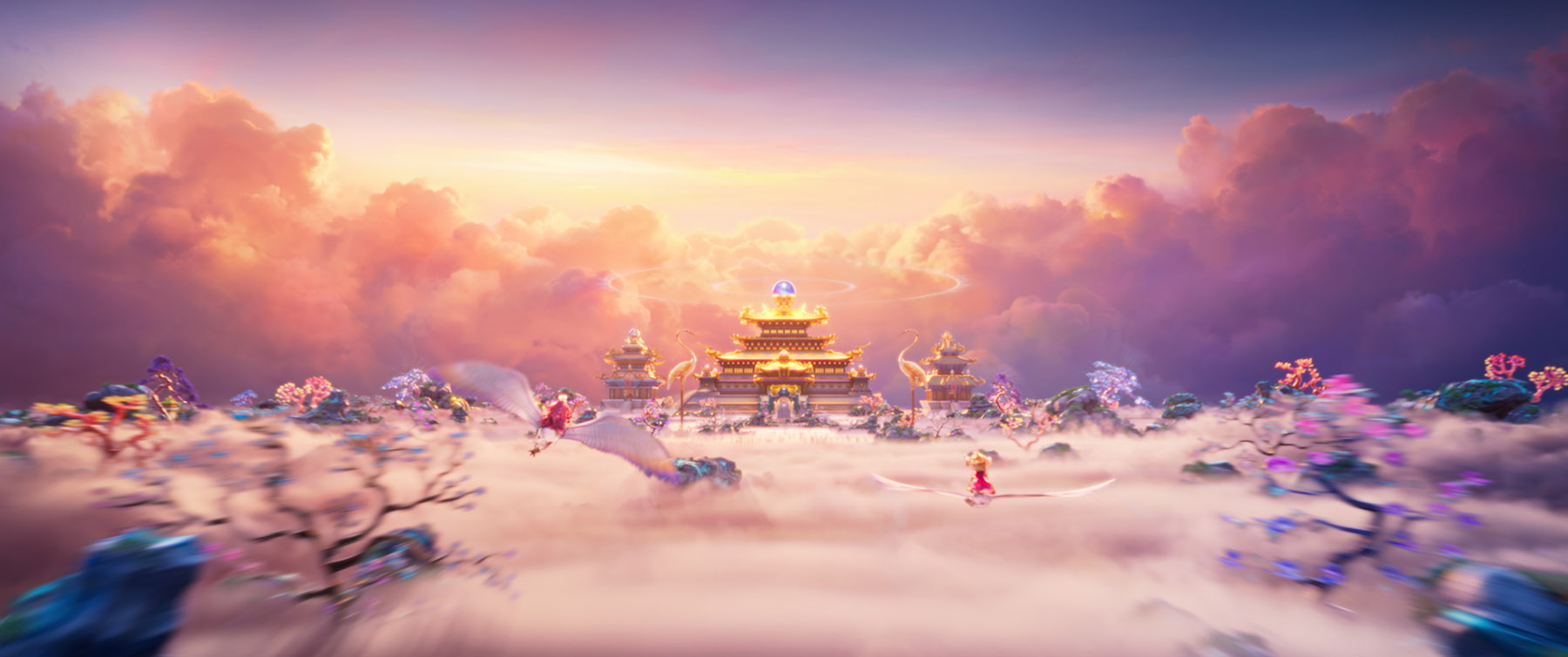
The story begins with the disappearance of a magical lamp, the loss of which threatens the survival of humankind. To recover it, Lyu Dongbin — a young swordsman trained at the Taoist sacred site in the Zhongnan Mountains — travels to the fairyland of Penglai, home to celestial beings and the last sanctuary protecting the mortal world.
His mission is to recruit Zhongli Quan, his former clanmate who is now a thief and the only person capable of helping him break into the heavily guarded vault of three immortals, the rulers of Penglai, where the lamp is believed to be hidden. The pair devises a daring plan to tunnel into the vault and steal back the artifact. As payment, Zhongli is promised the money stored in the vault.
But as the seemingly straightforward heist unfolds, they are forced to team up with six unlikely peers — including teen daredevil Han Xiangzi and swordswoman He Xiangu — and uncover a far more complicated conspiracy. The true mastermind behind the lamp's disappearance turns out to be someone else entirely, forcing the unlikely partners to confront a powerful enemy.
Mu, who also wrote the screenplay, reveals that one of the most compelling aspects that drew him to bring the legend of the Eight Immortals to life is that they are a rarely seen ensemble: none of them are born with supernatural powers, but instead earn immortality through perseverance and self-cultivation.
"Chinese deities are usually calm, restrained, and imbued with an ethereal, immortal air — even somewhat intangible. But the Eight Immortals are a group steeped in earthly warmth. This contradiction is what makes them so distinctive," Mu explains.
The legend evolved over centuries, from the Tang Dynasty (618-907) to the Ming Dynasty, with new members gradually added to the group. Each addition reflected the qualities people admired in heroes during different historical periods — a social significance that also captivated Mu and his fellow creators.
As one example, He Xiangu — the sole female figure among the Eight Immortals — was not part of the group during the Tang Dynasty (618-907), but gradually appeared in the legends during the Song (960-1279) and Yuan (1271-1368) dynasties. Some scholars believe her addition reflects Taoism's growing need for a more approachable and worldly figure, giving the legend a touch of human warmth.
One of the film's most stunning action sequences features the Eight Immortals battling Yang Jian, the three-eyed nephew of the Jade Emperor — the supreme ruler of heaven — and his fierce celestial hound, Xiaotian.
In a battle in which the balance of power is heavily tilted against them, the eight figures demonstrate their bravery, willing to risk their lives for the sake of ordinary people. The director cites a line from the film — "Because we bleed, we feel pain, fear and despair, and we also empathize" — to explain the inspiration behind his creation.
"When they stand up for justice, their noble spirit and the strength they summon in desperate circumstances are deeply moving," adds Mu.
ALSO READ: Folklore beats with a modern pulse
Although Mu is a native of Dalian in Northeast China's Liaoning province, he has infused the film with the local characteristics of Southwest China's Sichuan province — where the production team is based — adding a distinctive regional flavor. One highlighted scene features the eight protagonists gathering around a hotpot, arguably the province's most famous dish and a symbol of social bonding. The scene also includes an ancient tree in the backdrop, which is inspired by a 1,900-year-old ginkgo tree on Mount Qingcheng in the province.
For many industry observers, the film's success reflects Chinese audiences' growing appetite for stories rooted in the country's rich cultural heritage and traditional mythology.
In an earlier interview with Chinese media, Ying Xujun, president of Pearl Studio and chief producer of the movie, said that traditional Chinese culture provides a vast trove of inspiration for filmmakers. She added that the legend of the Eight Immortals has been passed down for centuries and remains deeply embedded in China's cultural memory.
Contact the writer at xufan@chinadaily.com.cn
