

It’s Ryuichi Sakamoto season in Hong Kong. The late Japanese composer’s legion of fans is revisiting his legacy via an exhibition, film screenings and a mixed-reality show. Mathew Scott reports.
Ryuichi Sakamoto offers a moment of deep reflection, not long into the Stephen Nomura Schible-directed documentary Coda (2017). At the time of shooting the film, the Japanese composer was battling cancer and had been advised to take time out from his work. But he found that the urge to produce new works was impossible to ignore.
Talking directly into the camera, Sakamoto says he is no longer “taking anything for granted” when it comes to how long he might live. “But I know that I want to make more music. Music that I won’t be ashamed to leave behind, meaningful work.”
The artist who passed away at 71, in March 2023, spent the last years of his life pushing the boundaries of creativity. It was a continuation of the journey of that same maverick spirit that had started the pure synth-pop band Yellow Magic Orchestra in 1978, and went on to score the Oscar-winning soundtrack for Bernardo Bertolucci’s The Last Emperor (1987).
READ MORE: Tuning into the local
In Hong Kong, the maestro’s legion of fans is in for a months-long celebration of the legend. The Sakamoto cavalcade kicked off with the screening of the Elizabeth Lennard-directed Tokyo Melody: A Film about Ryuichi Sakamoto (1985), followed by a panel discussion at Broadway Cinematheque on Feb 13. A day later, the Ryuichi Sakamoto: seeing sound, hearing time exhibition was opened at M+ and is on until July 5. The Hong Kong Arts Festival-hosted mixed-reality show, Kagami, was staged from Feb 27 through March 15, and M+ is hosting multiple screenings of both Coda and yet another Sakamoto film, Opus (2023), directed by the maestro’s son, Neo Sora, through Sunday.
The pursuit of pure music
Coda and Opus capture Sakamoto’s last, and highly prolific, years. At the screenings I attended, some of the viewers were visibly affected, watching the artist’s invincible spirit soar on screen.
Silke Schmickl, senior curator and head of Moving Image at M+, says that Sakamoto’s sizeable following in Hong Kong could be down to “how open he was as an artist”. She adds that being at the M+ screenings of the Sakamoto films can be “very empowering for an audience,” as the experience makes “you feel somehow there’s always room for yourself”.
“We felt there was a strong message to share about his way of being, not just an artist, but really a human being, and as someone with this extreme curiosity.”
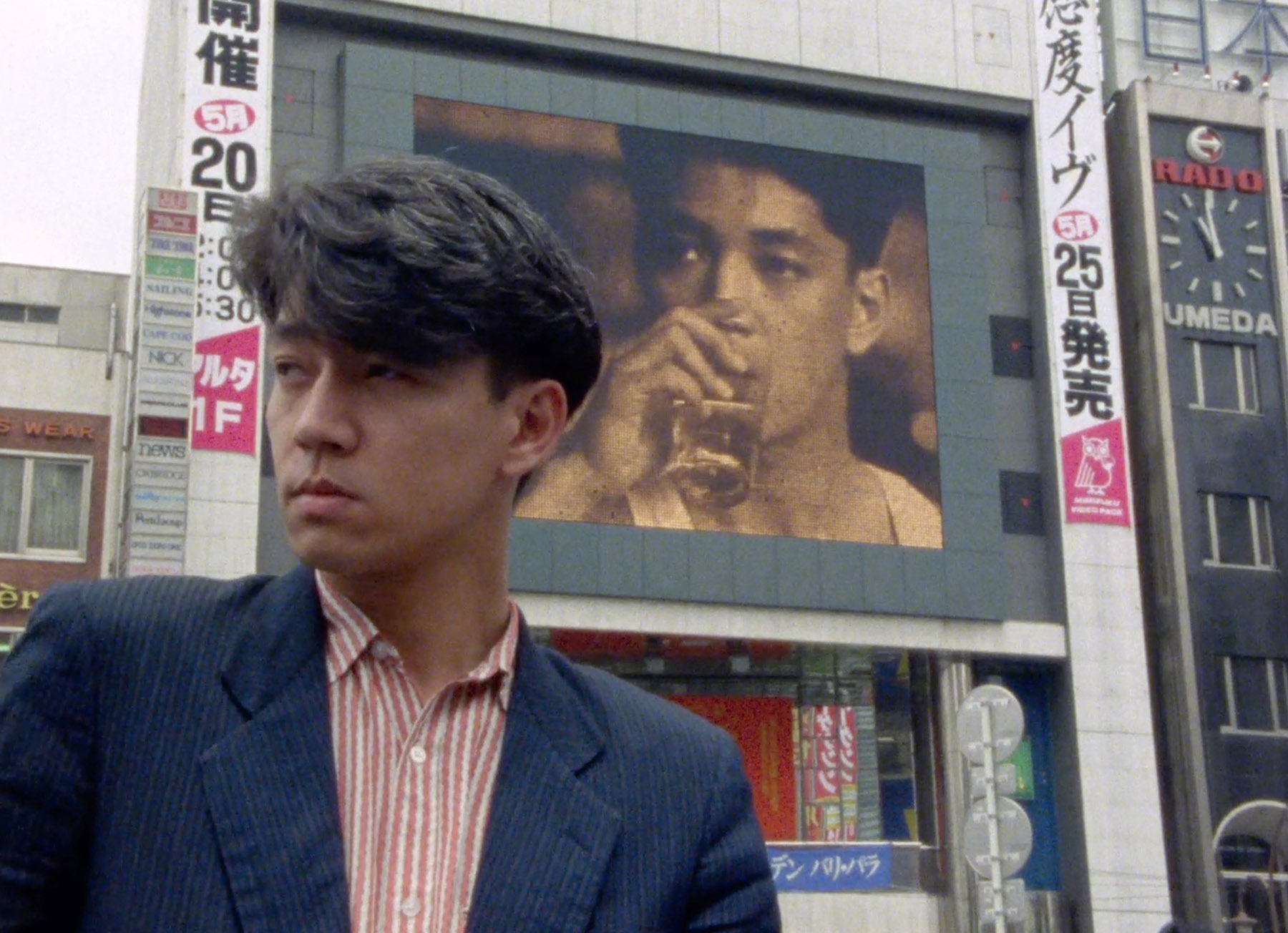
Coda observes how Sakamoto faced up to his own mortality while exploring ambient sounds, whereas Opus captures his final concert performance. Both films afford Sakamoto the opportunity to reflect on his life. They also capture the passion, and often sheer delight, experienced by the artist in the act of making music and then in finding ways to share them.
On first listen, Sakamoto’s compositions could come across as quite simple. Think of the notes that seem to flow in and out of the savage landscapes shot in Alejandro González Iñárritu’s Oscar-winner The Revenant (2015), scored by Sakamoto with Alva Noto. Coda and Opus reveal the intricate and layered processes that the artist went through in order to come up with such easily accessible music. Coda captures a moment when the artist drops a microphone into an Arctic ice flow to record running water and marveling at the “purity” of the sound.
An avid listener
Sakamoto was a great listener. Back in the early 2010s, I was fortunate enough to spend a morning with him at his Manhattan home and heard how as a young man he had sat on the stairs of his family home, eavesdropping on dinner-table conversations shared between his father — a famous postwar Japanese literary agent — and some of the great writers of the age, including Yukio Mishima (Confessions of a Mask, 1949). Even though I was there to interview him, my lasting memory of the day is how keen he was to have me tell my story, while he nodded and smiled.
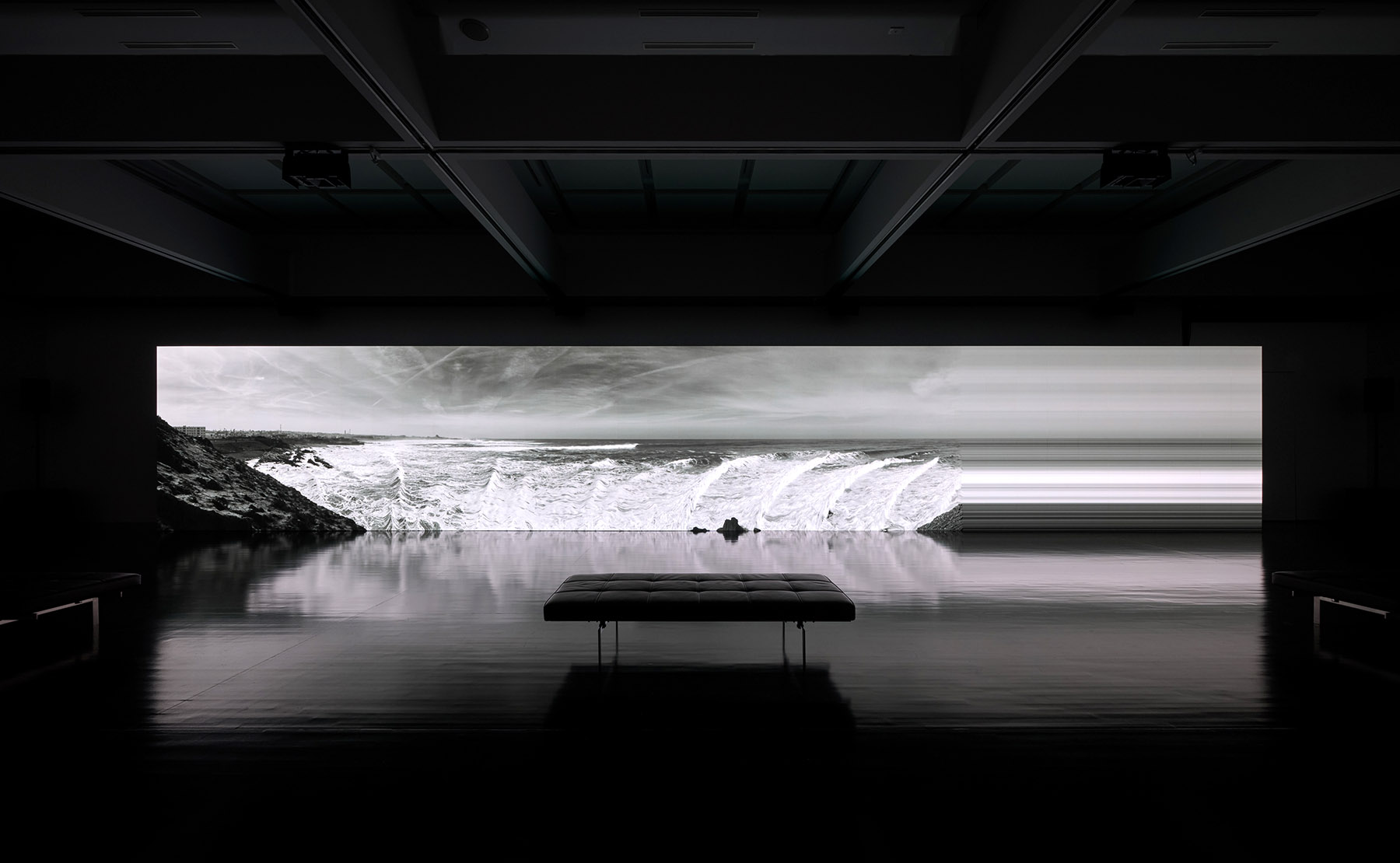
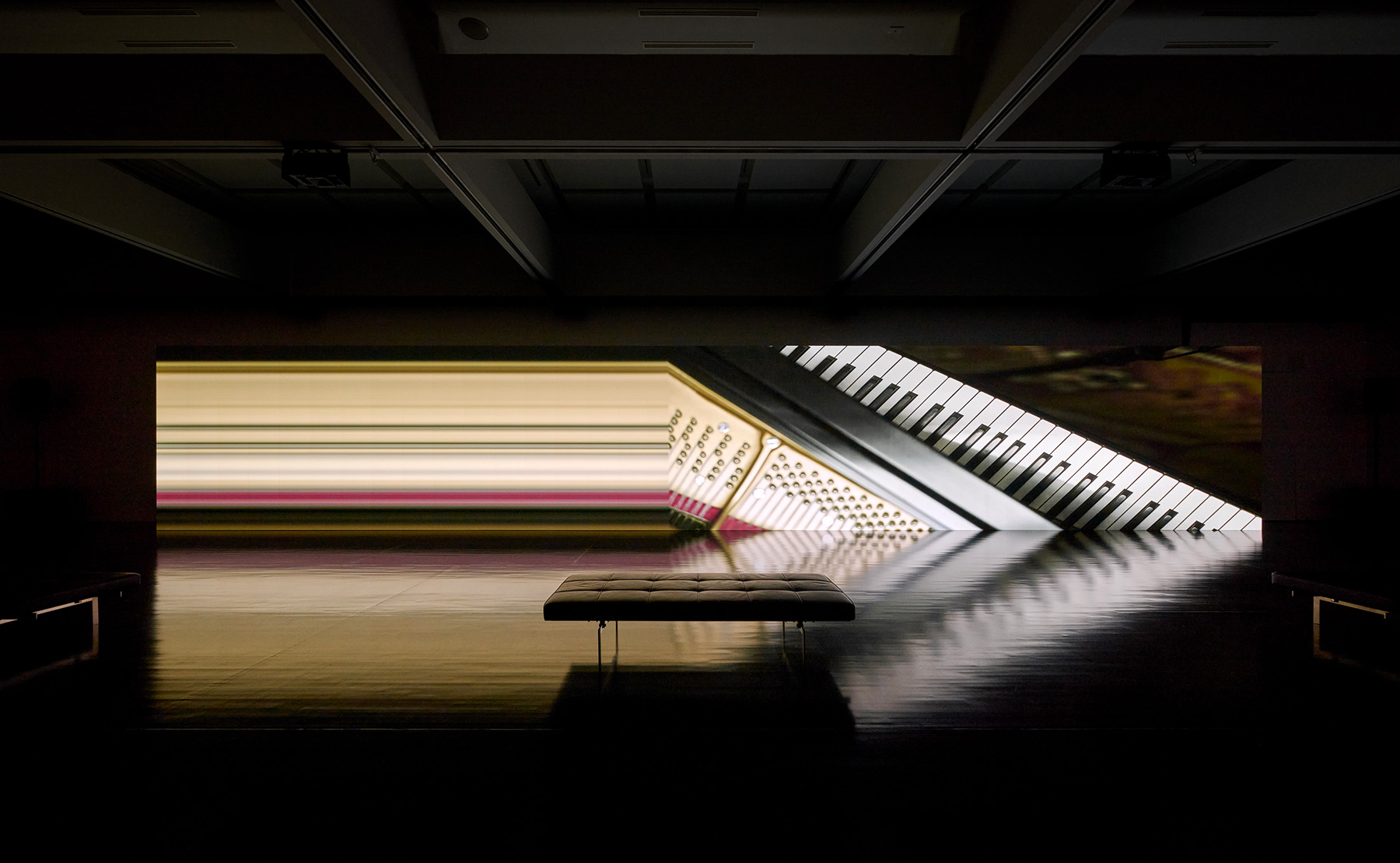
Shiro Takatani might have taken his cues from Sakamoto’s ability to find music in the unlikeliest of places while putting together the visuals for the installation async-immersion (2023), on display at the M+ exhibition. The music is from the composer’s 2017 recording async, inspired by the sounds that surrounded him at his New York City residence. Sakamoto called the piece “some of the most personal music I have ever created”. In the film by Takatani, everyday objects — potted plants, books, tools — in Sakamoto’s NYC home are shown to spread out horizontally across the screen, dissolving into abstract shapes before being restored back to their original forms, as if in response to the music.
M+ is also screening works on which Sakamoto collaborated with other artists. Nam June Paik’s wonderful All Star Video (1984), showing in the museum’s Found Space through July 5, features cameos by avant-garde music greats including John Cage and Laurie Anderson. The Grand Stair is hosting screenings of Carsten Nicolai’s videos, Endo Exo and Phosphenes, both released in 2024, and set to music from Sakamoto’s 2023 album, 12, through July 31.
Childlike sense of wonder
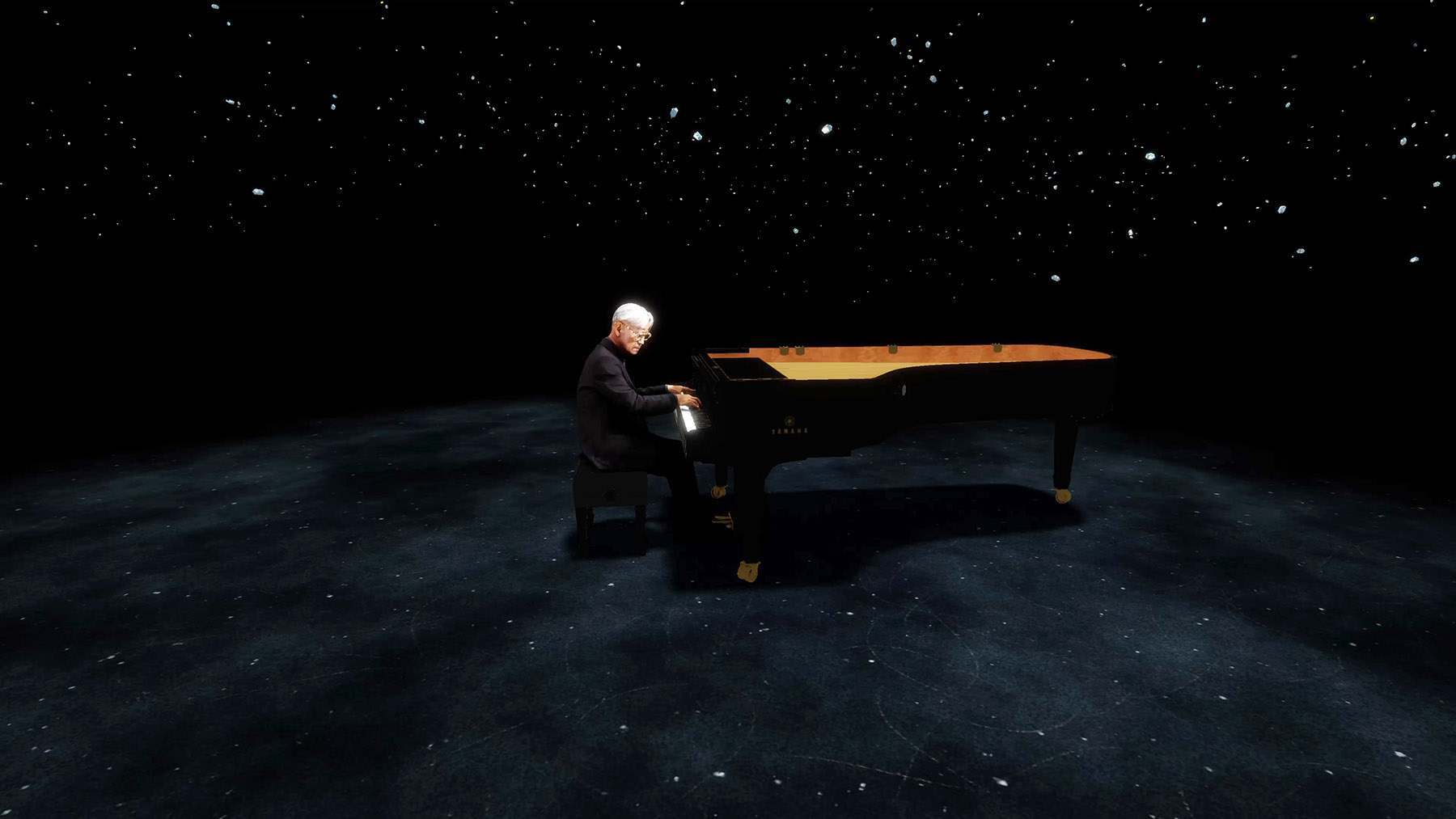
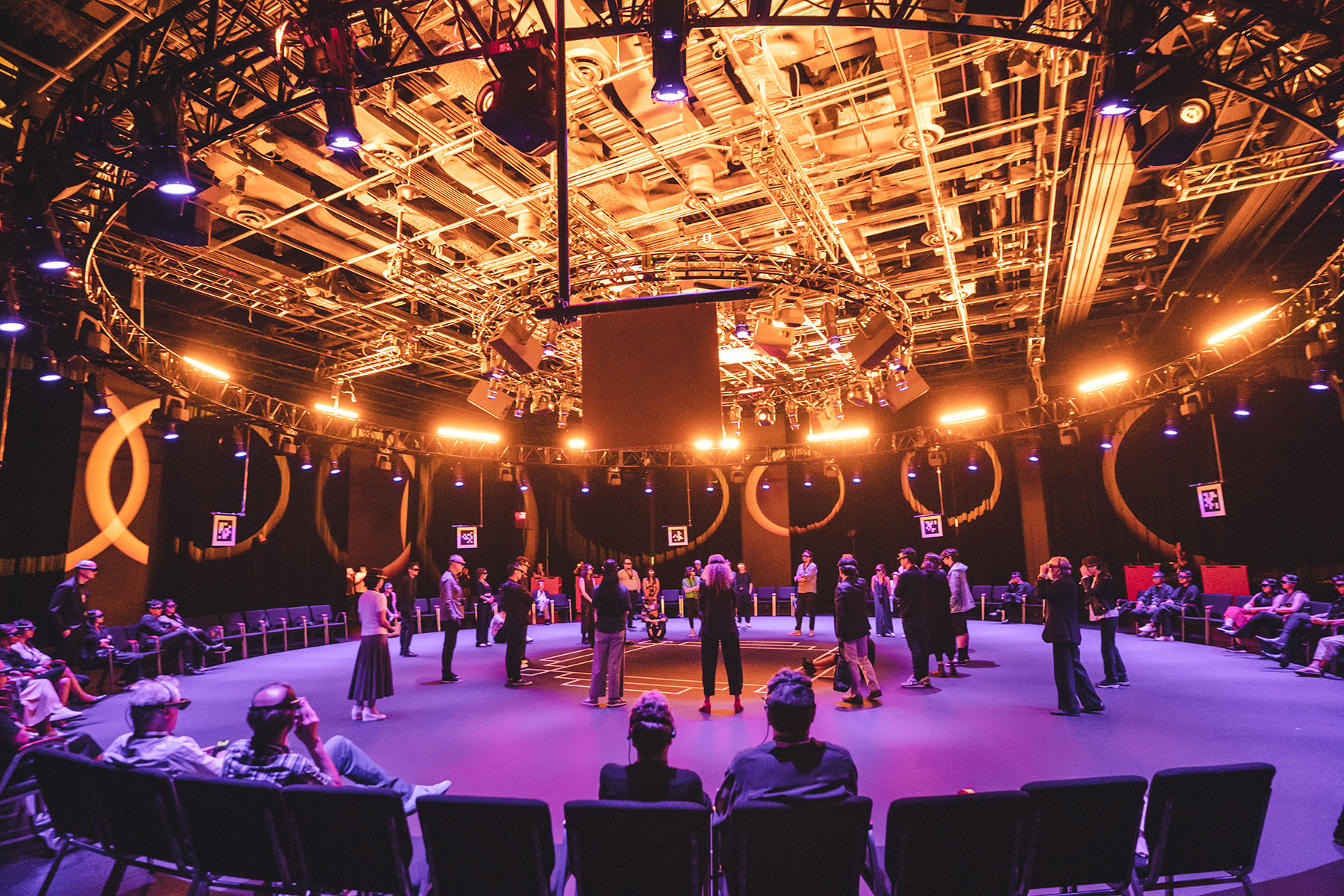
On Sunday, the curtains came down on the local run of Kagami. Produced by the United States-based mixed-reality studio Tin Drum and presented by the Hong Kong Arts Festival, Kagami simulates Sakamoto playing the piano in a way that feels like a live performance. Viewers wear headsets that block out everything but the projection of Sakamoto playing, sometimes with images of snowflakes or falling stars, floating around. The format allows them to wander around the room, and watch the maestro at work from up close.
The project was developed with active collaboration between Sakamoto and Tin Drum. Todd Eckert, the studio’s co-founder and Kagami director, says that the composer was enthralled by the power of the new technology that was going to bring virtual performances by him to generations of admirers.
ALSO READ: Moving with the times
“Ryuichi was a genuinely curious, excitable person,” Eckert says. “All that he wanted to talk about was: ‘How can we do something new with sound? How can we do something new with performance?’ And for him, it was that same excitability of when you’re a little kid and you discover something and you’ve never heard or seen it, and it feels like life is amazing. That’s how he was all the time.”
There were tears at the end of the show that I went to. A mother-daughter pair consoled each other, saying that though they’d “missed seeing him play live; today it felt like we were in the room with him”.
If you go
Ryuichi Sakamoto: seeing sound, hearing time
Dates: Through July 5
Venue: M+, 38 Museum Drive, West Kowloon Cultural District, Kowloon
www.mplus.org.hk/en/exhibitions/ryuichi-sakamoto-seeing-sound-hearing-time/
The writer is a freelance contributor to China Daily.
