

ShanHai AI uses carefully trained models to trace connections across ancient texts, bringing history closer, Wang Ru reports.
Ancient classics long confined to archives can now be brought together through algorithms, while bricks and tiles from the Qin Dynasty (221-206 BC) and Han Dynasty (206 BC-AD 220) can be digitally revived through codes. With the help of artificial intelligence, the secrets embedded in China's profound history are becoming traceable and accessible to people today.
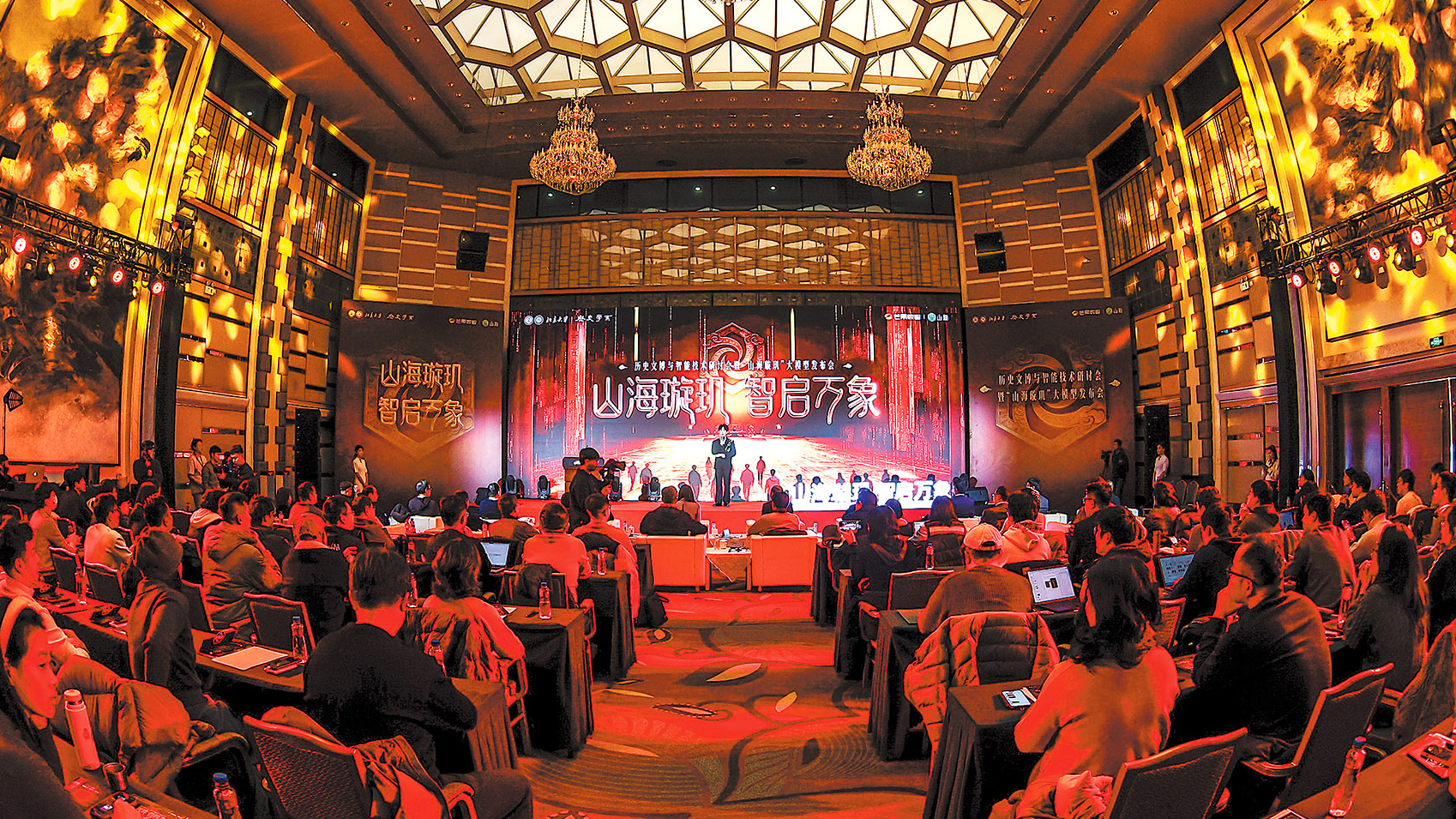
ShanHai AI, a vertical-specific model specializing in history and museum studies, was recently released by SumHi, a digital platform providing access to thousands of artifacts from prestigious museums and the Department of History at Peking University, marking a significant integration of traditional Chinese culture and technology.
The model was trained on a high-quality corpus of more than 270 million words, systematically compiled by scholars at Peking University. The dataset includes ancient classics, archaeological reports, and academic essays, and is enriched by more than 1 million professional question-and-answer pairs.
READ MORE: Application of AI bolsters culture and museum sectors
"Our initial aspiration was not to feed the AI with historical materials, but to translate the thinking patterns of history studies — particularly its emphasis on evidence, analytical frameworks, and the practice of drawing cautious conclusions — into rules that the AI can comprehend and put into practice," says Hu Hong, a history professor at Peking University who joined the development of ShanHai AI.

The AI tool is designed to serve both professionals and the general public. For example, for researchers, it can overcome limitations of memory and academic perspective by identifying historical correlations across vast bodies of material. For creators of films, TV series, novels and games, it can work as a consultant, offering accurate historical background information.
"Generally speaking, ShanHai AI demonstrated good academic 'discipline' in testing — it didn't fake answers or answer with ambiguity. Instead, it tried to answer on the basis of reliable historical materials and academic consensus. We don't want to make a 'perfect' AI, but an intelligent history assistant system that is cautious, open and evolvable," says Zhang Fan, the primary academic consultant for ShanHai AI, who is also a history professor at Peking University.
The first phase of the AI focuses on the Qin and Han dynasties but will be expanded to encompass more dynasties in Chinese history.

"As a history researcher, I feel most of our academic achievements are largely known within academia, but the public does not often know how to access them. We have always hoped that our work could also reach and serve a broader audience," says He Jin, dean of the Department of History at Peking University.
"While our capacity as scholars to popularize research is limited, technology now allows us to reach far wider audiences. We are very pleased to see our academic results benefit the public," he adds.
He says he has tested ShanHai AI's capabilities and found it effective. "When I asked history questions, it offered specialized answers and cited original sources in historical literature for every sentence in its answer. When I posed obscure questions, it honestly said it had no answer, rather than fabricating one," he says.
He believes AI has great potential for promoting academic research. "It breaks the ceiling of human intelligence. As each of us has limited time and memory to learn and remember facts throughout our lives, AI can play a major role in academic areas that require large-scale materials and comprehensive comparisons," he says.
ALSO READ: AI tunes into music for healing purposes
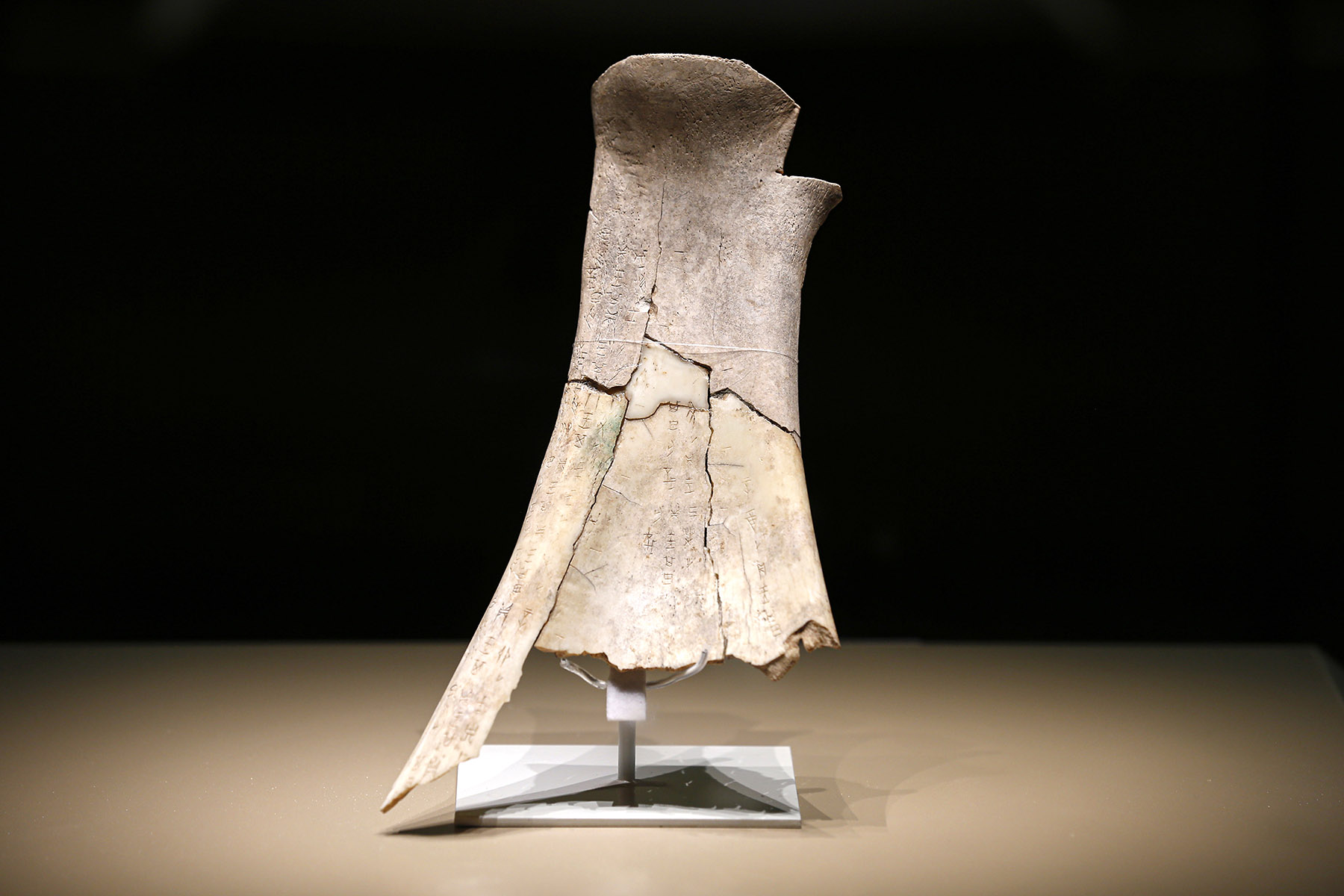
He uses the example of the inscribed oracle bones from the Yinxu Ruins in Anyang, Henan province, which carry jiaguwen, the earliest-known formal writing system in China, that are often fragmented when discovered. A critical task for scholars is to piece them back together. In the past, it could take scholars a decade to reconstruct a single piece, but now AI's image recognition ability can complete the same task in several hours, significantly improving efficiency.
He adds: "We hope history is not only recorded but also experienced; not only read, but also engaged with in dialogue; not only confined to the past, but also belonging to everyone."
Contact the writer at wangru1@chinadaily.com.cn
